More about the Time Capsule

DSCN3235The Gridley Herald for October 21, 1925, published an account of the pioneer monument dedication, but does not mention the time capsule hidden in the base.

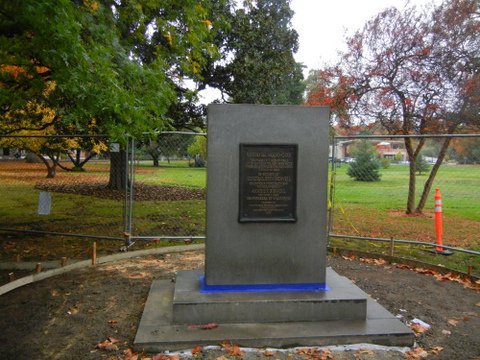
With appropriate ceremonies and before hundreds of residents of Butte County, together with representative people from many part of the state, the granite monument and bronze tablet erected to commemorate General and Mrs. Bidwell and the pioneers of the state was unveiled Friday afternoon by Mrs. Lily Bidwell Collins and Miss Anne Ellicott Kennedy, direct descendents of Chico’s two most outstanding pioneers.

Mrs. Collins and Miss Kennedy were close relatives, but not direct descendents of the Bidwells, who had no children of their own. Lily Bidwell was the daughter of Thomas Bidwell, John’s brother, and his wife, America. After his brother’s death the General took financial responsibility for Lily’s upbringing and education.

Annie Ellicott Kennedy was the daughter of Joseph Kennedy and his wife Winifred Moon. Joseph was the son of Annie’s brother and thus Annie’s nephew. Born in 1907, Annie’s grand-niece would have been 18 at the dedication.

It was a gala day in Chico’s history. Chico schools were dismissed and the children came to attend the the exercises in a group, supervised by their teachers. There were speeches by the mayor and other notables, and music by the Chico High School band and the college chorale. Guests of honor on the platform included “Mrs. Amanda Wilson, one of Chico’s native Indians, who was a close friend of Mrs. Bidwell” and Mr. C. C. Forbes, who was instrumental in obtaining the marker.

Be sure to come on Saturday, November 29 to find out what is in the time capsule. My thanks to Ranger Kirk Coon for giving me a photocopy of the newspaper article.
Posted in Uncategorized | Leave a comment

Tiime Capsule Time!

Haven’t you always wanted to see a time capsule opened? Especially if it is a mystery time capsule. with no record of who planted it or what is inside?

Bidwell Mansion State Historic Park has it’s very own mystery time capsule. It was discovered when this monument had to be moved. DSCN3233

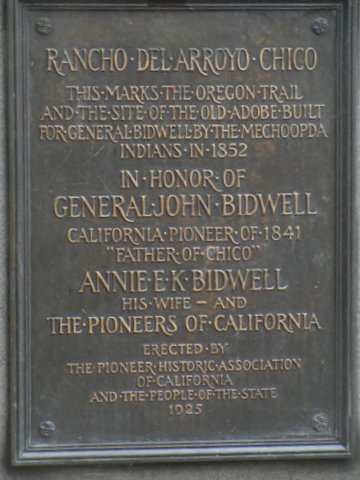
The monument stands at the corner of the Esplanade and So-Wil-Le-No Ave., right next to Chico Creek. The city is improving the street and sidewalk, so they had to move the monument 10 feet back. When they took the upright off the base, they found inside a copper box sealed with lead solder. No inscription, no instructions.

The monument was erected in 1925 by the Pioneer Historic Association of California (which no longer exists) to honor John and Annie Bidwell and all the pioneers of California. It marks the spot where Bidwell’s adobe stood by the side of the road that led to the northern mines and Oregon.

What do you guess might be inside the box? A dry and dusty scroll commemorating the occasion? Pictures by school children? Mementos of John and Annie? A nice big gold nugget?

The way to find out is to come to the grand opening on Saturday, November 29th at 10 a.m. at Bidwell Mansion State Historic Park. Come and find out what was placed in the time capsule 89 years ago. It’a an historic occasion! DSCN3235

Posted in Uncategorized | Leave a comment

“What Shall I Do?”

John Bidwell sent this letter to Annie in 1880, when he was in San Francisco and she was visiting her family in Washington, D. C.:

            SF Aug 24, 1880

My Dear Wife

By the bye. The President and General Sherman are to spend one day in Chico. So Col. Dick Hammond told me today. He saw a letter written to Gen. McDowell by Gen. Sherman, giving the programme of the Presidential party, and in it was one day in Chico! Gen. Sherman and President certainly expect you are at home. What shall I do!

They are to leave Chicago in 9 days from this date – two days after this will reach you if you are in Washington. But as the President will delay a few days at Salt Lake, one or two days at Virgina city, a few days at San Francisco, &c and then start for Oregon & Washington Ter. overland via Chico, you will have ample time to reach Chico, provided you lose no time. As soon as the President and party have gone, then you can return East and finish out your four month’s visit!!!!!!

It is now 11 P.M. must pack trunk; for I am off for home in the morning. If I have time I may add a line in the morning. But I had better make a formal close now.

But seriously, what am I to do without you when the Presidential party comes? You must solve the question. So if you are going to step across the continent, step quick!

In haste and with great love, your affectionate husband

John Bidwell

“By the bye”!  What a way to begin such a bombshell. The President is coming to visit! Isn’t it amazing how Bidwell gets the news second-hand, no one has planned this out months in advance, and no one in the presidential party has contacted him yet?

Notice also that a visit from General Sherman is pretty much equal to a visit from the President. At the time probably more people wanted to see Sherman than Hayes. The man who had conquered the South was wildly popular.

Poor General Bidwell! What is he to do without Annie? This is the biggest event in the history of Bidwell Mansion, and the hostess isn’t home. She didn’t “step across the continent” to get home before the president arrived. She sent instructions to John, and he enlisted the ladies of the town to substitute for the lady of the house.

It all went off quite nicely, but the General must have been in a tizzy without his dear Annie.

Posted in Rutherford B. Hayes, William Tecumseh Sherman | Leave a comment

John Marsh and John Bidwell

On Thursday, November 4th, 1875, John Bidwell wrote in his diary:

Thirty four (34) years ago today I arrive at the ranch of Dr. John Marsh near Mt. Diablo – party consisted of 32 men l woman and child.

John Bidwell didn’t often reminisce in his diary. But the events of 1841 were lastingly imprinted on his mind, and not without a touch of lingering rancor at the memory of Dr. Marsh’s character and actions.

The letters of Dr. John Marsh, widely printed in Missouri newspapers, were a prime factor in motivating John Bidwell and others to form the Western Emigration Society. Enticed by his (and fur trapper Antoine Robidoux’s) descriptions of the healthful climate and fertile soil of California, 500 people signed up to migrate to the new land. Even though many of those people dropped out, John Bidwell remained determined to head west. Along with him in the first wagon train to California were several men who had known Marsh when he lived in Missouri, including John Bartleson and Michael Nye.

Marsh had traveled to California in 1836 by way of the southern Santa Fe route. He knew of the explorations of Jedediah Smith and Bonneville, and he was able to give his readers some good information about traveling the Oregon Trail and finding Mary’s River. But he didn’t know anything about crossing the Sierra Nevada That didn’t stop him from confidently informing his Missouri readers that the mountains could easily be crossed in a day or so.

Nothing could be further from the truth, and after the group’s exhausting two-week struggle to surmount this massive barrier, they must have had a few choice words to say to Marsh about his travel suggestions.

Posted in John Marsh, Uncategorized | Leave a comment

John Bidwell Arrives in California

“Saturday, 30th. We had gone about 3 miles this morning, when lo! to our great delight, we beheld a wide valley! This we had entirely overlooked between us and the high mountains which terminated our view yesterday. Rivers evidently meandered through it, for timber was seen in long extended lines as far as the eye could reach. But we were unable to reach it today, and encamped in the plains. Here grew a few white oaks. Traveled today about 20 miles. Saw many tracks of elks. The valley was wonderfully parched with heat, and had been stripped of its vegetation by fire. Wild geese, fowls, etc. , were flying in multitudes.”

Just the day before, as the men gazed from the foothills at the coastal range, “Mr. Hopper, our best and most experienced hunter, observed that, “If California lies beyond those mountains we shall never be able to reach it.”” They had no idea that they were already in California.

That morning, the 30th, they breakfasted on coyote, and all Bidwell got was the lungs and the windpipe. Then as they traveled further down through the hills, following the Stanislaus River, they came upon this glorious view. California lay before them, and it was everything they had been promised: a fertile land teeming with wild game, with a healthy climate and plenty of room for all. California at last!

Posted in Uncategorized | Leave a comment

Heritage Day at John Marsh’s Rancho

John Marsh in 1852

John Marsh in 1852

John Marsh’s letters were a prime motivator in getting John Bidwell to California. Marsh, already living in California, wrote to Missouri newspapers and extolled the attractions of his new home. That, plus the tales told by Antoine Robidoux, convinced John Bidwell to start up the Western Emigration Society and gather folks to go with him to a place 2000 miles away.

At the end of their trek the Bidwell-Bartleson party of exhausted pioneers were welcomed by John Marsh himself, who fed them and told them what their next moves should be (get a passport, find a job.)  At the time Marsh was living on a Mexican land grant in an adobe house. That house is long gone, but Marsh’s later house is still standing, although in desperate needed of restoration.

The John Marsh Historic Trust has taken on the task of restoring the house, and Marsh Creek State Park is the newest state park in California. Together the trust members and state parks crews are working to renovate the house and someday open it to the public.

On Saturday, October 11, the John Marsh Historic Trust is hosting a FREE Heritage Day at the rancho with tours, booths, Native American dancing, roping and riding, speakers (including me), and lots of activities for the kids. This is a great opportunity to get a rare look at California history at a state park that is not yet open to the public (except on this one special day).

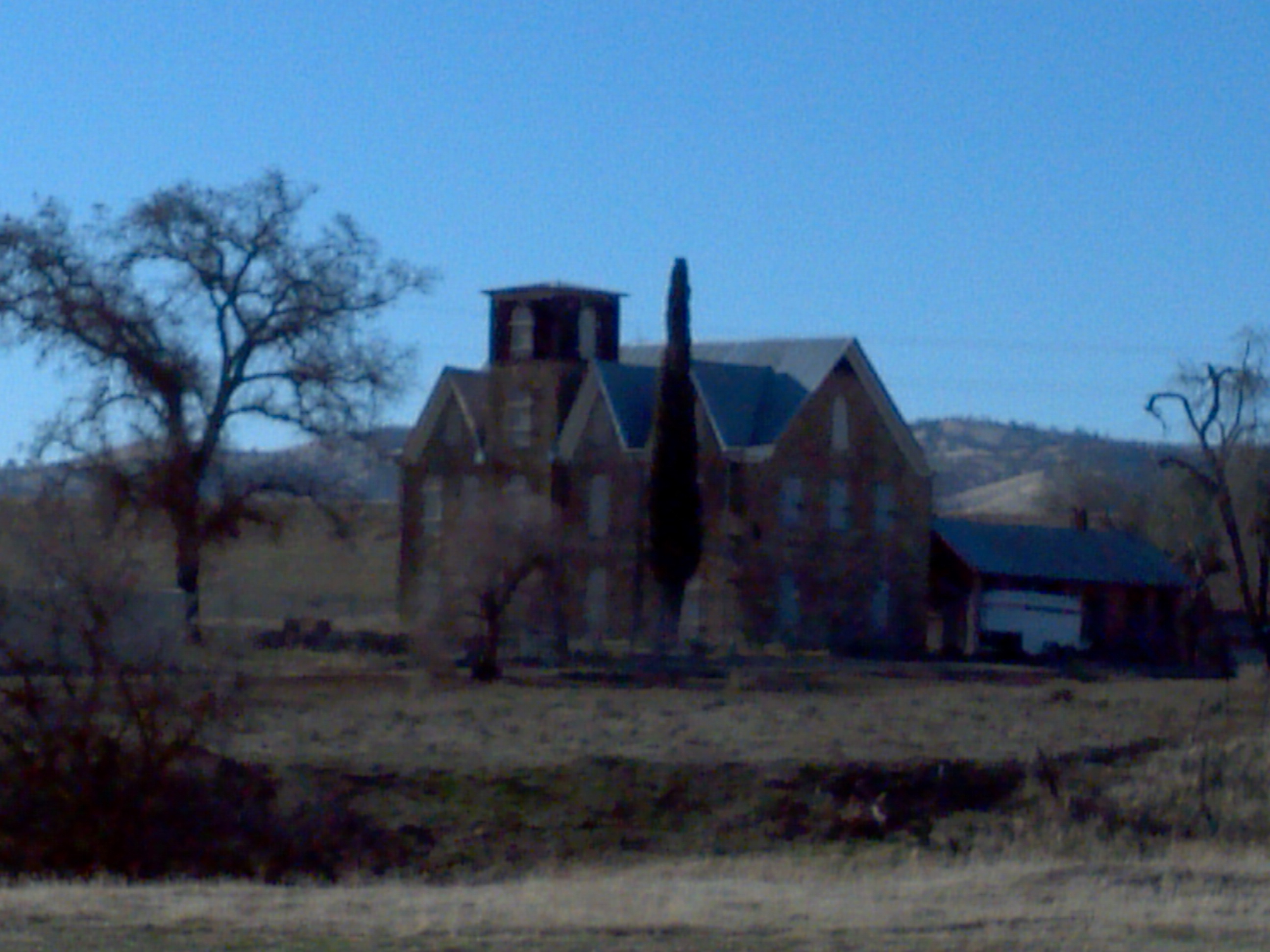
The park is located just south of Brentwood, near Mt. Diablo. Here’s a picture of the house I took about a year ago. You can find better photos at http://www.johnmarshhouse.com.

John Marsh's Stone House

John Marsh’s Stone House

Posted in Uncategorized | Leave a comment

Pity the Poor Pioneer Woman

On his 1841 trek to California, John Bidwell traveled with several members of the Kelsey family. He never forgot the trials on the trail of Mrs. Samuel Kelsey, wife of the oldest of four Kelsey brothers on the trip.

I remember Mrs. Samuel Kelsey; I pitied her. We had traveled all day and everybody was tired. It was hard work to get a fire built, but she managed to and was frying some bacon and tried to make some coffee. She had, I think, five children, the smallest of which could barely stand alone.

They were all standing about, crying at the top of their voices for something to eat. Just at that time the coffee upset and it went into the bacon and put out the fire. She threw up her hands and hollered out loud enough for the whole camp to hear:

“I wish to the Lord I had never got married!”


Posted in Kelsey | Leave a comment

Sherman and Bidwell

General William Tecumseh Sherman

General William Tecumseh Sherman

I am currently reading Fierce Patriot: The Tangled Lives of William Tecumseh Sherman, by Robert L. O’Connell. I recommend it to all you Civil War buffs out there, as well as anyone who wants to read a well-written biography of a great American.

The author notes that the two decades between 1820 and 1840 seem to have been crucial in forming the American character. Alexis de Tocqueville toured the United States in 1830 and proclaimed the emergence of Homo democraticus, a new kind of creature “whose passion for equality and self-interest was tempered only by his ability to join fellow citizens in all manner of mutual associations for pragmatic benefit.”

William Tecumseh Sherman was born in 1820, and John Bidwell in 1819. Both of them, in their own ways, epitomized this new man: “exuberant, optimistic, egalitarian, and opinionated–ready to take any situation in hand and shape it to their own advantage.”

This certainly describes Bidwell, who prided himself on his self-possession and ability to handle any situation. We sometimes forget that he had a sense of humor and a love of his fellow-man. He was forward-looking and confident, with a belief in America as a place where any man with gumption and the will to work could succeed.

Two admirable men: Bidwell and Sherman, each a great American success. To read about their first meeting, check out this blog entry.

Posted in William Tecumseh Sherman | Leave a comment

Ever Been to Nataqua?

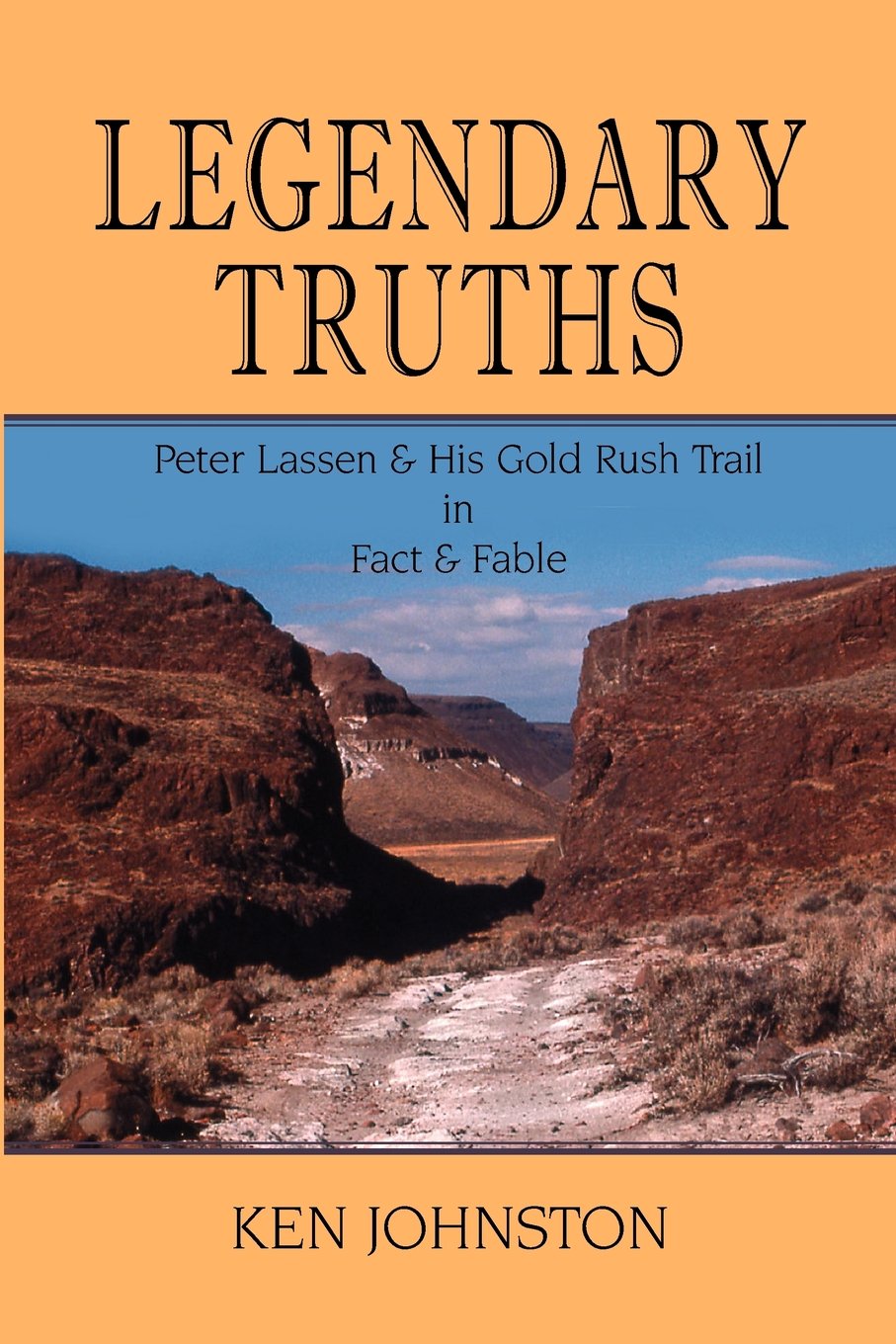
lassenbookI’ve been reading about Peter Lassen in Legendary Truths by Ken Johnston. I recommend the book to anyone who wants a detailed account of Lassen’s life and the development of the Lassen Trail. Johnston dispels many old myths about Lassen as a pathfinder and the viability of the Lassen Trail as a route to the goldfields of California.

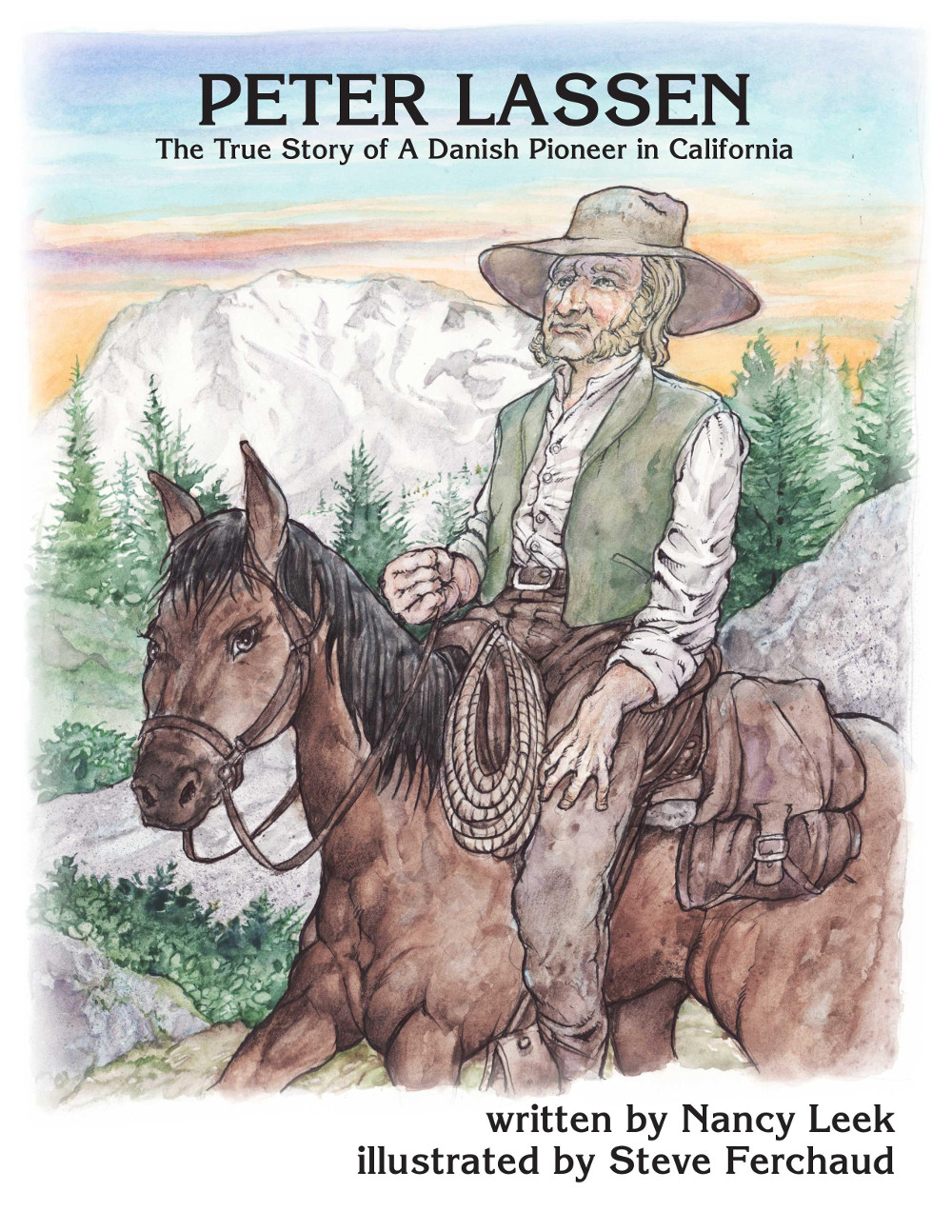
Although we usually think of Lassen as living at his Mexican land grant, Rancho Bosquejo, on Deer Creek in Tehama County, that is not where he ended his life. In 1855 he moved to Honey Lake Valley, near Susanville, where he successfully prospected for gold.

His gold find resulted in an influx of miners into the region, with the usual subsequent problems of land ownership and disputed claims. In April 1856 Lassen met with his partner Isadore Meyerowitz and eighteen other settlers at the cabin of Isaac Roop to draw up laws for their area.

Being in a sparsely settled region, far beyond the urban centers of Sacramento and San Francisco, these pioneers did not believe that they were in either the state of California or in Nevada (which at the time was part of Utah Territory.)  Not only that, they didn’t want to pay taxes to California. So they headed up a movement to create a new territory, which they called Nataqua.

Where did they get the name Nataqua? Ken Johnston says that it was a “local Indian word said to mean “Woman.””  Of course, this doesn’t explain why they wanted to name their new territory “Woman,” but maybe it was actually the name of someone’s native wife.

Pater Lassen was elected chairman or president of the committee meeting, and Isaac Roop was secretary. The committee declared Nataqua Territory to be 240 miles long and 155 miles wide, with coordinates that included most of northwest Nevada and a strip of northeast California. They intended Honey Lake Valley and Susanville to be part of the new territory, although the designated coordinates actually left them outside the bounds of Nataqua.

Peter Lassen is generally considered to be the first governor of Nataqua Territory, although he was actually only elected as surveyor. On his death in 1859 Isaac Roop took over as the purported governor. In 1861 the territory of Nevada was created, but the border between California and Nevada was a matter of dispute and it wasn’t until a survey was done in 1863 that the uncertain border was clarified and Nataqua Territory quietly went away into the mists of history.


Posted in Nataqua, Peter Lassen | 1 Comment

Sierra Stories

index If you enjoy stories about California history, then this book is for you: Sierra Stories: Tales of Dreamers, Schemers, Bigots and Rogues, by Gary Noy. I saw the author last night at Lyon Books; he brings the Sierra Nevada to life with stories about the people and their “magnificent peculiarities.”

Some of these personalities you have probably heard of, like Lola Montez, the exotic “Spanish” dancer (born in Ireland), the artist Albert Bierstadt, whose paintings of the Sierra were more beautiful than the original, and the photographer Eadweard Muybridge, famous for his “moving pictures” photos and for shooting his wife’s lover. But most of them are forgotten today, ones like beloved soprano Kate Hayes, the “Swan of Erin” and Okei Ito, founder of the Wakamatsu Tea and Silk Company.

Each chapter is short, but packed with entertaining information, and each chapter ends with another little related story, making for 64 stories all told. Gary Noy selected these 64 from some 300 stories he has collected over the years as he roamed the byways of the Sierra Nevada and delved into the archives of California history.

flumerideIt is impossible to pick a favorite story, but one of the best is the tale of “The Ultimate Thrill” of riding the Bonanza V flume near Virginia City at a speed so fast that it seemed to “annihilate time and space.”

Pick this book up and you will enjoy every chapter.

Posted in Uncategorized | Leave a comment