It’s California Poppy Day!

April 6th is California Poppy Day, honoring our state flower. The California Poppy was designated the state flower in 1903, and in 2010 April 6th was named an official state holiday (but not one where anybody gets the day off, sorry to say). Instead, according to Senate Bill 944:

. . . all public schools and educational institutions are encouraged to conduct exercises honoring the California Poppy, including instruction about native plants, particularly the California Poppy, and the economic and aesthetic value of wildflowers; promoting responsible behavior toward our natural resources and a spirit of protection toward them . . .

So I hope you learn something about the California Poppy today. Here are some tidbits of information, with which you can stun your friends and family.

The California poppy (Eschscholzia Californica) is one of 12 species in the genus eschscholzia, which is named for botanist Johann Friedrich von Eschscholtz. 

Before they flower, the plants look a bit like carrots. But don’t try to eat the yellow taproot — it is mildly toxic. I am not sure what constitutes “mildly toxic” and I do not plan to experiment and report my findings.

Other species of eschscholzia grow in Western North America and you can find pictures and descriptions at the wonderful website CalFlora.

As you know, I like to visit Table Mountain Ecological Reserve in Butte County every year for the wildflower display. The true California poppy is not a native of Table Mountain, but two of its cousins are there:

Foothill poppy

One is Eschscholzia caespitosa or foothill poppy, which is nearly identical, except that it lacks a collar below the petals. These are only found in a few rocky outcrops.

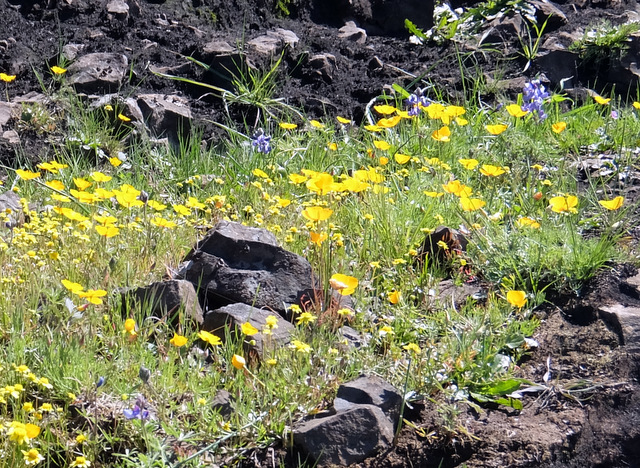
The other is the smaller, paler cousin of the California poppy, Eschscholzia lobbii, or frying pans. (Yes, the flower is called frying pans. I’m not sure why, but you can think of it as a little pan full of melted butter, ready for your morning eggs.)

Frying pans are very common on Table Mountain. You see them everywhere — swathes of little yellow poppies.

Frying-pans at Table Mountain

More information on California’s state symbols can be found at https://statesymbolsusa.org/states/united-states/california

Posted in Uncategorized | 3 Comments

Bidwell’s Old Adobe

“The ‘Old Adobe’ in 1868.” from “In Memoriam: John Bidwell” by Col. C.C. Royce

After his log cabin on Chico Creek burned down in 1852, John Bidwell built this two-story (with a one-story wing) adobe building. It was his home, his ranch headquarters, as well as a tavern and a hotel for travelers on the Marysville-Shasta Road.

Although the year of the photograph is 1868, the year that Bidwell Mansion was completed, the mansion does not appear in the photo. It would have been outside the photo, off to the left. It was set quite a way further back from the road.

The adobe stood for several years after the mansion was built. It was still standing in 1872 when the newspaper reported it being using as a polling place for the “Mill” precinct. It appears on a bird’s-eye map of Chico made in 1872.

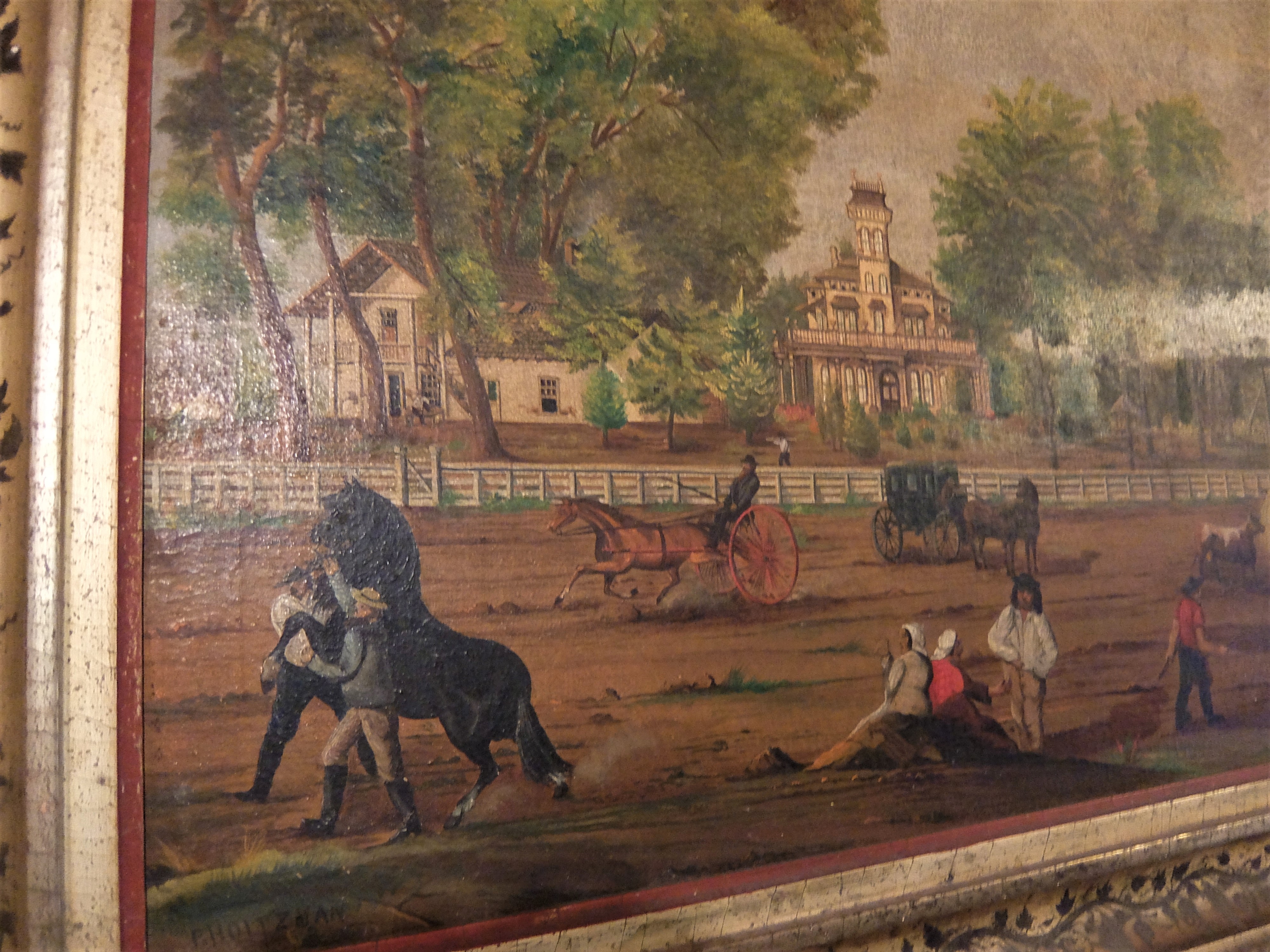
This undated painting by an unknown artist hangs in the Butte County Pioneer Museum in Oroville. (It is impossible to get a good photograph of the painting because of the bright light that shines on it.) Across a lively scene on what is now the Esplanade, you can see the adobe on the left, the mansion in the center, and another residence on the right. (That same house shows up in the 1868 photograph.) Here is a close-up of the adobe:

By the end of 1874, it was gone. The Weekly Butte Record reported on April 25, 1874, that it was “Disappearing.”

The old adobe on the Bidwell premises, so familiar to old residents of Chico, is undergoing the process of demolition. In a little while it will have entirely disappeared, and those who have known it long will know it again no more forever. In its time it has witnessed Chico’s growth from nothing to be the most flourishing town in Northern California.

In Bidwell’s diary for April 21 he notes: “Tearing down adobe house.” Later that year he had the cottonwood trees by the former adobe torn out as well.

I don’t like to go back. When people talk of the “good old days,” I like the present better. I don’t want to return to those days. . . . I had an old adobe house that was built in ’52 — an insect-infested house. A great many people say “let it stand.” But I removed every vestige of it. It had no charms for me.

John Bidwell: 1891 Dictation.
Posted in Uncategorized | 2 Comments

Table Mountain and Oregon City

Goldfields!

Spring is running a bit late this year. With all the cool and cloudy skies we have had lately, the flowers are only just getting started. But with all the rain, the wildflower season will only get better and better.

My daughter and two granddaughters went to Table Mountain two weeks ago and almost the only thing we saw was carpets of California goldfields. That’s mainly what we saw again today, but the lupine, bluedicks, popcorn flowers, and frying pans are beginning to show up.

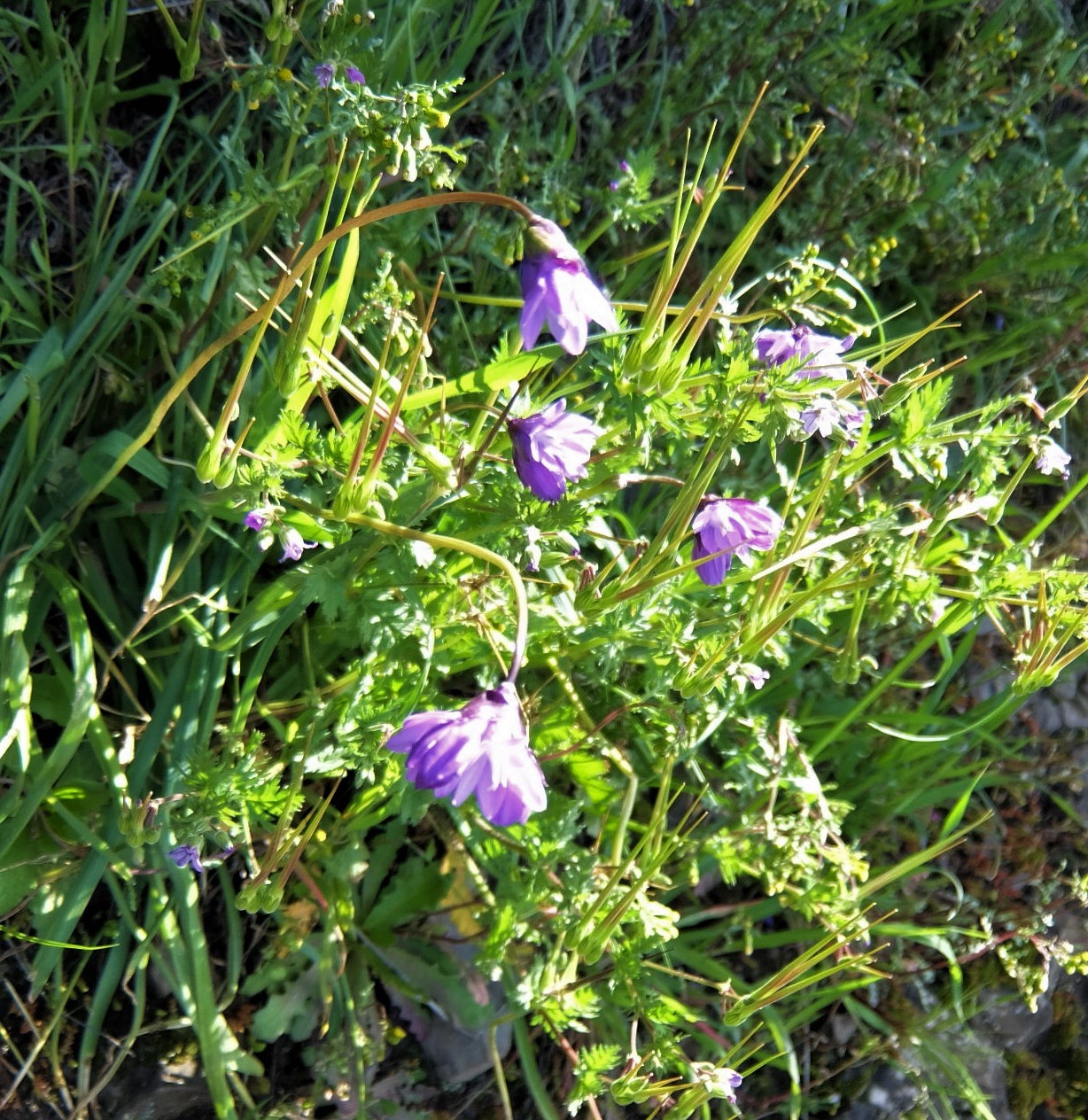
A nice cluster of bluedicks

The streams are rushing along, full of water, and the waterfalls are throwing themselves down the hills. Here are two girls by one of my favorite waterfalls, with more water than I have ever seen.

The section of Table Mountain set aside for hiking is officially known as North Table Mountain Ecological Reserve. A Lands Pass from the California Department of Fish and Wildlife is required to visit. I have never seen anyone checking for passes, but it only costs $5.40 for a day pass and the fee goes towards upkeep and improvements.

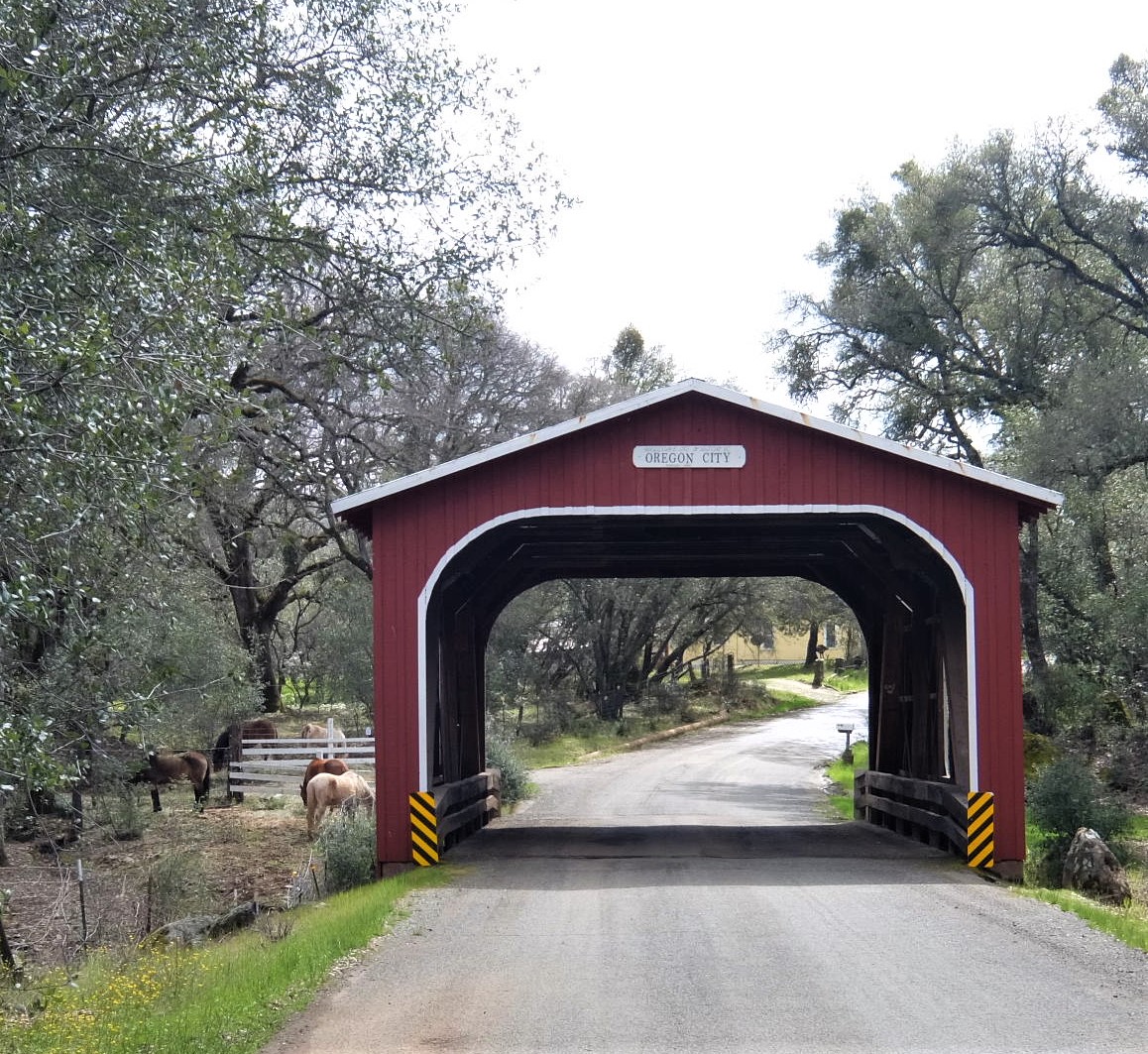
As long as you have made the drive to Table Mountain, why not visit Oregon City while you are there? Oregon City is a tiny community with a gold rush history. It was settled by a group of Oregonians, led by future California governor Peter H. Burnett, in 1848. (Click on the link if you want to find out why Burnett was not a very good governor.)

Oregon City boasts a covered bridge and the oldest schoolhouse in Butte County. Go on a weekend during wildflower season and you will find the school open and staffed by volunteers from the Butte County Historical Society. It’s worth a visit.

Posted in Uncategorized | Leave a comment

Classroom Visits

Fairview School’s Community Read-In is back and that makes me happy. Ever since I worked at the Orland Free Library, I have enjoyed visiting Fairview School in the Spring for the Community Read-In. All kinds of adults come to read and talk about books with the kids — police officers, firefighters, business owners, city officials, park rangers, and even librarians.

Fairview School hasn’t had a Read-In since 2019. Now it’s 2023 and I am looking forward to it — next week on April 6.

I visit 4th grade classes and talk about California history. How did people get to California? What did it take to make the journey? What did California look like when John Bidwell arrived here in 1841?

It’s so much fun to talk to the students. They ask great questions. They have imaginative ideas. I always have a good time.

If you are a teacher, or if you know a 4th grade teacher who would like a visitor to give a presentation about California history, please get in touch. I don’t charge anything as long as the school is in my area (Butte, Glenn, or Tehama Counties). I might want some gas money if I’m visiting a school further afield. 🙂

Posted in Uncategorized | 2 Comments

Luzena Goes into Business

After two or three days Luzena and Mason Wilson sold their oxen for six hundred dollars and bought a hotel. Whatever you may picture as a hotel in 1849 Sacramento, your imagination exceeds the reality.

The hotel we bought consisted of two rooms, the kitchen, which was my special province, and the general living room, the first room I had entered in Sacramento. I thought I had already grown accustomed to the queer scenes around me, but that first glimpse into a Sacramento hotel was a picture which only loss of memory can efface. Imagine a long room, dimly lighted by dripping tallow candles stuck into whisky bottles, with bunks built from floor to ceiling on either side.

Illustration from Overland to California by William G. Johnston. Thanks, Internet Archive!

How much of this hotel was framed, and how much was mere canvas, Luzena does not say. What she calls the “living room” was the “everything” room: bedroom, dining room, parlor, and tavern.

A bar with rows of bottles and glasses was in one corner, and two or three miners were drinking; the barkeeper dressed in half sailor, half vaquero fashion, with a blue shirt rolled far back at the collar to display the snowy linen beneath, and his waist encircled by a flaming scarlet sash, was in commanding tones subduing their noisy demands, for the barkeeper, next to the stage-driver, was in early days the most important man in camp. In the opposite corner of the room some men were having a wordy dispute over a game of cards; a cracked fiddle was, under the manipulation of rather clumsy fingers, furnishing music for some half dozen others to dance to the tune of “Moneymusk”.

“Monymusk” (the usual spelling), is a Scottish reel. That “cracked fiddle” played by “clumsy fingers” probably didn’t sound as good as this version.

One young man was reading a letter by a sputtering candle, and the tears rolling down his yet unbearded face told of the homesickness in his heart. Some of the men lay sick in their bunks, some lay asleep, and out from another bunk, upon this curious mingling of merriment and sadness stared the white face of a corpse. They had forgotten even to cover the still features with the edge of a blanket, and he lay there, in his rigid calmness, a silent unheeded witness to the acquired insensibility of the early settlers. What was one dead man, more or less! Nobody missed him. They would bury him tomorrow to make room for a new applicant for his bunk. The music and the dancing, the card-playing,
drinking, and swearing went on unchecked by the hideous presence of Death. His face
grew too familiar in those days to be a terror.

Luzena Stanley Wilson, ’49er; memories recalled years later for her daughter Correnah Wilson Wright.

A young man lays dead in his bunk and the drinking, dancing, and card-playing continue without heed. The fiddle plays on, “unchecked by the hideous presence of Death.” It was the first, but not the last corpse that Luzena would see.

Posted in Luzena Stanley Wilson, Uncategorized | Leave a comment

What Mrs. Fisher Knows

Mrs. Abby Fisher must have been some cook. Her friends persuaded her to put her recipes in a cookbook, the first published by a black woman west of the Mississippi.

Abby and her husband Alexander came to California in 1877. In 1879 she won the highest award at the State Fair in Sacramento for her pickles, sauces, and preserves. In San Francisco she became a popular cook and caterer, her cooking rated so highly that everyone wanted her recipes.

Abby Clifton was born into slavery in South Carolina around 1831. Sometime in the 1850s she met and married her husband, Alexander Fisher, in Mobile, Alabama and the couple and their children (they had a total of 11) eventually migrated to California. In the 1880 census Alexander is listed as a “Pickle and Preserve Manufacturer” so it was a joint venture, but Abby was the one who was in demand as a cook and gained fame as a cookbook author.

As she states in her “Introduction and Apology,” Abby Fisher could neither read nor write, and that gave her doubts that she would “be able to present a work that could give perfect satisfaction.” But she didn’t let her doubts hold her back.

But after due consideration, I concluded to bring forward a book of my knowledge based on an experience of upwards of 35 years in the art of cooking soups, gumbos, terrapin stews, meat stews, baked and roast meats, pastries, pies and biscuits, making jellies, pickles, sauces, ice creams and jams, preserving fruits, etc. The book will be found a complete instructor so that a child can understand it and learn the art of cooking. Respectfully – Abby C. Fisher

I learned about Mrs. Fisher from an article by the California State Library: “Mrs. Fisher Pens a Cookbook.” You can read more about her there. Her cookbook, containing 160 recipes, is available from the Internet Archive. The recipes are brief, but certainly usable, with a little imagination. She never tells you how hot to set the oven, for example.

Here is a page with some recipes for pies, in case you want to make a sweet potato pie. Sounds delicious! (A gill is a half-cup.)

Posted in Uncategorized | 1 Comment

Luzena’s First Day

Luzena Wilson got up on her first day in Sacramento and went right to work. There was no time to lose. There was money to be made feeding hungry miners.

There was no credit in ’49 for men, but I was a woman with two children, and I might have bought out the town with no security other than my word. My first purchase was a quart of molasses for a dollar, and a slice of salt pork as large as my hand, for the same price. That pork, by-the-by, was an experience. When it went into the pan it was as innocent looking pork as I ever saw, but no sooner did it touch the fire than it pranced, it sizzled, frothed over the pan, sputtered, crackled, and acted as if possessed. When finally it subsided, there was left a shaving the size of a dollar, and my pork had vanished into smoke.

Every second man in the city, it seemed, kept a store, and any of them were willing to give credit to a woman. All it took to set up shop was a barrel of flour, a barrel of salt pork, a sack of onions and what other few provisions were available. Whiskey was always a good seller.

Luzena was astounded at the prices. “Nothing sold for less than a dollar; it was the smallest fractional currency. A dollar each for onions, a dollar each for eggs, beef a dollar a pound, whisky a dollar a drink, flour fifty dollars a barrel.” Coin was scarce, but a pinch of gold dust equaled a dollar, and an ounce was worth sixteen dollars.

She was critical of the quality of the provisions. Vegetables were scarce. The best to be had were “beans and dried fruits from Chile, and the yams and onions from the Sandwich Islands.” Beef was local; everything else came around the Horn: brown, rancid butter, sour flour full of long black worms, and corned beef “with the texture of redwood.”

She could provide an excellent meal to any man willing to pay.

One morning an official of the town stopped at my fire, and said in his pompous way, “Madame, I want a good substantial breakfast, cooked by a woman.” I asked him what he would have, and he gave his order, “Two onions, two eggs, a beefsteak and a cup of coffee.” He ate it, thanked me, and gave me five dollars. The sum seems large now for such a meal, but then it was not much above cost, and if I had asked ten dollars he would
have paid it.

To give you an idea of prices in Sacramento, here is a receipt for purchases John Bidwell made in July 1849:

It reads:

Sacramento City July 25th, 1849

Mr. Jn Bidwell

                        Bot of Priest Lee & Co.

3 Cases Vinegar                      @$6                18.00

1 cask Brandy  24 ½ Gal.       @$4                98.00

5 cases Ale                              $15                  75.00

                                                                    $191.00

2 casks Brandy 24 ½ 23 ½ 48 gals  @$4       192.00

2 cases 4 doz. Pickles                          $18        72.00

½ doz. Lemon Syrup                          $24        12.00                                                

                                                                        $467.00

Rec’d Payment

                        Priest Lee & Co.

                                    pr A. Hadley

Posted in Luzena Stanley Wilson, Uncategorized | Leave a comment

California at Last

Luzena Wilson finally made it to the crowded tent city around Sacramento. There she encountered men who were lonesome for the comforts of home.

It was almost dusk of the last day of September, 1849, that we reached the end of our journey in Sacramento. My poor tired babies were asleep on the mattress in the bottom of the wagon, and I peered out into the gathering gloom, trying to catch a glimpse of our destination.

The night before I had cooked my supper on the camp fire, as usual, when a hungry miner, attracted by the unusual sight of a woman, said to me, “I’ll give you five dollars, ma’am, for them biscuit.” It sounded like a fortune to me, and I looked at him to see if he meant it. And as I hesitated at such a remarkable proposition, he repeated his offer to purchase, and said he would give ten dollars for bread made by a woman and laid the shining gold piece in my hand. I made some more biscuit for my family, told my husband of my good fortune, and put the precious coin away as a nest-egg for the wealth we were to gain.

It’s no wonder that Luzena was amazed when a miner offered her a $5 gold piece, “ma’am, for them biscuit.” According to Measuring Worth, $5 in 1849 was worth at least $157 dollars. A man might work a week for that much money. But everything in California was different than back in the States.

Luzena stowed that gold piece safely away, as she thought, in a little box in the wagon. But the day they entered Sacramento she discovered the box rolling empty on the wagon floor. Her nest-egg, the beginnings of their fortune, “lay hidden in the dust, miles back, up on the mountains.” She lad lost the first money she earned. Nevertheless, that coin was an intimation of the wealth to come from the employment of her womanly skills.

As the day faded they entered the tent city that was Sacramento.

All around us twinkled the camp fires of the new arrivals. A wilderness of canvas tents glimmered in the firelight; the men cooked and ate, played cards, drank whisky, slept rolled in their blankets, fed their teams, talked, and swore all around; and a few, less occupied than their comrades, stared at me as at a strange creature, and roused my sleeping babies, and passed them from arm to arm to have a look at such a novelty as a child.

Children were indeed a novelty in Gold Rush California, and young men who missed home and family and their younger siblings would go out of their way to see a young child.

We halted in an open space, and lighting our fire in their midst made us one with the inhabitants of Sacramento.

Luzena and Mason Wilson had arrived. What adventures awaited them in California?

Sherwood Crittenden c. 1949. Bancroft Library Photos of children in the Gold Rush are scarce.
Posted in Luzena Stanley Wilson, Uncategorized | Leave a comment

Luzena and the “Languishing Spark of Womanly Vanity”

Luzena and her husband and their two little boys were on the western, downward, side of the Sierras and close to the end of the trail—

The first man we met was about fifty miles above Sacramento. He had ridden on ahead, bought a fresh horse and some new clothes, and was coming back to meet his train. The sight of his white shirt, the first I had seen for four long months, revived in me the languishing spark of womanly vanity; and when he rode up to the wagon where I was standing, I felt embarrassed, drew down my ragged sun-bonnet over my sunburned face, and shrank from observation. My skirts were worn off in rags above my ankles; my sleeves hung in tatters above my elbows; my hands brown and hard, were gloveless; around my neck was tied a cotton square, torn from a discarded dress; the soles of my leather shoes had long ago parted company with the uppers; and my husband and children and all the camp, were habited like myself, in rags.

A day or two before, this man was one of us; today, he was a messenger from another world, and a stranger, so much influence does clothing have on our feelings and intercourse with our fellow men.

Ah, the “languishing spark of womanly vanity”! Poor Luzena, to be seen in that state.

We can scarcely imagine how bedraggled and filthy one would become on the overland trek. Think of how grubby you feel after a week of camping and no shower. Then multiple that by twenty. Give yourself at best one change of clothing.

And just try to find a picture that fits this description! No woman would be caught dead having her photograph taken in that condition. Photos of women on the trail are exceedingly scarce. This picture of the Joseph Byington family is an oft-repeated one. Notice the barefoot children. What the women were wearing on their feet is hard to see. Their clothes look clean though, and I am sure this is the beginning of the trail and not the end.

Mormon pioneer Joseph H. Byington and his two families

Hollywood has given us a more appealing image:

Westward the Women with Robert Taylor and Denise Darcel

Imagine what those clothes would look like at the end of the trail. Picture the roughened hands and the sunburnt faces. Not a single woman has a bonnet or an apron. They wouldn’t last a week on the trail.

Posted in Uncategorized | 2 Comments

A Hard March

All the emigrants on the trail to California faced that desert. Forty miles of sand and alkali with no water. To get across it they had to drive their oxen relentlessly on in spite of heat and thirst. To hesitate, to linger, was death. Here is how Luzena Stanley Wilson describes it:

It was a hard march over the desert. The men were tired out, goading on the poor oxen which seemed ready to drop at every step. They were covered with a thick coating of dust, even to the red tongues which hung from their mouths swollen with thirst and heat. While we were yet five miles from the Carson River, the miserable beasts seemed to scent the freshness in the air, and they raised their heads and traveled briskly. When only a half mile of distance intervened, every animal seemed spurred by an invisible imp.

They broke into a run, a perfect stampede, and refused to be stopped until they had plunged neck deep in the refreshing flood; and when they were unyoked, they snorted, tossed their heads, and rolled over and over in the water in their dumb delight. It would have been pathetic had it not been so funny, to see those poor, patient, overworked, hard-driven beasts, after a journey of two thousand miles, raise heads and tails and gallop at full speed, an emigrant wagon with flapping sides jolting at their heels.

It was an ordeal she never forgot. In her recollection she jumps from the Carson River to the “summit of the Sierra” and says nothing at all about the struggle to ascend the Sierras.

At last we were near our journey’s end. We had reached the summit of the Sierra, and had begun the tedious journey down the mountain side. A more cheerful look came to every face; every step lightened; every heart beat with new aspirations. Already we began to forget the trials and hardships of the past, and to look forward with renewed hope to the future.

They knew they were almost there. Having passed through the fiery trial of the 40-mile desert, they were drawing close to their promised land.

Posted in Luzena Stanley Wilson | 1 Comment