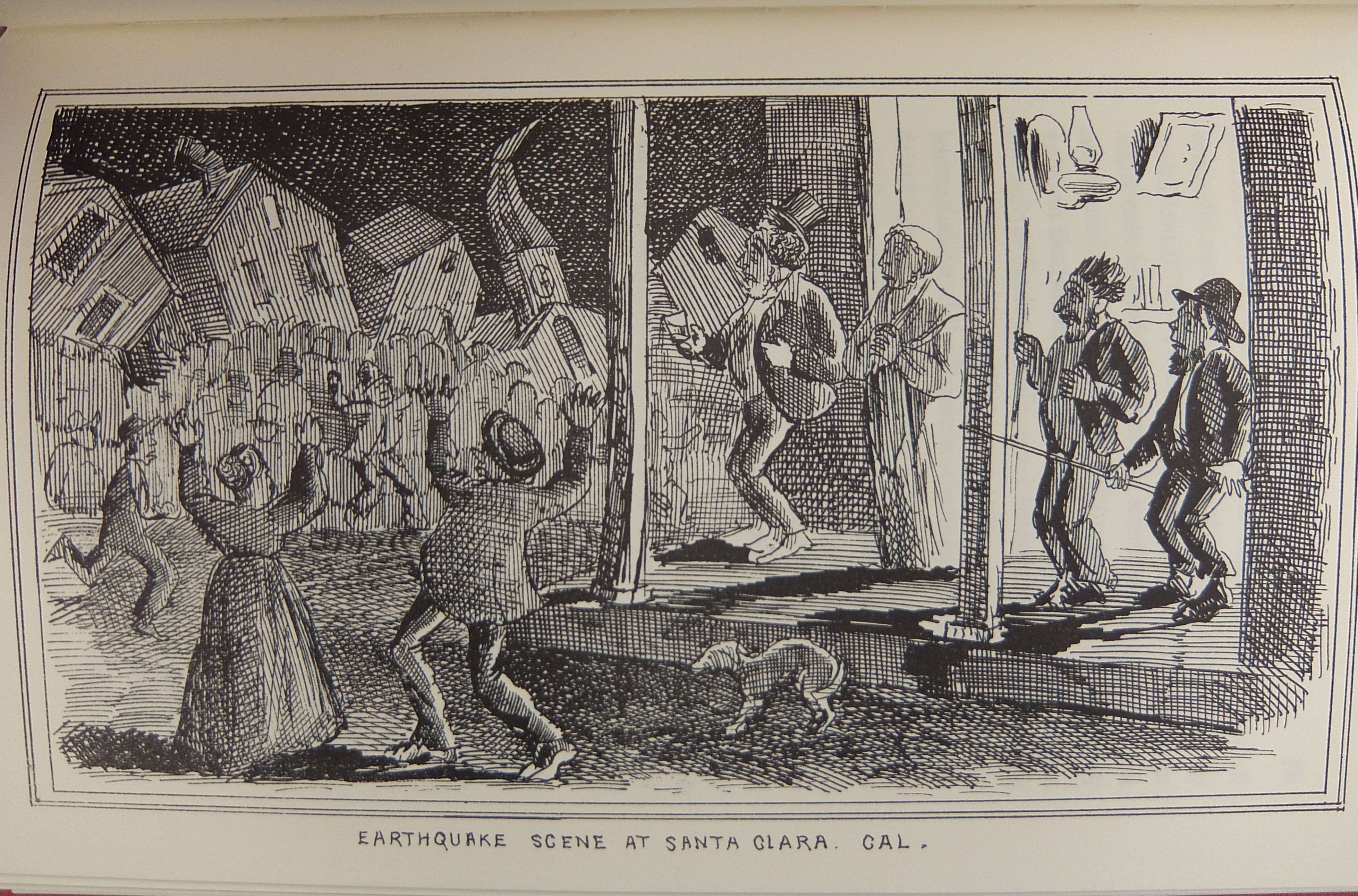
Only a few months after the Likins family arrived in San Francisco they experienced a violent earthquake. The earthquake had a magnitude between 6.3 and 6.7, and took place on the Hayward Fault on October 21, 1868. It was called the Great San Francisco Earthquake until the quake of 1906 came along.
Aftershocks continued for a few weeks. Amy Likins resumed her book-selling and was in Santa Clara when another strong shock hit.
I now concluded to go to Santa Clara and canvass that town, before delivering my pictures in San José. Eight o’clock in the evening found me seated in the ladies’ parlor at the hotel, conversing with the landlord concerning the severe shock of earthquake we had two weeks previous.
I thought, if the Lord spared me, I would not stay another night in a brick house. I had partially undressed when the house commenced shaking. Frightened all but to death, I scarcely knew what to do; but found myself in the door-way with the candle in my hand, thinking I must not go into the street in this condition. There came a second shock. I blew out the light, threw it on the floor, and rushed into the street, not caring how I appeared. It was full of people. Some of them looked at me curiously; but I drew my shawl close about me and stood my ground, nor could I be persuaded to return to my room. The clerk brought me my shoes and baggage, and took me where he knew I could obtain lodgings, to a lady’s, a few doors away. She gladly offered me shelter, as her husband was away from home, and she was very lonely.
There were several light shocks after I had been there. Next morning, many joked me about my appearance the evening previous, especially Mr. W., who said he never would forget how comical and frightened I looked.
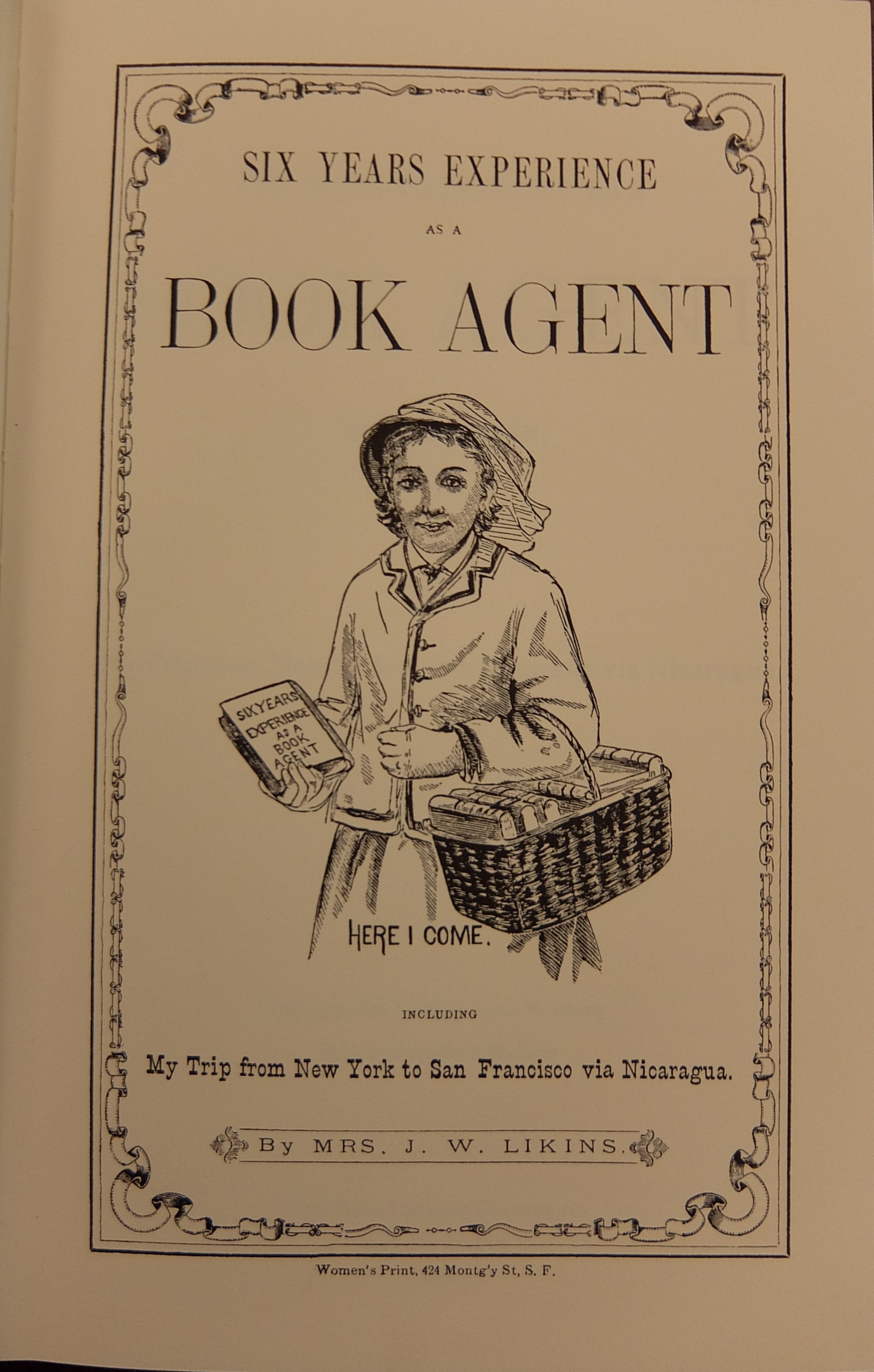
And here she is! Or should I say, “Here I Come,” since that’s what Mrs. J. W. Likins says herself on the picture. Six years of selling books had given Amy Likins plenty of confidence.
This is the title page of her book, first published in 1874, and reprinted by the Book Club of California in 1992. The text can be accessed online at the Library of Congress (that’s what I have been using for my excerpts), but the online transcript does not include the illustrations.
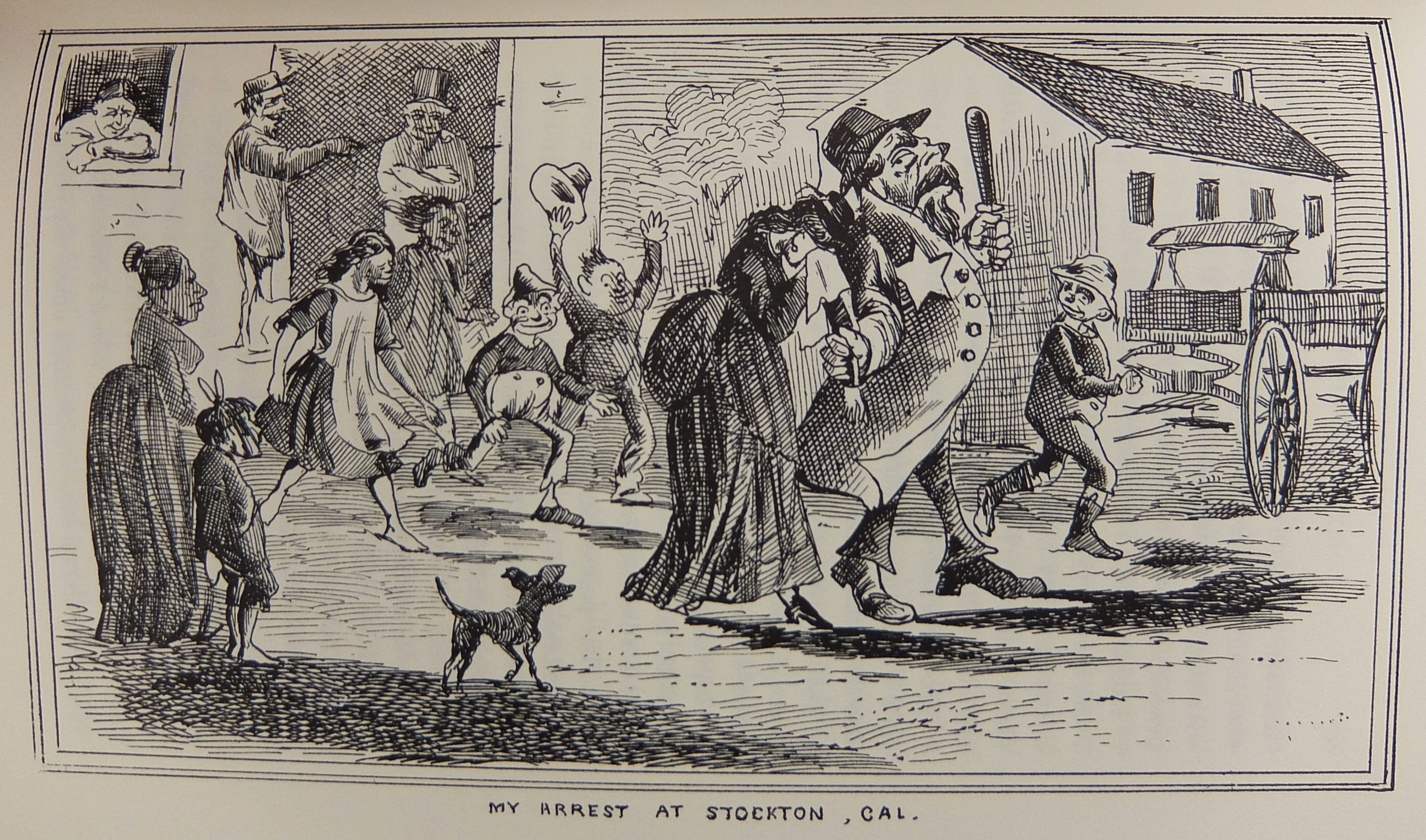
To see the illustrations I had to go to the History Room of the California State Library, never a hardship for a history researcher. I had several other things to look for, but first I had to find this book.
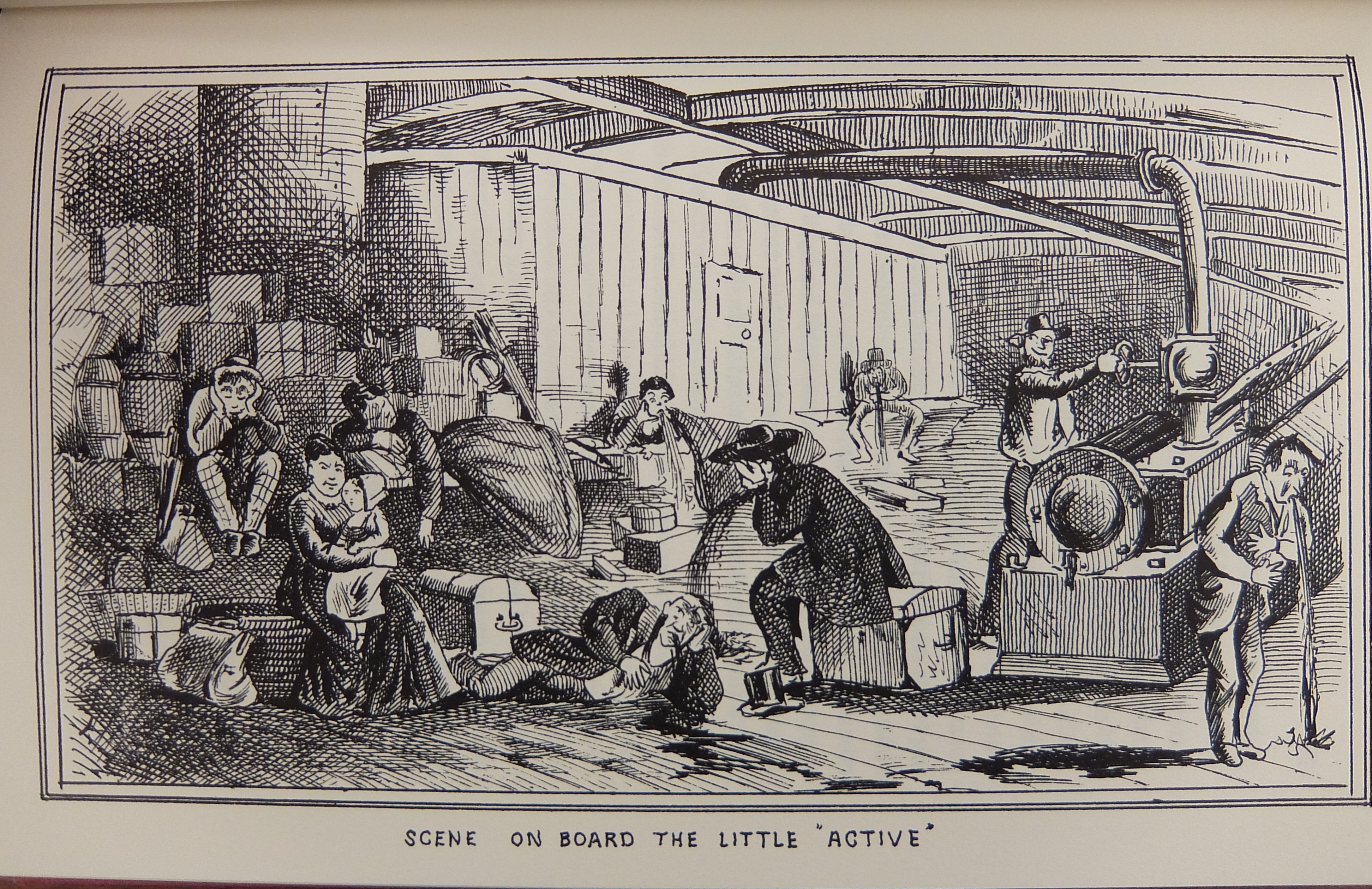
In her memoir Mrs. Likins included the story of their trip to California by the Nicaragua route. This was an alternative to crossing the Isthmus of Panama, but actually a very similar experience. Their steamship landed at “Greytown” (San Juan de Nicaragua) and they transferred to a smaller steamer named the “Active.”
The steamer was a small coaster with no cabin or accommodations whatever. There was a heavy sea, and the little steamer seemed to have all she could carry, but still battled with the waves that seemed to threaten her destruction at any moment: at every surge she seemed to crack, and sound as though she would break to pieces.
She was named the ‘Active’, and I think it a very appropriate one too, for nearly all on board soon became very active, and seemed as though they would throw up even their boots; but I will not jest about it. All the benches were occupied by ladies, lying down, groaning and moaning. The strongest man reeled, while others weaker soon became so sick that they lay on the bare floor, in all the filth and dirt—among them my husband. I was seated on some baggage, watching and tending my little girl, who was so white and limp I was afraid she would die.
The illustrations are crude, but nevertheless a delightful addition to the narrative. More to come.
Mrs. Likins, the Bancroft book agent, took pride and comfort in her membership in the Rebekah order of the Independent Order of Odd Fellows and she mentions this several times in her memoir.
Seal of the Sovereign Grand Lodge, Independent Order of Odd Fellows
The Odd Fellows were founded in the United States of America in 1819 and quickly became one of the foremost fraternal orders. It became the first fraternity in the United States to include both men and women when it adopted the Rebekah degree in 1851, at the behest of Schuyler Colfax, later Vice-President of the United States under Abraham Lincoln. The Odd Fellows emphasized service and charity along with the usual benefits of fraternity, and by the second half of the 19th century they were the largest fraternal organization in the United States.
Amy Likins says that she became a Rebekah fifteen years before coming to California in 1868, which would have been only two years after the degree was created. She found her association quite useful as she went about her travels as a book agent. A man wearing the symbol of the Odd Fellows, the three link chain, was someone she could trust, someone she could call on to assist her if she were accosted by some “ruffian,” as she relates in the following story.
The next day I visited the R.R. offices, and on making my appearance before the illustrious and distinguished Govenor S.*, I was treated with a very great deal of respect, and received permission from him to visit all of the offices, after having himself patronized me, for which I tendered him my sincere thanks. I then called in every office, and among the numerous clerks; my order book will show evidence of their liberal patronage, for which I thanked them all very kindly. I here admit that Rail Road men are a class that have treated me very politely, and with but one exception . . .
This fellow was in the employ of Mr. J., the superintendent of the road from Sacramento to Folsom. He was a baggage master, by the name of L. He came up to me, and offered to shake hands. Without being impolite, I could not very well refuse, at the same time telling him that I did not remember ever meeting him before. With a hateful grin, he said, “you cannot play that on me; didn’t I see you in San José, the week before last, working on this same book?” reaching his hand for the prospectus, which I refused to give him, saying, “you are very much mistaken, I was in that place, but had a different book.”
“I presume you take me for Mrs. B.,” who was working there on the same book. He answered, “you need not try to play such a game on me, as I know you are that Mrs. B.; probably if you don’t want to recognize me, you would recognize Mr. F., the engineer, if he would come around. Probably, you will also deny making a row between him and his wife, a few weeks ago.”
Finding it was impossible for me to convince him of his mistake, and seeing that he was a ruffian under the influence of liquor, and as I had tried hard to get away from him and his abuse, he persisted in following. At a little distance, I saw a Mr. J—, who wore an emblem of Odd Fellowship, and was pleased to find that he had taken the Rebekah degree; and immediately inquired of me what assistance I needed. I told him my name and situation as best I could, for weeping. I pointed out to him the ruffian, who stood at some little distance. Mr. J— called to him, and told him he must necessarily be mistaken, as Mrs. J. W. L. must be a lady, or otherwise she would not be in possession of certain signs and pass-words. He also told him that if he did not at once beg the lady’s pardon he would discharge him from his employ.
The ruffian did indeed beg her pardon, “with a half drunken idiotic grin on his countenance,” and Mrs. Likins went on her way, secure in the knowledge that her Rebekah affiliation had come to her aid.
*Presumably Governor Leland Stanford, who after serving a term as state governor (1862-63), went back to being a railroad baron.
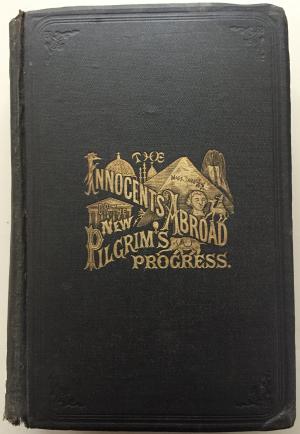
Amy Likins (or as she preferred, Mrs. J. W. Likins) was soon selling books as well as engravings. She usually took two or three new titles in her basket. Mark Twain’s The Innocents Abroad came out in 1869 and was easy to sell. Everyone liked reading Mark Twain.
After having remained at home for a few days, I started once more to try amongst the shipping. Here I met with good success, selling many engravings and taking many orders for “Mark Twain’s Innocents Abroad.” I had sufficient employment to keep me busy for several months amongst the shipping, wharfingers, and lumber-merchants.
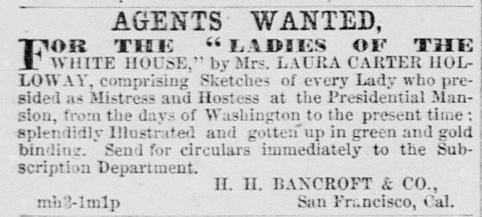
Other titles she sold were Ladies of the White House, The Life of Sumner (biographies were popular), and The Sights and Sensations of the National Capitol.
She did not confine her efforts to San Francisco. She made sales trips to San Jose, Santa Clara, Santa Cruz, Stockton, Sacramento, and points between. If she saw them today, she would not recognize the cities and towns of the Bay Area that she visited.
The next morning found me seated in the Western Pacific R.R. cars bound for the so called city of Milpitas. When I arrived there, it reminded me of the old saying, that I could not see the town for the houses, which consisted of one hotel, two drinking saloons, one dry goods and grocery store, two blacksmith shops, one harness making shop, and a half a dozen dwellings; but the citizens were all very kind and polite. . . In this place I took some half a dozen orders, which I considered pretty well, for a small place.
Here she is in Mayfield, “a small village in Santa Clara county,” which must have been absorbed into some larger town. I can’t find it on a map.
Taking my bundle, I started out; called at the several places of business, and had tolerable good success. I called on one gentleman I pitied very much; he had to use crutches. He told me he was a cripple, from rheumatism. Still he seemed energetic, and full of business, carrying on a drug-store and keeping the Post-office, and was contented and happy. He said, when I came around again, he would take Mark Twain’s “Innocents Abroad,” if I would bring it to him, as he was a great reader.
I called at the blacksmith shop, above his place. There was a man working there, an apprentice, I think, who was so low as to be abusive and vulgar, forgetting he ever had a mother. He was a stout, raw-boned, thick-lipped, flat-nosed, tangle-haired, uncivilized creature, who depended mainly on his strength more than his brains to make his way through the world, and would just as lief strike a woman as a man. With the exception of this ruffian, I was treated with the greatest of respect by all of the citizens of Mayfield; and was more liberally patronized than I had expected from so small a place.
You never know what will fascinate people, especially 150 years later. I have read lots of accounts of women on the trail and in mining camps, and I enjoy those, but I especially liked this story of Six Years Experience as a Book Agent in California. It gives a different view of life and work in California, and I am grateful to Amy Likins for writing down her story in such a candid and colorful way.
Although most people treated her courteously, she met some opposition along the way from both men and women. But Amy Likins always gave as good as she got.
I met a gentleman from the country, who was trading at one of the wholesale houses; he seemed very angry to think a woman should be selling pictures among so many men. He said I looked old enough to be married and have a family, and ought to be at home taking care of them. I told him I knew I looked old, [she was 37] but he need not remind me of it; that I had a family and was trying to make an honest living for them, at the same time telling him I presumed he was a bachelor, who would not know how to appreciate a wife if he had one.
The proprietor laughed heartily, and said, “Madam, you guessed right.” As I was wasting time I left him.
A few days later she encountered another one of these misogynists.
An old man was standing in the door-way of his shop; I spoke to him, unrolled the picture and asked him to subscribe. He was a strong Democrat and was not long in letting me know it. “You d—women think you will rule the country. There is a clique of you who go prowling around, having secret meetings, lecturing all over the country on women’s rights; here you are roaming around with that d— picture of that loafer Grant. There was one of your clique in here the other day, lecturing on temperance. I told her in plain English to leave my shop; I would have no women’s rights around me.”
I replied, “Thank you for your hint; I am not in your shop, nor do not intend crossing your doorway, for fear I might become polluted, for you certainly are the most profane ruffian I ever met.”
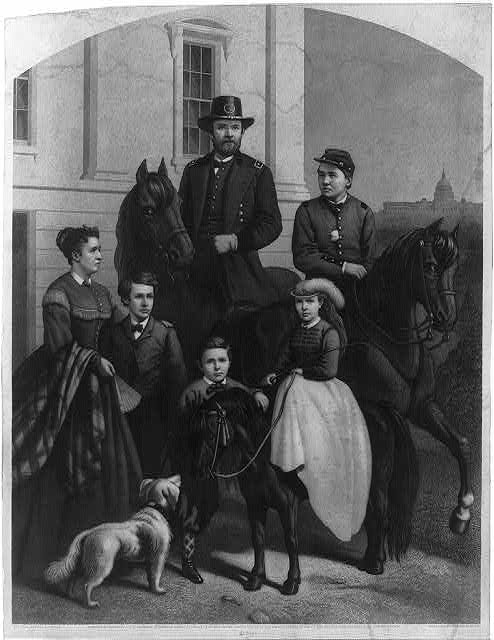
How did a lady book agent go about her business? To start, Mrs. J. W. Likins (Amy) was given an engraving of “Grant and His Family” and told to go out and get subscriptions. If she could be successful with the one picture, she could work up to other engravings and books. Everything she sold was by subscription, taking orders first and delivering the goods later.
Pictures like “Grant and His Family” were very popular items. Later she would also sell “Lincoln and His Family” and “Washington and His Family”. Mrs. Likins started selling in August 1868, just before Grant was elected to his first term.
It was now just before Grant’s election, and great excitement concerning it prevailed. The Democrats arguing in favor of their candidate, and the Republicans in favor of theirs. In almost every room, in front of every store or business house, and on every street corner, I would find gentlemen in groups, whispering or conversing in low tones; I suppose plotting and planning for the coming campaign; while others were loud and boisterous in expressing their opinions.
It was a great trial for me to know just how to approach them . . . still I did not pass any of them; with a heavy heart I would step up, unroll the picture, saying, “Gentlemen, I have a fine engraving of General Grant and his family.” After they had looked at it, which they very seldom failed to do, I would present my order-book, take them in rotation, and insist upon one and all to subscribe, and was generally very successful.
It wasn’t easy at first, but she made herself approach strangers and ask for their business.
They would treat me kindly, and were very polite, with the exception of some few ruffians who seemed to have forgotten “their mother was a woman,” would hurt my feelings, in many ways, with regards to Grant’s life and character, on this coast, before the war; as though I was accountable for the way he had acted.
Claiming that Grant had acquired an Indian wife and children when in California (1852-53) was a common slur on Grant from Democrats. It was frequently used against opponents whether or not there was any evidence for the accusation. Approaching a man in an office, she says
I politely showed him the picture. He looked up, with his blinky eyes, and crooked mouth, in which there was an attempt to grin. “I would buy the engraving if it had his squaw wife and Indian babies on it; we cannot trade madam,” and he turned around to his desk.
When once alone in the hall, I sat down on the bottom stair that led to the third story of the building, and had a good cry. Many passed me, looking at me wonderingly, but none addressed me. I dried my tears away, drew down my vail, and passed into the street.
I had canvassed California street on both sides, from Front to Montgomery; on Montgomery, from California to Washington, and now made up my mind to try Front street, as Mr. S. had told me he thought I would be very successful there. I started in at California street, passed down the lower side to Washington. The gentlemen whom I met were all pleasant and jolly. Democrats joking Republicans by saying, “Don’t back out now; if the lady had a picture of Seymour we would buy it.”
Horatio Seymour, former governor of New York, was Grant’s Democratic rival in the race for the presidency. He lost, 47% to Grant’s 53%.
Here we are, halfway through the month of March, Women’s History Month, and I have written nothing on women in California. I’ve been very busy with other projects — several presentations (Chico History Museum on March 29 is the next one) and a book I am revising. But in honor of Women’s History Month I will go back a few years and repost a series I did on Amy Likins. It’s one of my favorites! Here you go——
If you were a respectable married woman in 1868 in San Francisco, and you needed to find work, what could you do?
Most women who had to work ran boardinghouses and cooked and cleaned for a living. Many women worked as seamstresses, dressmakers and milliners. Teaching school was another possibility, but unmarried women were preferred for that job.
Mrs. J. W. Likins found herself in just this quandary in the summer of 1868. She and her husband and daughter had come to California that spring, and soon Mr. Likins found work with the railroad as a baggage handler. Disaster struck when their hotel caught on fire (a common occurrence in young San Francisco) and they lost everything but their lives and Polly the parrot. Then Mr. Likins became ill, and soon they were in dire want.
AUGUST 11th, 1868. Now begins the one great struggle of my life. I scarcely know where to turn or what to do. As I look around the room, I see nothing but want and poverty on every hand. Something must be done to get out of this place. Bidding my dear ones keep up courage, I start out. Never before did I know the meaning of the word poverty. Now I felt it in all its keenest pangs—everything looked dark and cloudy. I started for the Post-office. Not being able to pay car hire, I went on foot.
On my way I passed the book-store of H. H. Bancroft, then on the corner of Montgomery and Merchant streets. In the window I noticed a card, with the words “Agents Wanted” on it. Stepping into the store a gentlemen advanced to meet me. I asked him “Do you employ ladies agents?” “Yes”, he replied, “allow me to take you to the Subscription Department.”
And so began Mrs. Likins employment as a lady book agent. She was given an engraving of “Grant and His Family” and an order book, and told to go out and get orders for the print. Although she says that “It was a great trial for me to know just how to approach them,” she pressed on, talking to men on the street and in offices, and ladies in their homes.
Taking them on my arm, order-book in my hand, I started up Montgomery street, calling on one and all, up stairs and down, in every room. Some looked at me curiously, others with pity, and some few with contempt, while I endeavored, in my embarrassment, and in an awkward way, to show the picture.
I admire the courage of Mrs. Likins. Selling anything is hard work, and she had never sold anything before in her life. But she pressed on, in spite of her fears and embarrassment, and became quite good at her job. And she was able to support her family.
I came across her account in a book called So Much to Be Done: Women Settlers on the Mining and Ranching Frontier (University of Nebraska Press, 1990). The excerpt in this book is taken from Six years experience as a book agent in California, including my trip from New York to San Francisco via Nicaragua, by Mrs. J.W. Likins, published in San Francisco in 1874. If you would like to read the complete book, you can download it from the Library of Congress.
She never mentions her first name, but if the 1870 census is to be trusted, she was Amy Likins, married to James, with a daughter Lucy, and in 1868, when she began her book-selling career, she was 37 years old.
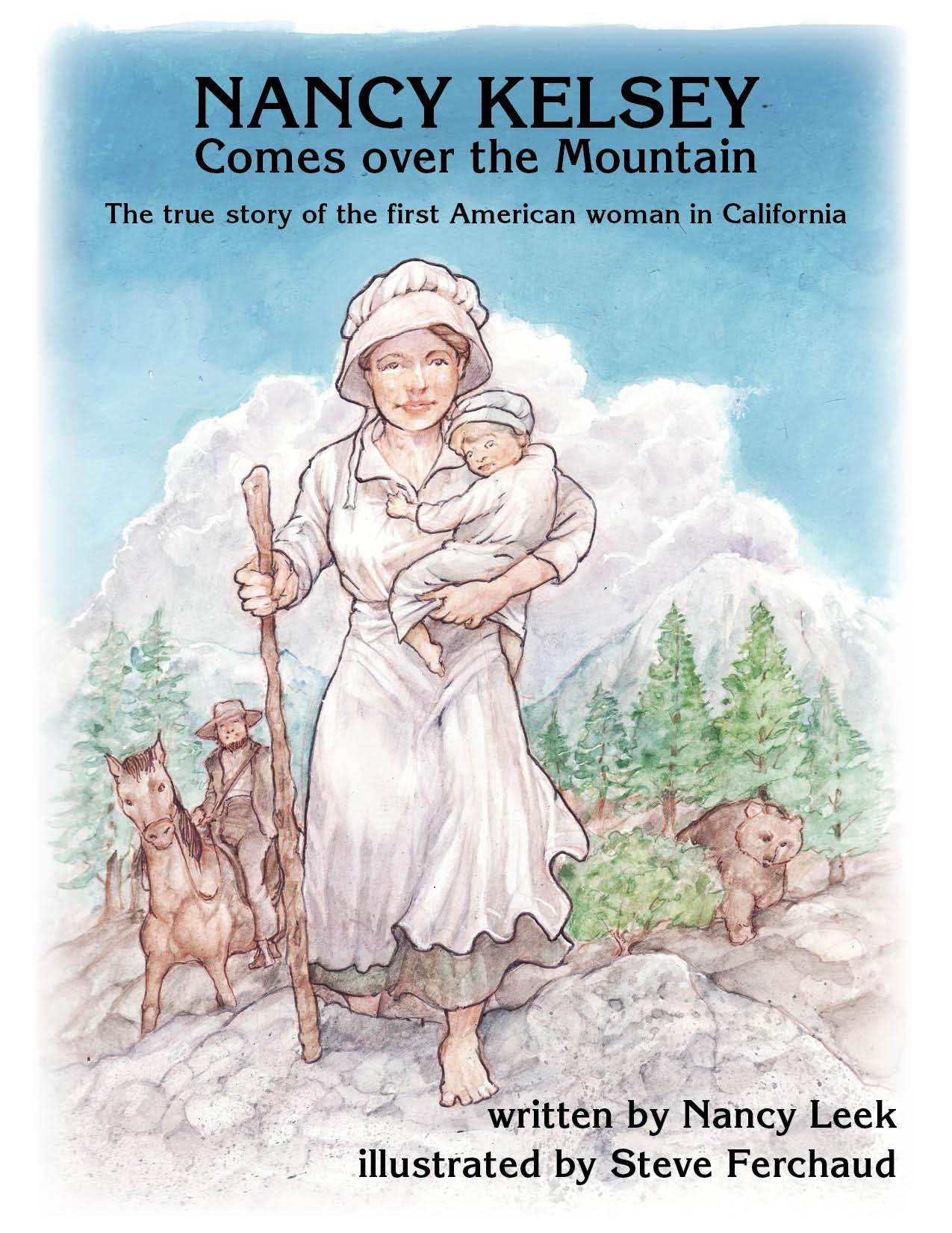
Want to meet a real pioneer woman? Meet Nancy Kelsey, a woman who could drive a team, cook over a campfire, sew a shirt, shoot and dress a deer, tan the hide and make moccasins, and anything else she needed to do.
I’ll be presenting a program about Nancy tomorrow (March 15) at 2 p.m. at the Kelly-Griggs House Museum in Red Bluff. I’d love to see you there.
Nancy came to California in 1841, the only woman in the Bidwell-Bartleson Party, the first American wagon train to set out overland for California. She came with her husband Ben and her baby girl, Martha Ann. I have written a few blog posts about her: check out Letters from Nancy Kelsey and Nancy Kelsey’s Last Years and More About Nancy Kelsey.
My grandmother used to sing this song in the car. My grandparents had migrated from cold old Rochester, New York, to sunny Southern California in the 1920s, just when this song was at the height of its popularity. They were probably singing “California, Here I Come” all the way.
Al Jolson’s recording of the song just entered the public domain. It is out of copyright so the recording can be played and the song can be recorded without seeking permission from the copyright owner. Other popular songs from 1924, like “Ain’t Misbehavin'” and “Tiptoe Through the Tulips,” are also now in the public domain.
Other works of art have a slightly shorter (although still very long) copyright term of 95 years. Quite a few famous (and not so famous) works of literature, paintings, photographs, films (talkies were new) and cartoons (early Mickey Mouse, Popeye!) are now in the public domain. To explore what’s new in public domain, or learn more about it, check out these two websites.
An ode to “the spring that obtains but one month in the year” by Bret Harte.
California Madrigal (On the Approach of Spring)
Oh, come, my beloved, from thy winter abode, From thy home on the Yuba, thy ranch overflowed; For the waters have fallen, the winter has fled, And the river once more has returned to its bed.
Oh, mark how the spring in its beauty is near! How the fences and tules once more reappear! How soft lies the mud on the banks of yon slough By the hole in the levee the waters broke through!
All nature, dear Chloris, is blooming to greet The glance of your eye and the tread of your feet; For the trails are all open, the roads are all free, And the highwayman’s whistle is heard on the lea.
Again swings the lash on the high mountain trail, And the pipe of the packer is scenting the gale; The oath and the jest ringing high o’er the plain, Where the smut is not always confined to the grain.
Once more glares the sunlight on awning and roof, Once more the red clay’s pulverized by the hoof, Once more the dust powders the ‘outsides’ with red, Once more at the station the whiskey is spread.
Then fly with me, love, ere the summer’s begun, And the mercury mounts to one hundred and one; Ere the grass now so green shall be withered and sear, In the spring that obtains but one month in the year.