Sunday, 8th. Started about noon and went ten miles; scenery grand.
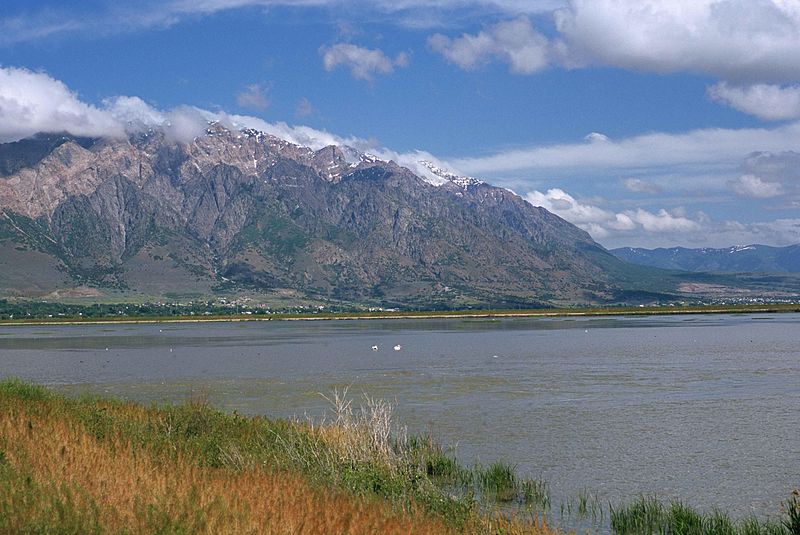
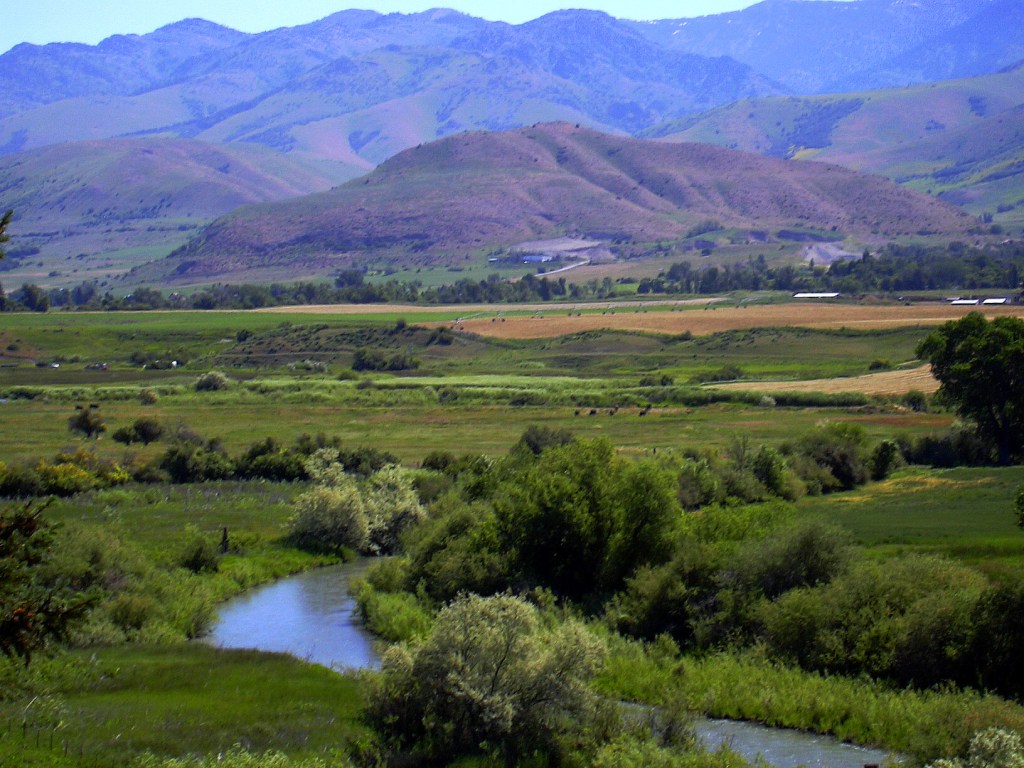
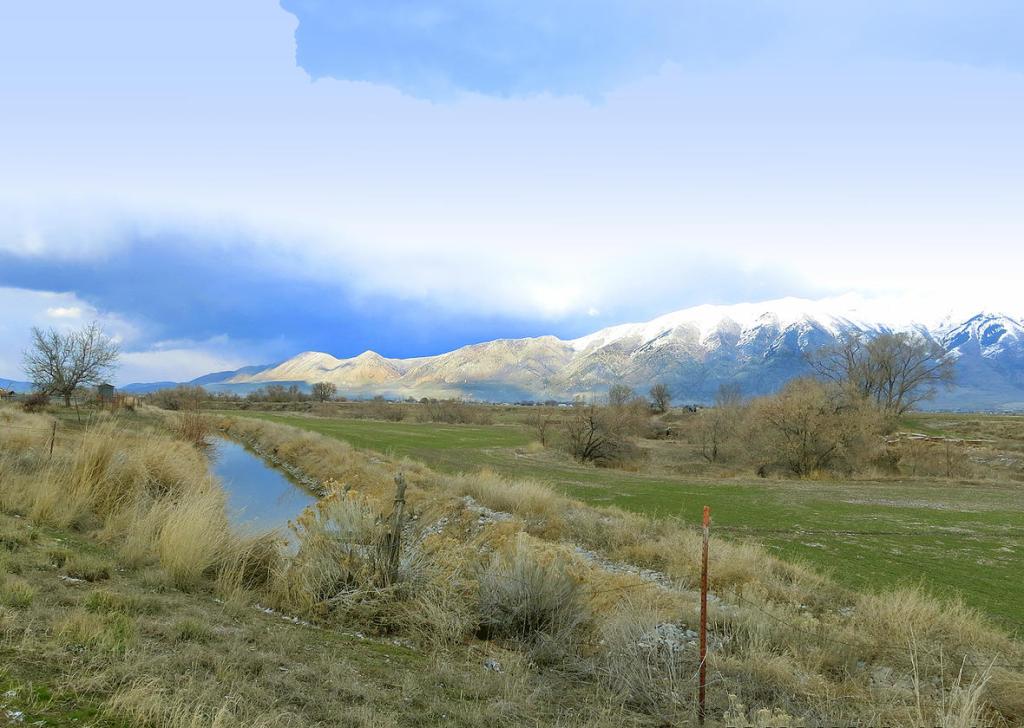
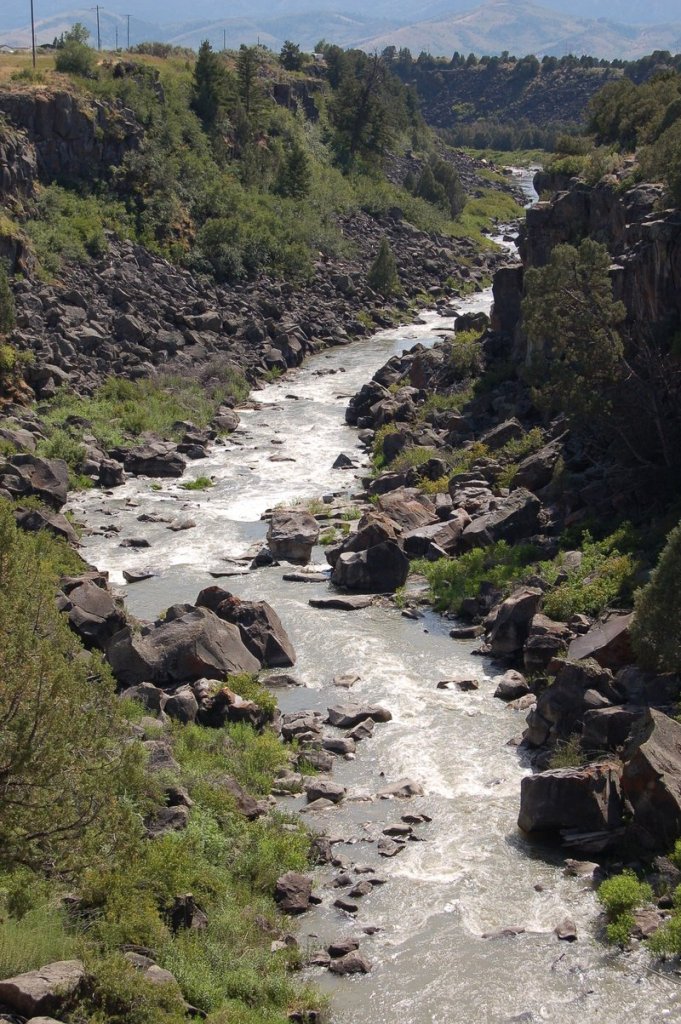
I have never traveled through the Bear River Valley, so I don’t have any pictures of my own. But here are a few gathered from around the web to give you an idea of the grand scenery that John Bidwell was enjoying.
The hills often came right down to the banks of the river, making travel along the river impossible. (See the last photo of Black Canyon.) The company would have to detour inland and around the hills, then back to the river. Jimmy John noted one such detour on the 7th:
Left the river this morning and came to it at twelve. Nooned there and left it again on account of the hills next to the river. Came to it at night and camped on its bank.
Imagine trying to get an ox-drawn wagon through the hills and back down to the river.
John Bidwell waxes poetical in the Bear River Valley:
Saturday, 7th. This morning we were obliged to make an inland circuit from the river, the bluffs approaching so near the river as to rend it impossible to continue along its banks. We, however, reached it again by a most beautiful defile, and beautifully watered by a small rivulet proceeding from a spring. In the afternoon we again left the river on account of the hills, and did not reach it again until dark. The bluffs were exceedingly high, and no person could ever believe that wagons ever passed these huge eminences of nature, did he not witness it with his own eyes. But the pleasing view we had from their top, just as the sun was going to sleep behind the western mountains, paid us for all our trouble.
A most beautiful landscape presented itself to view — the rugged summits of almost every shape were fantastically pictured upon the sky bounding the western horizon. A beautiful little lake was seen to the south, whose surface was fancifully mottled with numerous islands, while the river meandered proudly through the valley among willows and scattering cottonwoods till it disappeared among the hills in the shades of evening. Distance traveled today 16 miles.
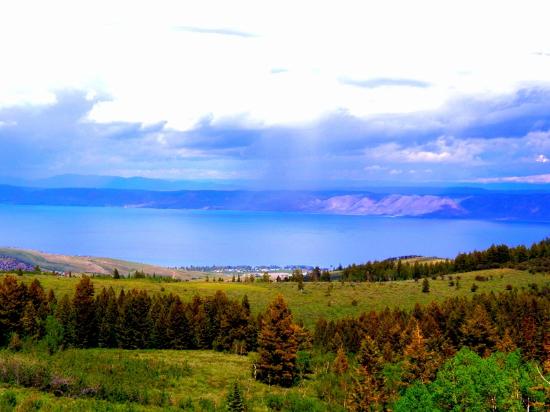
Over and over, Bidwell uses the word “beautiful” — what a refreshing sight that landscape must have been. After traveling across the arid landscape of western Wyoming, the Bear River valley was an oasis of good water, plentiful grass, and abundant game. The “beautiful little lake” which they could see to the south must have been Bear Lake, which gives us a pretty good idea of where they were on August 7th.
This photo of Bear Lake State Park is courtesy of Tripadvisor.
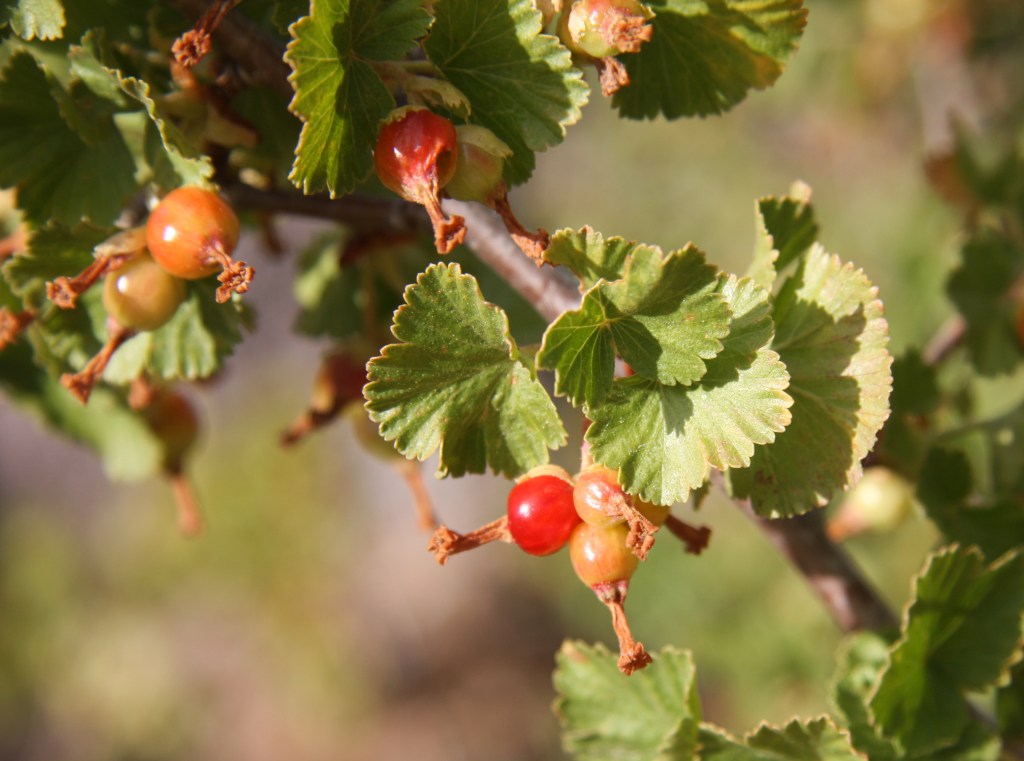
Friday, 6th. Had a fine road down the valley of the Bear river and made about 25 miles during the day. Found many kinds of wild currants, red, black, yellow, &c., some of which were of excellent quality.
John Bidwell has mentioned finding currants before. On July 26 we talked about black currants (Ribes nigrum). Another related berry found in the Rocky Mountains is wax currant (Ribes cereum) which is very small and red.
All these berries would be a welcome addition to the pioneer diet. They can be eaten raw straight from the bush or cooked into oatmeal or stew. Being high in vitamin C and other nutrients, they help prevent scurvy, a common ailment on the trail.
Thursday, 5th. Proceeded down stream about 18 miles.
“Downstream” in this case means northward. They are about to cross, or have already crossed, over into Idaho, but of course this was not yet a state.
The only reason they know where they are or what the names of the rivers are, is that they are still traveling with their trail guide, Thomas Fitzpatrick. However, his job is to lead the missionaries up into Idaho to teach the Flathead Indians. They will soon be parting ways and the Bidwell-Bartleson Party will be on their own.
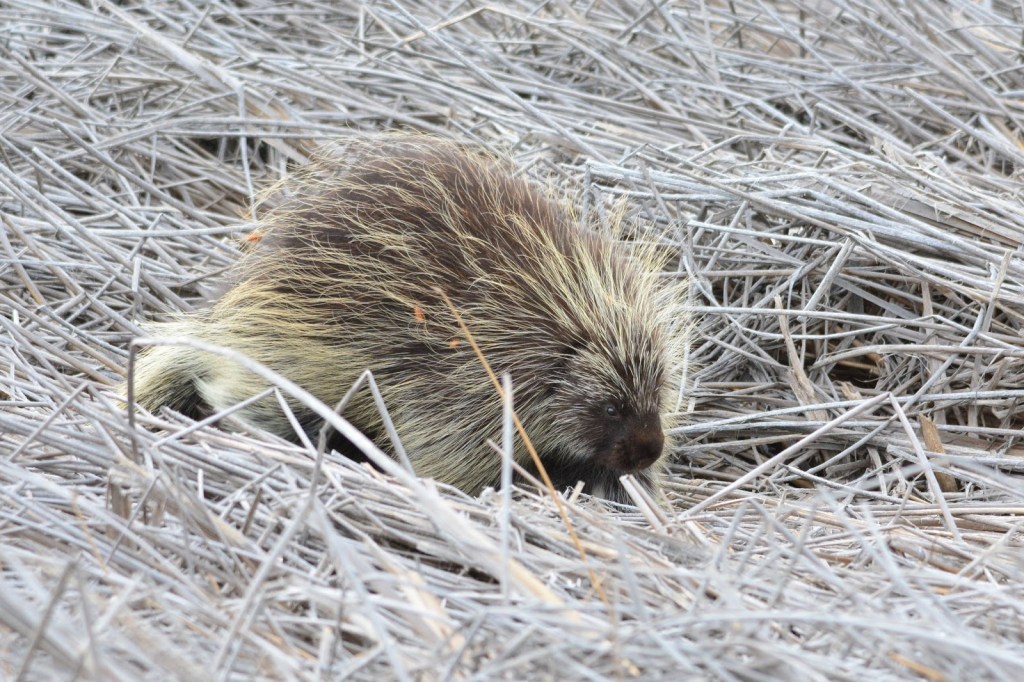
The Bear River Valley is providing them with good food. Jimmy John, in his journal, records that they caught and killed trout (“a great number”), chub, wild geese, antelope, and a porcupine.
Well, that’s succinct. They had just struggled over a high divide to get from the Green River to the Bear River. They had come to a valley with water and grass for the livestock. It was a good place to take a break and “recruit” the animals. (This use of “recruit” as in revive or replenish is often found in pioneer accounts.)
Jimmy John, in his journal, had more to say.
Today we did not move from the camp, but lay by and caught a good number of trout, some of which were 18 inches in length. There is a great number wild geese here and other fowls, and antelopes.
Bear River Valley.Photo taken by Charles R. Savage in 1869
Tuesday, 3rd. Ascended a high divide and passed down by a most difficult route into the valley of the Bear river. The course of this stream was marked out as it wound its way through the vale by the willows that skirted its banks. Reached the river, where we found abundance of grass, having come about 20 miles.
An abundance of grass was always welcome. Jimmy John reported trout in the river as well.
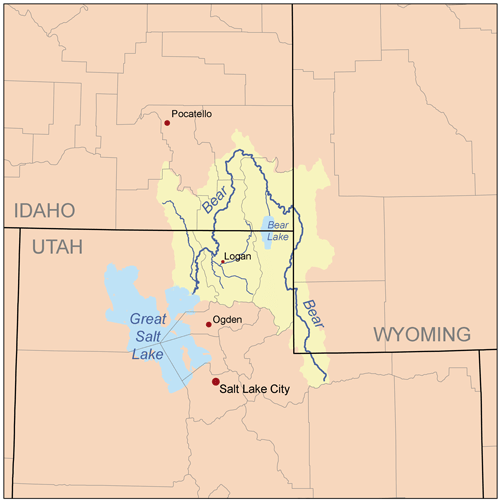
The Bear River begins and ends in Utah, where it empties into the Great Salt Lake, but along its winding U-shaped course it wanders through three states: Utah, Wyoming, and Idaho. At 500 miles long, it is the longest river in the United States that does not empty into an ocean.
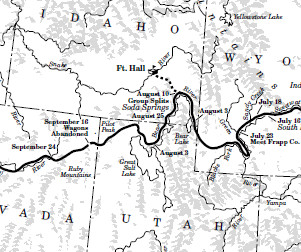
At this point on their journey, the Bidwell-Bartleson Party has come to the Bear River close to where the three states meet.
Monday, 2nd. Retraced about 2 miles of yesterday’s travel, and went up another defile, in order to find a practicable route across the divide between the waters of the Green and Bear rivers; plenty of grass, good spring water, distance 11 miles.
According to the Uintas County, Wyoming website, “The Bear River is the world’s longest river that does not flow into an ocean. The river starts in the High Uintas of Utah, flows through Wyoming, Idaho and Utah before finally ends up in the Great Salt Lake. It is 515 miles-long, though it final destination is less than 100 miles from its headwaters.”
On this map they are about halfway between Black’s Fork and Bear Lake.
Sunday, August 1. Ascended Black’s fork about 12 miles.
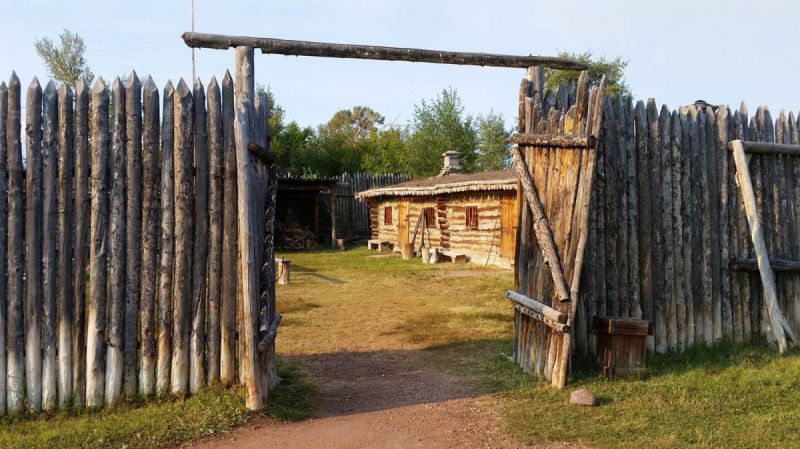
They are now in the present-day southwest corner of Wyoming, near the border with Utah. Black’s Fork is a 175 mile-long tributary of the Green River. It was here in 1843, two years later, that Jim Bridger and Luis Vasquez would establish a trading post. It was an important resting and meeting place on the Oregon-California-Mormon-Pony Express trail, but it was not there yet for the Bidwell-Bartleson Party.
For more about Fort Bridger, visit Fort Bridger State Historic Site. (Which I have always meant to do while traveling cross-country, but I haven’t got there yet.)
Replica of Bridger’s trading post at Fort Bridger State Historic Site.
Saturday, 31st. Left Ham’s fork this morning. A distance of 14 miles, over an uncommonly hilly road, took us to Black’s fork of Green river, on which we encamped. Here we found a little grass and no wood. The hills, which everywhere rose to view, were thinly clad with shrubby cedars. The fruit found in this lonesome part of creation — serviceberries on the mts. and currants on the streams. In the afternoon we descried a large smoke rising from beyond the intervening chain of hills. From this and other signs we were assured that there were plenty of Indians in the country. It was necessary therefore to keep a vigilant look-out, lest the Blackfeet should leave us minus a few horses.
The serviceberry (amelanchier) is a delicious and highly nutritious native of North America, also known as shadbush, shadblow, saskatoon, and juneberry. The berries are dark purple when ripe. Native Americans used dried serviceberries in pemmican. For more about serviceberries, check out this article at the Backyard Forager.
Friday, 30th. Traveled about 5 miles and encamped. Guess what took place; another family was created! Widow Gray, who was a sister to Mrs. Kelsey, was married to a man who joined our Company at Fort Larimie. His right name I forget; but his everywhere name, in the mountains, was Cocrum. He had but one eye — marriage ceremony performed by Father De Smet.
I like the idea of an “everywhere name,” although how the man got that nickname is anyone’s guess. Jimmy John called him Cockrel; his real name was Richard Phelan. He was a fur trapper who joined the wagon train at Fort Laramie. Unattached women were in short supply in the West at that time, so maybe the Widow Gray looked like a likely prospect for a single man.
We don’t know Mrs. Gray’s first name, only that she was the sister of Lucy (Mrs. Samuel) Kelsey and had a young child with her. It’s likely that she was in her twenties; not as old as “Widow Gray” sounds.
Phelan gave up trapping and continued on to Oregon with the half of the party that took the safer route, and with his wife settled down to farming in Oregon.



 goldfields