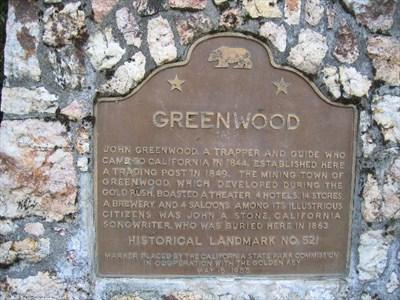
A Lady Book Agent

Here we are, halfway through the month of March, Women’s History Month, and I have written nothing on women in California. I’ve been very busy with other projects — several presentations (Chico History Museum on March 29 is the next one) and a book I am revising. But in honor of Women’s History Month I will go back a few years and repost a series I did on Amy Likins. It’s one of my favorites! Here you go——

If you were a respectable married woman in 1868 in San Francisco, and you needed to find work, what could you do?

Most women who had to work ran boardinghouses and cooked and cleaned for a living. Many women worked as seamstresses, dressmakers and milliners. Teaching school was another possibility, but unmarried women were preferred for that job.

Mrs. J. W. Likins found herself in just this quandary in the summer of 1868. She and her husband and daughter had come to California that spring, and soon Mr. Likins found work with the railroad as a baggage handler. Disaster struck when their hotel caught on fire (a common occurrence in young San Francisco) and they lost everything but their lives and Polly the parrot. Then Mr. Likins became ill, and soon they were in dire want.

AUGUST 11th, 1868.
Now begins the one great struggle of my life. I scarcely know where to turn or what to do. As I look around the room, I see nothing but want and poverty on every hand. Something must be done to get out of this place. Bidding my dear ones keep up courage, I start out. Never before did I know the meaning of the word poverty. Now I felt it in all its keenest pangs—everything looked dark and cloudy. I started for the Post-office. Not being able to pay car hire, I went on foot.

On my way I passed the book-store of H. H. Bancroft, then on the corner of Montgomery and Merchant streets. In the window I noticed a card, with the words “Agents Wanted” on it. Stepping into the store a gentlemen advanced to meet me. I asked him “Do you employ ladies agents?” “Yes”, he replied, “allow me to take you to the Subscription Department.”

And so began Mrs. Likins employment as a lady book agent. She was given an engraving of “Grant and His Family” and an order book, and told to go out and get orders for the print. Although she says that “It was a great trial for me to know just how to approach them,” she pressed on, talking to men on the street and in offices, and ladies in their homes.

Taking them on my arm, order-book in my hand, I started up Montgomery street, calling on one and all, up stairs and down, in every room. Some looked at me curiously, others with pity, and some few with contempt, while I endeavored, in my embarrassment, and in an awkward way, to show the picture.

I admire the courage of Mrs. Likins. Selling anything is hard work, and she had never sold anything before in her life. But she pressed on, in spite of her fears and embarrassment, and became quite good at her job. And she was able to support her family.

I came across her account in a book called So Much to Be Done: Women Settlers on the Mining and Ranching Frontier (University of Nebraska Press, 1990). The excerpt in this book is taken from Six years experience as a book agent in California, including my trip from New York to San Francisco via Nicaragua, by Mrs. J.W. Likins, published in San Francisco in 1874. If you would like to read the complete book, you can download it from the Library of Congress.

She never mentions her first name, but if the 1870 census is to be trusted, she was Amy Likins, married to James, with a daughter Lucy, and in 1868, when she began her book-selling career, she was 37 years old.

Posted in Uncategorized | 1 Comment

Nancy Kelsey at Kelly-Griggs House

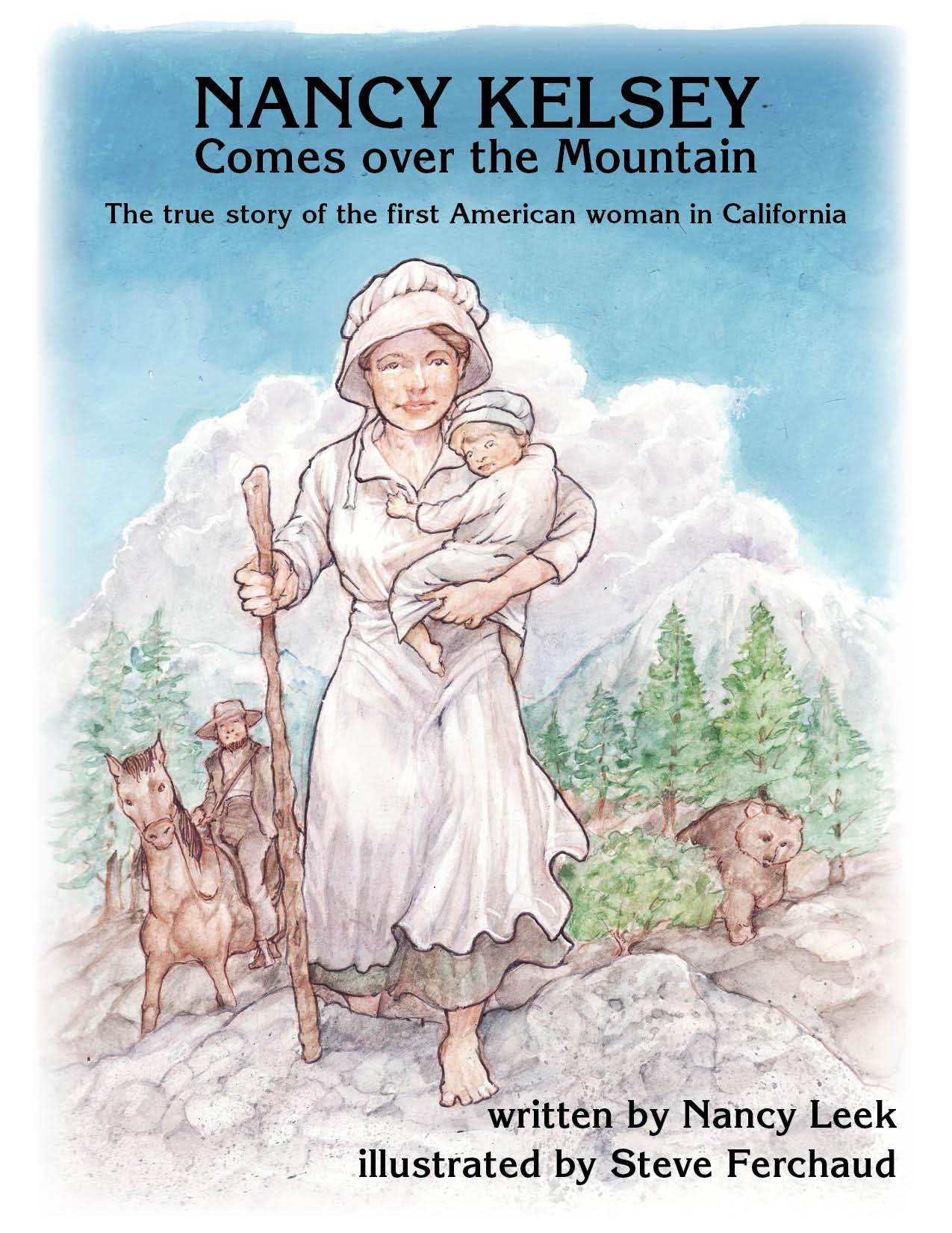
Want to meet a real pioneer woman? Meet Nancy Kelsey, a woman who could drive a team, cook over a campfire, sew a shirt, shoot and dress a deer, tan the hide and make moccasins, and anything else she needed to do.

I’ll be presenting a program about Nancy tomorrow (March 15) at 2 p.m. at the Kelly-Griggs House Museum in Red Bluff. I’d love to see you there.

Nancy came to California in 1841, the only woman in the Bidwell-Bartleson Party, the first American wagon train to set out overland for California. She came with her husband Ben and her baby girl, Martha Ann. I have written a few blog posts about her: check out Letters from Nancy Kelsey and Nancy Kelsey’s Last Years and More About Nancy Kelsey.

Happy Women’s History Month!

Posted in Uncategorized | Leave a comment

California, Here I Come!

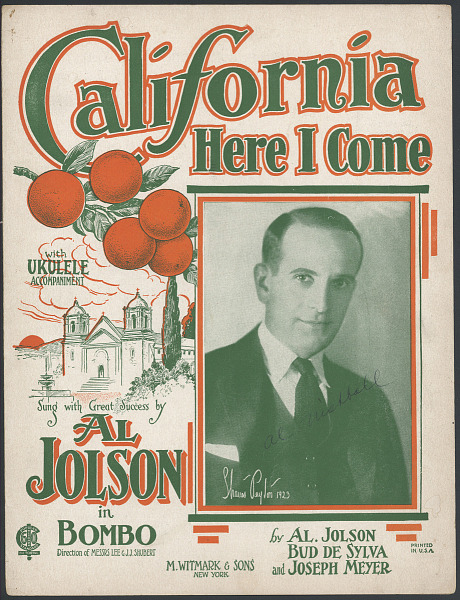
My grandmother used to sing this song in the car. My grandparents had migrated from cold old Rochester, New York, to sunny Southern California in the 1920s, just when this song was at the height of its popularity. They were probably singing “California, Here I Come” all the way.

Al Jolson’s recording of the song just entered the public domain. It is out of copyright so the recording can be played and the song can be recorded without seeking permission from the copyright owner. Other popular songs from 1924, like “Ain’t Misbehavin'” and “Tiptoe Through the Tulips,” are also now in the public domain.

Listen here to Al Jolson singing “California, Here I Come.” https://www.loc.gov/item/jukebox-69143/

Sheet music. 1984.0458.08.

Other works of art have a slightly shorter (although still very long) copyright term of 95 years. Quite a few famous (and not so famous) works of literature, paintings, photographs, films (talkies were new) and cartoons (early Mickey Mouse, Popeye!) are now in the public domain. To explore what’s new in public domain, or learn more about it, check out these two websites.

Public Domain Day at Yale Law

Internet Archive on Public Domain Day

Posted in Uncategorized | Leave a comment

Ode to Spring

Chico Creek Canyon in the Spring

An ode to “the spring that obtains but one month in the year” by Bret Harte.

California Madrigal (On the Approach of Spring)

Oh, come, my beloved, from thy winter abode,
From thy home on the Yuba, thy ranch overflowed;
For the waters have fallen, the winter has fled,
And the river once more has returned to its bed.

Oh, mark how the spring in its beauty is near!
How the fences and tules once more reappear!
How soft lies the mud on the banks of yon slough
By the hole in the levee the waters broke through!

All nature, dear Chloris, is blooming to greet
The glance of your eye and the tread of your feet;
For the trails are all open, the roads are all free,
And the highwayman’s whistle is heard on the lea.

Again swings the lash on the high mountain trail,
And the pipe of the packer is scenting the gale;
The oath and the jest ringing high o’er the plain,
Where the smut is not always confined to the grain.

Once more glares the sunlight on awning and roof,
Once more the red clay’s pulverized by the hoof,
Once more the dust powders the ‘outsides’ with red,
Once more at the station the whiskey is spread.

Then fly with me, love, ere the summer’s begun,
And the mercury mounts to one hundred and one;
Ere the grass now so green shall be withered and sear,
In the spring that obtains but one month in the year.

Posted in Uncategorized | Leave a comment

Reuben — The Rest of His Story

On January 29th, 1851, George Murrell wrote from Long Bar on the American River:

My Provision speculation this winter did not come up to my expectation. And I had to be very industrious with my mules to save myself. I still have about 700 lbs. of flour on hand & that article has depreciated up here some $10.00 on the hundred.

I will soon get clear of it all however, for I have up a Bake oven & Reub has learned to be a very good Baker. I can sell the bread when I cant sell the flour as the miners here dont love to cooke.

Looks like once again George has overestimated his ability to earn and Reuben is the one bringing in the money.

Two weeks later George began a new venture, after relocating to Greenwood.

I have opened a boarding house on Long Bar on my own hook. Reub is cook. I have 10 boarders to start with at an ounce a week, and think it will not be long untill a No [number] of others will board with me. I am also carrying on mineing. I work like a white hand myself & have two hands hired at $4.00 per day & I board them. My claim is paying me from $6.00 to $10.00 per day to the hand.

This might be a good going concern, until . .

On April 13th, 1851 George writes that “Reub is well & wishes to come home next fall, money or no money,” but soon disaster struck. A month went by and on May 21st he wrote:

I have not recovered Reuben’s body yet & entertain but little hope of doing so.

Somewhere between the two dates Reuben drowned in the American River and we can only surmise that George reported this in a previous letter. The footnote to this letter says:

One day George Murrell, Reuben, and Henry Augustus Perkins were carried away by the strong current of the Middle Fork of the American River. George Murrell survived, but the two other men drowned. [p.222]

Mr. Perkins left behind a wife and two small children in Salem, Massachusetts. Reuben too had a family: parents, siblings, perhaps a wife, but we know nothing of them.

Reuben’s body was recovered a few days later, while George was gone packing provisions to another camp. “When I got back home I learned that in my absence my friends had found the body of Reuben about 1 mile below here, taken him out & given him a decent burial.”

George Murrell would return to Kentucky in 1854, but Reuben stayed forever in California, buried near the American River, his golden dreams of home and freedom earned, unfulfilled.

Posted in Uncategorized | Leave a comment

Reuben at Work

Sacramento citty / October 4th, 1849

Master Sam– I take the pains to write you a few lines & wish to hear you are well & doing well. There is no time for dogeing [dodging] now. We expect to go to work in a few days & make something & get back as soon as we possibly can for I dont think this country is near as good as Old Ky. We are here now, and it is, root little hog or die. —Rheubin Murrell [dictated to George Murrell]

George and Reuben were still in Sacramento eleven days later. They were delayed in going to the mines, first by the sickness of George’s partner, Mr. Hackley, and then by the illness of George himself. But “Rheubin is in fine health & employed in the boarding house that I am at. He more than pays my board though that is $4 a day.” George was lucky to have Reuben to support him.

Winter was approaching and the season for mining was over by the time they got to Georgetown. George wrote:

This winter, oweing to the inclemency of the season, I spend my time in reading & writeing. Rheubin is engaged in washing clothes when the weather is fair enough to dry them. He gets $6.00 per dozen. But they are so dirty & soap is so high (It being $1.00 per pound) that he cant make a great deal at it.

I think you can see a pattern appearing here. In April he wrote:

I now have on hand about $20.00 in cash, 4 months provisions, a complete set of mining implements for two persons worth about $80.00. And Rheubin set in as a cook for an eating house this morning for $10.00 a day just as long as I am willing to let him stay.

So George is all ready to go mining, but Reuben is the one who is actually working and earning money. Black cooks were in demand and it was typical of slaveowners to hire out an enslaved person as a cook. George does some prospecting and finds a claim he likes on the “South Branch of the North Fork of the American river’ but the water is too high to work the stream. It won’t be until late July that they can get to mining. In the meantime, Reuben is still working as a cook and has learned to make “spruce beer”, which George drinks instead of milk.

White and black miners working together. From the Center for Sacramento History.

By mid-July George and Reuben are both working the claim and making a few dollars a day, but not the fortune they anticipated. In August they moved on to “Long Bar, Middle Fork of the American River,” where Reuben “has been here two weeks & made about $100 clear” probably as a cook, and George has hopes of averaging $8.00 a day at mining. That would be a half ounce of gold a day. A week later he writes:

I have Rheube hired out at $10.00 a day. And foolish I was that I did not have him hired all the time, I might have been a great deal better off. $10.00 a day is big wages & but few hands can get it now. Although at one time it was considered low & but few men could be employed at it. At present some of the new comes willingly work for their board & seem glad to get that.

Reuben is making a steady $10 a day, while George is at best finding $8 a day, and likely less. Several times George invested what money he had in mining schemes, but these rarely paid off. He tried packing goods to the mines, but met with more reverses. To his friend Sandy Gossum, but not to his parents, he wrote:

I have lost within the last 3 weeks some $800.00, independent of some two thousand or upwards during last spring & summer. When writeing home, I seldom ever speak about these things, for it would only tend to create an anxiety among my friends . . .

My last losses arose from the following causes. One man oweing me $400 for provisions left for parts unknown with a pocket full of money. All who knew him deemed him honest. Some rascals stole a couple of my best mules worth $300. and another scamp stole one hundred dollars out of my purse.

Clearly, George Murrell is not a man cut out for business, while Reuben is a hard worker who is supporting them both. It was not an unusual situation in Gold Rush California.

Posted in Black History Month, Uncategorized | Leave a comment

Reuben

In the spring of 1849 George Murrell, the son of a well-to-do farming family near Bowling Green, Kentucky, joined the great overland trek to the land of gold. Like all forty-niners, George had high hopes of getting rich. George took with him an enslaved man, Reuben. (Or as George usually spelled it “Rheubin.” But I’ll stick with the more conventional spelling.)

George’s letters home have been brought together in a book: “There is More in Luck than Work”: The Letters of a Young Kentuckian in the California Gold Rush (1849-1854), edited by Juliette Bourdin. Murrell’s letters, donated by a descendant, now reside in the Huntington Library. I have to thank my friend Josie Reichschneider Smith for loaning me the book. She reviewed it for the Fall 2024 issue of the Overland Journal.

The book contains sixty-seven letters, written on the overland trail and during George’s five-year stay in Placer and El Dorado Counties. Like many a miner far from home, George was lonesome for the old folks at home, and wrote long heart-felt letters to his parents, sisters, and friends, describing the climate and scenery, mining techniques, food, and high prices.

Reuben missed his friends and family too, and the book includes letters that he dictated for inclusion with George’s letters. Here is the first paragraph of a letter addressed to his brother.

Brother Sam: I take pleasure in writing to you. And let you all know that I have arrived safely in California & am now at Sacramento citty, where we will remain a few days & then go to the diggens. We got to the first mines several days ago. I dug a few days & made fifteen dollars although the mines are not considered rich at thta place. In the trip out here I have enjoyed myself, had fine health, have been in good spirits & am yet in good spirits, & think that we will have luck & make a raise & then come back home again.

All we learn of Reuben is through his master’s eyes and words. George calls him “faithful, industrious, obedient, & kind” and says “Rheub is of great help to me in everything.” In George’s mind, they shared a close bond of friendship and affection.

We can’t really know Reuben’s heart and mind, but his hopes can be deduced. As George wrote to his father, “Rheubin says that there is no country like home but he would not be satisfied to return without makeing some money. He has great confidence that he is going to be lucky, & I tell you a great deal depends upon luck.” George may have made a promise of freedom or some other reward to Reuben.

Rheubin is well & is very desirous to accumulate money, he will be true to me while we stay here & accompany me home in spite of the abolitionist who have been tampering with him. He expects his master will do something great for him when he returns.

It was typical of forty-niners from the Southern states to bring a slave with them, to do the hard labor of mining, to do domestic chores, or to be hired out. Rarely did slaveowners bring more than one or two enslaved persons. Promises were often made, sometimes kept and sometimes broken, (as Alvin Coffey learned.) Some Northerners (not all were abolitionists) would try to persuade slaves to seek their freedom.

Without letters freely written by Reuben, we can’t know what his expectations were, or how he truly felt. But it seems that he hoped to make enough money to improve his lot, and he looked forward to going home and being with his family again.

Next time: Reuben at Work

Posted in Uncategorized | Leave a comment

Three California Paintings

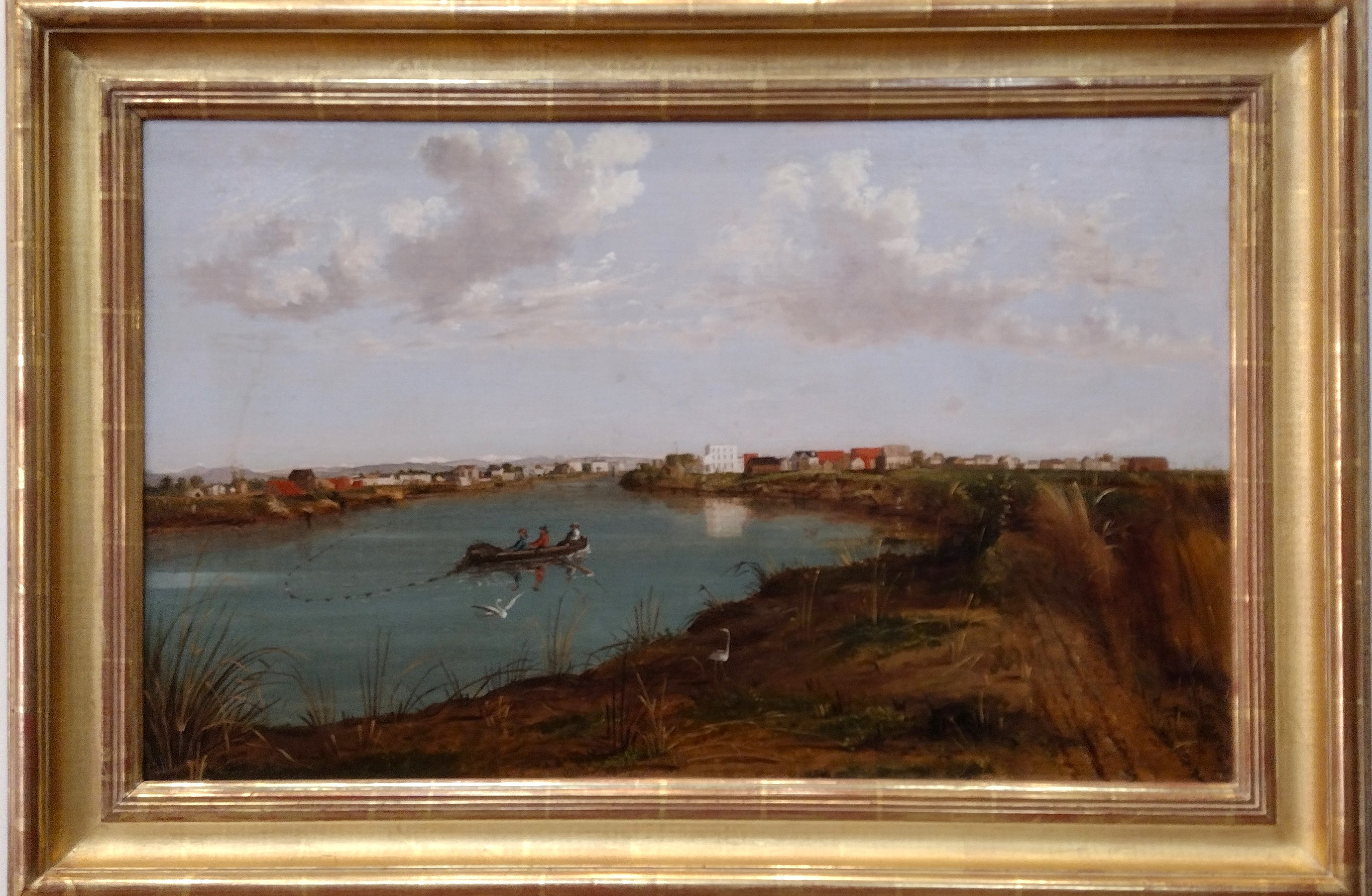
Untitled view of Stockton Channel by Albertus Del Orient Browere

Hidden away in a back gallery at the Haggin Museum in Stockton are three genre paintings of everyday life in early California. The prominent galleries at the front of the Haggin Museum hold an impressive collection of European (mostly French) and American art collected by the wealthy Haggin and McKee families. Some familiar names among the artists are Rosa Bonheur, Pierre-Auguste Renoir, and Albert Bierstadt. But it is the California paintings by lesser known names that I want to highlight here.

The label for the painting of Stockton reads:

Completed in 1858 by Albertus Del Orient Browere for a sketch he made of the town in 1854, this painting depicts Stockton as viewed from the south bank of the Channel looking east. Charles Weber’s home, the St. Charles Hotel, and the City Brewery are all identifiable in this view of Gold Rush Stockton.

Three fishermen in a rowboat and two egrets are in the foreground, while small buildings line the channel behind them. Stockton was the jumping-off point for the southern mines of the Mother Lode. I am guessing that the large white building is the hotel. And isn’t Albertus Del Orient Browere an impressive name!

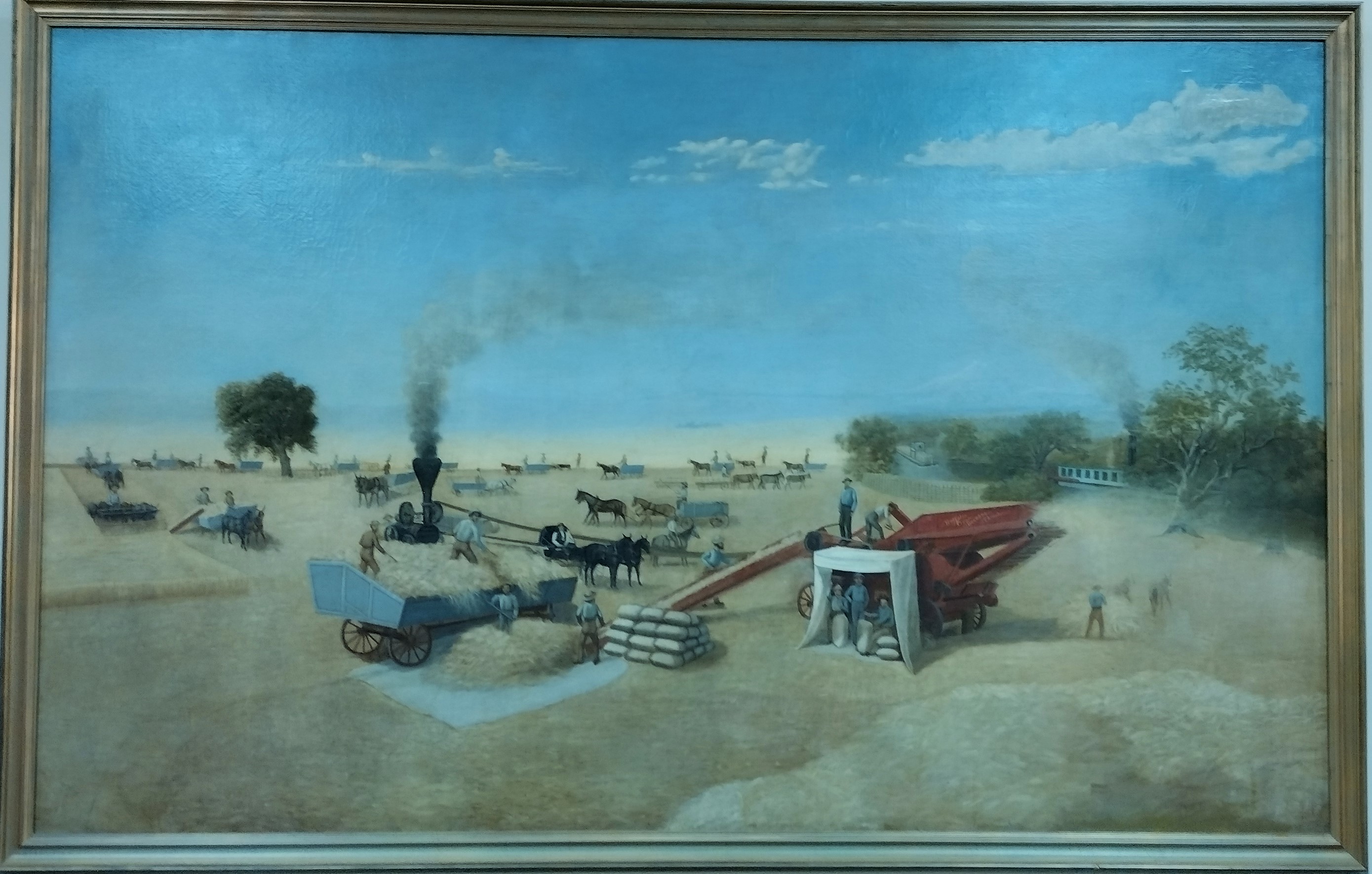
Harvesting Wheat by Andrew Putnam

This painting (1875-1876) depicts a scene on the ranch of Dr. Hugh J. Glenn, for whom Glenn County is named. Dr. Glenn’s holding were huge, 55,000 acres. He had 6000 acres dedicated to growing wheat, earning him the nickname of the “Wheat King of California.” He was also prominent in politics. In the painting you can see the Sacramento River and two steamboats on the right, and faintly in the distance, Mt. Shasta. What looks like a locomotive is a steam engine for driving the thresher. I like the little tent, giving just three men a bit of shade in the hot sunshine. The man in the carriage may be Dr. Glenn himself.

The third painting, by Eugene Camerer, is my favorite because so much is going on in it.

Mike Schur’s Freighting Outfit (1858) by Eugene Camerer

The three men relaxing in the foreground are watching two other men trying to lift a wheel caught in a stream, while the driver and his assistant urge the six mules forward. The over-loaded wagon is burdened with shovels, a keg of something undoubtedly alcoholic, and a variety of heavy boxes. It reminds me of the adventures of Ed McIlhaney, who had a mule-packing outfit (but no wagon) taking good to the mines. On one trip his first mule was loaded with “twenty gallons of whisky in two ten-gallon kegs each.” The other five mules were loaded with “250 pounds each of sugar, coffee, bacon, rice, and potatoes” and a few other items. His most memorable trip involved packing a billiard table to Rich Bar.

So there you have it, from the Haggin Museum, a little look into life in 19th century California.

Posted in Uncategorized | Leave a comment

A Visit to the Bancroft Library

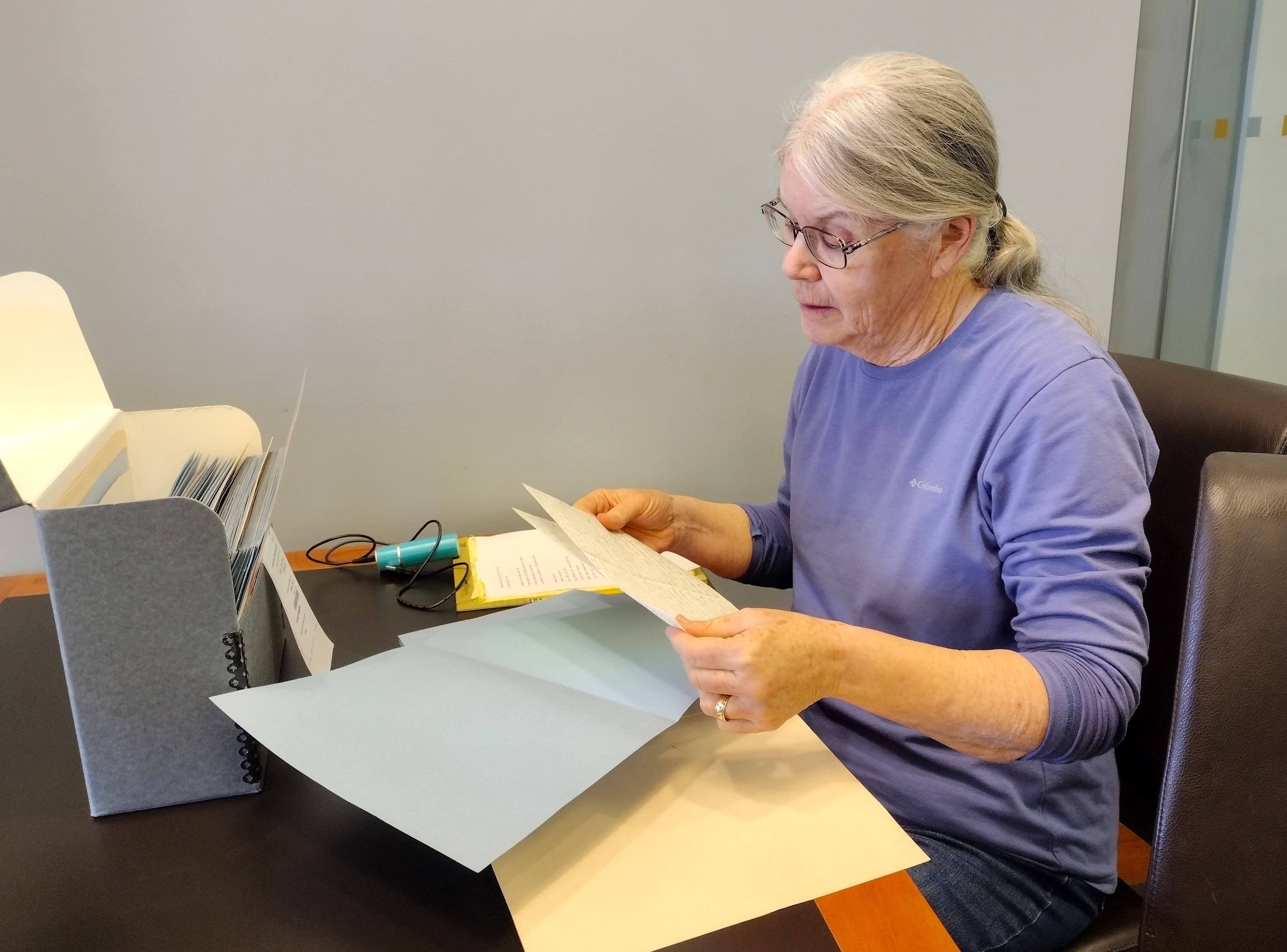
It’s a happy day when I can spend a few hours reading old papers in the Bancroft Library. To me there is nothing that can compare to holding authentic original letters and manuscripts from days long past. On Thursday I got to spend the day at the Bancroft, looking through several boxes of the Bidwell Family Papers.

I have a special affection for the Bancroft Library. When I was a student (many, many years ago) at UC Berkeley, I got a work-study job in the library, and I was lucky enough to be assigned to the manuscript division of the Bancroft, down in the basement, where I sorted and labeled and organized collections of minor figures in California history.

The Bancroft is the primary special-collections library of the University of California, Berkeley. It holds a vast collection of books and manuscripts on the history of California and western North America. Added to that are a rare books collection of medieval manuscripts and early printed books, Egyptian papyri, the Mark Twain Papers, and the papers of other famous California writers. What a treasure house!

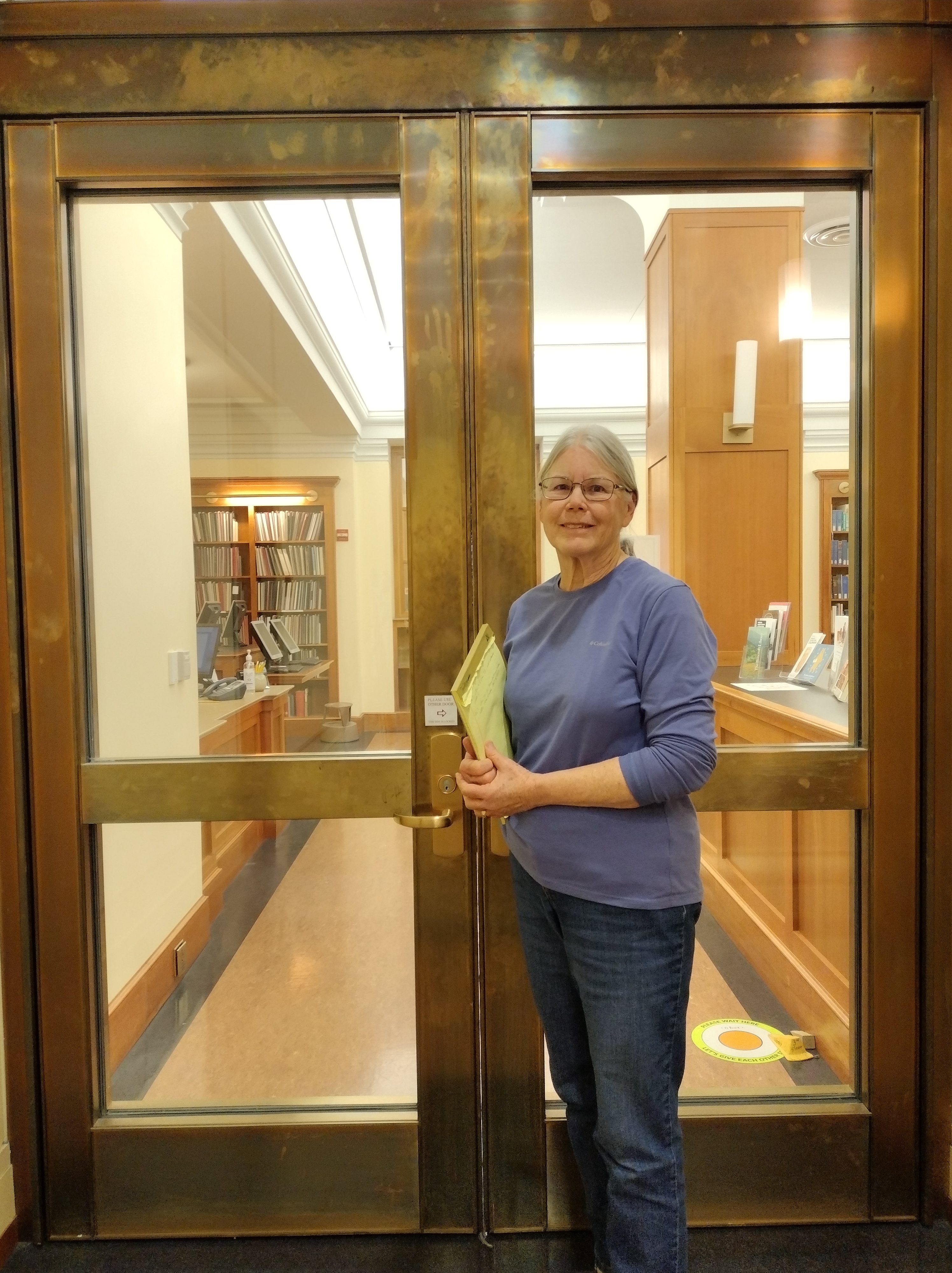
A librarian in her natural habitat.

If you would like to do some research at the Bancroft Library, you can. Take a look at their website. Everything you need to know is there. Nothing in the library can be checked out — everything must be consulted inside the library — and you must register before using the library. You have to make an appointment and request the materials that you want to look at a week ahead of time. Some materials are stored off-site and have to be retrieved. Plan ahead.

And then you walk in, show your ID, get a little green slip of paper with your name, and sit down in a beautiful reading room. The librarian will bring your materials to you and you are on your way down the research road.

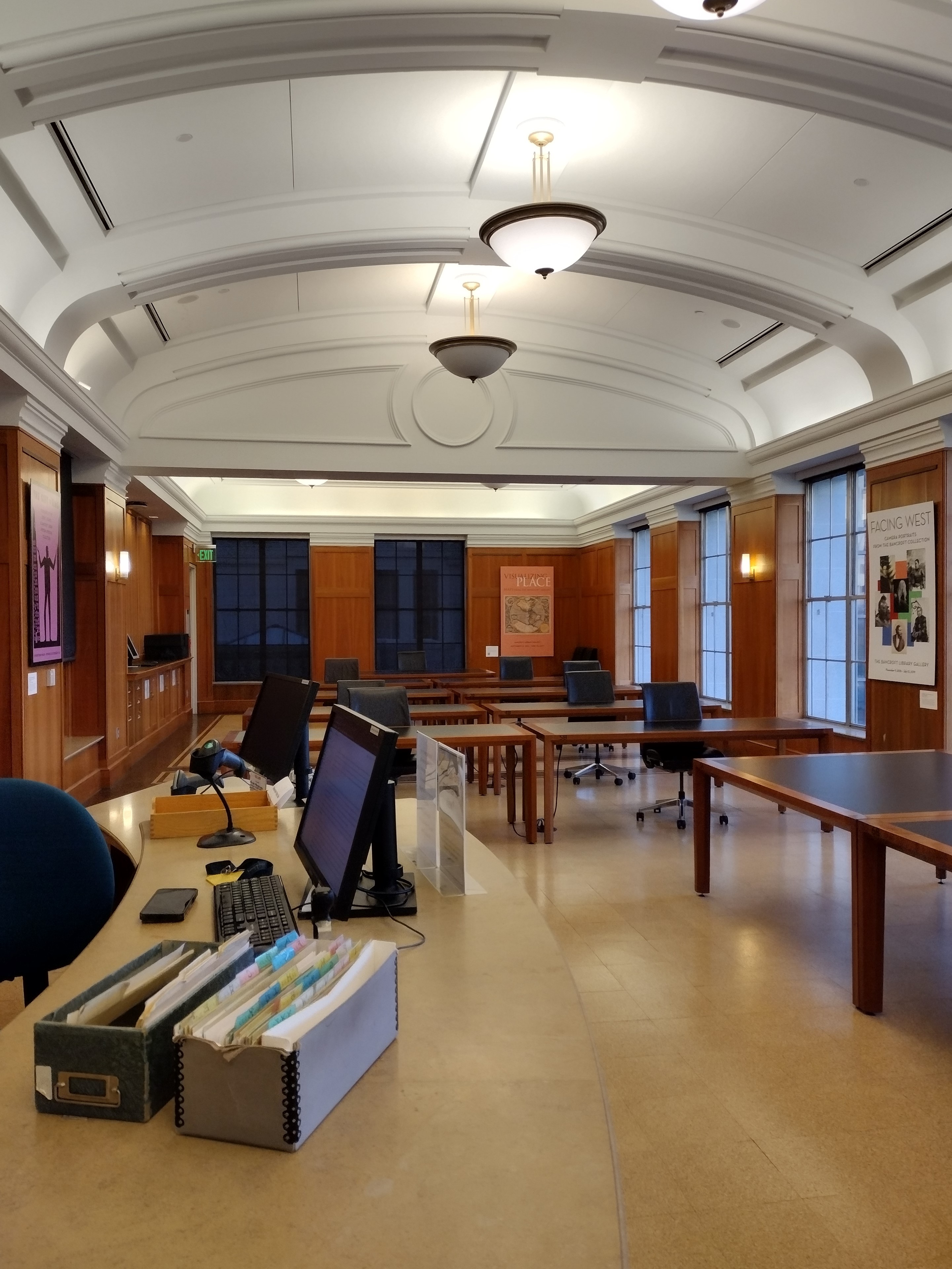
The reading room with no one in it because it was the end of the day.

Posted in Bancroft Library, Uncategorized | 1 Comment

Upcoming Presentations

I have several talks and presentations to give in the coming months. A couple of them don’t have dates yet, but I’ve got plans.

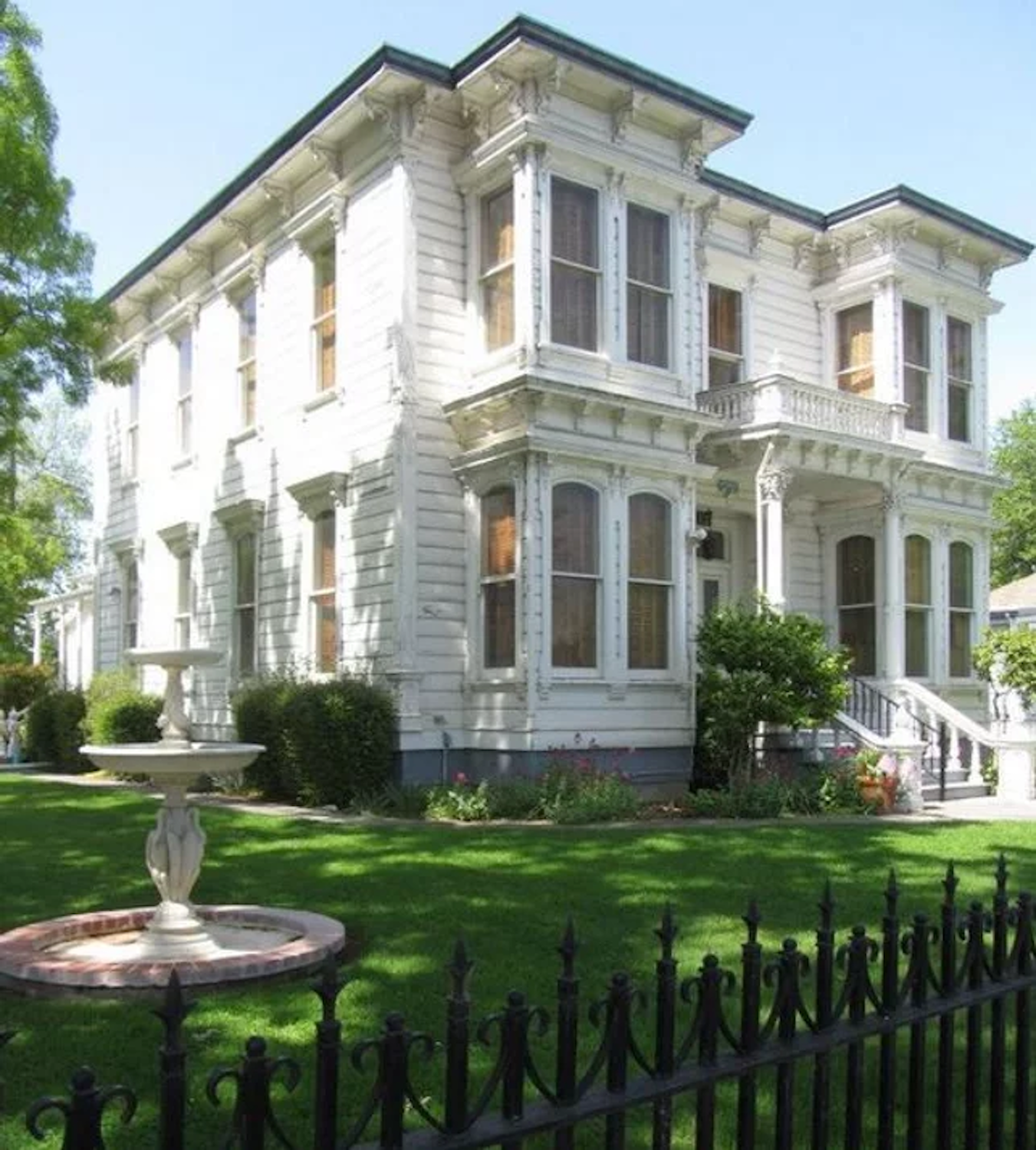
Kelly-Griggs House Museum

First up is a talk at Kelly-Griggs House in Red Bluff on Saturday, January 18, at 2 p.m. It’s always a pleasure to visit Kelly-Griggs and I am looking forward to it. I’ll be talking about John and Annie Bidwell, and I will include a brief update on the Mansion fire. The lives of the Bidwells was so much more than gracious living in a Victorian mansion. Come and find out how they influenced progressive causes of their day, like diversified agriculture, environmental protection, women’s rights, and Indian welfare.

In February I will be speaking at the DAR dedication of a plaque in honor of Annie Bidwell, a proud daughter of the American Revolution. The plaque will eventually be placed on the grounds of Bidwell Mansion State Historic Park, but since that is not possible at this time, the dedication will take place at the local DAR chapter meeting on Saturday, February 15, at 10 a.m. at the Veterans Memorial Hall in Chico.

Also in February, I will be giving a talk about Alvin Coffey at the Vallejo Naval & Historical Museum for Black History Month. I have never been there, so I am curious to visit a new museum. The date is Saturday, February 22, and the event starts at noon. My talk is part of an exhibit and fund-raiser for the James & Ursula Williams Family Fund, which supports education in Vallejo.

Then in March it’s back to Kelly-Griggs for a presentation on Nancy Kelsey. Date to be announced. And sometime in the spring I will be doing another Bidwell presentation at the Chico History Museum.

Whew!

Posted in Uncategorized | Leave a comment