A Visit to the Sutter County Museum

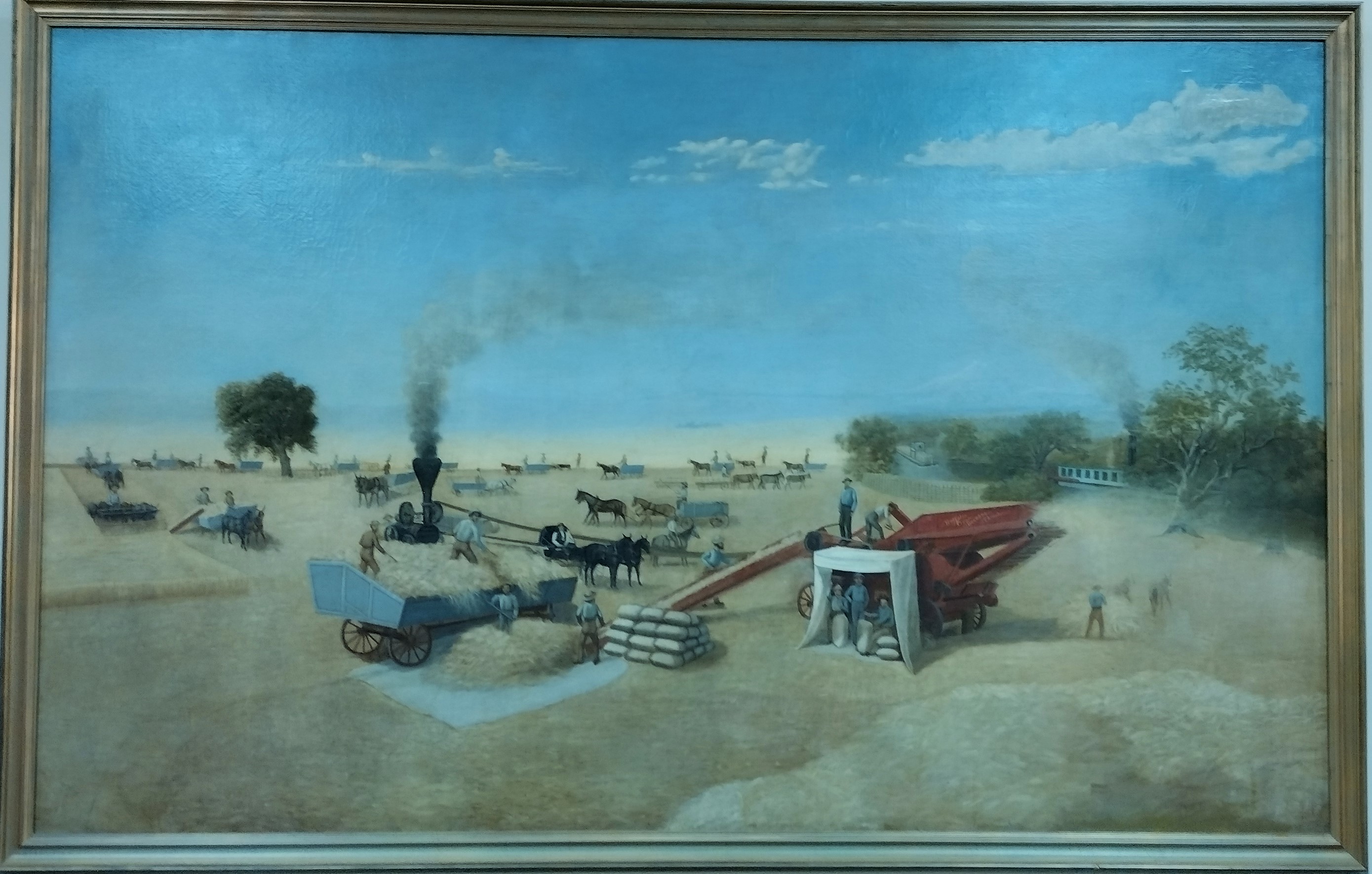
A mural of Sutter’s Hock Farm

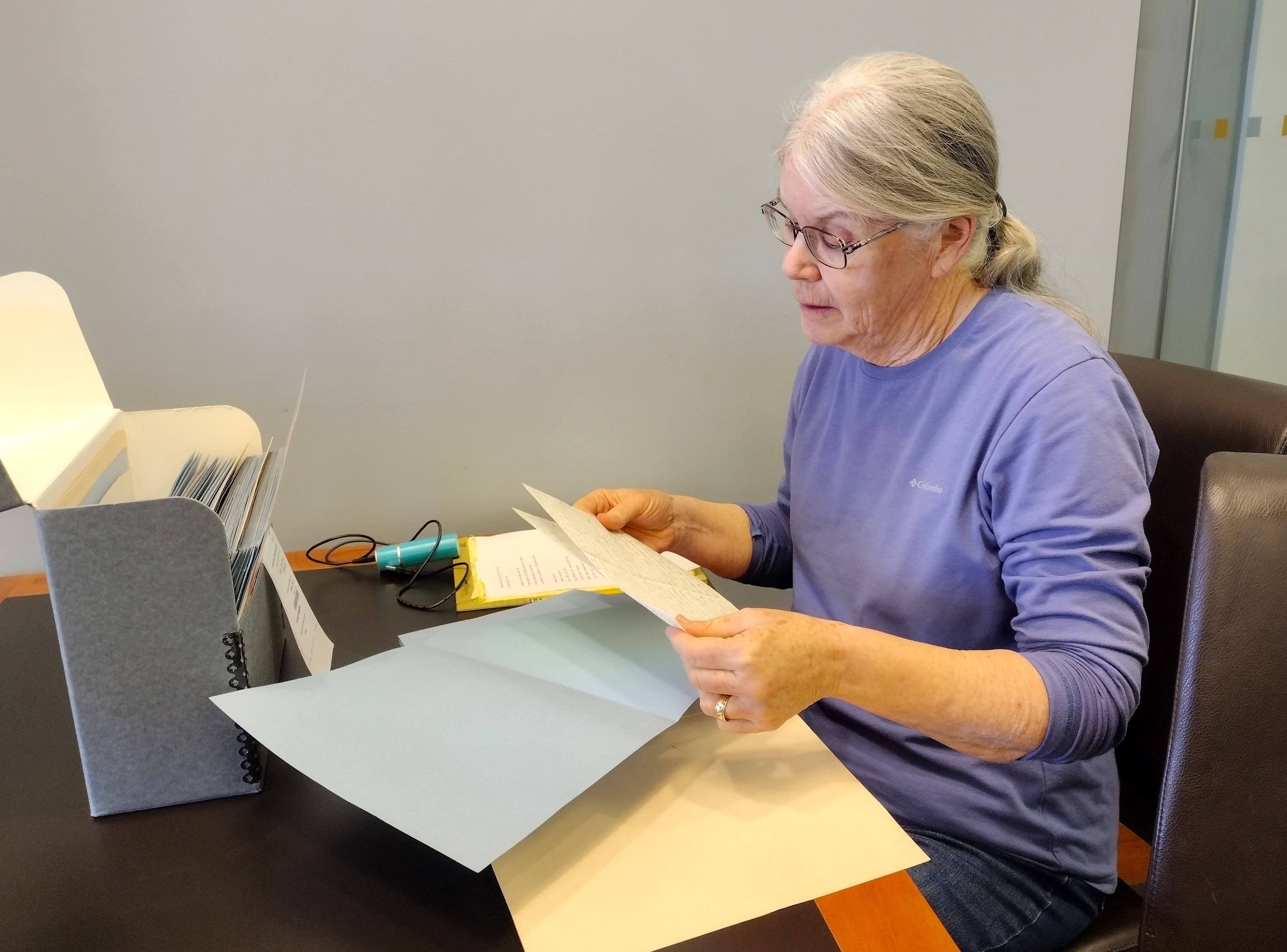
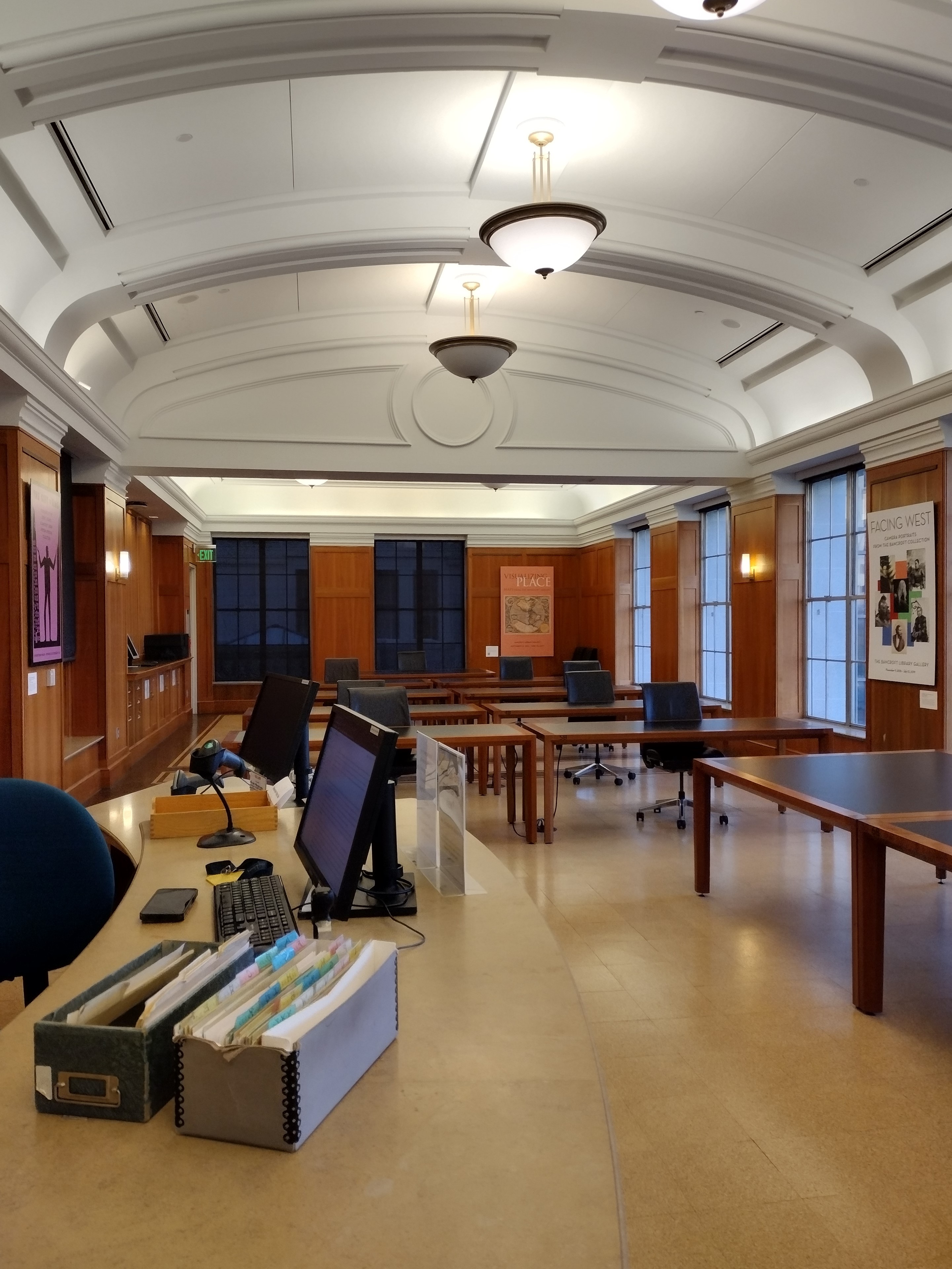
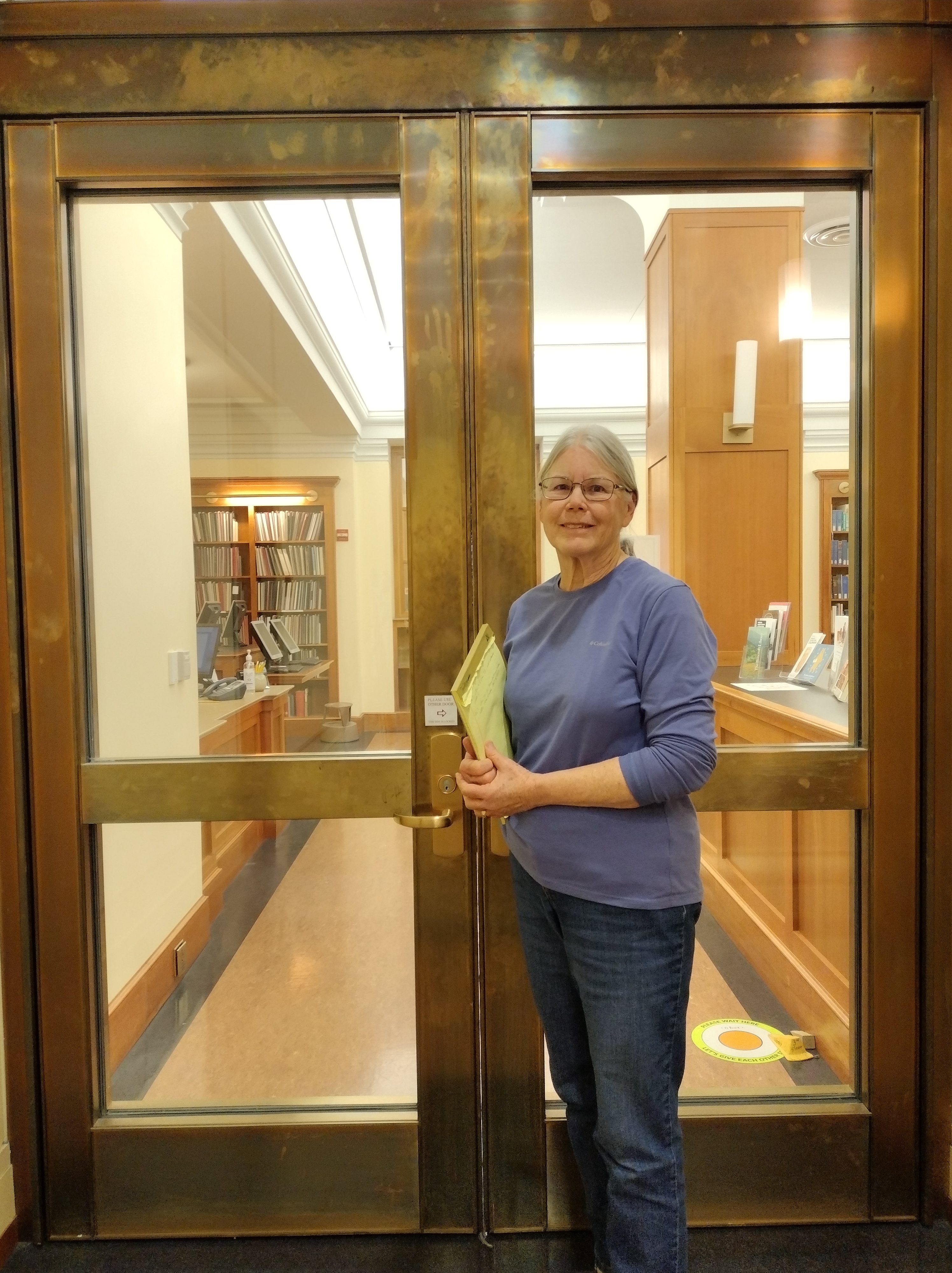
Today Jim and I took a little drive down 99 to Yuba City to visit the Sutter County Museum. I’ve been meaning to get there for a long time now, because I like small hometown history museums, and because I wanted to see if they were interested in my books. I had a nice chat with the docent on duty and with the museum director, Molly Bloom.

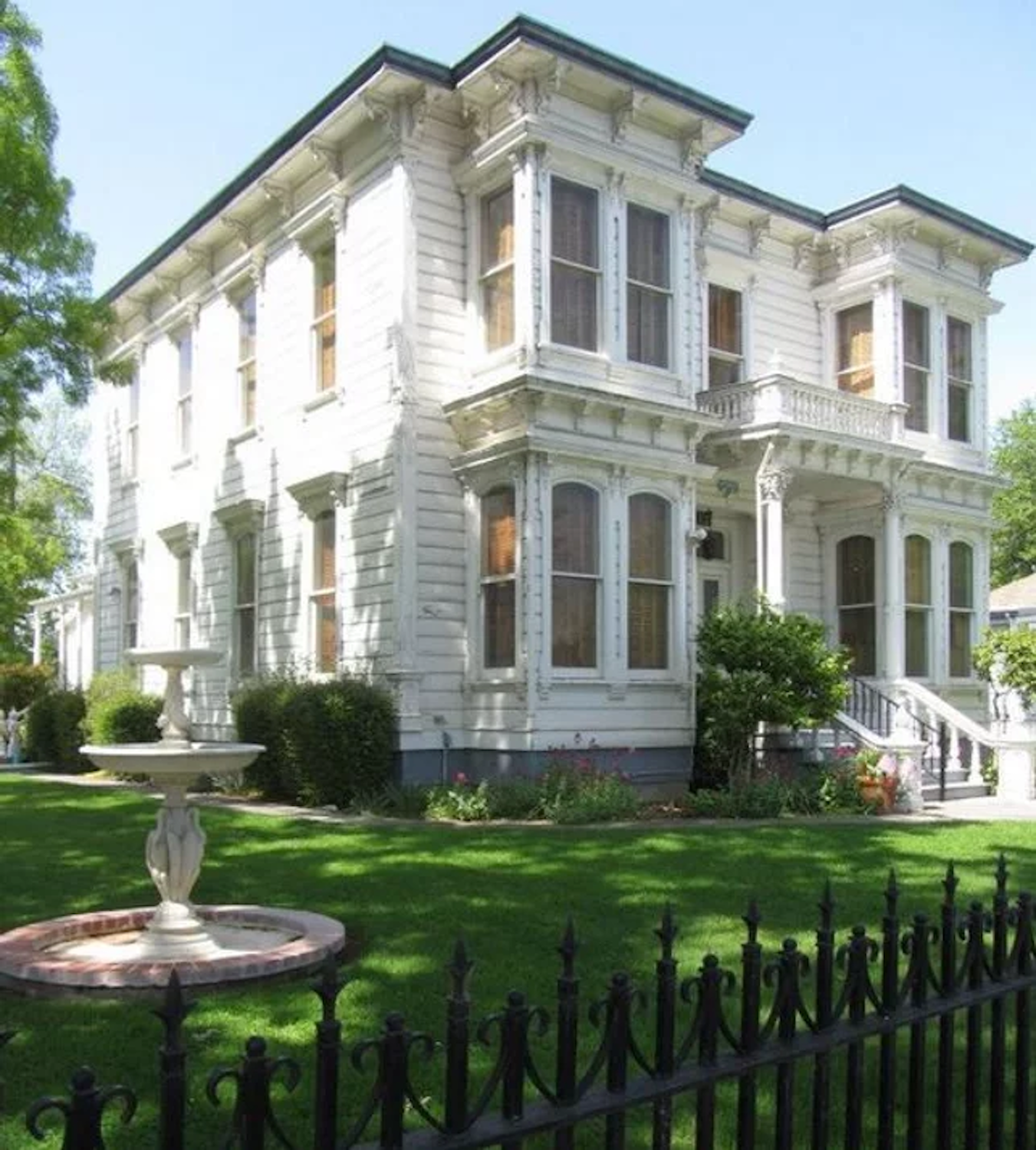
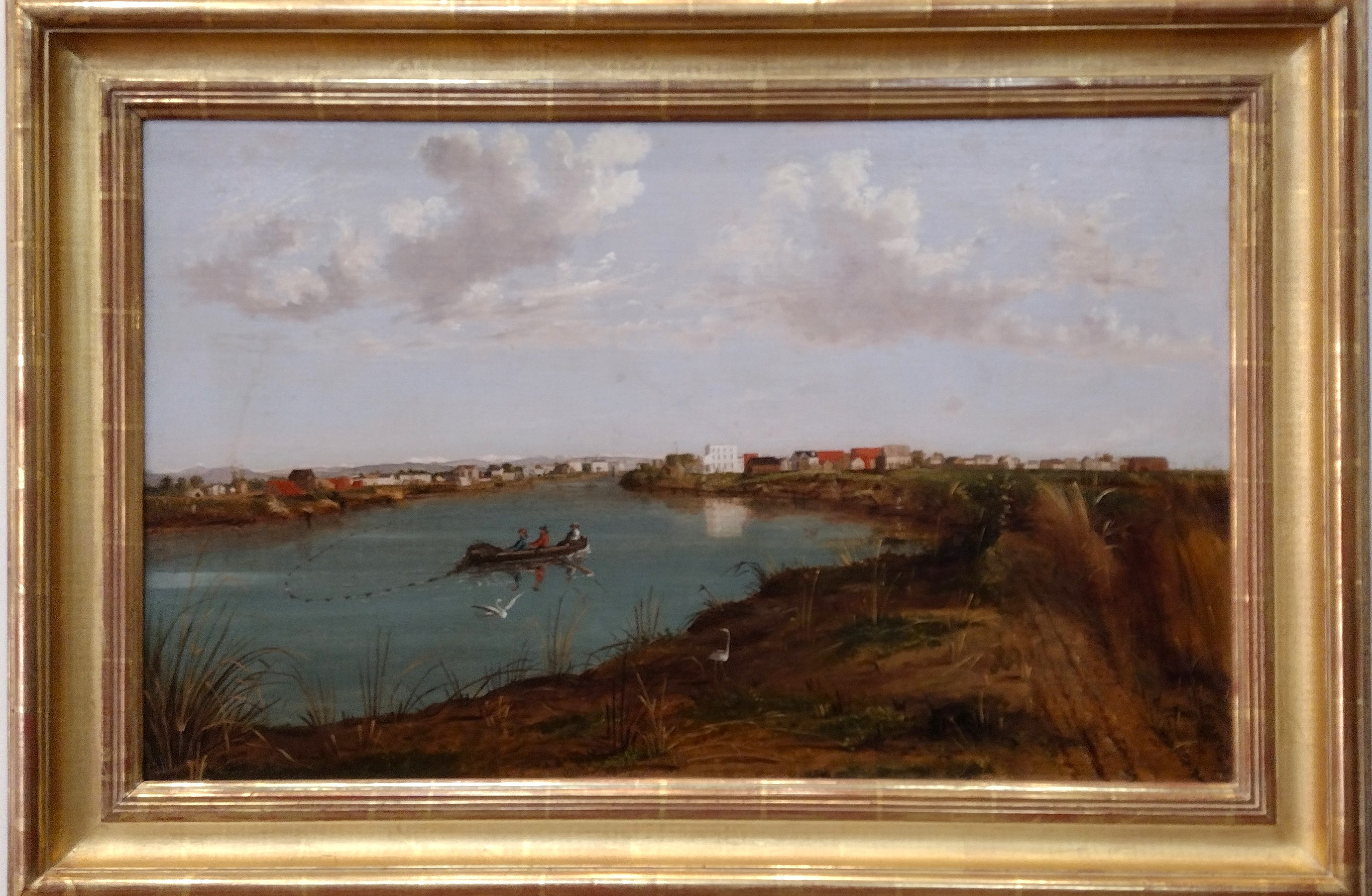
Since the county is named after John Sutter, there was a corner dedicated to him. His reputation is sliding downwards nowadays, but he was a significant historical figure and should be acknowledged. The mural on the wall shows a nice view of what Sutter’s Hock Farm would have looked like from the Feather River, with the Sutter Buttes in the background. (The house burned down in 1865.) There is also a painting of the Hock Farm in 1851, before the big house was built, by William Smith Jewett.

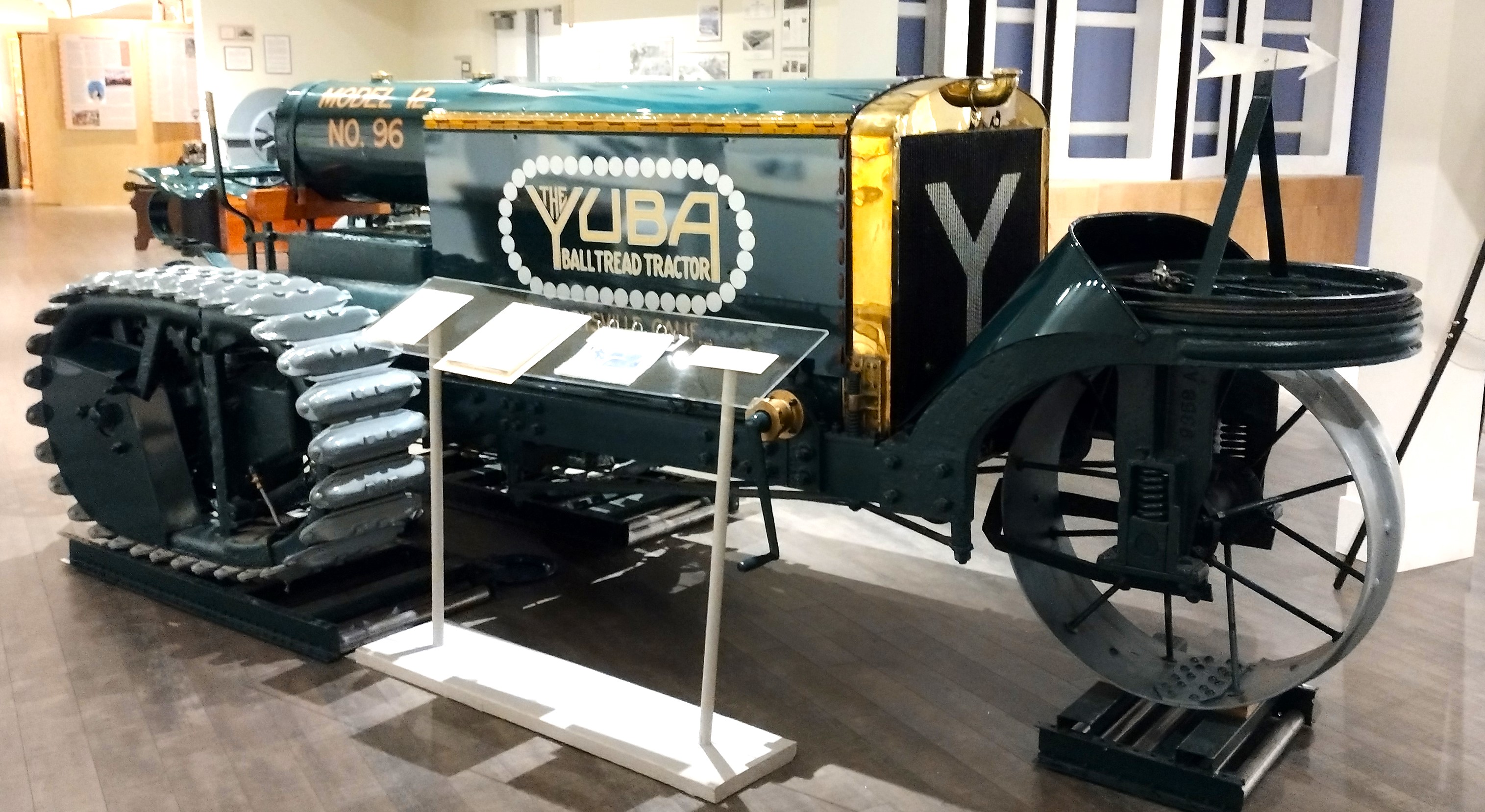
The first area that you come to focuses on the indigenous Nisenan people. Agriculture dominates another part of the exhibit, with a beautifully restored Yuba Ball Tread tractor, manufactured in Marysville, and in its day considered ideal for orchard work. There is also a blacksmith’s shop, chock-full of blacksmithing tools and old-time agricultural implements.

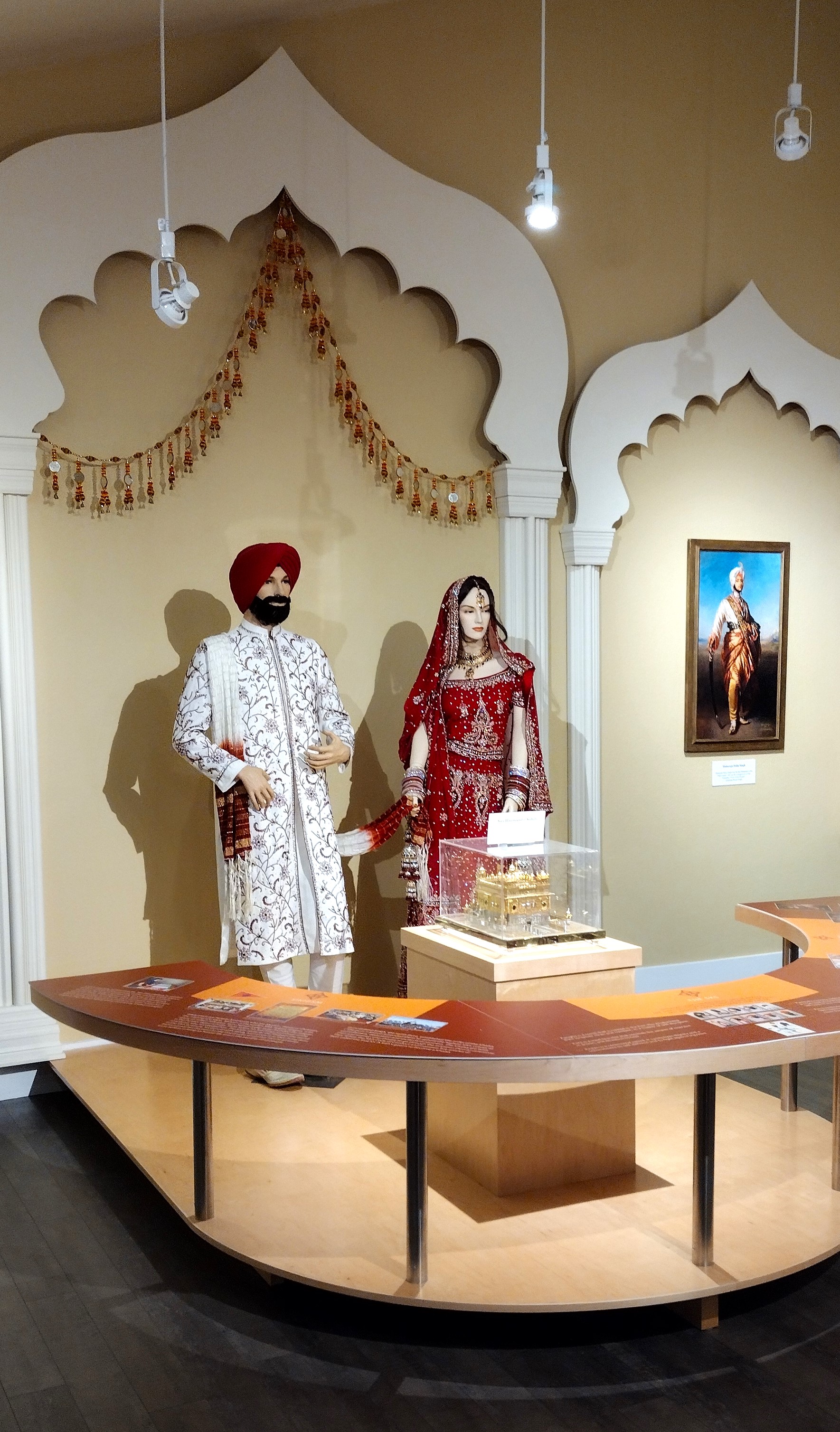
Sutter and Yuba counties have a diverse population and the museum reflects that. There are exhibits dedicated to African American, Chinese, Hmong, Japanese, and Punjabi populations. Immigration from Punjab began around 1900, and Punjabi-Americans, mostly Sikhs, now form a significant portion of the Sutter County population. Their display in the museum is extensive and highly informative.

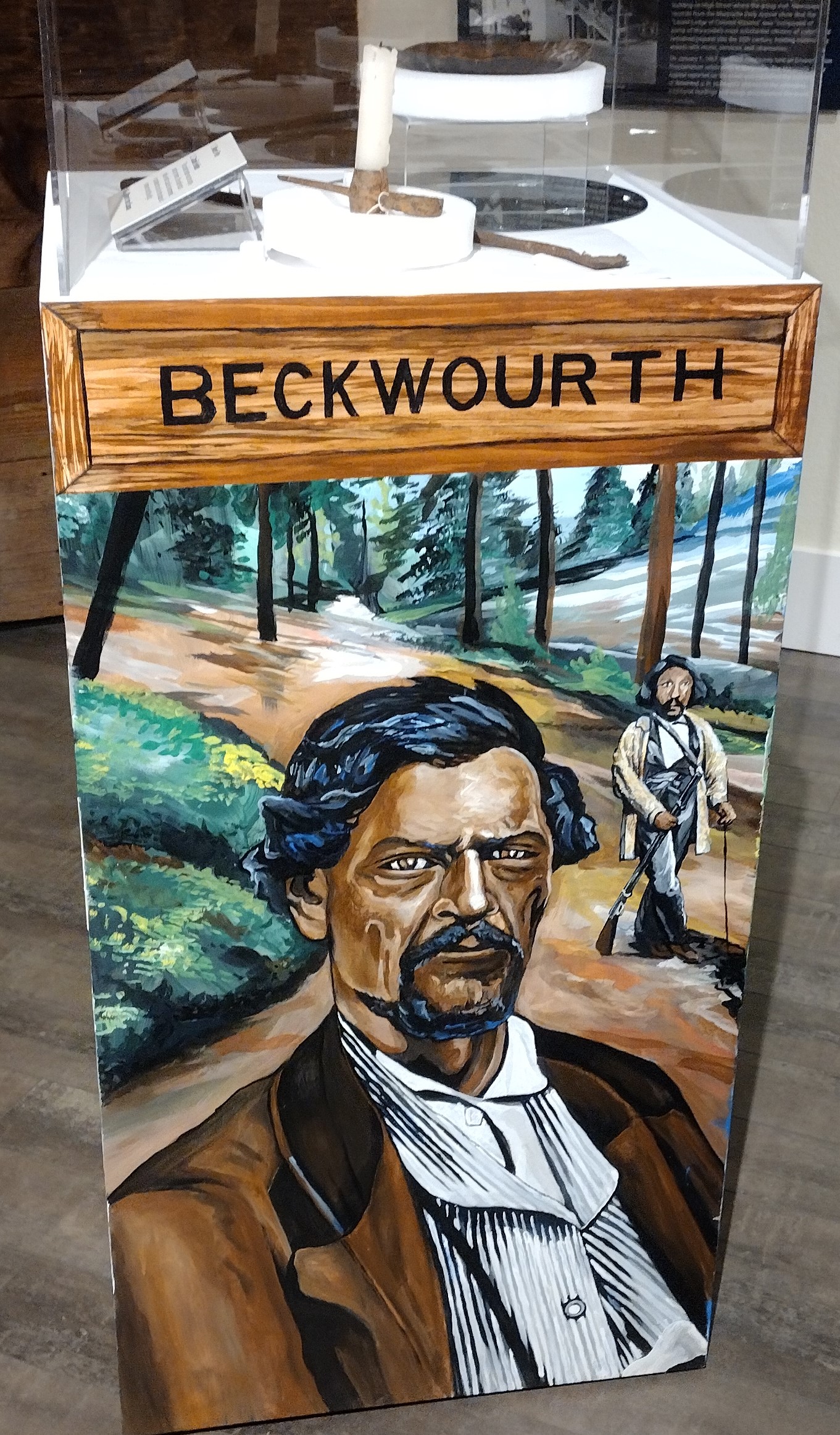
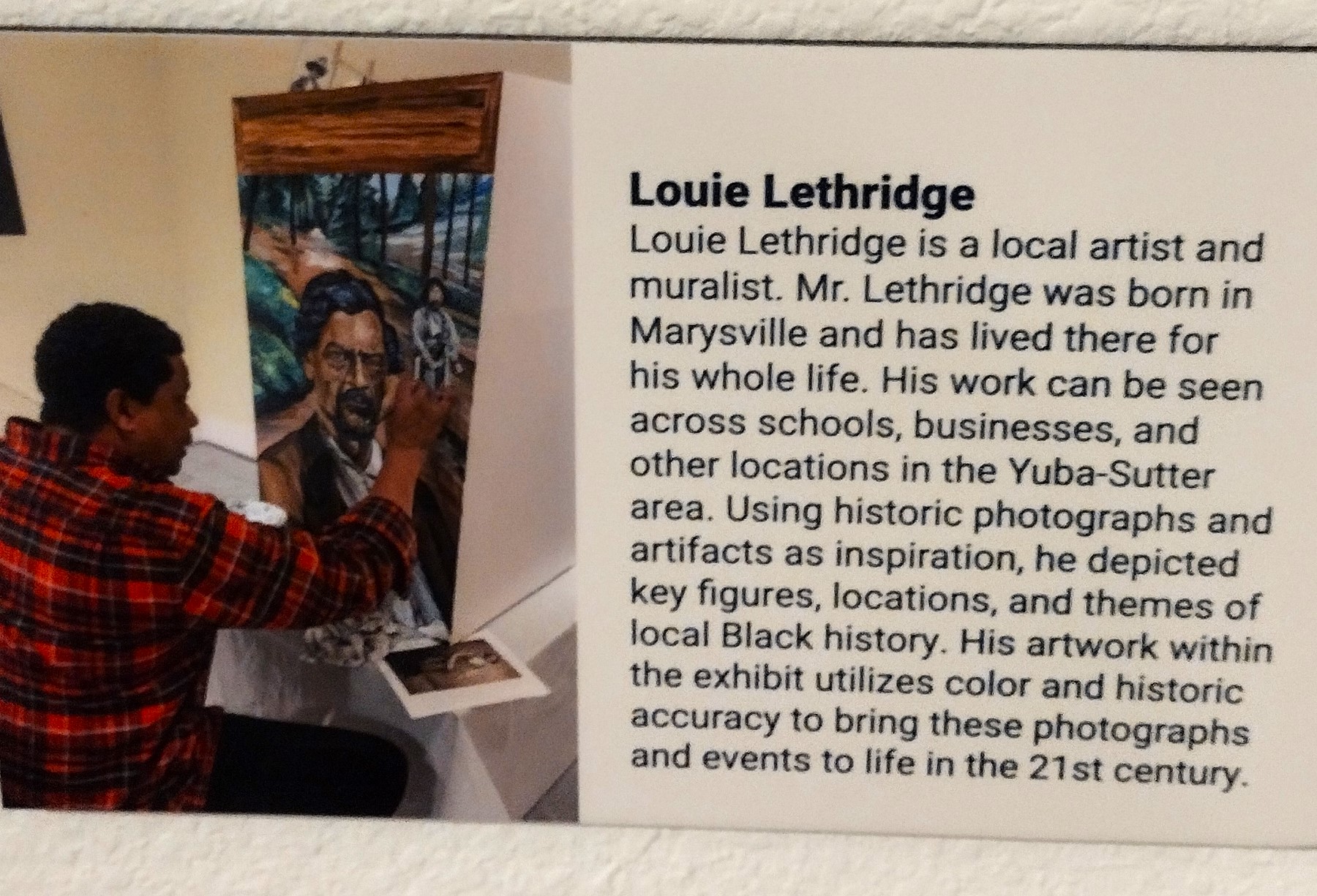
I particularly liked the area devoted to black and African American history, which included a shout-out to the Sweet Vengeance Mine. Some of the people highlighted here, like Jennie Carter and Edward Duplex, I have written about on this blog. But I have never written anything on Jim Beckwourth, and I really should. The painting on this display case, by local artist Louis Lethridge, is really striking.

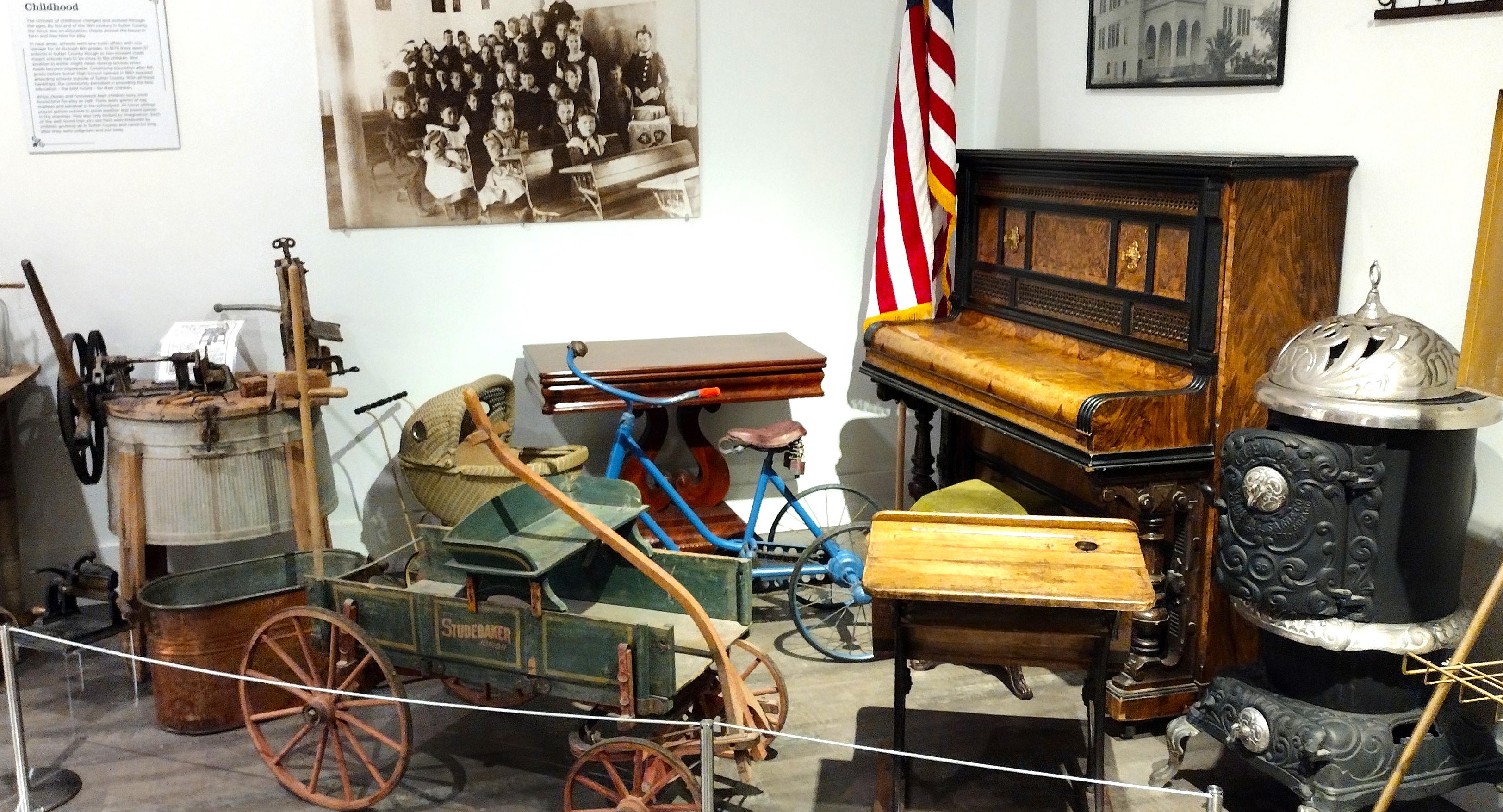
The museum also contains a carriage and a Model T Ford, but my favorite vehicle is the Studebaker Junior wagon, in the children’s corner.

The museum has a tempting gift shop, with lots of books, and items by local artisans such as jewelry, ceramics, and soap. I bought three books, ones that will give me topics for many blog posts to come.

The Sutter County Museum, located at 1333 Butte House Road, is open Wednesday through Friday, 9-5, and Saturday 12-4. In addition to local history, it hosts temporary exhibits, so there is always something new and different. The museum is well worth a visit!

Posted in Uncategorized | Leave a comment

On the Impeachment of Pres. Andrew Johnson

In March 1868 John Bidwell was in Washington D.C., awaiting his wedding day. Back home in California, the brother of his bride-to-be, John R. Kennedy, had been left in charge of Rancho Chico. Concerned about business on the ranch, Bidwell wrote frequently to Annie’s brother.

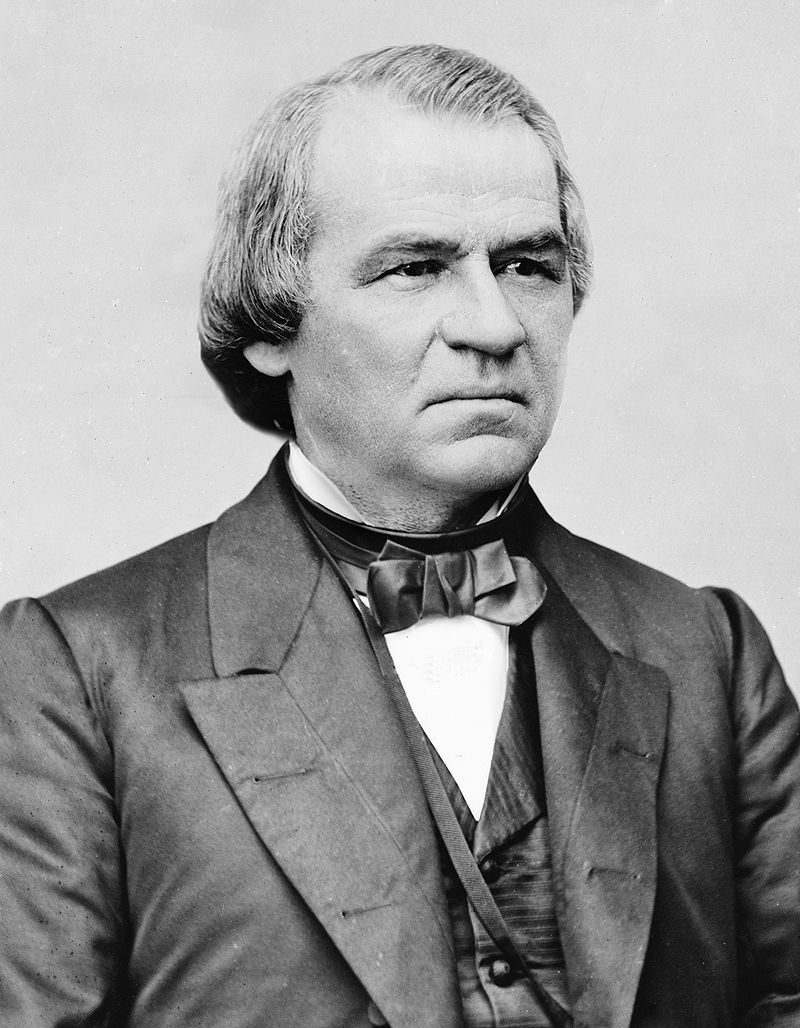
In Washington, the news was all about the impeachment of President Andrew Johnson, the first impeachment of a U.S. president to ever take place. John Bidwell had served as a congressman in the previous term of 1865-67, but he had not run for re-election and was happy to be out of politics. He had his opinions though. He wrote:

If Andrew Johnson had as much ability and patriotism as he has of stubbornness, he would be the greatest man living. As it is he is blindly rushing along the giddy verge of ruin, and will sacrifice anybody or anything in order to crush the party who elected him to office. He cannot succeed. But I cannot add more in the way of politics, except to say, that men of all classes are glad that the President cannot carry Gen. Grant from the path of duty; and consequently there is no danger of war should the President in his stubborn blindness to carry his points, attempt to use the military power. Grant now in this important crisis stands between the President and people.

The ambition of men has ever been the bane of popular liberty – ambition triumphant results in monarchy – oppression. Is not human nature the same in all ages? How fortunate it is that under our form of government there are so many checks to the Executive power. How favored are we as a people that the President cannot offer Grant any higher position. Grant is as high as he can be under any President – the only higher step he can take is to be President himself. If Andy Johnson could make Grant obey him and not the law, he would carry his points at all hazards – who knows what he might do? But I must close. I never know when to stop when I get on politics.

Johnson had fired Edwin Stanton from his cabinet position as Secretary of War, contrary to Congress’s Tenure of Office Act, which made it unlawful for a president to dismiss a cabinet secretary without the consent of the Senate that had confirmed him. Johnson made General Ulysses S. Grant, who was serving as commanding general of the Army, his interim Secretary of War, but when the Senate reinstated Stanton, Grant resigned. Johnson was furious with Grant, but could do nothing to shake him. The Senate was outraged at Johnson’s high-handed moves, and sought his impeachment.

There were eleven articles of impeachment, but most of them revolved around Johnson’s violation of the Tenure of Office Act. Johnson was acquitted by one vote and he remained in office, although his influence was diminished. The Tenure of Office Act was repealed 20 years later.

Bidwell was a firm believer in the Constitution of the United States of America. “How fortunate it is that under our form of government there are so many checks to the Executive power,” he wrote, and who would disagree? But it makes you wonder if anything has changed for the better in 156 years.

Posted in Uncategorized | Leave a comment

A Bidwell New Year, 1869

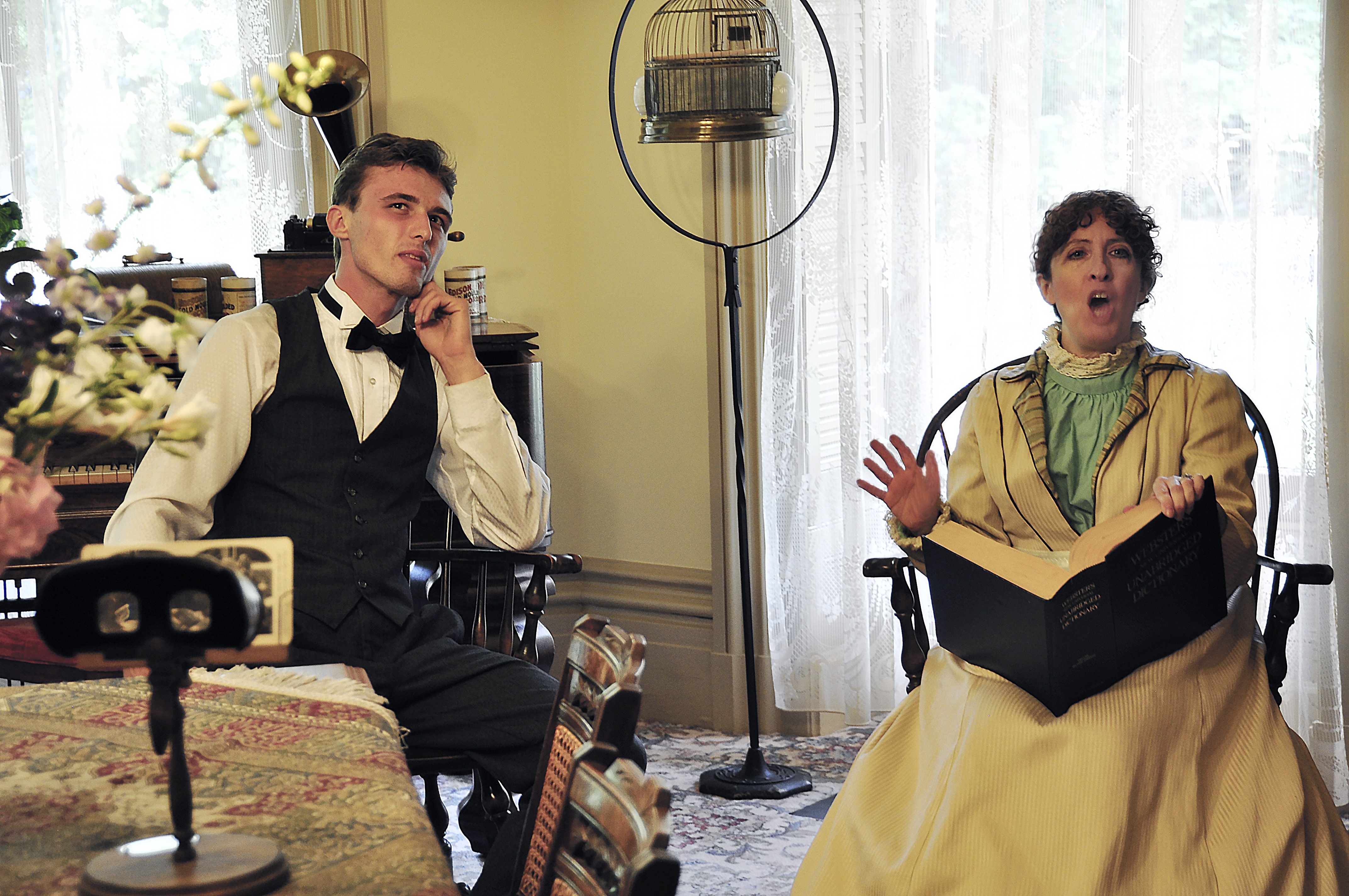
Annie (Denise Van Patten) in the library with her nephew, stereoscope on table.

John Bidwell wrote to his mother-in-law, Catherine Kennedy, on December 31, 1868, striking a humorous note on the weather:

Much love to all. Annie and John are in the room – well as could be desired, and as cheerful as they would be if they were away from home in Washington!! But now to the weather. We will compare with you at any time. Our fall and winter, till within a few days, have been all that romance could paint or desire. Now, however, the war in the sky has begun. Already the aerial fountains have been broken up and pluvial blessings in abundance showered upon us. The rains of course produce mud – but where there is no mud there is no soil – and who would live in such a country? Our mud too is rich and deep in some places. But while making these frank confessions I beg a thousand pardons for alluding to the fact that if any country has a right to contest with us this claim to superiority Washington city can make a good showing if not win the prize!! – for mud pure and simple, not for fertility!

The other John here is Annie’s brother John Kennedy, who had come to California for his health. It looks like they had been having the same rainy week that we have just had, and Bidwell jokes that Washington has just as much mud in the winter, without the fertile growing conditions of California.

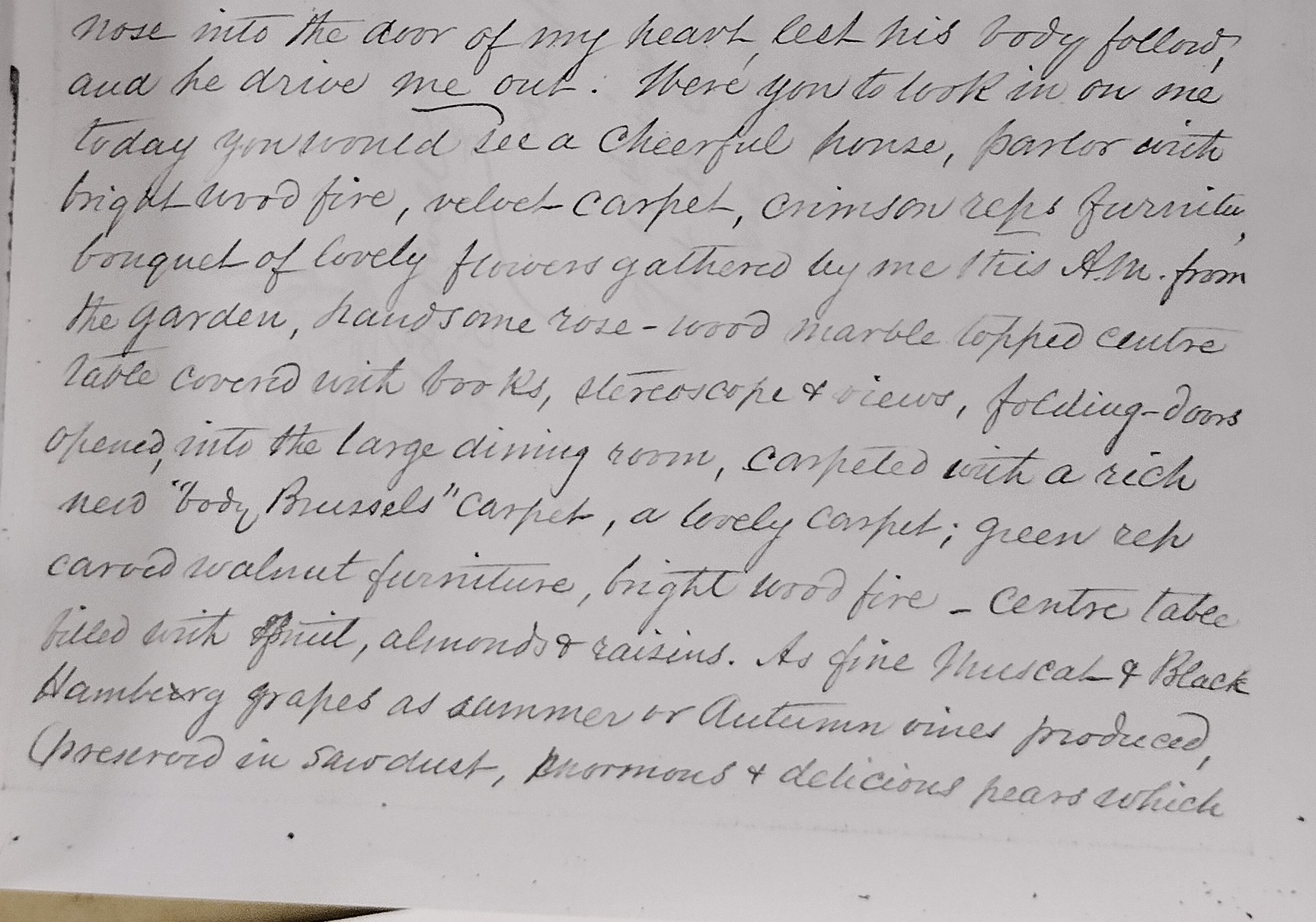
The next day, January 1 1869, Annie added her own letter, and give us a picture of life in the brand-new Bidwell Mansion.

Were you to look in on me today you would see a cheerful house, parlor with bright wood fire, velvet carpet, crimson reps furniture, bouquet of lovely flowers gathered by me this A.M. from the garden, handsome rose-wood marble centre table covered with books, stereoscope & views, folding-doors open into the large dining room, carpeted with a rich new “body Brussels” carpet, a lovely carpet; green rep carved walnut furniture, bright wood fire – centre table filled with fruit, almonds & raisins. As fine Muscat & Black Hamburg grapes as summer or Autumn vines produced, preserved in sawdust, enormous & delicious pears which I daily wish Papa could enjoy together with the figs and apples.

The carpeting and furniture had been purchased in San Francisco. By “rep” Annie is referring to the upholstery fabric. Rep was a woven fabric usually made of silk, wool, or cotton used for upholstery, drapes, and sometimes men’s clothing like waistcoats. According to Collins dictionary, a Brussels carpet was a worsted carpet with a heavy pile formed by uncut loops of wool on a linen warp. A body Brussels carpet had a woven pattern over the entire body, whereas on a tapestry Brussels carpet the pattern was printed.

Annie was justly proud of the delicious fruits grown on Rancho Chico: figs, grapes, pears, apples, almonds and raisins enjoyed well into the winter months.

So picture, if you can in these dismal days, Annie sitting by the fireplace in her new home, reading a book or viewing landscapes with her stereoscope, with a dish of luscious fruits ready to hand on the table, while outside the wind blows and the rain pours, but inside all is cozy and home-like.

Posted in Bidwell Mansion, Uncategorized | 2 Comments

A Butte County Christmas, 1856

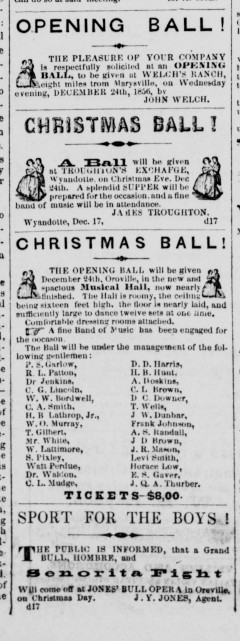
Butte Record 24 December 1856

A minimum of three Christmas balls on Christmas Eve! Music, dancing, supper, and hopefully, some young ladies. Note the price for the one in Oroville — $8.00. It had better be good for that price.

And on Christmas Day there was “Sport for the Boys!” A Bull Fight! Popular entertainment in those days. But what was the “Senorita Fight”? Curious, I searched further. A report appeared in the Record on the 27th.

Butte Record 27 December 1856

It sounds like every man in Butte County was eager for the spectacle, but the editor of the Record found it a disappointment. The bulls were tired and refused to fight. When tormented, one “made desperate efforts to to get loose”, then laid down to rest. “Another was hauled in, who soon showed an unmistakable desire to let everybody alone if they would do likewise, and desired to go home.” The spectators laughed and jeered.

What of the senorita? This much-anticipated lady was brought out to fight a bull. “On the appearance of the senorita, she was greeted with immense applause, but she soon proved to be a “steamboat,” and the good-natured audience laughed again.”

I don’t know exactly what is meant by a “steamboat” in 19th century slang, but it must have been something like — more puffery than substance. Her performance was definitely a disappointment and the onlookers felt cheated. The manager came out, tried to apologize, and the audience left amid cries of “steamboat! “steamboat!” In the apologetic card submitted to the paper by the manager, Mr. Jones, he explained that the bulls were fatigued and hungry from their journey, the band of musicians failed to show up, and as for the senorita:

The senorita was on hand, but refused to kill or fight a dung hill bull. As the senorita refused to fight, I thought I would give the audience as near a senorita as was in my power. I give them the petticoats in sight.

In other words, the senorita was a fake. They saw petticoats, but no senorita.

I sincerely hope your Christmas festivities are full of laughter and light, and no bull.

Posted in Christmas, Uncategorized | Leave a comment

Arson

(Nancy Leek)

I walked through Children’s Park and across the footbridge on Wednesday to take a closer look at the destruction. It is a sad sight to see. Later that day State Parks held a press conference and announced that the fire that destroyed Bidwell Mansion in the early hours of December 11 was deliberately set. Here is their press release:

After reviewing the evidence at the scene, CAL FIRE investigators on Tuesday, Dec. 17 determined the cause of the December 11 fire at Bidwell Mansion to be arson. Investigators found clear indicators pointing to an intentional act and can confidently rule out an accidental blaze. California State Parks is working with CAL FIRE and our allied agencies to identify the person or people responsible for the arson. That portion of the investigation continues, and we have no further information to provide on the investigation at this time. We will continue to provide updates as needed.

If they have any clues as to who or how or why the fire was set, Cal Fire is not saying at this time. They are keeping their cards very close to their vests.

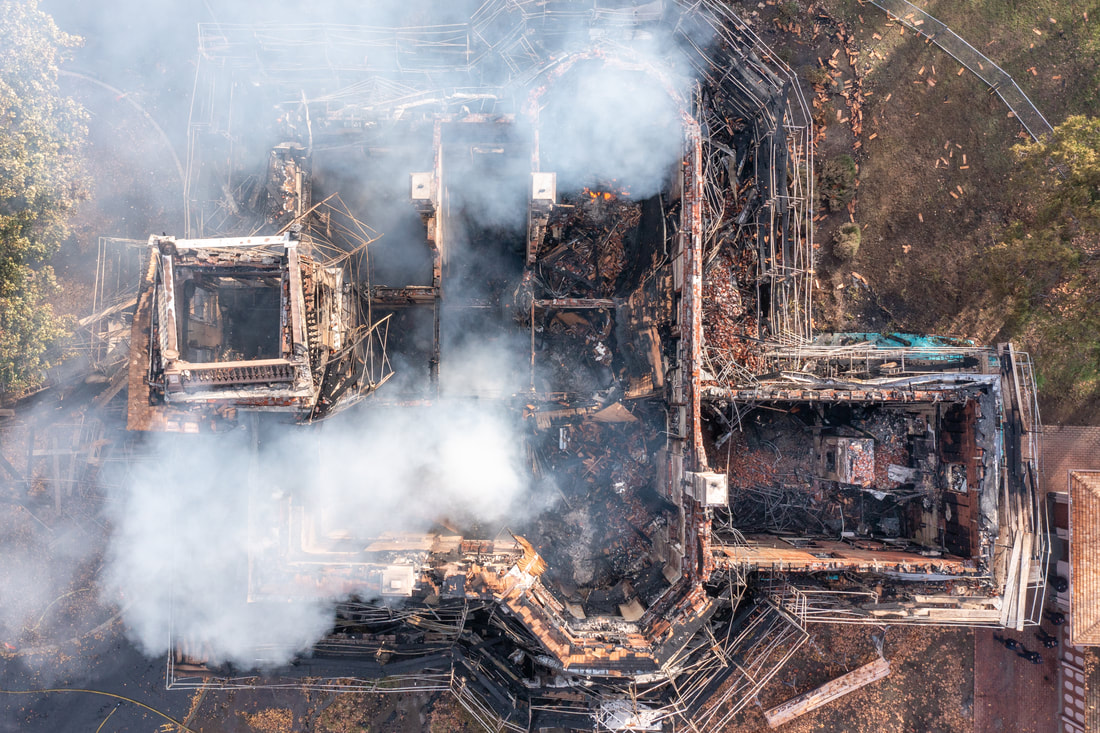
(Matt Bates/University Photographer/Chico State)

This aerial photo, taken by Chico State photographer Matt Bates shortly after the fire, shows smoke and flames smouldering inside the shell of the Mansion. The tower, still standing, is on the left, the elongated octagon that formed the library and dining room in in the center, and the kitchen wing is on the right. It remains to be seen what, if anything, can be salvaged from the interior.

More photos can be seen on the webpage of the Bidwell Mansion Association.

This view shows the carriage house intact, and the kitchen, with stucco still on the exterior, having the least amount of damage.

(Nancy Leek)

Could it be rebuilt? Should it be? That question is the big unknown. Generations of Chicoans feel a connection to Bidwell Mansion. It lives in the memories of children who toured the Mansion on field trips, of Chico State students who walked by it every day, and of families who used it as a setting for their milestone photos. It is central to the identity of Chico.

Many have expressed a desire to see it resurrected. Others believe such a project would be too costly and that a park or some other memorial would make more sense.

Ultimately the decision will be made by California State Parks and the Office of Historic Preservation, with input from the citizens of Chico. Whatever the decision, be assured that I will share updates with my readers and keep you informed about ways you can help preserve and honor the mansion’s story.

(Nancy Leek)

Posted in Bidwell Mansion | Leave a comment

Bidwell Mansion Destroyed by Fire

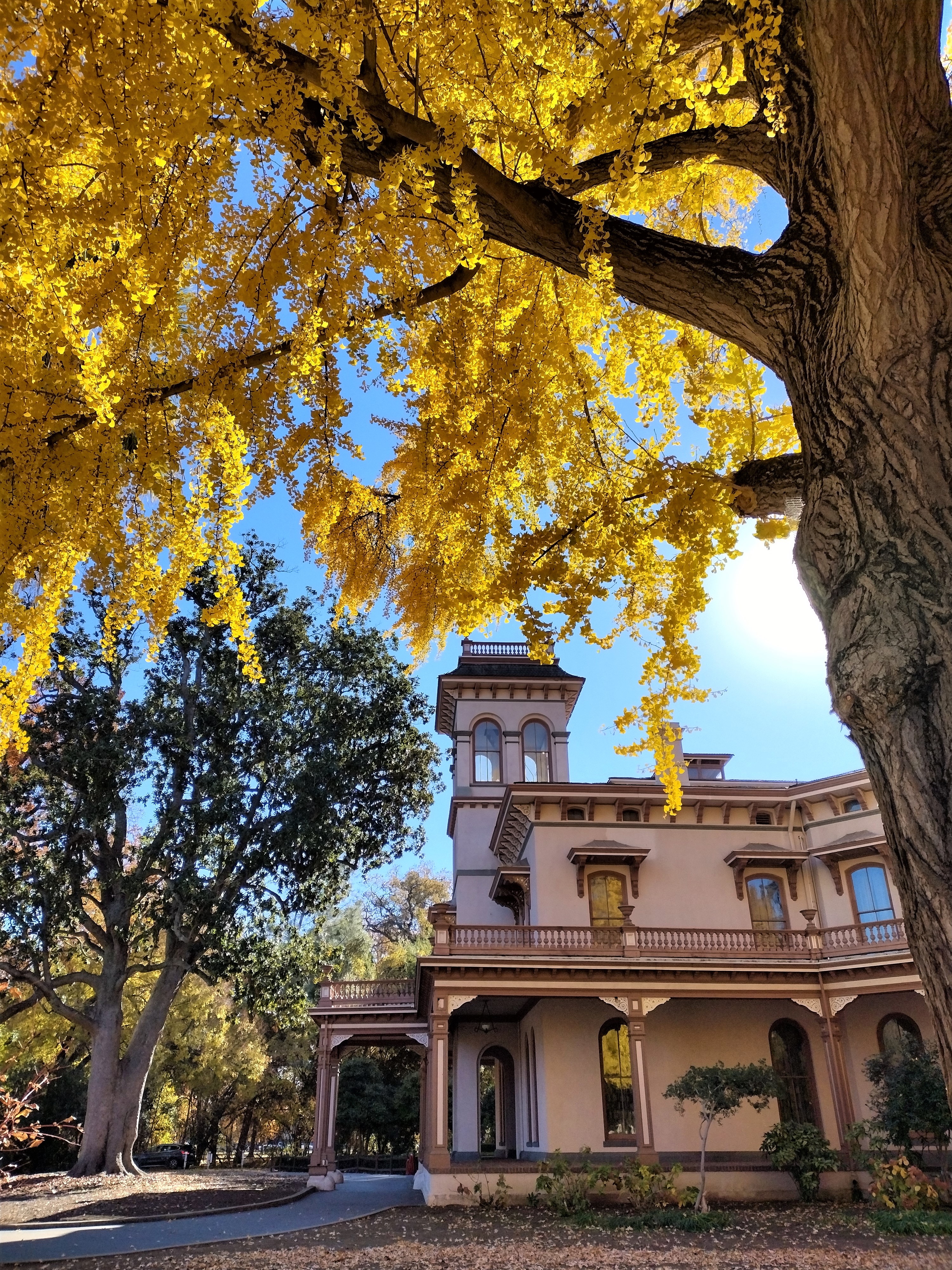
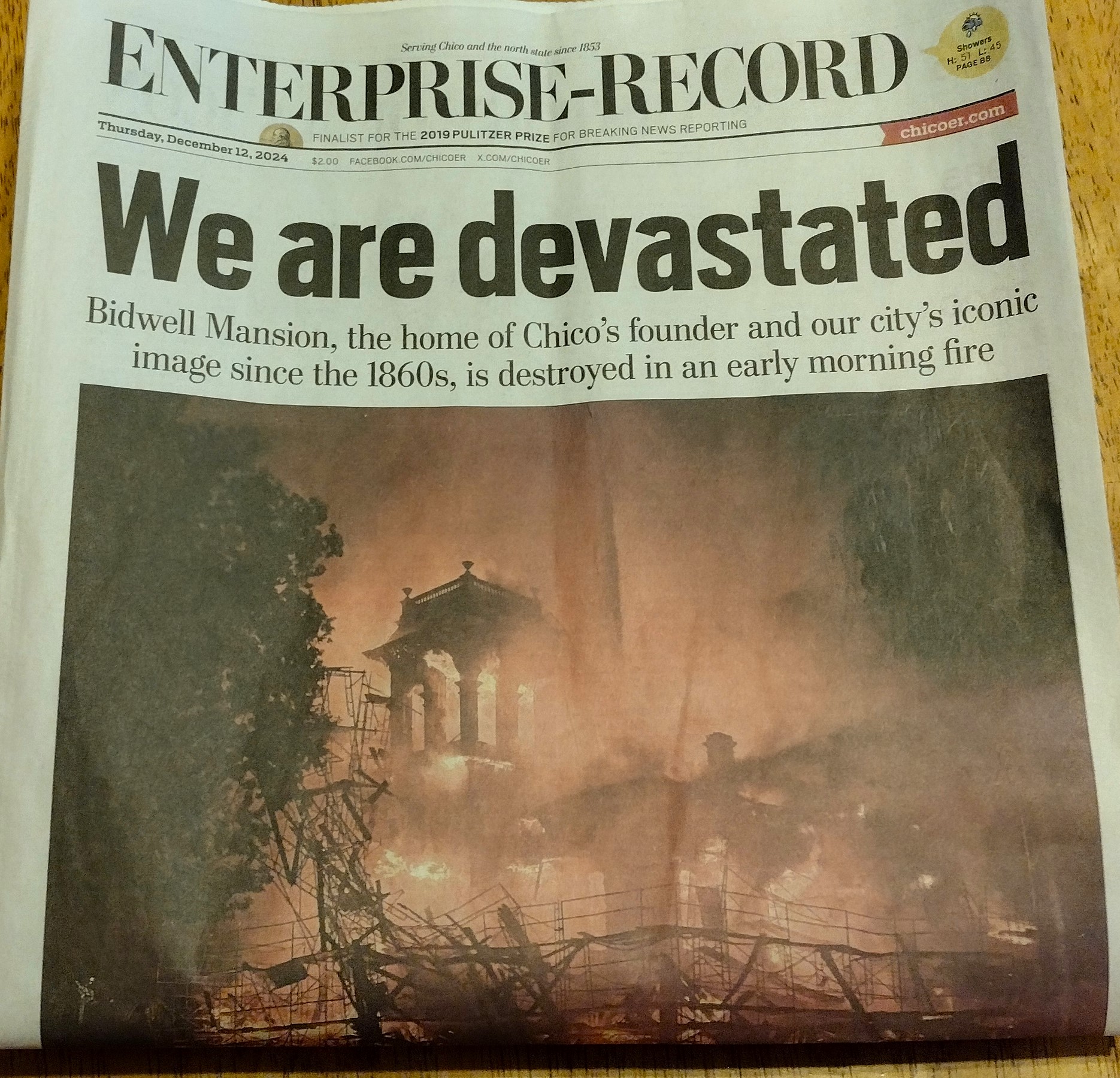
In the early hours of December 11, 2024, fire destroyed Bidwell Mansion.

Chico Enterprise Record, December 12, 2024

For those of you who do not live in Butte County, Bidwell Mansion is the symbol of Chico, a beautiful Italianate villa, the home of Chico founder John Bidwell and his wife Annie. Building began in 1865 and the house was completed in 1868. In its day it was the most elegant and up-to-date home north of Sacramento.

I cannot express the significance of Bidwell Mansion any better than historian Michael Magliari:

The mansion was not merely one of California’s most historically and architecturally significant buildings, it was also the single most important material expression of Chico’s identity as both a place and a community.

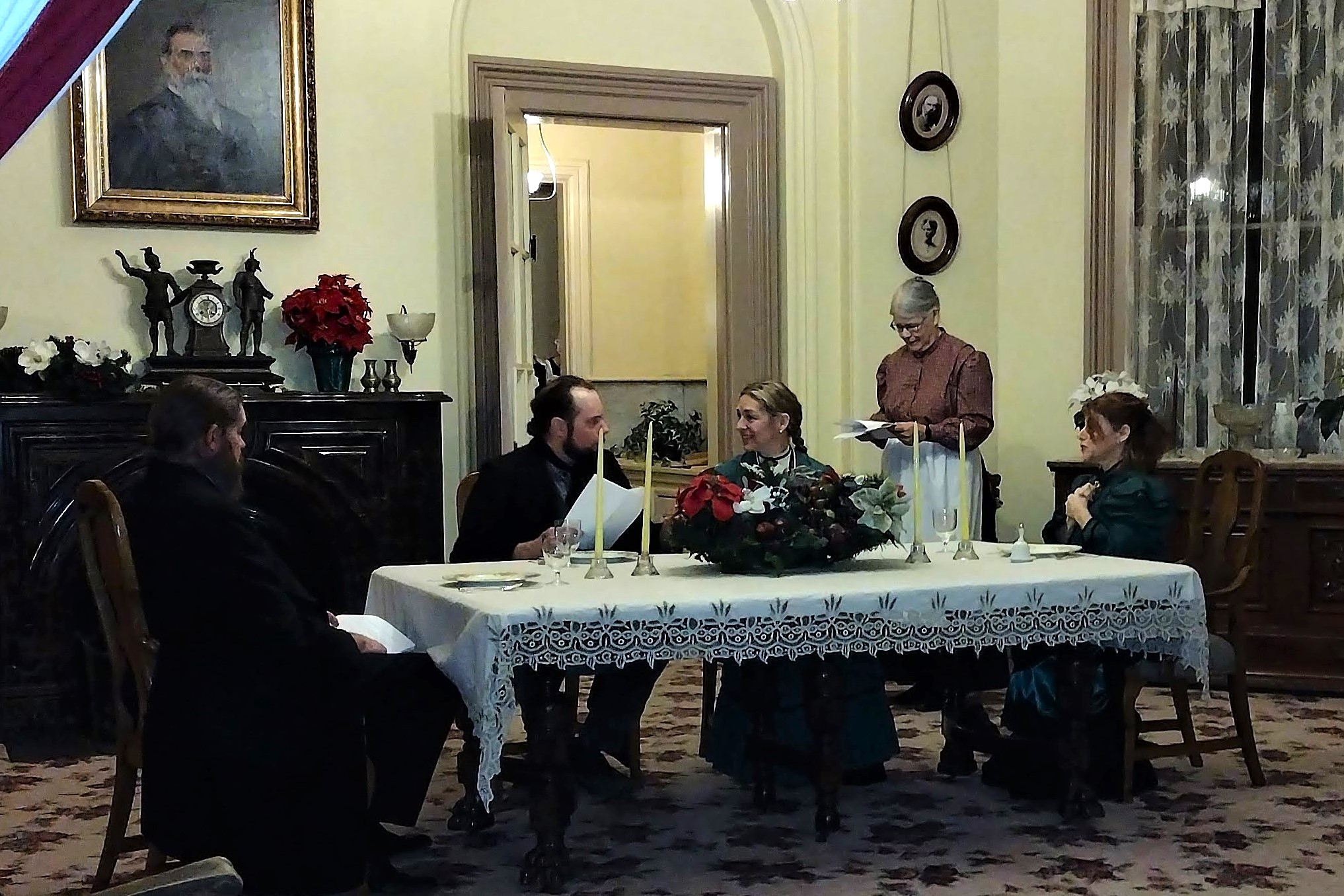
I have been on the board of the Bidwell Mansion Association since I wrote a biography of John Bidwell in 2010. I have participated in many events inside the Mansion and have enjoyed bringing John and Annie to life through reenactments and vignettes. I thought it would go on forever.

John and Annie Bidwell dine with Mr. and Mrs. Swasey while the cook (me) checks the script. (December 2022)

I am heartsick over the loss of this iconic structure. I want it to be a bad dream that I can wake up from. I want to be able to go back in time. I want an alternative world where Bidwell Mansion still stands and gladdens the hearts of Chico residents. Where children can visit on school field trips and visitors can learn about the lives of a truly remarkable couple and where American history comes to life.

But we have our memories.

Posted in Bidwell Mansion | 3 Comments

Saloons in Early Chico

The saloon inside the Union Hotel, ca. 1910. CSUChico Special Collections sc12279
Chico Record 30 April 1910, quoting an 1873 article

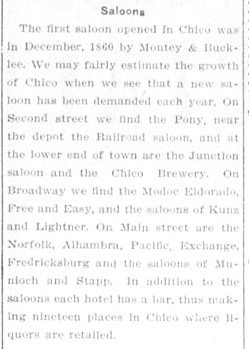
The first saloon opened in Chico in December, 1860 by Monty and Bucklee. We may fairly estimate the growth of Chico when we see that a new saloon has been demanded each year. On Second street we find the Pony, near the depot the Railroad saloon, and at the lower end of town are the Junction saloon and the Chico Brewery. On Broadway we find the Modoc Eldorado, Free and Easy, and the saloons of Kunz and Lightner. On Main street are the Norfolk, Alhambra, Pacific Exchange, Fredericksburg and the saloons of Munloch and Stapp. In addition to the saloons each hotel has a bar, thus making nineteen places in Chico where liquors are retailed.

Basically, as soon as John Bidwell opened up the land on the south side of Chico Creek for development, saloons sprung up. “A new saloon demanded each year.” No wonder the W.T.C.U. was so active, with all those saloons to combat.

There’s a Thomas Buckley, age 27, in Kimshew Township in the 1860 census — he is listed as a saloon keeper. D.C. Monty is in Chico the same year, occupation bar keeper, age 30. Looks like a couple of buddies got together to open the first saloon in Chico.

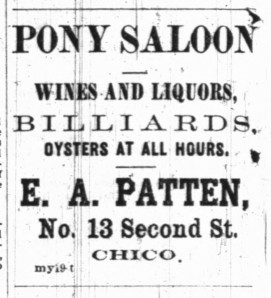
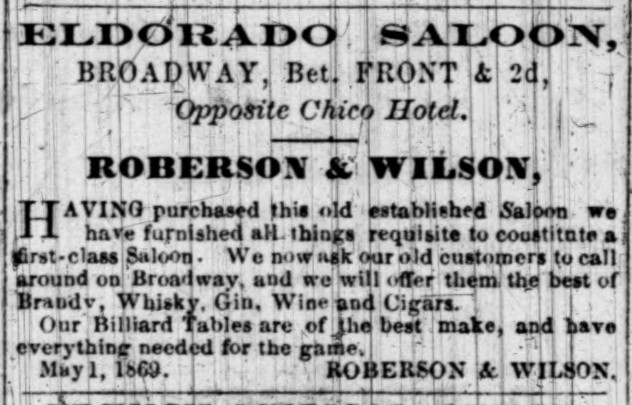
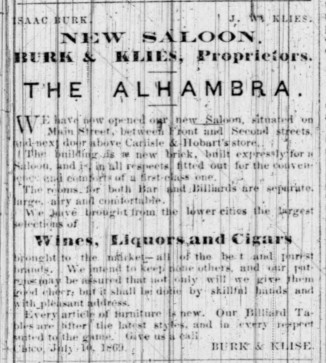
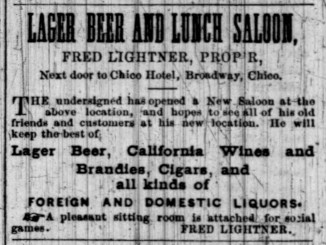
The saloon was a social center for working men, a place to hang out with friends, have a drink and a bite to eat, and play a game of billiards. Some saloons, like the Humboldt Saloon on Main Street, offered baths and barbering. Here are ads for the Pony Saloon and the Eldorado, and a few other establishments in Chico of the 1860s and 1870s.

Posted in Chico | Leave a comment

Hotels in Early Chico

If you were traveling on the stagecoach from Sacramento to Shasta City in 1862, and wanted to stop over in Chico, where would you stay? How about here?

The Chico Hotel at the Junction ca. 1900

Well, not in 1862. The Chico Hotel burned down more than once, so the above photo from 1900 does not show the hotel as it stood in 1862 or 1873.

Up until 1860, the only option for accommodation was Bidwell’s adobe hotel/tavern/ranch headquarters on the north side of Chico Creek. But with a new town on the south side with houses, shops, and services, hotel rooms were soon available. In 1862 the first hotel, the Chico Hotel, was opened.

Ira Wetherbee had made his fortune with a truly extraordinary find. In 1859, at a mine in Magalia which he co-owned, a 54-pound nugget was washed out of the hillside. The “Dogtown Nugget” was sold in San Francisco for $10,690. Wetherbee gave up mining and invested in the Chico Hotel. He became one of the best-known men in Chico, notable for his friendliness and generosity. He advertised his hotel as “the only first-class hotel in Northern California.”

The Junction, where today Broadway and Main intersect with Park Avenue, Humboldt Avenue, and 8th and 9th Streets, was the center of transportation and commerce in Chico in the 19th century. That’s where you went to find livery stables, blacksmiths, saloons, and more hotels, like the Union House on Main.

Two other choices were the Junction Hotel or the Railroad House at the depot.

Chico Weekly Enterprise 18 December 1869
Chico Record 30 April 1910 (quoting an article from 1873)

“Few towns in the Sacramento Valley can make a better showing!”

Posted in Chico, Uncategorized | Leave a comment

Some Chico “Firsts”

“Now that Chico is forging to the front as a prosperous city of 12,000 or larger population” wrote the Chico Record in 1910, “it is interesting to look backward and consider for a moment the humble beginnings of the city.” Quoting from an article written in 1873 (I haven’t be able to find the source), the article’s author lists a number of Chico “Firsts.” (The image from the California Digital Newspaper Collection is faint, but it’s all there is.)

First Log House, First Frame House

Chico Record 30 April 1910

That first frame house must be gone by now. The Wright-Patrick House, formerly on the site of the Patrick Ranch, was built in 1852, but doesn’t qualify as Chico. The oldest house still standing in Chico is the Allen-Sommer-Gage House, built in 1861-61, at 410 Normal Avenue.

First U.S. Mail, First Postmaster, First Bridge, First Stage Line

First Fruit Trees

Bidwell got his first grape cuttings from one of the missions, and the first peach trees were raised from peach pits given to him by a young New Englander, Nelson Blake.

First Election, First Death

I have written previously about the unfortunate death of Amos Frye.

Chico was quite the bustling place in the early days. I wish I could have seen it, dusty streets and board buildings and all. Next time: First Hotels and First Saloons!

Posted in Chico | Leave a comment

Children’s Books on the California Gold Rush

Last Sunday I gave a presentation at the Kelly-Griggs House Museum in Red Bluff about Alvin Coffey, the Gold Rush, and slavery in California. One of the attendees asked if I could recommend books for children about the California Gold Rush. (Other than my own.)
Well, it’s been 10 years since I retired from a job as a children’s librarian, but I will do my best.

Fiction:

By the Great Horn Spoon! by Sid Fleischman has been the go-to fiction title ever since it was published in 1963. For fun and adventure and historical highlights it can’t be beat. Another by Fleischman is Bandit’s Moon, which features the outlaw Joaquin Murrieta.
Other fiction titles to look for are:

The Ballad of Lucy Whipple, by Karen Cushman

Chang’s Paper Pony by Eleanor Coerr,

Letters from the Corrugated Castle: A Novel of Gold Rush California, 1850-1852  by Joan W. Blos
Gold Rush Girl by Avi.

The California Gold Rush: An Interactive History Adventure, by  Elizabeth Raum. Fiction or non-fiction? This is a fact-based informative book in a fictional “choose your adventure” format.

Picture Books: These are easier, illustrated books for grades K-3.

Nine for California, Boomtown, and Taking Charge by Sonia Levitin — three picture books about a lively family coming to the goldfields. Plenty of everyday Old West detail.

Gold Fever, by Verla Kay — Rhyming text and lively illustrations bring the gold rush to life.

Red Flower Goes West  by Ann Warren Turner — The overland journey of a family and the flower Mama will not leave behind.

Non-Fiction History books:

These are all good books– attractive and accurate.

The Great American Gold Rush by Rhoda Blumberg

Gold! Gold from the American River by Don Brown

Gold Fever! Tales from the California Gold Rush  by Rosalyn Schanzer

Hurry Freedom: African Americans in Gold Rush California by Jerry Stanley

Biographies: There is not much to choose from among biographies of early Californians. I found three about Levi Strauss and three about John Sutter:

Levi Strauss Gets a Bright Idea: A Fairly Fabricated Story of a Pair of Pants by Tony Johnston. Factual but full of humor in a picture book format.

Who Was Levi Strauss? by Ellen Labrecque. The only historic Californian in Penguin’s extensive “Who Was?” series of juvenile biographies.

Mr. Blue Jeans : a story about Levi Strauss by Maryann N. Weidt

Meet John Sutter: California Gold Rush Pioneer (Introducing Famous Americans series)

John Sutter and the California Gold Rush by Matt Doeden (Graphic History series)

John Sutter: Sutter’s Fort and the California Gold Rush (The Library of American Lives and Times series)

All three of these Sutter titles are from publishers who cater to the school library market, like Children’s Press, Enslow, Abdo, Lerner, and Scholastic. They fit into series that focus on famous Americans. These publishers also often also have non-fiction titles about the California Gold Rush: decent introductions but pretty basic.

Check your school or public library — it should have many of these books, and you can also request that a library get a book for you. Librarians love to help!

Posted in Uncategorized | Tagged , , , , | 1 Comment