The Weekly Butte Record found a number of reasons to celebrate in February. All the following come from the issue for February 13, 1864.
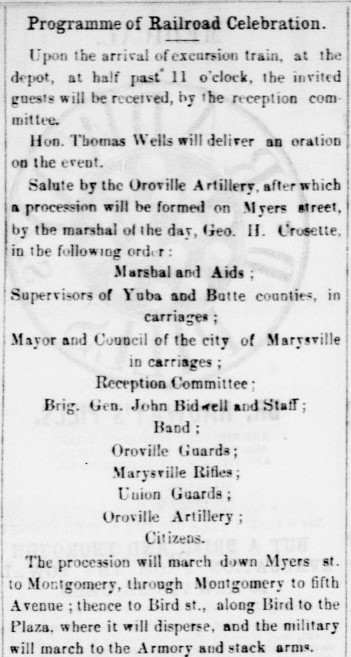
The event that got the most coverage was the completion of the California Northern Railroad, linking Marysville and Oroville. This was a boon to merchants and shipping, and called for a parade and speeches, followed by a collation, a ball, and general jubilation. All the local militia units would be on display.
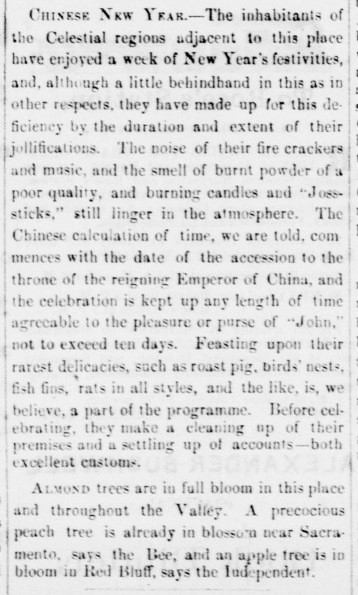
The newspaper also took note of the Chinese celebration of the Lunar New Year, referring as they often did, to the Chinese as “celestials.”
Notice that the almond trees were in bloom in mid-February, then as now.
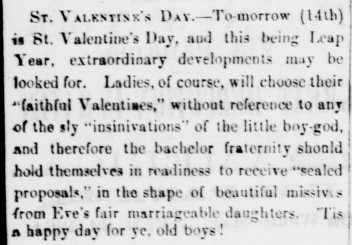
And of course, Valentine’s Day. 1864 was a year to be reckoned with — it was a leap year, when custom said that women could propose to men. “The bachelor fraternity should hold themselves in readiness”!
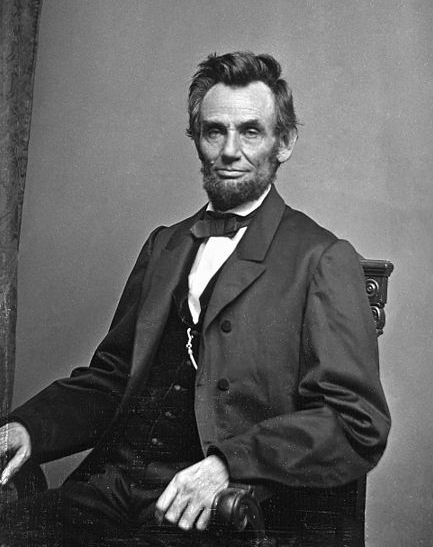
February 12th 2024 marks the 215th birthday of Abraham Lincoln, 16th president of the United States, who led the country through four years of a bloody and bitter war, a war fought to end slavery and to maintain a government “of the people, by the people, and for the people.”
This last week I had the opportunity to speak to two 5th grade classes. Since they had already covered California history in the 4th grade, and were currently studying U.S. history, I figured a good topic would be the issue of slavery in California, as demonstrated in the life of Alvin Coffey.
We tend to think of slavery and the American Civil War as events that took place “back East”, but these issues touched California too. People in California came from every state in the nation and from all over the world, and they brought their customs and prejudices with them. Slavery was a hot issue in California.
Fifth grade students, kids who are 10 years old or so, find it hard to wrap their brains around the idea that some people thought it right to enslave other human beings. They know it is wrong, and they live in a world of such diversity that it doesn’t make sense to them. President Lincoln would approve.
Lincoln thought long and hard about the issue of slavery. He had such clarity of thought and expression that he was able to explain the problem in terms that any adult or 5th grader can understand. In the 1850s he wrote out his thoughts on a fragment of paper, using the reasoning he heard around him from proponents of the slave system.
If A. can prove, however conclusively, that he may, of right, enslave B.—why may not B. snatch the same argument, and prove equally, that he may enslave A?” Lincoln wrote. “You say A. is white, and B. is black. It is color, then; the lighter, having the right to enslave the darker? Take care. By this rule, you are to be slave to the first man you meet, with a fairer skin than your own.
You do not mean color exactly?—You mean the whites are intellectually the superiors of the blacks, and, therefore have the right to enslave them? Take care again. By this rule, you are to be slave to the first man you meet, with an intellect superior to your own. But, say you, it is a question of interest; and, if you can make it your interest, you have the right to enslave another. Very well. And if he can make it his interest, he has the right to enslave you.
Lincoln saw clearly that if we give up the principle of equality before the law, we have given away our own freedom. We have put ourselves at the mercy of any person who decides that they are smarter, stronger, richer, or more worthy in any way than we are, and are willing to enforce that notion.
So– Happy Birthday to President Abraham Lincoln, and may we never forget the principles he lived and died to defend.
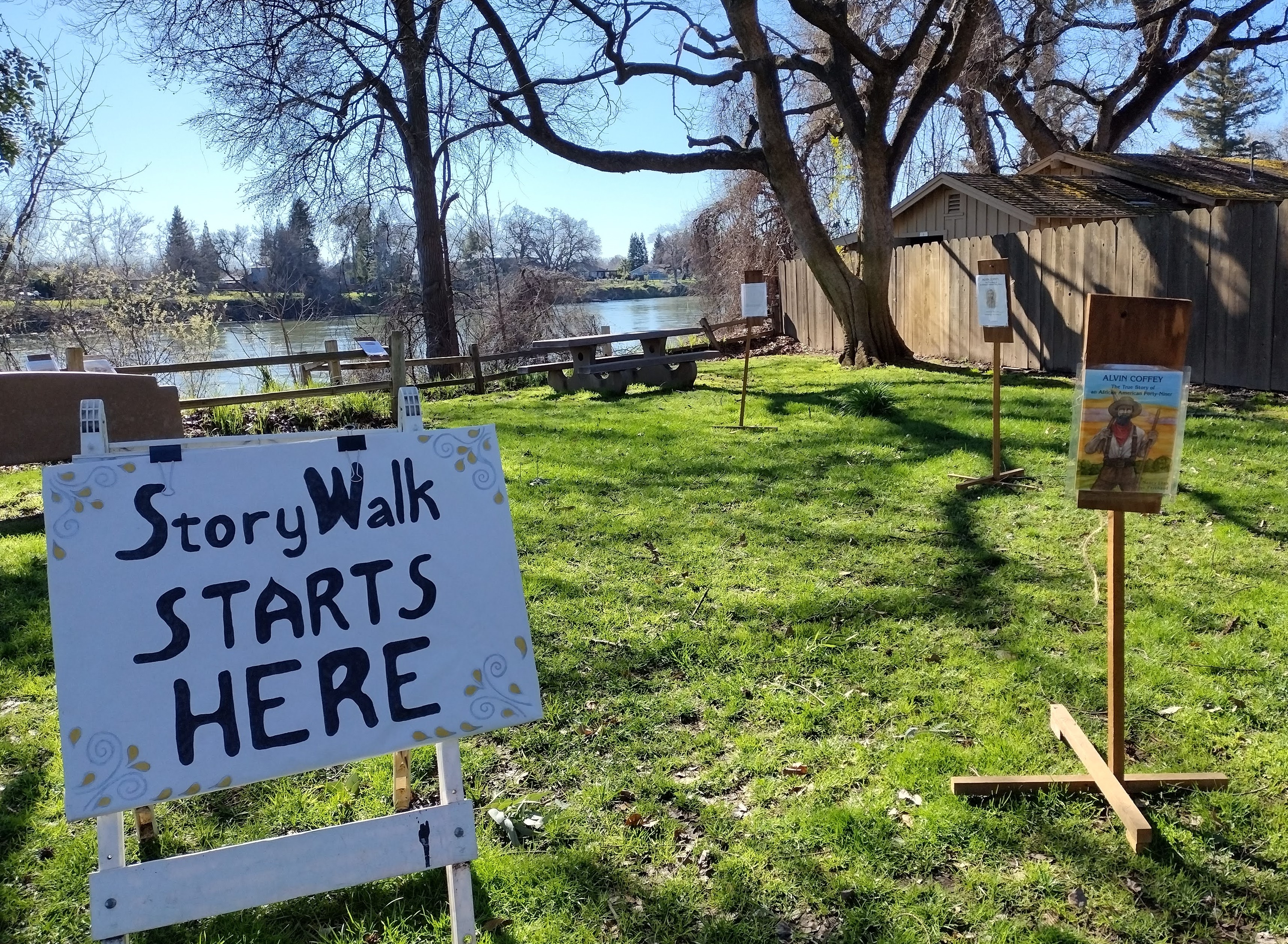
Today is a beautiful day to be out and about, so I went to William B. Ide Adobe State Historic Park in Red Bluff to walk their StoryWalk.
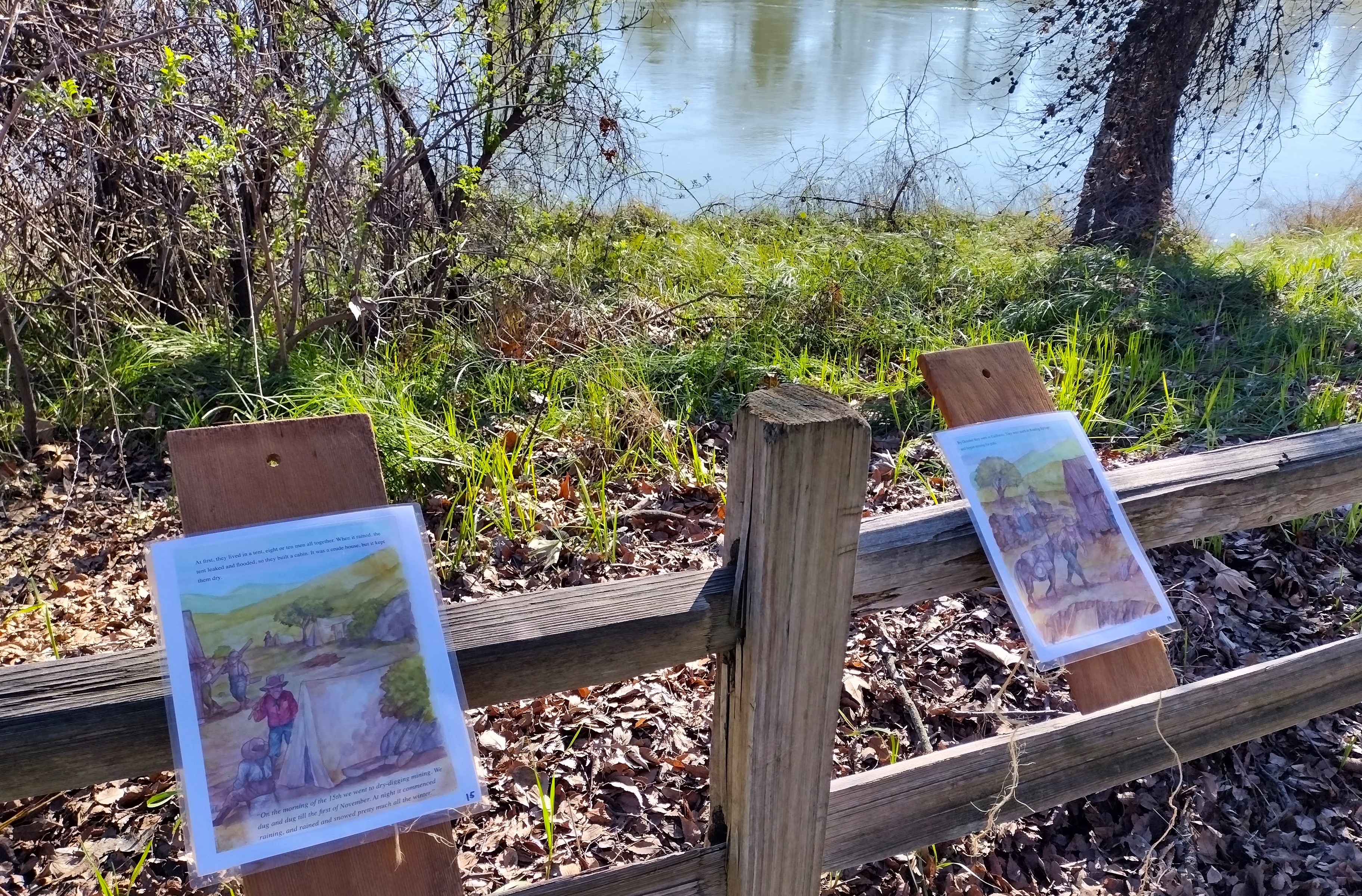
The guides at Ide Adobe do a StoryWalk every month, featuring a seasonal or fun picture book. Today’s book, in honor of Black History Month, was my book on Alvin Coffey, African-American Forty-Niner. The pages were cut apart, laminated, and posted on the fence along the river. Read at your own pace.
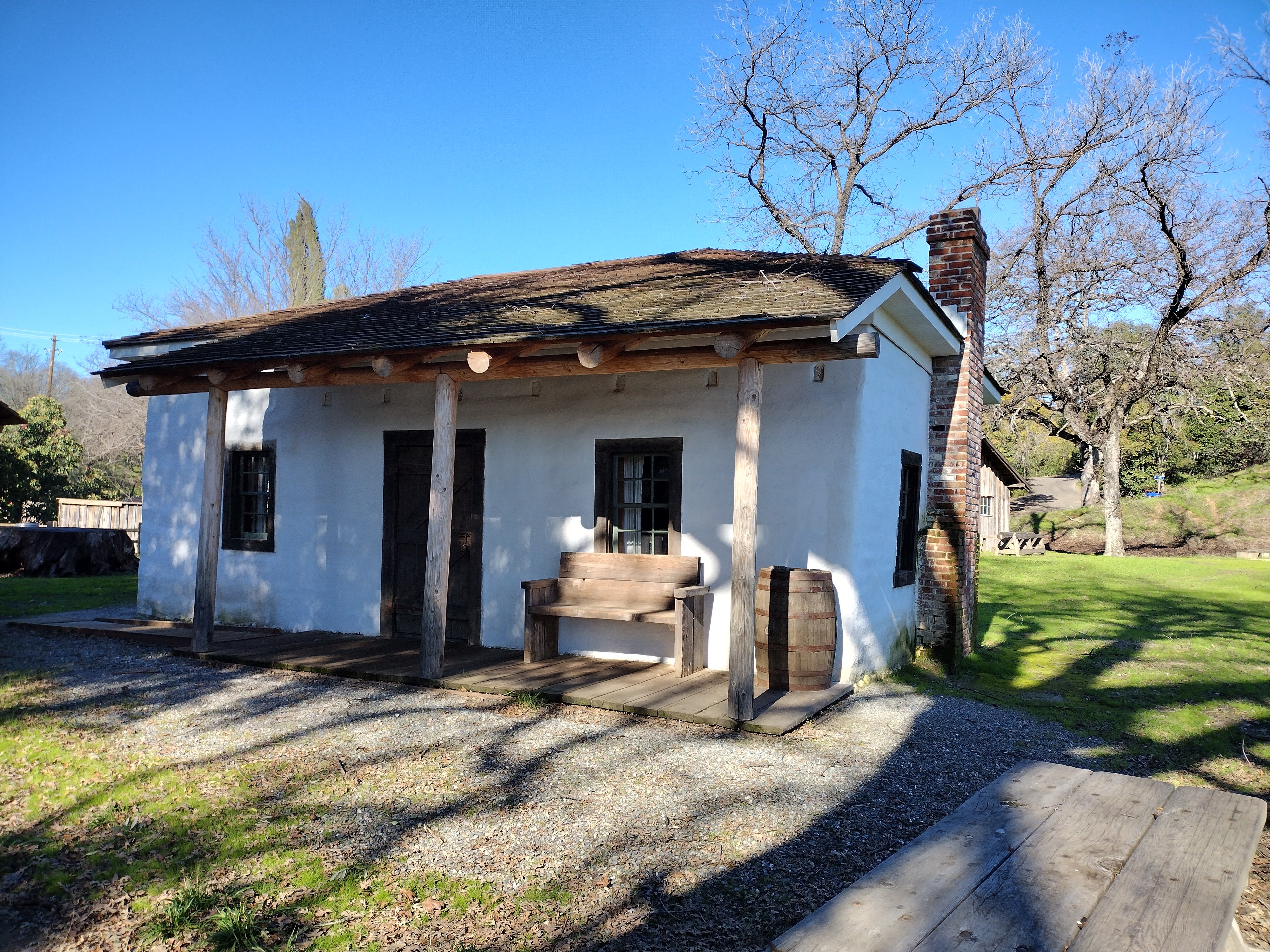
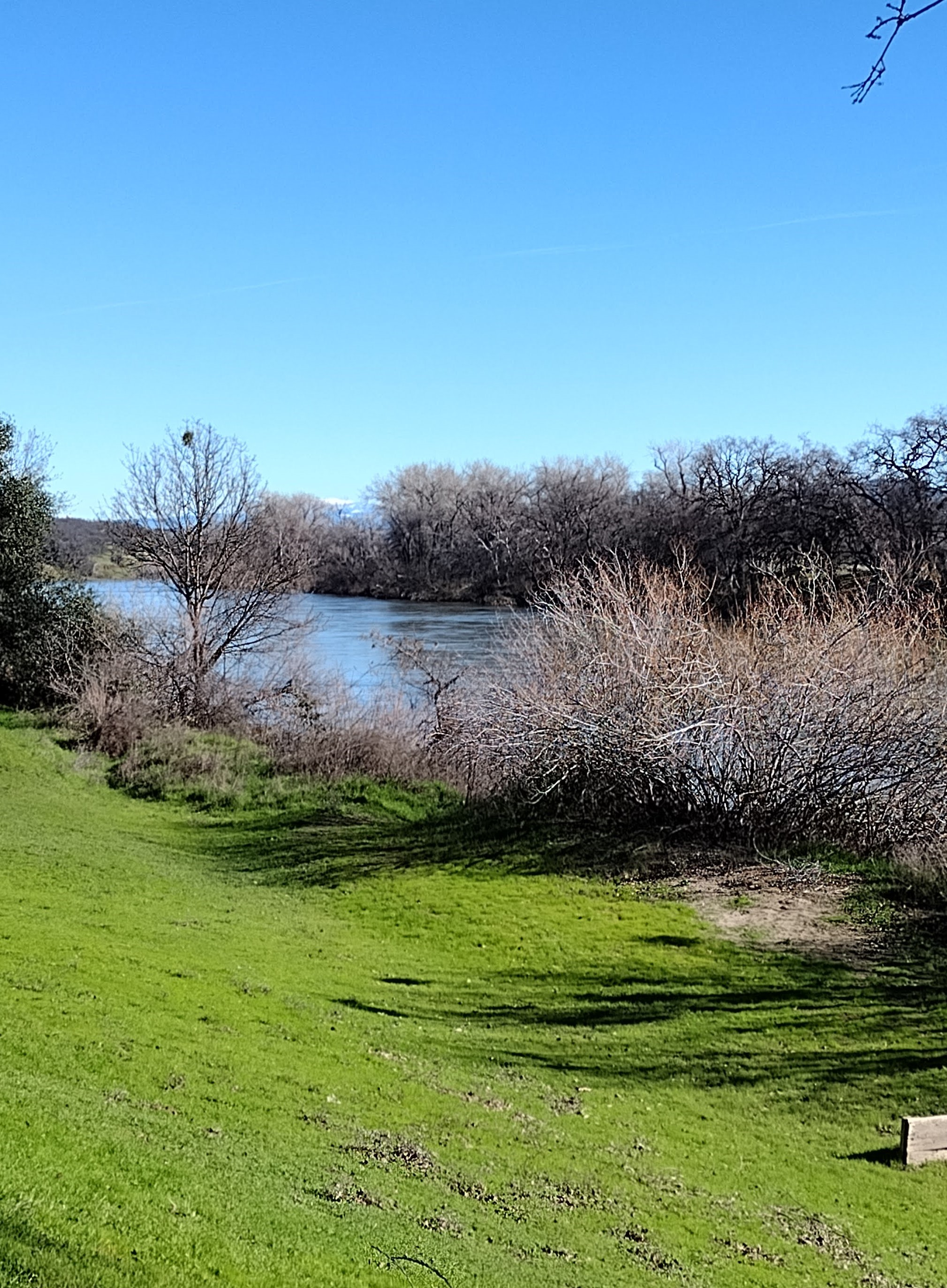
If you want to see what pioneer life was like on the California frontier in the 1850s, Ide Adobe SHP is the place to go. It sits on the banks of the Sacramento River, and shows how a family might have lived, with its adobe cabin, water well, smokehouse, garden, blacksmith shop, and garden.
It was once thought that William B. Ide, a leader of the Bear Flag Revolt and the first (and only) president of the short-lived California Republic, lived here in this adobe house. That is now considered incorrect, but the State Park still bears his name and honors his legacy. The site is just north of Rancho Barranca Colorada, the Mexican land grant that Ide owned jointly with Josiah Belden.
The adobe was actually built in 1852 by A. M. Dibble, an early settler in Red Bluff. It changed owners numerous times over the years, until acquired by California State Parks. The site was the location of a ferry across the Sacramento River.
Spring is the perfect time to visit Ide Adobe State Historic Park. Take a walk down by the river. Look for birds and wild critters. The grounds are open sunrise to sunset and the Visitor’s Center is open Friday to Sunday, 10 a.m. to 4 p.m. Check their Facebook page for the next StoryWalk activity.
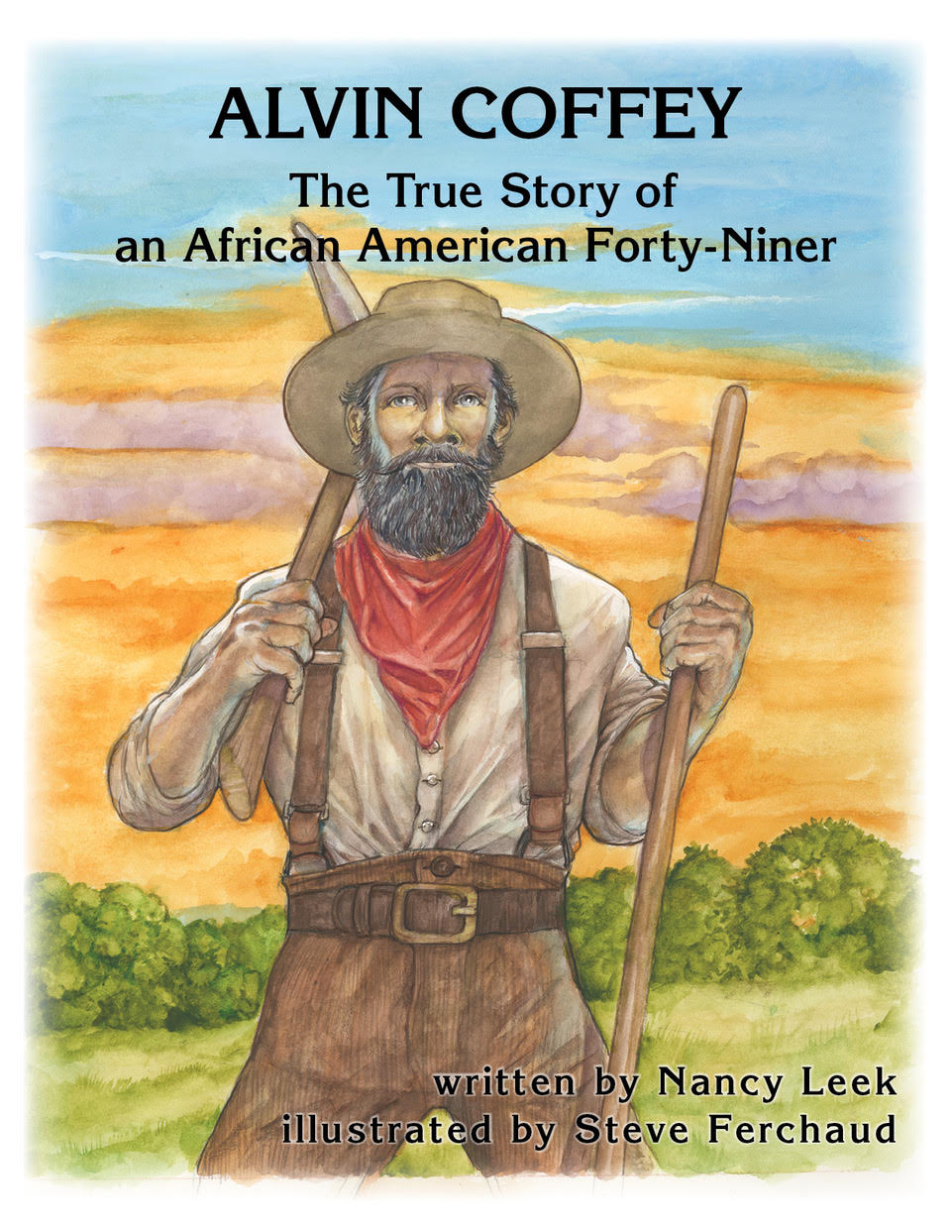
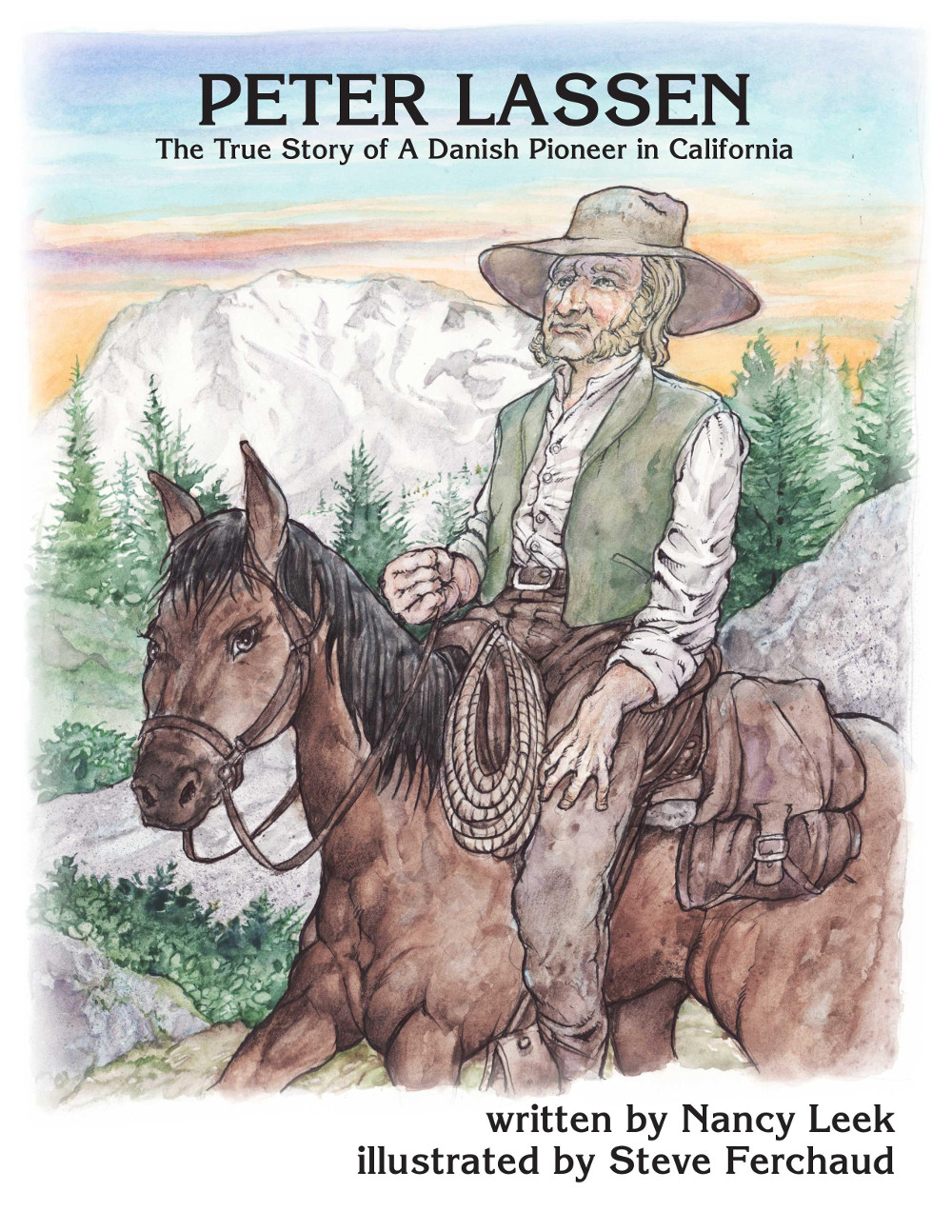
Alvin Coffey is getting some attention during Black History Month! The Red Bluff Daily News announced that my book, Alvin Coffey: The True Story of an African American Forty-Niner, will be the featured book at a StoryWalk activity at Ide Adobe State Historic Park.
The event takes place on Saturday, February 10th, from 10 a.m. to 1 p.m. You can check it out on the Ide Adobe Facebook page. There will be crafts and games and lots of fun related to Black History in the California Gold Rush.
I am honored to have my book featured at a history activity in Tehama County, where Alvin and his family settled and prospered. Come out and learn how black Americans made history right here in the North State.
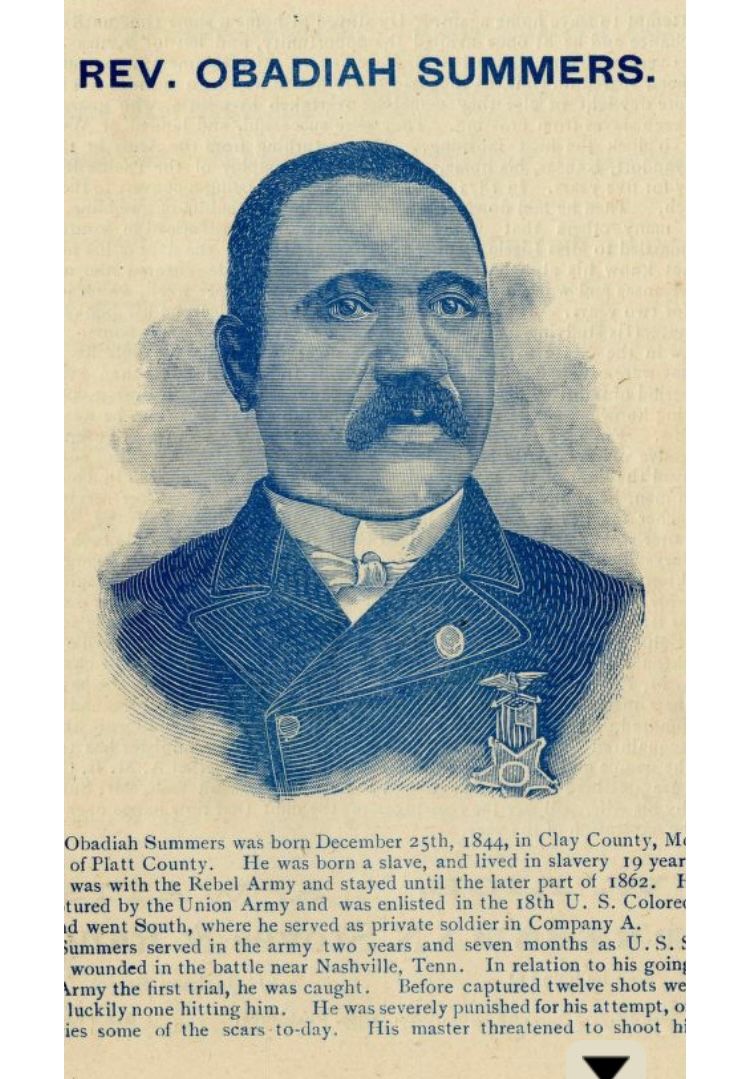
Obadiah Summers served as pastor in the African Methodist Episcopal Church in Chico in 1885, before moving on to serve congregations and build up churches in Sacramento, San Francisco, and Oakland.
Summers was born a slave in Missouri in 1844. During the Civil War he was compelled to serve in the Confederate Army as a servant to a Confederate officer. He was captured by Union forces in 1862, and had no intention of returning to Missouri as a slave. He enlisted in the Union army on January 18th, 1864, in Wyandotte, Kansas and served as a private in Company A of the 18th Regiment of the United States Colored Troops.
After the war he went to work for the railroad and in 1871 was licensed to preach by the A.M.E. Church. He probably worked at both jobs for some time. During his time in Chico he also seems to have been ministering to an A.M.E. church in Marysville.
Chico Weekly Enterprise 9 September 1885
In September 1885 the Chico Weekly Enterprise appealed to its readers to “Help Them Out.” Rev. Summers was raising money to clear the church of debt and was seeking help from Chico citizens.
In addition to appealing for donations, the church raised money with a variety of social activities. In May a social was held which the newspaper labeled a “grand and pleasant affair.” After recitations and songs, ice cream and cake were served. It wasn’t reported how much admission was charged or how much money was raised, but it was typical to charge 25 cents.
But to pay off a debt of over $100, the church was still seeking contributions. In his diary John Bidwell recorded several visits in May 1885 by “Rev. Mr. Summers (colored)”. These visits were surely part of the Rev. Summers campaign for contributions.
John Bidwell doesn’t record how much he gave, but he could be counted on to be generous to churches. On July 7, 1886, he notes “Rev.O.Summers (colored) lectured in our church.” That would have been the Presbyterian Church.
Widely popular and admired, Obadiah Summers was appointed the first black chaplain to the California State Assembly in 1895. The Chico Weekly Enterprise remembered and congratulated him.
Rev. Summers was married and the father of seven children. He died in Oakland on March 15, 1896 at the age of 51 and is buried in the Mountain View Cemetery in Oakland.
Get ready for Black History Month! Alvin Coffey is the ideal book to highlight black history in California.
As 4th grade students study the Gold Rush, they learn about the prospectors who came seeking gold in the rivers and hills of our Golden State. Too often the image presented is a white prospector. But men (and some women and children) came from every country and every race and ethnicity on the face of the earth.
African Americans came, both enslaved and free. Free blacks from the Northern States came looking for gold, but also for freedom from prejudice and greater opportunities.
Enslaved men from the South, like Alvin Coffey, had the choice made for them by those who claimed to own them as property. But Alvin knew it was an opportunity to earn his freedom and freedom for his wife and children. It must have been galling for Alvin to labor to make another man rich. But he persisted, hoping that the money he earned on his own time would buy him a better life.
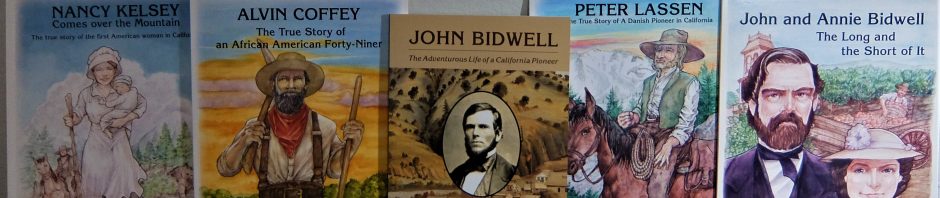
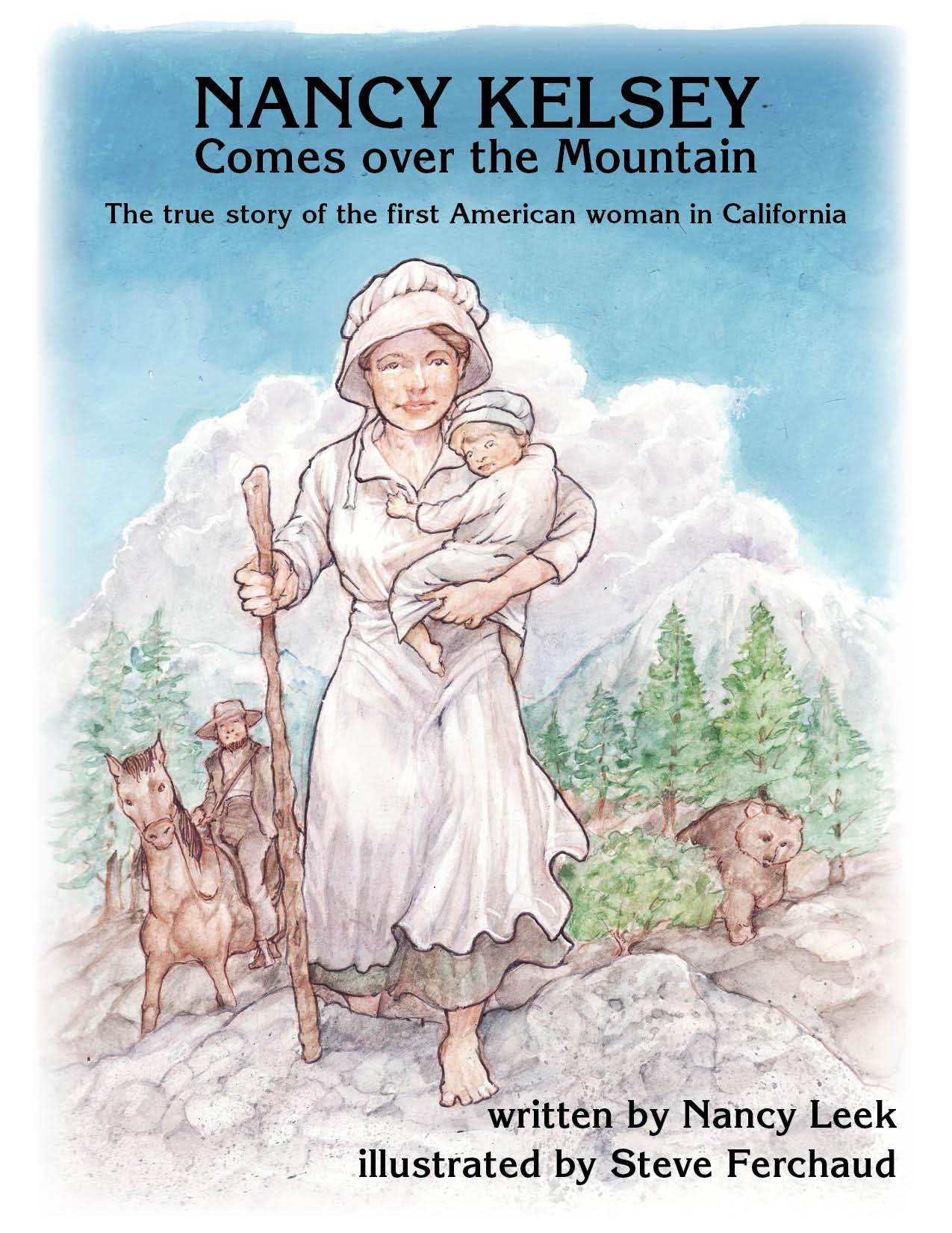
I read and researched everything I could find on Alvin Coffey, including primary sources. The book is historically accurate and visually appealing, with full color illustrations on every page by Steve Ferchaud.
You may not think a picture book is for you, but you can buy one for a school library, a 4th or 5th grade teacher, or a grandchild or young friend. It’s an exciting story with an inspiring message.
I am also available to do presentations to schools and groups. I love talking to kids, and I am pretty good with adults too. Contact me to visit your class or organization.
A cold, clear morning in January 1848. Jim Marshall goes out early to check the tailrace of the sawmill that he is building for John Sutter on the American River. The night before he had turned the water from the river into the tailrace to deepen and widen it. Each morning he inspected it to see if it had become deep enough to adequately carry off the water from the waterwheel.
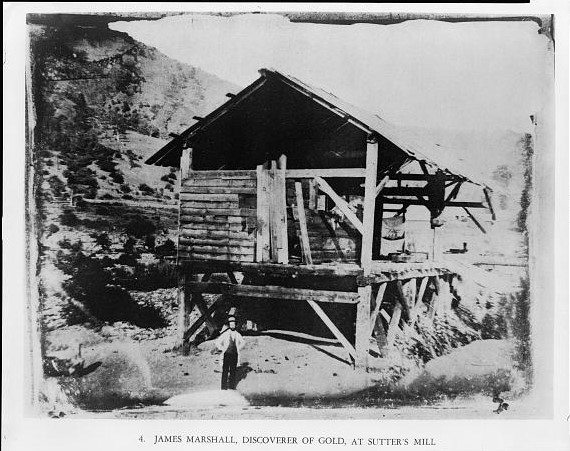
The Library of Congress labels this “Photomechanical reproduction of the 1850 (?) daguerreotype by R. H. Vance shows James Marshall standing in front of Sutter’s sawmill, Coloma, California, where he discovered gold.” Probably not actually Marshall in the picture.
On January 24 Marshall noticed some bright and shiny flecks of metal in the water. Could it be gold? He was sure that it was, and tests proved him right. And so the stampede for riches that we call the California Gold Rush was on.
Was Jim Marshall the first to find gold in California? His name would go down in history as the discoverer of gold in California. But he wasn’t the first to find gold.
There was Jennie Wimmer, wife of Marshall’s assistant and cook for the men building Sutter’s Mill. She had seen gold mined in Georgia and had told the men that she was sure that the sparkles she saw on the river bottom were gold. But they ignored her.
Before Jennie there was Margaret Hecox, who came to California with her family in 1846. Coming down the Yuba River, she and another woman went to wash clothes.
We were busy at our washing down near the stream, when something brightly gleaming in the water attracted our attention. It looked like sands of gold. I gathered my apron full of the shining specks and carried it to Mr. Hecox, saying I thought it was gold. He laughed at me and seemed to consider it a good joke. This made me angry and I threw it away. I have always been sorry that I did not keep it and wait until I could have it tested. I am sure now that it was gold.
In 1844 Pablo Gutierrez and John Bidwell went searching for gold in the mountains. Pablo recognized the landscape, the soil, and the rivers as being like that of the gold-mining regions of Mexico. But before they could get the equipment they needed, the short-lived rebellion called the Micheltorena War intervened. The Californios rebelled against the new governor — Manuel Micheltorena — and his henchman sent up from Mexico City. Sutter sided with the Mexican government and took Bidwell, Pablo Gutierrez, and a troop of Indian soldiers along with him. Pablo was captured while carrying messages and hanged as a spy.
Before Pablo Gutierrez, there was Jean Baptiste Ruelle, a French-Canadian fur trapper who discovered gold in the San Fernando Hills in 1841. Bidwell later wrote:
The first gold discovery in California so far as I know, was made in 1841 by “Juan Baptiste Ruelle,” at a place in the mountains about 30 miles N.E. from the Mission of San Fernando. He was a Canadian trapper but had lived in New Mexico, and worked in Placer Mines. His discovery in California created no excitement whatever, owing to the fact no doubt of the very small yield.
No doubt there were others who found a bit of gold, but never cashed in on their find. Everybody knew about Ruelle’s mine, and everybody knew the earnings were hardly worth the work. The great rush for gold would have to wait until Jim Marshall picked those few shining flecks out of the tailrace on January 24, 1848.
It was a discovery that would utterly change the landscape, the people, and the culture of California.
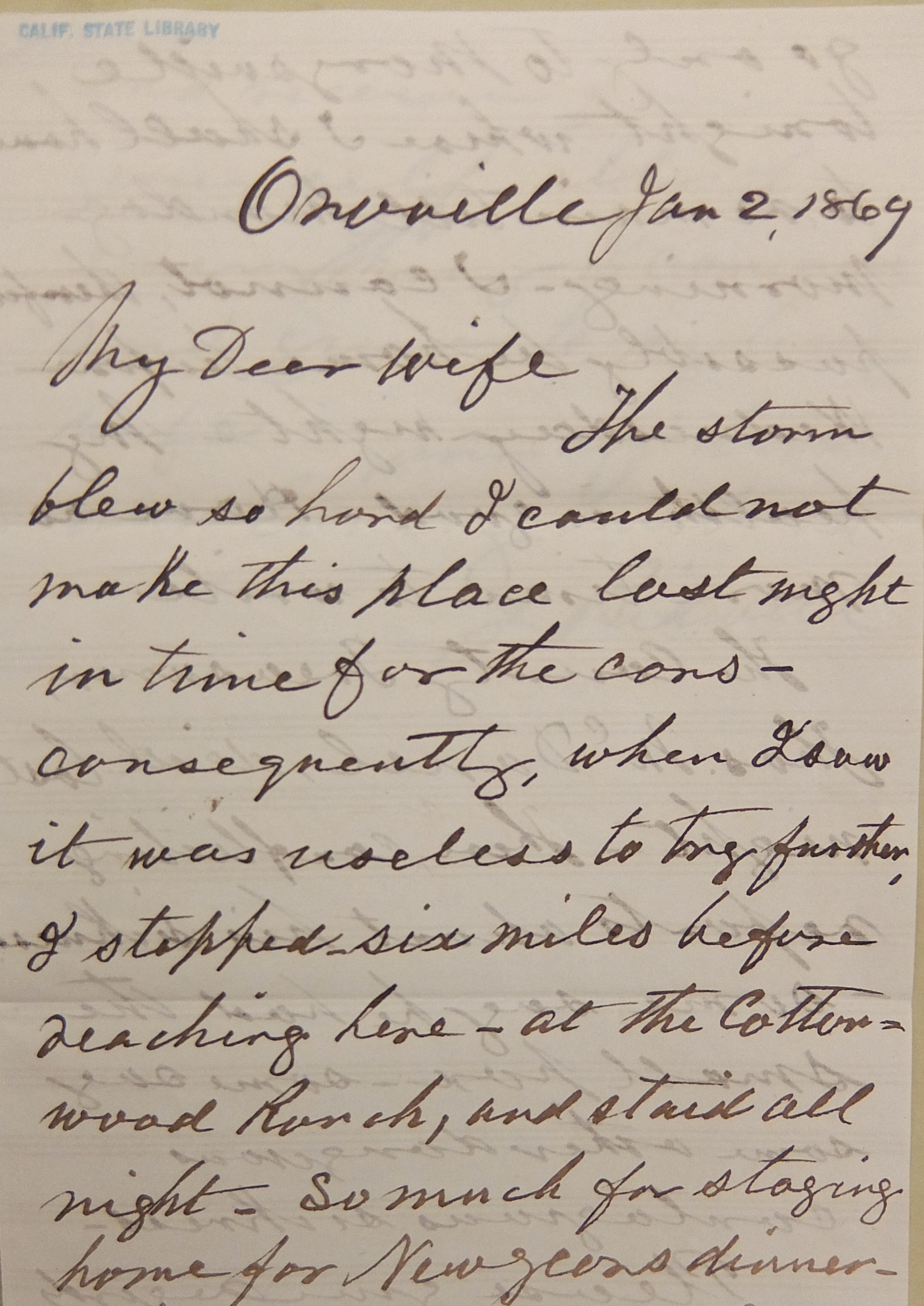
. . . as John Bidwell traveled toward Oroville on Friday, January 1, 1869. He drove a buggy and intended to take “the cars” (the railroad) to Marysville and then go by steamboat to San Francisco on business. But the weather was horrible. From Oroville he wrote to Annie:
Oroville Jan. 2 1869
My dear wife The storm blew so hard I could not make this place last tonight in time for the cars – consequently, when I saw it was useless to try further, I stopped six miles before reaching here – at the Cottonwood Ranch, and staid all night.
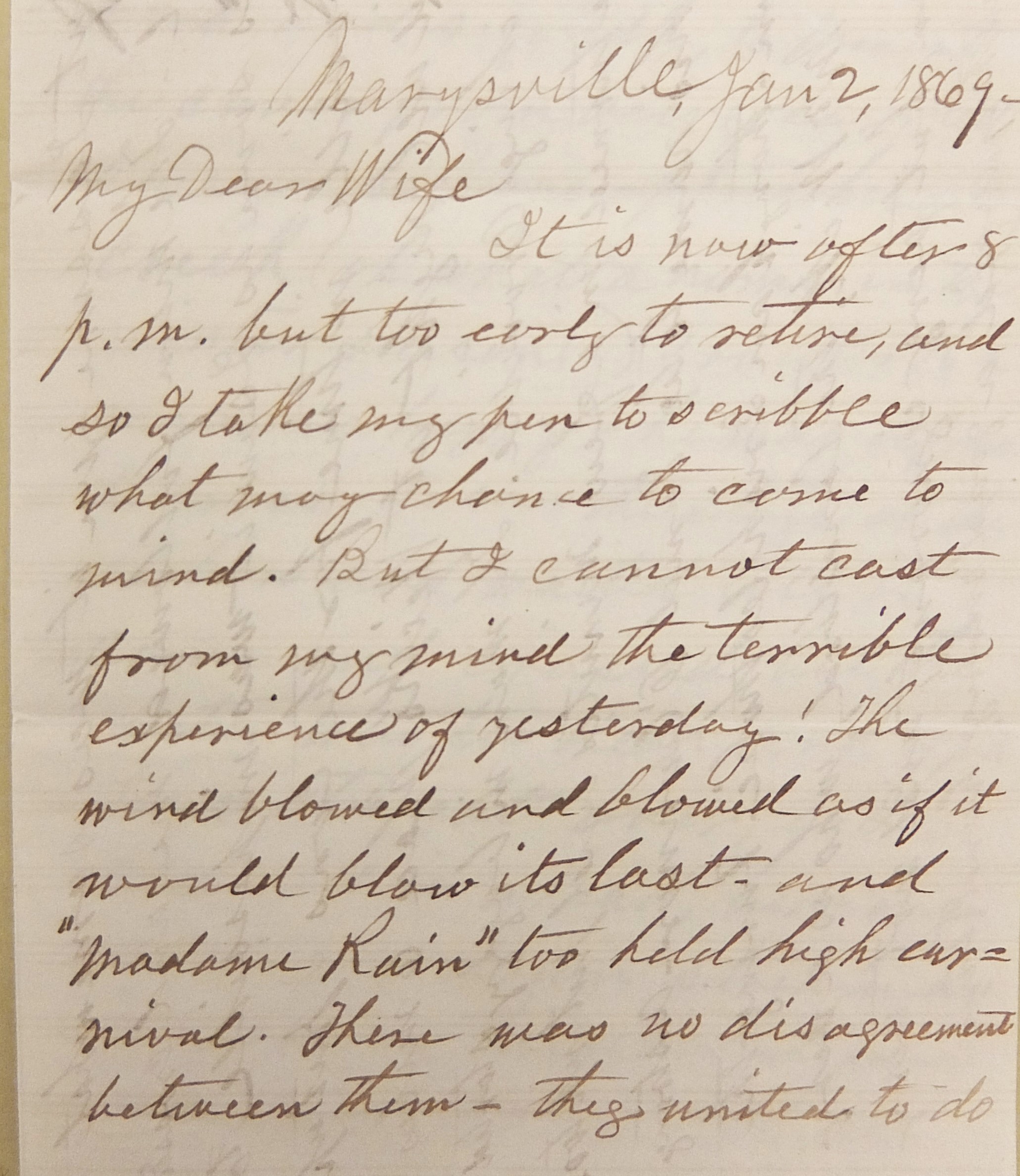
From Marysville he wrote again to describe his ordeal.
My dear wife It is now after 8 p.m. but too early to retire, and so I take my pen to scribble what may chance to come to mind. But I cannot cast from my mind the terrible experience of yesterday! The wind blowed and blowed as if it would blow its last and “Madame Rain” too held high carnival. There was no disagreement between them – they united to do their worst.
I was obliged to put down the buggy top for two reasons – first because the horses could not pull the buggy against the wind, and secondly, to prevent the cover from being carried away. As I was approaching Dry Creek (oh what a name in the winter season!) I overtook a man in a buggy – he was afraid to cross. We saw the stage at the station and waited till it came and crossed; but the water was too deep and rapid to go straight over, so I plunged in ahead, bearing slantingly downstream so as to have the current favor me, and came out all right. But I assure you it was somewhat frightful. The man followed me and crossed over. As soon as I saw it was impossible to reach Oroville in time for the cars I put up and staid all night at Wick’s place 6 miles before reaching Oroville.
Bidwell was followed a road that today is Highway 149 (more or less). Dry Creek intersects the road a mile or so south of where 149 branches off from Hwy. 99 and some three or four miles north of Wicks Corner, the junction of Hwy. 149 and Hwy. 70. Since “it was useless to try further” he stopped overnight at the ranch of Moses Wick.
Wick’s ranch was on the heavily traveled Marysville-Shasta Road and in addition to raising cattle he kept a hotel for travelers.
I don’t like driving a car on a paved road in heavy wind and driving rain. Imagine what it would be like in a buggy drawn by one or two horses, with no bridge over a raging stream.
The man in the other buggy was an Irishman named Daniel O’Connor, “a strong Union man, though an Irish Catholic.”
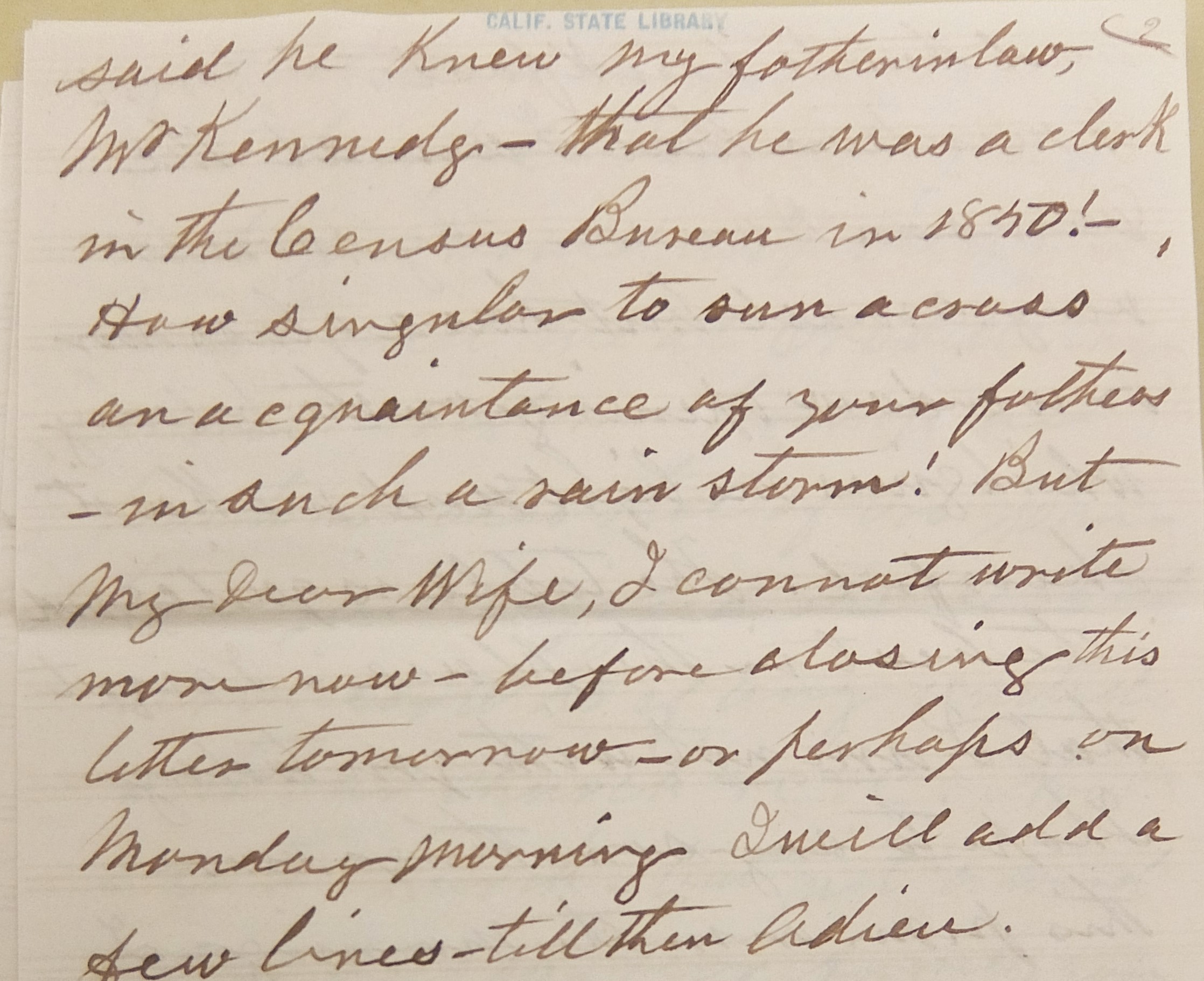
Mr. O’Connor “said he knew my father-in-law, Mr. Kennedy – that he was a clerk in the Census Bureau in 1850! How singular to run across an acquaintance of your father’s in such a rain storm!”
In his diary John Bidwell noted:
Fri. January l. Set out for San Francisco – Stormy day, heavy southeaster – Roads horrible – Reached Wick’s ranch and staid all night – Met a Mr. Daniel O’Connor once in the Census Bureau.
And that is how the year 1869 began for newly-married John Bidwell, trying to get to San Francisco through the wind and the rain of a very wet year.
This is not my usual history of Northern California post. Instead I am sharing a bit of family history for the New Year.
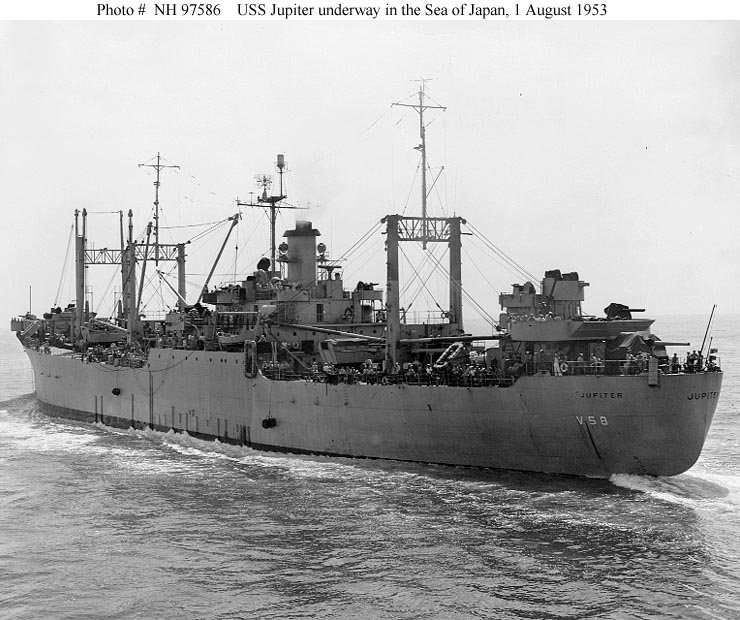
My father, Alfred R. Norris, was a Chief Warrant Officer in the U.S. Navy. From 1958 to 1961 he served as officer of the deck on the USS Jupiter (AVS-8) in Yokosuka, Japan. On New Year’s Day 1961 he was the officer of the day and as was customary, he recorded the deck log for the midwatch (midnight to 4:00 a.m.) in the form of verse.
The ship is moored tightly, starboard side to berth three
With condition Yoke set, and lights on the tree,
Eight inch lines doubled, to hold us secure
And a headwire out, just to make sure.
The services required, including a phone
Are coming aboard from the land of Nihon
Ashore in Yokosuka, the crew’s having fun
For that’s where we’re spending New Year ’61.
The man who is boss in the harbor tonight
Is COMDESFLET ONE, with his two stars so bright.
With many ships present, and all painted gray
PACFLET, various units, all happy and gay.
For the month of December, the iron was cold
Even the Captain was freezing, in spite of his gold.
Now boiler one’s steaming, it’s warm again here,
And we’re wishing you all, a Happy New Year.

A.R. NORRIS
Command Duty Officer
The Navy has very specific instructions about how the log is to be kept. However, according to the National Archives “Pieces of History”, an exception can be made for the New Year.
The sole exception to the tight regulations of the deck log takes place on the first night of the New Year during the mid-watch (midnight to 0400), when a ship may record the first entry of the New Year in verse. Navy regulations still apply, however, and however artistic the poet may be, they must still include the mandatory requirements of the current Navy Regulations: “the sources of electric power, steam and water; the state of the sea and weather; position of the ship; status of the engineering plant; courses and speed of the ship, bearings and distance of objects sighted; changes in status of ship’s personnel, disposition of the engineering plant, and even the strain upon anchor chain or cables when anchored and the placement of lines while moored.”
The custom seems to be in decline and fewer of these poems are being recorded. But it’s a fun tradition and one that I hope will not fade away entirely. You can read more about New Year’s midwatch poetry at Midwatch in Verse. The authors have even published a book.
A few notes: “Lights on the tree” (I think) refers to the lights that were put out on the mast at Christmas time. I remember seeing that. “Condition Yoke set” refers to the level of material readiness on board ship. There are three levels: XRAY, YOKE, and ZEBRA. Yoke is usual while in port.
John and Annie Bidwell hosted a pair of distinguished guests at their Chico home this Christmas season. Invited to the festivities were local doctor Oscar Stansbury (Mrs. Stansbury sent her regrets) and General William Tecumseh Sherman. General Sherman’s visit had long been anticipated and the Bidwells were delighted to welcome him to their home at last.
Gathering near the Christmas tree with Mrs. Bidwell, the three men conversed on a wide variety of topics, much to the interest of the other guests. Dr. Stansbury told of a medical call that took him out on a dark and stormy night, in which only the sagacity of his horse Jenny saved him from being swept away by a raging flood. Two versions of the conversation were recorded–
John Bidwell and General Sherman reminisced about their first meeting in 1847 when Sherman was a young lieutenant newly arrived in California. The talk turned to politics, with Sherman supporting the Republican candidate and Bidwell backing General Neal Dow, the candidate of the Prohibition Party, “the party of the future.” Then they discussed the visit to Cherokee, where General Sherman demonstrated his prowess with the water cannon, although both men deplored the devastation wrought by hydraulic mining.
The cast gathers by the Christmas tree. Left to right: Christine Buckstead, Byron McLaughlin, Robyn Engel, Nick Anderson, Nancy Leek, Adrienne Glatz, and Dino Corbin.
Mrs. Bidwell gently reminded the men that it was time to enjoy music in the parlor, where Christmas carols were sung by Adrienne Glatz, accompanied by Alicia Glatz on Annie’s piano.
“Christmas with the Bidwells” is an annual event presented by the Bidwell Mansion Association. The mansion was decked out in festive decorations and refreshments were served in the Visitor’s Center. The Chico High School Madrigal Singers performed a program of holiday songs old and new. Look for “Christmas with the Bidwells” again in 2024.





 goldfields