In late May and early June of 1848 John Bidwell was prospecting for gold on the Feather River. He had already found some gold, but he hadn’t yet found rich diggings. The search continued until he struck pay dirt on July 4th at what became known as Bidwell’s Bar.

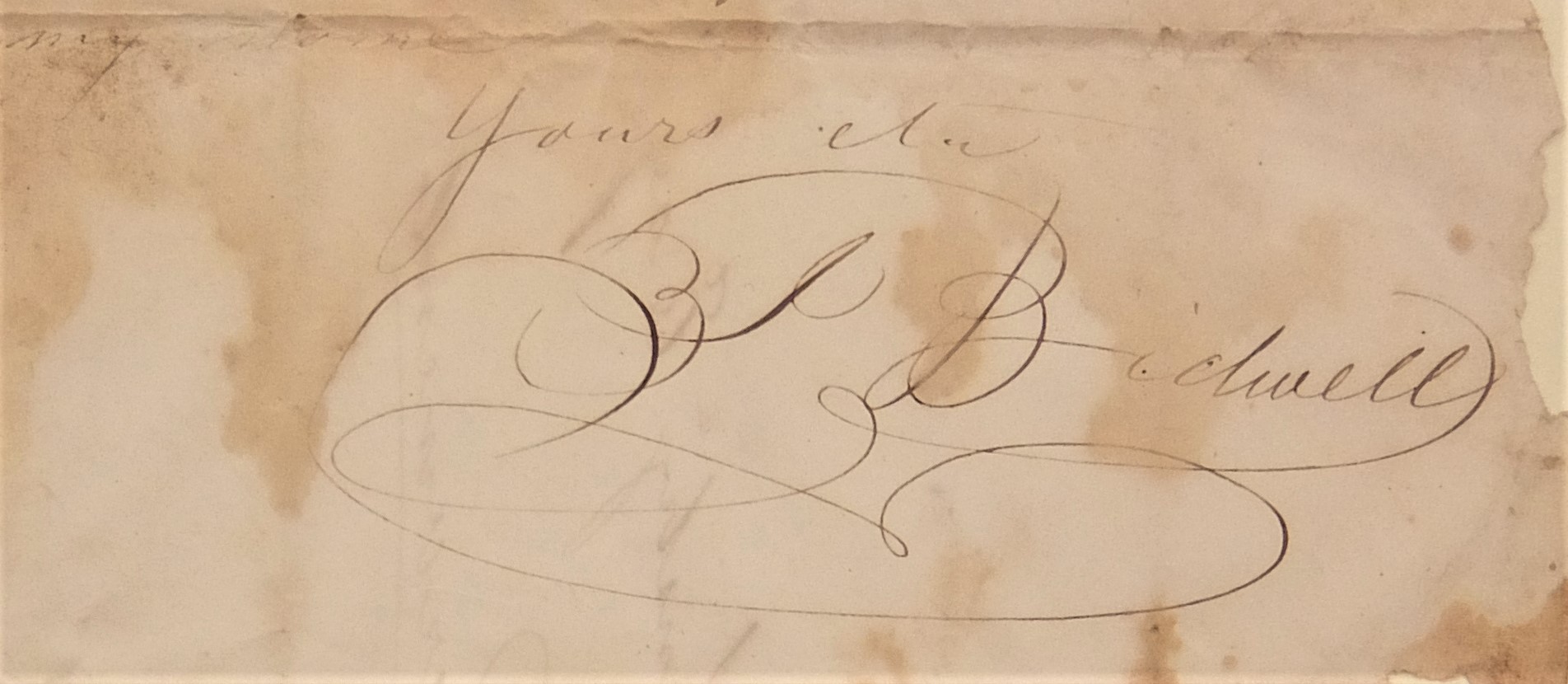
On June 24th he wrote from “Feather River below first camp” to his friend and partner, George McKinstry. The letter tells us a number of things about the first days of the Gold Rush and life in the “diggins.”
Mr. McCall arrived yesterday morning and brought two letters from you dated the 20th inst. We spent the remainder of the day in search of a place to construct a washing machine, but did not succeed in finding one. McCall and Dickey go again today to look at another place.
I don’t know who Mr. McCall is — he doesn’t show up in Bancroft’s Pioneer Register and Index. Dickey is William Dickey, owner of Rancho Chico at the time. A “washing machine” was a cradle, so named because it was rocked to agitate the water and sand. It made washing the gold out of the dirt easier and quicker than panning.
Last week we did tolerably well washing the sands along the river – we made something not far from $1000 – This week we have done but little – The first camp above where we were when you came to us, was good – the first day of our arrival there we took out not less than 300 dolls. – but the place soon became exhausted it being small, and we have not been able to find as good a one since.
We are not making over $50 per day with all our Indians – and if we do not find a good place in one or two days at most, I want to go down either to Yuba or the American Fork. So I think that the boat had better not be sent up until we determine or if it is already on the way when you receive this, have it detained at Hock. I am expecting this letter will find you of the road up, but thought you might dispatch the boat ahead with direction to pass on up from Hock I have written a few lines to Mr. Cameron, requesting him to detain the boat until you receive my letter. I shall expect you to either come or send an answer to this, stating your opinion of going below etc.
$1000 in a week sounds great, but $50 a day probably barely covered the expenses of transportation, labor, and provisions.
Everything that Bidwell writes about “Hock” (Sutter’s farm on the Feather) and the boat just goes to show how difficult communication could be. Bidwell can’t be sure where McKinstry is or when his letter will reach him. Mr. Cameron was Duncan Cameron, an employee of Sutter’s at the Hock Farm.
“With all our Indians” tells us that Bidwell and others were using Indian labor to extract the gold. Bidwell had already developed a relationship of trust with the Indians who lived where he first settled on Little Butte Creek. He had employed Indians to help him dig ditches and plant crops.
Bidwell (and others) have been criticized for paying the Indians with beads, blankets, clothing, and foodstuffs. But the reasons for this are easy to discern. Very little coin was in circulation and the Indians were not familiar with money as a means of trade. Beads and blankets were things they could use. Whether they were paid sufficiently is a separate question. The evidence from other letters shows that Bidwell used persuasion and payment to get Indians to work for him. He never coerced them and was critical of men who did.
As more white miners flocked to the goldfields, using crews of Indians fell out of favor. Forty-niners saw it as a type of cheating; they liked to see every miner working on an equal footing, not aided by any type of paid or unpaid help.
I am entirely out of coffee; I would like a few more shirts having sold nearly all of these which I brought up. I see plainly that we cannot keep goods in camp to supply miners unless we can find a place where we can establish ourselves permanently for some time or are better provided with means of transportation. I cannot leave camp or I would meet you at Hock. If I were certain that you would be there I should come down any how. If you come you can find camp by asking any of the Indians along the river mentioning my name.
John bidwell to George McKinstry, June 24, 1848. John Bidwell Papers, California State Library
Bidwell and McKinstry are not just mining gold; they have gone into business to supply goods to other miners. They need a permanent location, which they will find at Bidwell’s Bar, and a reliable form of transportation to the diggings. Boats could bring goods as far as the Hock Farm or Marysville, but what then? Pack mules were the usual method, but here we can see that they are still developing their system.
More from the diggins next time.


 goldfields