Come and Hear about Pres Longley

Pres Longley, the Bard of Butte

Pres Longley, the Bard of Butte

The Annual Meeting of the Bidwell Mansion Association is coming up on Sunday January 26, and John Rudderow and I will be speaking on our book The Miner Poet: Poems of Pres Longley. There is a reception at 5:30 (cookies, coffee, and lemonade), and the meeting is at 6:00 p.m. After a short business meeting, we will be speaking and answering questions.

If you like poetry, if you are interested in local history, or if you want to know more about what it was like to be a Gold Rush miner, please come. Pres Longley, the poet of Helltown and the bard of Butte, was well-known in for his verse, which appeared in local newspapers. He knew John Bidwell pretty well and was sometimes a guest at the Mansion.

It was Joseph Kennedy, Annie Bidwell’s father, who asked Pres, “Does poetry pay?'” Pres thought about that a moment, and then replied:

Does poetry pay?
No, not in dollars and cents.
But it must be inferred
There is some recompense.

The recompense for Pres was friendship and conviviality, a tale well-told and the occasional pie. If you would like to know more about our own miner poet, join us at Bidwell Mansion Visitor’s Center on January 26.

Posted in Uncategorized | Leave a comment

Planting Out Cherry Trees

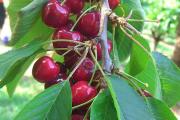
January is the time for planting bare root fruit trees, whether you are planting now or in the 19th century. Here are two entries from John Bidwell’s 1871 diary:

Fri. January 6.
Setting out cherry trees – Ramage & choir met here to have a last sing – Present Judge Hallets, Harry Hallet – Warren – Farrell, Mrs. Clark & Misses Wilson & Allen. Weather beautiful – Mr. Cochran fell on his horse & was hurt –
Sat. January 7.
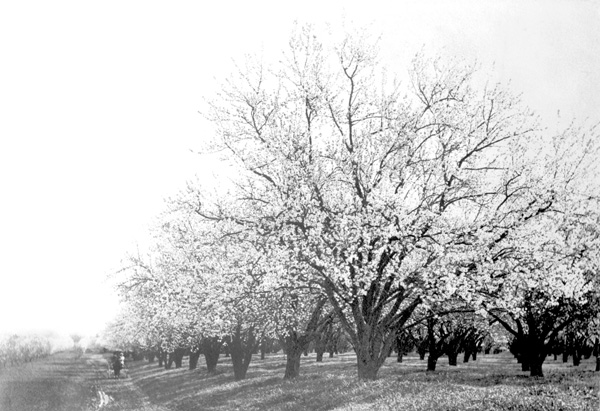
Day fine – Set out cherry trees – Cleared off garden on S. side of creek – Recd. money on Church note – and paid off debts – H.C. Bidwell arrd. from mts –

cherryHe planted the cherry orchard behind the Mansion. It later became the site of Chico Normal School. H. C. Bidwell was his half-nephew Henry C. Bidwell, son of his half-brother Daniel Bidwell. Henry became superintendent of the Plumas County Mining Company.

Posted in cherry orchard, fruit trees | Leave a comment

The Fate of the Sutter Gun

John Sutter’s little Russian 4-pounder wandered around a bit after the end of the Mexican War, from Monterey to Santa Barbara to San Francisco. When Captain Lippitt of the 7th New York Volunteers, in command of the garrison at Santa Barbara asked for an additional field piece, Colonel Jonathan D. Stevenson refused, writing in his letter to Lippitt that “The piece which you now have is an excellent one, probably one of the best in the country, known as the Sutter Gun. It has the admiration of all the participants in the glories of the Mesa and San Gabriel conflicts.”

In 1848, when the 7th New York Volunteers were mustered out, Captain Joseph Folsom (for whom the city of Folsom is named) returned the gun to John Sutter as his property. Sutter used it to fire salutes from Sutter’s Fort.

At this point gold had already been discovered at Sutter’s Mill by James Marshall. In the subsequent rush for gold, Sutter was overwhelmed by the squatters and thieves who swarmed over his vast land holdings. Unable to hold onto his employees and facing mounting debts, Sutter retired to his Hock Farm near Yuba City.

He took the cannon with him and used it to fire salutes to passing steamships on the Feather River. I can picture him, at ease on his veranda, with a glass of brandy in his hand, waving to a passing ship and ordering the gun to be fired.

Sutter's Hock Farm

Sutter’s Hock Farm

In 1865 the house at the Hock Farm burned to the ground and Sutter and his wife retired to Washington, D.C. where for years Sutter fruitlessly pursued a request to Congress for compensation of his losses in the war and the Gold Rush. On his departure he donated the Sutter Gun to the Society of California Pioneers in San Francisco. These it remained on display until the 1906 earthquake, when it disappeared in the fire.

Did it melt into a heap of slag? Was it jumbled into the rubble that was dumped into San Francisco Bay? Or is it still resting somewhere in hiding?

The cannon that is fired nowadays each day at noon at Sutter’s Fort is a replica, cast from a sister gun that went back to Sitka when the Russians left Fort Ross. So if you visit Sutter’s Fort and watch them fire the gun, you are seeing the Sutter Gun  . . . . almost.

Posted in Sutter Gun, Uncategorized | Leave a comment

The Adventures of the Sutter Gun, part 3

It’s a little tricky to trace the movements of the Sutter Gun during the Mexican War in California. When John Sutter returned to his home on the American River after the Micheltorena incident, his Russian 4-pound bronze cannon was left behind in Southern California.  Maybe it was taken to pieces and buried at the end of that little war, or maybe just left in someone’s front yard. Accounts differ. But when war broke out again between the Americans and the Mexicans, it was in the possession of the Mexicans.

In December 1846 Commodore Robert F. Stockton and an army of marines and sailors marched on Los Angeles from San Diego, while Fremont’s army approached from San Pedro. Entering Los Angeles they found that the pueblo had been abandoned by General Castro and his army, who took the Sutter Gun and other artillery with them.

Castro retreated toward the Colorado River. Finding that the artillery slowed him down, he buried the cannon in the sand. With his force, as a prisoner, was Captain Charles Weber, who noted the burial site. When Weber was released by Castro later in the march, he walked back to Los Angeles and told Stockton where to find the cannon.

(By the way, Weber, a German, came to California in the same emigrant company as John Bidwell. He served in both the Mexican and the American armies, became a wealthy merchant and gold-seeker, and founded the city of Stockton.)

As the Mexican War proceeded, the Sutter Gun was hauled all over Southern California to fight in every major battle. It took part in the Battle of San Pasqual, fought by General Stephen Watts Kearny and his dragoons who had just arrived in California after their long and wearisome march from Kansas. Dispatched by Stockton to bring relief to Kearny, Captain Archibald Gillespie took along the Sutter Gun. After intense hand-to-hand combat, “the Sutter” was brought up and the Californios retired from the field. Twenty-one Americans were killed and seventeen wounded, making the Battle of San Pasqual the bloodiest battle of the war in California.

Next “the Sutter” took part in the battles of Los Angeles and La Mesa. In the latter battle it was concealed within a defensive square of soldiers. As the Californio cavalry advanced on the square, it opened up and the Sutter Gun fired volleys of nails, chain, and scrap iron. The cavalry retreated and the battle was won by the American forces. It was the last battle of the war in California.

For a thorough account of these events, read The History of the Sutter Gun, by Morgan Blanchard.

Stay tuned to learn the fate of the Sutter Gun

Posted in Uncategorized | Leave a comment

Adventures of the Sutter Gun (and John Bidwell too), Part 2

John Sutter wasn’t the only American to get a grant of land from Governor Manuel Micheltorena. The governor also gave John Bidwell a land grant, his first, at a site in the Sacramento Delta called Ulpinos. Micheltorena knew very well that the Californios disliked him and that a revolution was brewing. He hoped by granting land to men like Sutter and Bidwell to bring the Americans over to his side.

His ploy worked. Sutter put together a small army of Indians and Americans in his employ, and with John Bidwell serving as his aide-de-camp they left New Helvetia on January 1, 1845, taking the Sutter Gun with them. In Monterey they joined up with Micheltorena and the army moved southward. In was a long slow slog through the rain and the mud of a California winter. Bidwell later stated

“The varying scenes of that march, in the very wet and cold winter as it was, the transportation of baggage and ammunition on Mexican carts drawn by oxen over muddy roads, and through difficult passes I have no desire to recall or portray.”

The depredations of Micheltorena’s army drove the residents of California to the rebel side, and General Jose Castro was able to gather his own army of Californios and Americans. Near Los Angeles the two forces met in the Battle of Cahuenga, a battle that hardly deserves the name.

Both sides had about equal numbers, and both had artillery. They fired their cannons at each other, but only a mule was killed. Bidwell again:

“The artillery from both sides opened simultaneously at long range – Sutter with his American riflemen was directed to occupy a deep and winding gulch midway between the opposing forces and approach within rifle shot. Then for the first time the Americans with Sutter could plainly see that Castro had with him as many or more Americans than Micheltoreno.”

It wasn’t long before the Americans on both sides got together, started trading news from home, and decided to sit out the battle. Why should they kill each other over an argument about Mexican taxes?

But as aide-de-camp John Bidwell still had a job to do, carrying orders from Micheltorena to Sutter. He was captured by Castro’s soldiers, got away on his horse, and was captured again.

“Sutter & I started to rejoin Micheltorena – and were both taken prisoner by Castro’s forces, and were both conducted immediately to the presence of Castro which was at the adobe building of the Cahuenga Ranch. C received us in the most friendly manner threw his arms around Sutter – and called him his dear friend.”

Sutter might have been hung, but his old friend pardoned him and he was allowed to return to New Helvetia. The Sutter Gun stayed in Southern California. Micheltorena was put on a boat and sent back to Mexico. The Californios, eager to return to their ranchos and not needing a cannon, took the gun off its caisson and buried the pieces in the ground.

It would soon be resurrected, for the Bear Flag Revolt and the Mexican War were only a year away. But for the time being the Sutter Gun rested in somebody’s garden or field, and by the end of March 1845 John Bidwell was back at Sutter’s Fort, keeping the books and managing Sutter’s business affairs as before.

Stay tuned for more adventures of the Sutter Gun in the Mexican War.

Posted in Sutter Gun, Uncategorized | Leave a comment

The Adventures of the Sutter Gun, Part 1

A couple of years ago I wrote about the French Army muskets that ended up at Sutter’s Fort, after Johann August Sutter bought Fort Ross from the Russian-American Fur Company. Dismantling Fort Ross and sending every bit of useful equipment to Sutter’s New Helvetia was John Bidwell’s first job after arriving in California.

But Napoleonic firearms weren’t the only weapons that Bidwell transported to Sutter, and the story of the cannon that became known as the Sutter Gun is a true tale of global arms trading and California adventure.

From The Overland Monthly, 1893.

From The Overland Monthly, 1893.

The bronze four-pounder was cast in St. Petersburg in 1804, just in time to be used against Napoleon’s army.  But even though it could fire a cannonball up to a mile, it was considered too small to be useful against the larger French field artillery. So the Czar gave the cannon to the Russian-American Fur Company, which transported it across Siberia to Sitka, and eventually down to Fort Ross in California. When Sutter bought Fort Ross, Bidwell shipped the cannon down the coast, through the bay and delta, and up the Sacramento River to Sutter’s Fort.

Sutter acquired a few other ships’ cannon with which to arm the fort, but the Sutter Gun was the only piece of field artillery in all of California, according to Stephen Beck, author of A Brief History of John Sutter and his Bronze Field Cannon. It was mounted on a caisson with large iron-reinforced wheels, and was accompanied by a limber, a two-wheeled wagon to carry ammunition and firing equipment. It was a true piece of field artillery, not a make-do ship’s cannon on an ox cart, which was all anyone else had.

In 1845 Sutter, Bidwell, and a small militia organized by Sutter took part in the little known Micheltorena War.  General Manuel Micheltorena had been sent to California by the Mexican government to replace Juan Alvarado as governor and collect taxes to support the war against Texas independence. He was as unpopular as a governor could possibly be.

Micheltorena came with an army of cholos recruited from the prisons of northern Mexico, who proceeded to pillage the ranchos and harass the residents. The residents of California, the Californios, turned against him, but Sutter, as a citizen of Mexico with the rank of captain in the Mexican army, sided with Micheltorena. His decision was undoubtedly aided by the new governor’s grant of thousands of additional acres of land to Sutter.

Stay tuned for part 2, for the further adventures of the Sutter Gun.

Posted in John Sutter, Sutter Gun | Leave a comment

Christmas Day, 1869

From John Bidwell’s diary for 1869:

Sat. December 25.  Christmas – Rained last night with a furious wind – Boys & girls of the town invited and had a high old time –

May you have just as good a time this Christmas with your family and friends.

Posted in Christmas | Leave a comment

Christmas with the Bidwells, Dec. 23-25

1870

Fri. December 23.  Little cloudy this morning but pleasant – heavy frost and freeze last night- H.W. Cleaveland left this morning for San Francisco – Annie shopping for Christmas presents – Mr. D. Ramage dined with us – Mr. McNair called to see about colt – Mr. Davis, carpenter of R.R. Co. called to see about place to connect pipes with flume.-

Sat. December 24. Sent turkies to Fairbairn, A.B.s, Wilson, etc.-

Sun. December 25. Rev. Mr. F. preached in morning -Rev. Mr. Reese preached in evening -Weather loveliest – walked down to R.R. bridge & up along creek with Annie – Last night Dick O’Farrell mare stolen –

Posted in Christmas | Leave a comment

Christmas with the Bidwells

How did John and Annie Bidwell celebrate Christmas? Well, for one thing, it didn’t go on all month like it does for us. Bidwell doesn’t usually mention Christmas in his diary entries until a few days before December 25th.

For instance, here is Bidwell’s diary entry for December 22, 1873:

Mon. December 22.  Began laying foundation to green house – Bought presents for S.S. Scholars- Dana C. Pearson called – and I subscribed to “Crofutts Western World” and got picture (Am Prayers) – Wife fixing Christmas tree – Sore from cold –

So three days before Christmas Bidwell is working on his usual ranch business (even though he is “sore from cold”), they go shopping for gifts for the children at the Presbyterian Church (the Sunday School scholars), and a salesman calls and he subscribes to a magazine and purchases a picture. Annie is busy trimming the Christmas tree. Rather than have the tree up for several weeks like we do, it is only up and decorated for a few days before and after Christmas Day.

Crofutt’s Western World, by the way, was a periodical (as it said on the masthead), “devoted to the railroad and kindred interests of the Great West; and to information for tourists, miners, and settlers beyond the Mississippi.crofutts

Posted in Christmas | Leave a comment

Melons in December

Most people know that John Bidwell loved to eat melons, especially the casaba melons that he grew from Turkish seed sent to him by the U.S. Department of Agriculture in 1881. He ate them every day from summer until they ran out in December. Here is what his ranch foreman, George M. Gray, tells about the melons:

The next year we planted ten acres on casabas on newly cleared ground between the flume and the Humboldt Road where the vegetable garden and the Bidwell nursery was for several years. The ground was very rich and we had plenty of water from the flume and of all the melons I ever saw growing those were the best.

DSCN0538

Bidwell sold the melons in town and to peddlers, and persuaded a hotel in San Francisco into taking them, until the hotel  decided that the melons were too large to make a handy serving. Overripe melons were fed to the hogs, and as Gray reports, “those hogs were said to be the sweetest pork that was ever sold in San Francisco.”

Bidwell made sure that he would have plenty of melons for himself.

Just before the first frost the General had a small slat building built back of the mansion under the trees with wide shelves on each side of the passageway, had straw put in the shelves, then filled with firm casabas and a light covering of straw on top.

When those on the ground out of doors were all gone these were getting ready to eat. On the last Sunday before Christmas the table girl brought in a casaba and said, “General, this is the last casaba.” The General threw up his hands and said, “Annie! Annie! do you hear that? This is the last casaba! What shall we do? What shall we do? Five months of melons and all gone.”

Poor John! It would be six months before melons would be in season again.

Posted in Casaba melon | Leave a comment