First Meeting: John Bidwell and William Tecumseh Sherman

John Bidwell spent much of the 1840’s in California surveying land and mapping land grants for other men. It was during one of his surveying trips in 1847 that he met future Civil War general William Tecumseh Sherman, he of Sherman’s March to the Sea and “war is hell” fame.

Sherman was at the time a first lieutenant in the U.S. Army. He arrived at Monterey in January 1847, just as the Mexican War in California ended. He was acutely disappointed to have missed the action.

A young Sherman, as he would have looked when he met John Bidwell.

In July he undertook a mission to go to Sonoma and arrest the mayor, who refused to step down, and replace him with a candidate designated by the military governor of California, Colonel Richard B. Mason. Accompanied by one soldier, Sherman proceeded north from Monterey to Yerba Buena (as San Francisco was then called). About four miles north of the Santa Clara Mission the two men stopped for the night. It was then that Lieutenant Sherman encountered John Bidwell, as he described in his Memoirs (1875):

“Just about dark I was lying on the ground near the well, and my soldier Barnes had watered our horses and picketed them to grass, when we heard a horse crushing his way through the high mustard-bushes which filled the plain, and soon a man came to us to inquire if we had seen a saddle-horse pass up the road. We explained to him what we had heard, and he went off in pursuit of his horse. Before dark he came back unsuccessful, and gave his name as Bidwell, the same gentleman who has since been a member of Congress, who is married to Miss Kennedy, of Washington City, and now lives in princely style at Chico, California.

“He explained that he was a surveyor, and had been in the lower country engaged in surveying land; that the horse had escaped him with his saddle-bags containing all his notes and papers, and some six hundred dollars in money, all the money he had earned. He spent the night with us on the ground, and the next morning we left him there to continue the search for his horse, and I afterward heard that he had found his saddle-bags all right, but never recovered the horse.”

Whether their paths ever crossed again in California I don’t know, but General Sherman was a guest at the wedding of John and Annie twenty years later.

Posted in William Tecumseh Sherman | 1 Comment

Bidwell Discovers Home

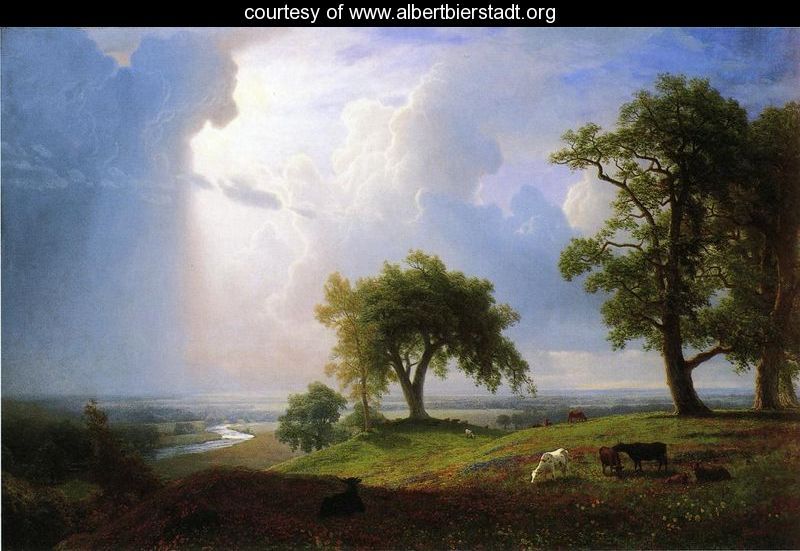
“Hastening up the valley, we struck the trail of the Oregon company, on what is now known as Chico Creek, Rancho Chico, and to me one of the loveliest of places. The plains were covered with scattered groves of spreading oak, there were wild grasses and clover, three or four feet high, and most luxuriant. The fertility of the soil was beyond question, and the waters of Chico Creek were cold, clear, and sparkling; the mountains were lovely and flower-covered, a beautiful scene. I never was permanently located till I located here, which was early in March, 1843.”

So it was just about this time of year, after a good rainy winter, when John Bidwell first laid eyes on the land that would become his home.  He had set out from Sutter’s Fort to recover a couple of stolen horses that he suspected had been taken by a bunch of fur trappers headed for Oregon. As he rode up the Sacramento Valley with Peter Lassen and an Indian guide, he was overwhelmed by the beauty of the landscape. How could he make this land his own?

It would take a couple years before he was able to acquire Rancho Chico, but eventually Bidwell would situate himself exactly where he wanted to be. In the process he would be instrumental in changing the landscape he loved so much.  Continuing his account many years later he stated:

” It is not easy to conceive and understand the change in the condition of the country caused by the extensive pasturage of horses and cattle in these plains. We seldom or never were out of sight of game, deer, elk, antelope, and grizzly bear.  The snow-capped mountains on each side of the valley seen through the clear atmosphere of spring, the plains brilliant with flowers, the luxuriant herbage, all truly combined to lend enchantment to the view.”

If only we could see the Sacramento Valley as Bidwell saw it: the air crystal-clear, the valley floor spread with wildflowers, the great herds of deer and antelope. The only way to see it now is to look at a painting like Albert Bierstadt’s California Spring

Posted in Uncategorized | Leave a comment

Bidwell Learns of the Gold Discovery

John Bidwell was still doing occasional work for Sutter, but at the time of Marshall’s gold discovery in Coloma he was near Chico, building a log cabin, surveying some land, and digging an irrigation ditch. In August of 1845 he had purchased a part interest in Edward Farwell’s rancho New Salem, which was located just south of Chico Creek. It was here that he had determined to settle as a farmer and raise cattle and grain.

“Having occasion to go to San Rafael and San Francisco, I reached Sutter’s Fort one or two days after Marshall had been there and announced his discovery, “Bidwell told Bancroft’s scribe in 1877. Sutter immediately took Bidwell into his confidence and sent him with samples of the ore to San Francisco.

“I was the first to carry the news to San Francisco. I well remember Vallejo’s words when I told him of the discovery and when it had taken place. he said, “As the water flows through Sutter’s mill-race may the gold flow into Sutter’s purse.”” That was a poetic and courtly comment on Vallejo’s part, but alas for Sutter it was not to be. The Gold Rush utterly ruined him. His vast rancho was overrun with prospectors and squatters, who stole his livestock, broke down his fences and took over his property.

By 1851 Sutter had abandoned the fort at Sacramento and was living with his wife and children on his Hock Farm near Marysville. When Sutter first came to America in 1834 he deserted a wife and four children back in Switzerland. After many years of separation he had at last brought them to California, and after the failure of all his schemes for wealth and power he only hoped to live out his years in a comfortable house on a farm on the banks of the Feather River.

Today an historical marker indicates the site of the farm, but there is nothing else to see. The house burned down in 1865, and John Sutter and his wife went east so that he could petition Congress for restitution of his losses. He died in 1871.

Posted in John Sutter, Vallejo | Leave a comment

More Searching for Gold

Bidwell kept on wondering if there might be gold in the California hills. In 1845, while acting as Sutter’s manager, he went looking again. Years later he related the following:

“In July, 1845 I went into the Sierra Nevadas ostensibly for the purpose of giving directions to men sawing lumber for Sutter, but for the real purpose of examining the region for gold. . .  Starting early in the morning I reached the place about forty miles from Sutter’s Fort, at one P.M. In the afternoon while the men were at work in another direction I stole away unbeknown to them toward a deep valley traversed by a small stream to the south. When halfway there or more, the intense heat and the probability of finding no water in the stream, and possibly my impression of gold mining as gained near San Fernando, had the effect to make me change my purpose.  . . .

This same point I visited in the spring of 1849 after I had worked a year at gold mining on the Feather River. Miners were at work in nearly all the gulches in that region.  . .  One man whom I knew – Thomas Fallon of San Jose – told me that had I pulled up a bunch of grass on the margin of the stream and shaken the earth into a pan and washed it, I would have in all probability gotten the color.”

IF he had “shaken the earth in to a pan and washed it,” but he didn’t have a pan, or a batea, that mysterious Mexican implement. Or if it hadn’t been such a hot day, or if there had been water in the creek, or if he hadn’t already gained the impression at San Fernando that gold was too scarce to bother with the California. So many Ifs.

The fact is that although Bidwell was in the right place at the right time, he wasn’t really the right man. He wasn’t obsessed with gold, and so he didn’t try all that hard to find it. In the end it was James Marshall who got the credit for the gold discovery, not by means of obsession or had work, but sheer good luck.

Posted in Uncategorized | Leave a comment

Still Searching for Gold

Throughout the 1840’s John Bidwell occasionally looked for gold in California, although he doesn’t seem to have put much effort into the project. During the Micheltorena War of 1845 he checked out a gold mine in the San Fernando Hills. In the Dictation taken down in 1877 by S. S. Boyton for Hubert Howe Bancroft he describes his visit to this mine:

“The first gold discovered in California so far as I know was made in 1841 by Jean Baptiste Reuelle at a place in the mountains about thirty miles north-east from the Mission of San Fernando. Jean Reuelle was a Canadian but had lived in New Mexico and worked in placer mines there. His discovery of gold in California created no excitement whatever owing to the fact, no doubt, of the very small yield. When I visited the mines at that place in 1845 there were probably about thirty people, most if not all from New Mexico. The average earnings as I learned were very small not exceeding twenty-five cents a day, though at times nuggets had been found of all sizes up to an ounce.”

Bidwell described the process of scooping, sifting and washing the dirt from the mine. It was a lot of effort for 25 cents worth of gold, and he was not impressed. Bidwell concluded that gold was too scarce in California to bother with. He went away from San Fernando thinking that he had looked into the matter, and it just wasn’t worth it.

Posted in Uncategorized | Leave a comment

Searching for Gold in California

John Bidwell is the gold discoverer that might have been.

If he had been just a little bit more lucky, or perhaps a bit more persistent, he would have discovered gold in 1843 or’44 or ’45. And then I guess we would all be rooting for the San Francisco Forty-Fivers. (It doesn’t have the same ring to it, does it?)

Bidwell first heard of gold in California when he was managing John Sutter’s Hock Farm near Marysville in 1843-44. One of the workers, Pablo Gutierrez, told him that he had seen signs of gold on the Bear River. Before coming to California Gutierrez had worked in the gold mines of Mexico and knew the signs of gold when he saw them.

Bidwell and Pablo traveled several miles up into the mountains where Pablo said they would find gold.

“Can you show me some?” said Bidwell.

“No,” said Pablo, “I need a batea.”

“What is a batea?” asked Bidwell. Pablo tried to describe it, in Spanish of course. Bidwell couldn’t picture what it could be. Pablo tried again and again to explain the batea, until Bidwell decided it must be some complicated piece of machinery.

“Pablo, where can you get it?”  “Down in Mexico,” answered Pablo.

Bidwell promised to pay his expenses if he would go to Mexico and get one. “But Pablo,” he instructed, “say nothing to anybody else about this gold discovery. We will get the batea and find the gold when you return.”

But, it never happened.

War intervened—first the short-lived rebellion called the Micheltorena War, and then the Bear Flag Revolt and the Mexican War. When the Mexican government sent up a new governor—Manual Micheltorena–in 1845, the Californios rebelled against him. They wanted one of their own to be governor.

John Sutter wanted to stay on the good side of the governor and the Mexican government, so he recruited a troop of soldiers, mostly Indians, and he and Bidwell rode southward to take part in the bloodless Second Battle of Cahuenga Pass. Poor Pablo Gutierrez was not so lucky, and lost his life when he was captured by the opposing Californio rebels. Some time later Bidwell discovered that a batea was not a complicated machine, but nothing more than a wooden bowl for washing gold.

So for want of a wooden bowl, the Gold Rush was delayed for another 4 years.

Posted in Uncategorized | Tagged | 1 Comment

Bidwell Mansion: A History of Narrow Escapes

Would you like to know more about the history of Bidwell Mansion?  David Nopel and David Veith have written a wonderful article about the changing fortunes of this icon of Chico history in the Chico News & Review. Check it out.

Bidwell Mansion circa 1870. Photo courtesy of Special Collections, Meriam Library, CSUChico.

The Mansion has been saved before from decline and destruction. We can do it again.

The article includes a never-before-published photo of the Mansion under construction. The photo, which is in private hands, shows a corner of Bidwell’s old two-story adobe next to the Mansion, which has scaffolding around it. I’d post the photo here, but I don’t know if I’m allowed to do that.

Go take a look at the article, if you haven’t seen it already. It will make you grateful for those who preserved a central part of Chico’s heritage for us. I hope it will also make you want to add to the effort to save the Mansion again.

Posted in Uncategorized | Leave a comment

Save the Mansion

Here’s a nice video from KCHO on Bidwell Mansion State Park—

Closing State Parks: Bidwell Mansion

I was going to embed it, but I looks like I don’t know how. But click on the link and find out why John Bidwell was so important to California history, and why the Mansion is a treasure that we need to preserve.

Posted in Bidwell Mansion | Leave a comment

The Discovery of Gold

Today marks the 162nd anniversary of the discovery of gold in California by James Marshall, an incident which touched off the California Gold Rush and changed the course of history.

James Marshall in old age

John Bidwell was intimately involved in the discovery of gold. As John Sutter’s business manager, Bidwell drew up a contract between Sutter and James Marshall for the building of a saw mill in August of 1847.  Sutter had a need for plenty of lumber to build his new project, a town he planned to call Sutterville, located a few miles south of Sutter’s Fort. He contracted with Marshall to supply him with lumber and Marshall selected the site at  Coloma on the south fork of the American River for a mill. The idea was to float the lumber 45 miles down the river to Sutterville.

John Bidwell had looked the location over in the summer of ’47 and didn’t think much of it. He was sure that the river was too wild and dangerous to make the transport of lumber practicable,  but Robert Semple, who was with him on this inspection tour, thought the plan was feasible.

In January of 1848 the mill was nearly completed. On the morning of January 24th  Marshall went out to inspect the tailrace and noticed some bright sparkles under the water. He gathered up the tiny pieces. They looked like gold, and he quickly set out for Sutter’s Fort to show his find to Sutter.

Sutter and Marshall tested the metal. They bit it, hammered it, weighed it against silver, and dropped it in nitric acid. It passed all the tests. Sutter didn’t want the news to get out until after his crops were planted, so he swore James Marshall to secrecy.

Other than Marshall’s workmen, who certainly had an idea that something was up, the next man to find out about the gold discovery was Bidwell.  In January 1848 he was at his new property on Little Butte Creek, digging an irrigation ditch and planning a fruit orchard. Wanting to acquire some fruit trees and grapevines, he set out for Mission San Rafael by way of Sutter’s Fort.

“The very spring that gold was discovered, I was preparing to set out my farm, and had dug the first irrigating ditch in the Sacramento valley. As soon as I got my ditch ready and the ground prepared, I went over to San Rafael and Sonoma to get my trees. I crossed over to San Francisco and reported the discovery of gold. I believe I was the first man to tell the news in San Francisco.”

This was not the first time John Bidwell had heard about gold in California. Stay tuned to learn more about Bidwell’s search for gold, and how he missed out on being the man who discovered gold in California.

Posted in Uncategorized | Leave a comment

BMA Annual Meeting

Please join the members of the Bidwell Mansion Association for our Annual Meeting on Sunday, January 29, 2012, at the Bidwell Mansion Visitor Center.  This is a free event, and if you are not already a member of the BMA, it’s a chance to join the group and meet with other history buffs.

There will be refreshments at 6 p.m. and the meeting will begin at 6:30 p.m. Our speakers this year are Marti Leicester and David Nopel on the topic of “The Humboldt Wagon Road.”   They have a book coming out soon from Arcadia Publishing.

The Humboldt Road was a pet project of John Bidwell’s. He envisioned a freight and passenger route that would connect San Francisco, the Sacramento River, and Chico to the gold and silver mines in Idaho and Nevada. Bidwell financed and constructed the road to carry the products of his ranch to the mines, and transport lumber, minerals, and passengers across the Sierra Nevada and down into California.

Come to the annual meeting next Sunday and find out more about this fascinating piece of California history.

Posted in Uncategorized | Leave a comment