Book Signing at B&N

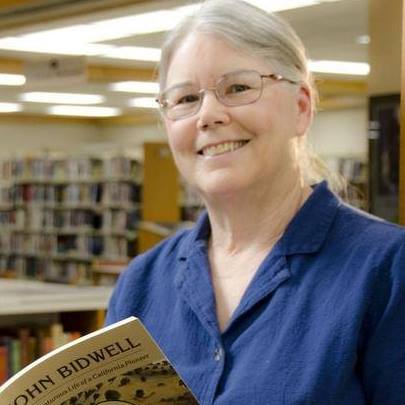
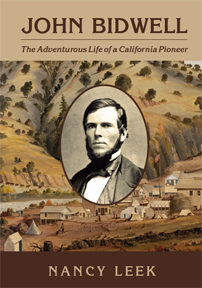
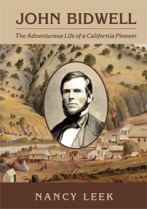
I will be at Barnes & Noble in Chico this Saturday, October 11th, from 11 a.m. to 3 p.m., with piles of my biography of John Bidwell, ready to sell and sign and chat about books and history. I hope I see you there!

This is the book that started my career as a writer. A friend of mine, also a librarian, said, “Somebody ought to write a book about John Bidwell.” There was an old biography by Rockwell Hunt, John Bidwell: Prince of California Pioneers (1942), and there is the excellent book by Michael Gillis and Michael Magliari, John Bidwell & California (2004). But we didn’t have a book for the general reader who wanted an introduction, or the young reader who wanted to know more about the man who built that big beautiful mansion.

I took up that challenge, and the more I learned about John Bidwell, the more I liked and respected the man. In reading the book by Gillis & Magliari, I discovered a man who epitomized California history from 1841 to 1900, a man who could truly say:

“The history of California lies like a map before me. Somewhat confused it may be, but I have seen it all.”

So please stop by Barnes & Noble on Saturday. Come in and say “Hello!” and chat with me for a while about the man who put Chico on the map, and so much more.

Posted in Uncategorized | Leave a comment

Happy 175th Birthday!

Huzza! Happy California Admission Day! It has been 175 years since California joined the United States as the 31st state. (If 50 years is a semi-centennial, what is 175? There are several to choose from, such as “dodransbicentennial,” but none of them have caught on.)

It’s strange to think that on September 9, 1850, as President Fillmore put his signature on the document that admitted California to the Union, the people of California had no way of knowing that they had just become a state. No telephone, no telegraph, not even the Pony Express to spread the news. It would take five weeks for the news to reach San Francisco.

John Bidwell, who was in Washington, D.C. at the time, was entrusted with the document admitting California to the Union. He left New York City on the steamship Oregon on September 13th. Fearing their loss to unknown men who opposed the admission of California as a free state, he gave the document into the keeping of Mrs. Elisha Crosby and her daughter Helen. Miss Helen slept with the packet of papers under her pillow and hid them in her blue silk umbrella as the crossed the Isthmus of Panama. For more on this story, see “Miss Crosby’s Blue Umbrella.”

The steamer Oregon arrived at San Francisco on October 18th. Here is how the scene is described in The Annals of San Francisco (1855).

When, on the 18th instant, the mail steamer ” Oregon ” was entering the bay, she fired repeated preconcerted signal guns which warned the citizens of the glorious news. Immediately the whole of the inhabitants were afoot, and grew half wild with excitement until they heard definitely that the tidings were as they had expected. Business of almost every description was instantly suspended, the courts adjourned in the midst of their work, and men rushed from every house into the streets and towards the wharves, to hail the harbinger of the welcome news. When the steamer rounded Clark’s Point and came in front of the city, her masts literally covered with flags and signals, a universal shout arose from ten thousand voices on the wharves, in the streets, upon the hills, house-tops, and the world of shipping in the bay.

Again and again were huzzas repeated, adding more and more every moment to the intense excitement and unprecedented enthusiasm. Every public place was soon crowded with eager seekers after the particulars of the news, and the first papers issued an hour after the appearance of the Oregon were sold by the newsboys at from one to five dollars each. The enthusiasm increased as the day advanced. Flags of every nation were run up on a thousand masts and peaks and staffs, and a couple of large guns placed upon the plaza were constantly discharged. At night every public thoroughfare was crowded with the rejoicing populace. Almost every large building, all the public saloons and places of amusement were brilliantly illuminated — music from a hundred bands assisted the excitement — numerous balls and parties were hastily got up — bonfires blazed upon the hills, and rockets were incessantly thrown into the air, until the dawn of the following day.

What a jubilation that must have been! Unfortunately, Bidwell himself never said much about his role in bringing California into the Union. He was in a hurry to get back to his ranch and didn’t linger in San Francisco.

A charming illustration from a souvenir programme for the semi-centennial Admission Day celebration ball in 1900.
Posted in Uncategorized | Leave a comment

Events! I Have Events!

Time for some shameless self-promotion. I have all kinds of events lined up for the Fall. I hope I see you at one or more of these.

First up — the Bidwell Mansion Association Victorian Picnic at the Chico Cemetery.

You read that right. The Victorians enjoyed getting together with friends and relations alive and deceased in a park-like setting. The BMA is hosting a picnic in the historic section of Chico Cemetery on Saturday, September 20th, 11 a.m. to 2 p.m. This is a ticketed event, and will include a delicious boxed lunch and a guided tour of the oldest section of the cemetery. Pay your respects to John and Annie Bidwell and learn about some of the folks they would have known. Tickets available at https://www.bidwellmansionassociation.com/event-tickets.html

I’ll be there in costume and full of information about some of the permanent residents of the cemetery.

Next: Shut Up & Write: a Creative Writing Workshop. Sunday, September 21, 5-8 p.m.

“Shut Up & Write” aligns with my slogan of “Keep Calm and Butt in Chair.”

I’ll be speaking about my writing journey and giving tips for narrative non-fiction writing. And then I’ll “shut up and write” and let someone else do the talking.

Next up: Tehama County Museum History Keepers & Seekers Rendezvous

If you love history, especially Northern California history, then this is the place for you. A gathering of local museums and historical societies, plus fun music, good food, vintage trucks, and prizes! I always enjoy this gathering on the grounds of the Tehama County Museum, where you can also take a peek inside the old jail. Saturday, September 27th — I hope to see you there!

Followed by:

The Manton Apple Festival on Saturday, October 4th, 9-4.

I’m looking forward to this one, because I have never been to the Manton Festival and I hear it is a great Artisan Fair. I’ll be there with folks from the Association for Northern California Historical Research (ANCHR). We have lots of excellent books on local history — you can check out our publications on the ANCHR website. It’s a good opportunity to pick up some Christmas presents for your history-loving friends.

And finally — last but not least —

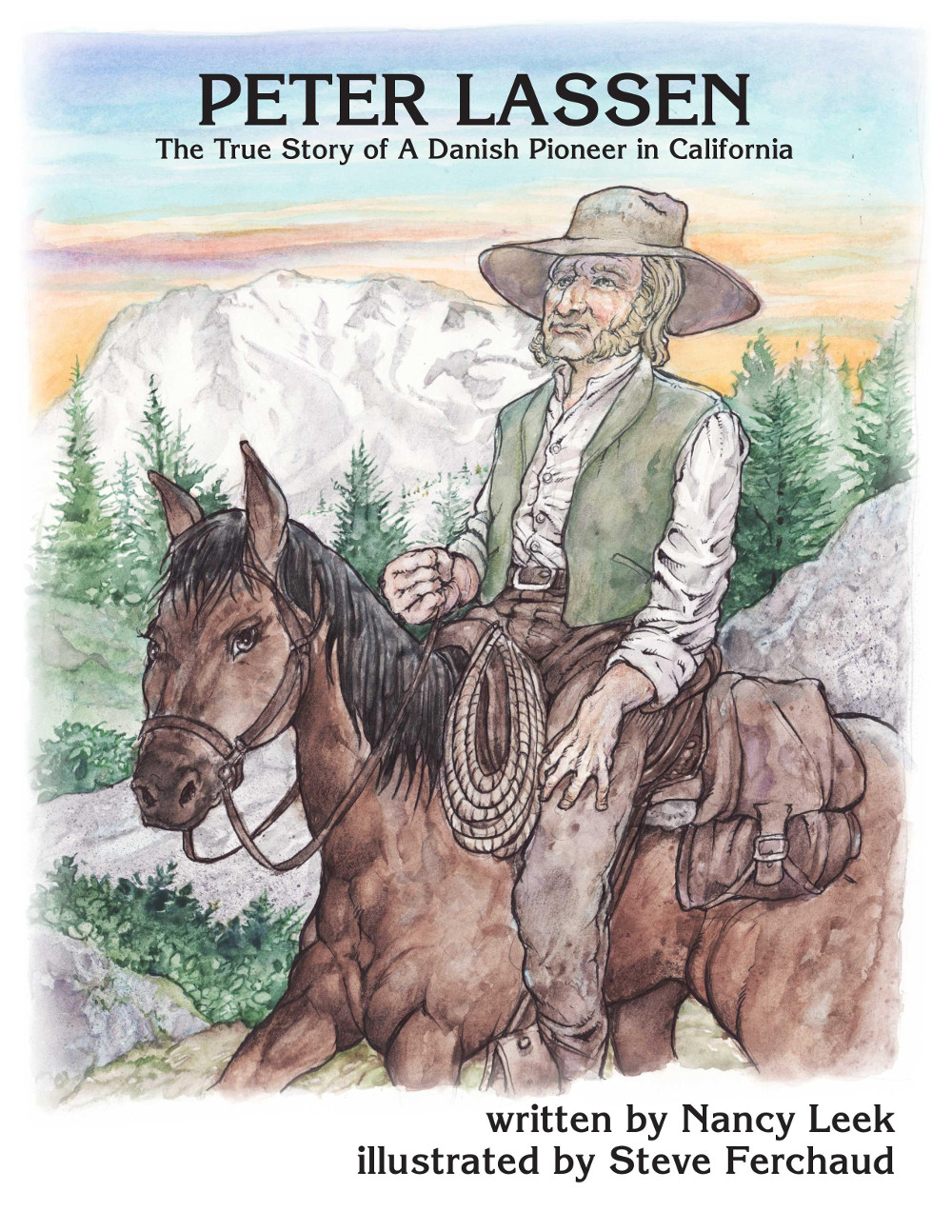
I’ll be selling and signing books at Barnes & Noble in Chico on Saturday, October 11th, 11-3. Come and say “HI!” even if you already have my book on John Bidwell.

It has been 15 years since I published this biography, but it is still going strong. I just reprinted more copies because it was all sold out.

Posted in Uncategorized | Leave a comment

Early Days in Chico

The earliest photo of downtown Chico, 1866.

I borrowed the above photo from “Awesome People of Chico” on Facebook. I’m not sure where the original is, but it shows just what a rough-hewn town Chico was in the 1860s.

The second house in Chico was built by Dr. S.M. Sproul in 1861-62. He had come across the plains with the Barham family in 1855. Mrs. Arabella Barham told the story for the Chico Enterprise-Record in 1918.

Dr. Sproul was the second person to have a completed house in Chico. He moved here from Butte creek. All of the townsite from the corner of Fifth and Main streets south and east was known to the old settlers as the Woods Field for it was sprinkled with many little oak trees and some underbrush. He got his lumber from Hupp the same time as we did but we built more rapidly than he.

Unfortunately I can’t find a photograph of the Sproul House.

Bidwell’s offer to give lots to anyone who would build on the Chico townsite started a little building boom and soon houses were springing up on every side. The first store building was erected by Charles and Edward Pond, brothers, who conducted a general mercantile business. The store still stands at the corner of First and Main. It is now used as a blacksmith shop.

Which corner it was on I am not sure, but Bidwell’s plan to get settlers off his ranch and into a town was working out. He surveyed the town and laid out the streets.

Main street was the first street laid off. Of course it was already a road but such a poor one that the mud was knee-deep in the winter months, being constantly churned up by the stages and heavy freight teams.


Looking south on Main Street from 2nd and Main Streets, in 1895.

The Valley House was the first hotel in Chico. It stood where the Union Hotel now is. You could scarcely call it a hotel as it was a very small affair but it did a big business. Dick White and his wife ran it. The stages all stopped there and their presence was always make known by the stage driver, who tooted a horn. No sooner was the first toot heard than the people would all come from their homes and hurry to the Valley House to hear the news. The stage drivers always had a lot to tell and about a third of it was true.

Until the Valley House opened for business, John Bidwell’s old adobe on the north side of Chico Creek was the only hotel on the Shasta-Marysville Road in Chico. On Rancho Chico that is, not in the town of Chico. Over the next few years, Chico grew and developed rapidly. Looking back from 1918, Mrs. Barham concluded:

When I look back over the vista of sixty years I can hardly realize the changes that have occurred, they have been so gradual. Those were great days. Everything was new and we were in a strange country but times then were pretty much as they are now with everybody working to make a living and we encountered hard times as we do now.

Posted in Uncategorized | Leave a comment

The First House in Chico

Barham home, 529 Main Street.

In October 1860 John Bidwell acquired title to “Potter’s Half-League,” a portion of Rancho de Farwell situated on the south bank of Chico Creek. That same year he had finally had his title to Rancho Chico on the north side of the creek confirmed, and now he owned land on the south side too. It was just what he needed to carry out his plans to create a town. He didn’t hesitate. On December 5th, 1860, he filed the plan for the town of Chico at the courthouse in Oroville.

As his ranch operations had grown, more and more employees were living on the ranch, clustered around ranch headquarters and his residence (pre-mansion). Bidwell’s plan was to create a town — a place for shops and businesses and churches, and most of all, houses — and move everybody off his ranch.

The Barham family lived just behind the mill, on the east side of the Shasta-Marysville Road (now The Esplanade). In 1918, Mrs. Arabella Barham recalled those days:

You see it was this way. General Bidwell away back in ’61 and ’62 was very anxious to have a town started here. He had built up quite a little settlement on the north side of Big Chico Creek but there was nothing on this side. There were numerous houses there including the hotel, the barns, blacksmith shops and a lot of other adobe shacks. The mill was there and we lived just back of it. My husband sold the grain and flour for Bidwell and was quite intimate with him. One day Bidwell said to my husband, “John, if you will go across the creek and build a home for yourself and wife I’ll give you a lot free.”

Arabella was not keen on the idea.

John came and told me about it and I felt just then as though I didn’t want to be starting a town for anybody and was perfectly satisfied to stay where I was.

She thought about the expense of building with lumber and the effort of hauling the lumber from Hupp’s sawmill in the mountains. Why go to all that work when they already had a house? But Bidwell was determined.

Bidwell kept after John, however, and finally he consented. The house is the one we live in and still stands on Main Street near Fifth, and all the original lumber is in it. My husband and a one-horse carpenter named Manser did the work. The house was completed in April 1862 and we moved in. It was the only house in the present site of where Chico now stands, at that time.

John J. Barham and Arabella Clark Barham with their granddaughter Lillias Boyle, circa 1900.

House building in those days was some task. Such a thing as millwork in lumber was unknown. All of the timbers which went into our house came down from the mills as rough as could be. Such a thing as a planing mill was unknown and in consequence, every piece of lumber and every board that needed a smooth surface was submitted to a hand planing by the carpenters.

The Barham property stretched along Fifth Street from Main to Wall Street. The house address was 529 Main Street. In 1960 the house was moved to the Silver Dollar Fairgrounds — does anyone know what became of it there? — and the site was turned into a parking lot for the Senator Theater.

Sources: Chico Enterprise-Record, January 3, 1918 and July 12, 1960. Photographs: Northeastern California Historical Photograph Collection, Meriam Library. California State University, Chico.

More about the early growth of Chico next time.

Posted in Uncategorized | Leave a comment

Looking at Ledgers

Yesterday I went to the California State Library in Sacramento to look at a variety of Rancho Chico ledgers. I had no idea that there were so many! I only wanted ledgers from 1865-1868 because I wanted to see if I could find anything that related to the building of Bidwell Mansion. They gave me eight huge heavy ledgers on a cart, and another eight smaller day books from the Bidwell store.

I don’t have a good grasp of the difference between blotters, day books, ledgers, and journals (in the bookkeeping sense). And John Bidwell was running a large enterprise, with income and expenses from the flour mill, the lumber company, the Chico & Humboldt Wagon Road, and various aspects of the ranch — livestock, dairy, orchards, etc. It was tricky for me to get my head around.

The most useful one for my purpose was the one you see at the top of the page, Journal F, which listed transactions from September 1863 to December 1867. Expenses for the building of Bidwell Mansion were listed as “New Residence.” It’s going to take me quite a while to go through the photos I took and analyze the data. Here is just one–

On July 7, 1865, Bidwell spent $2.50 for 2 yards of wire cloth for the Mansion from Baker & Hamilton, a supplier of hardware in Sacramento and San Francisco.

Toward the end of the day I went back to the store blotters. They didn’t have anything to do with my project, so I had set them aside at first, but I find it so fascinating to see what people were buying in the 1860s and how much things cost. For instance, eggs were selling for 25 cents a dozen. I could look at those books all day. Finally my daughter had to drag me away so that we could get going on the freeway before rush hour traffic set it.

Just for instance– here we have Major Hancock buying a chopping axe for $2, a Chinese man named Ah Jake stocking up on rice, brandy, and matches, and getting a pair of overalls and 2 pairs of socks, and a Mrs. Marriott doing her daily shopping for coffee, tea, nutmeg, candles, matches, and beans and spending a total of $3.88. I don’t know who any of these people are, but they were living in Chico one hundred and sixty years ago.

Posted in Uncategorized | Leave a comment

A Walk Around Bidwell Mansion

Crews have been at work cleaning up the exterior debris from the fire at Bidwell Mansion. With the scaffolding gone and the collapsed veranda cleared away, you can get a better look at the ruined structure. It’s a heart-breaking sight.

I took a walk around the perimeter, outside the tall metal fence. The photographs were taken through the fence, between the bars. Once the clean-up is completed, engineers will go in to assess the condition of the structure and determine whether it can be saved or rebuilt.

Sometime in the near future, perhaps in August, State Parks will hold the first public meeting to get input on the future of Bidwell Mansion State Historic Park. When I know that date and place, I’ll announce it here and on Facebook. Recovery will be a long process, and if you have an interest in what happens to our Chico icon, plan on coming to the meeting.

Posted in Bidwell Mansion, Uncategorized | Leave a comment

Fourth of July Parade

The Bidwell Mansion Association and friends gathered in costume to celebrate the 4th at the downtown Chico 4th of July Parade. “John and Annie” were given a classy ride in a beautiful 1920 Studebaker sedan generously provided by Jen and Ethan from Placerville. The rest of us walked.

State Parks guide Quinn Neves came with his reenactment buddies all dressed as mid-19th century gentlemen.

The Parade had singers, dancers, first responders, activists, volunteers from all kinds of great civic organizations, and us — keeping the legacy of Bidwell Mansion alive.

The next two photos were posted to Awesome People of Chico by Jason Sands. Thanks for snapping us!

See you next year!

Posted in 4th of July, Uncategorized | Leave a comment

A Chico 4th of July — 150 Years Ago

Our celebrations of Independence Day are skimpy compared to the way they enjoyed the Fourth in Chico in 1875. It was a full day of celebration, as promoted in the Chico Record on July 3rd. (The celebration took place of the 5th, since the 4th fell on a Sunday. Many of the days activities would be considered inappropriate for the Sabbath.)

The day began with the ringing of bells at 4 a.m. (!) followed by a “National Salute,” which probably meant the firing of guns, cannons, and anvils at sunrise. (If you want more about anvil-firing click here.) Next was a “Grand Procession” or parade at 10 A.M. “and the usual ceremonies of the day in the Forenoon,” which took place at the Pavilion.

“The ceremonies at the Pavilion, under the direction of the President of the Day, Hon. John Bidwell, who seemed to be as happy as the occasion required, passed off with enthusiasm,” reported the Chico Record. These ceremonies consisted of songs by a choir, prayer, the reading of the Declaration of Independence, a patriotic poem, an oration by E.J. Lewis of Tehama, and more music. “At the conclusion of these exercises, the vast audience, which filled the Pavilion and over-flowed into the square and streets surrounding the building, were dismissed to be “free and independent” as of right they ought to be.”

Butte Record 3 July 1875

The parade was led by Church, Jones & Beebe’s Brass Band, the Chico Guard under Captain Turner, Brigadier General George Cadwalader and his staff, who happened to be visiting, the president (Bidwell) and officers of the day in carriages, the town council, and the Independent Order of Odd Fellows.

These dignitaries were followed by a company of firemen, the Order of Good Templars, representatives of various trades and skills, public schools, the Grange and “Lady Grangers in carriages,” and “Citizens in Carriages and on foot.” As the parade proceeded, they were joined by school children representing the states and the “Goddess of Liberty and Justice” on wagons or floats.

Here is the route taken by the parade, quite a lengthy one for a small town:

A balloon ascension had been announced for the afternoon, but that turned out to be a flop. It “persistently refused to be filled with the means at hand to supply it with gas.” A smaller balloon was attempted, but it also could not be elevated. It caught fire and burned. “The good-natured crowd that assembled to see it go up cheered quite as lustily when it burned up, and sought other diversions.”

At 5 o’clock the Chico Guard assembled and “at the order ‘fall in,’ fifty-seven muskets made their appearance. Captain took the boys in hand and put them through their various evolutions, marching and counter-marching, the manual of arms, etc.” General Cadwalader was pleased by the display.

The day ended with fireworks on the plaza, where “the crowd thronged and surged throughout the whole Pavilion block, down Broadway and along Fourth, Fifth, and Main Streets.” (Chico Weekly Enterprise, 9 July 1975). The fireworks were followed by a “Grand Anniversary Ball” in the Pavilion, the “grandest affair of the year.”

If you are wondering about the Pavilion, it was a community hall located on Broadway between 4th and 5th Streets. I can’t find a photo of it, but here it is depicted on the 1871 bird’s-eye map of Chico. It was replaced by a new pavilion in 1878.

Posted in 4th of July | Leave a comment

Black Bart in Butte County

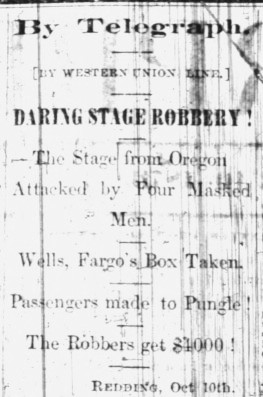
On this date — June 21 — in 1879 the notorious stage robber Black Bart held up a stage coach near Forbestown in Butte County. It was his first robbery in the year 1879 and his ninth robbery since he began his career in 1875. This incident would be followed by two more robberies in October in Shasta County. He generally committed his crimes in the summer and fall, and then retired to San Francisco to live off his ill-gotten gains over the winter.

Here is the notice from the Chico Weekly Enterprise reporting that robbery. No name is given the robber and according to the report, he didn’t get much from the robbery.

Chico Weekly Enterprise 27 June 1879

The Sacramento Daily Union picked up the story:

Sacramento Daily Union 23 June 1879

Of all the stagecoach robbers in California history — and there were many — Black Bart is the name that still holds a place in the minds of the public. Why does he remain the most famous hold-up artist in California history?

One reason is the length of his career. He committed 28 robberies and eluded capture for eight years. That’s a long time in a chancy business.

Another reason is his choice of pseudonym and his penchant for advertising himself by leaving notes in verse at the scene of the crime.

His real name was Charles Boles, but “Black Bart”, a name he seems to have picked out of thin air, sticks in the memory. His verse was crude, but it caught the public’s attention, especially when he signed himself as “Black Bart, the Po-8.”

It also helped that he was a “gentleman bandit.” He was never cruel or vicious. He didn’t molest women. He didn’t murder stagecoach drivers or passengers. He politely asked the driver to “Please throw down the box” while holding a shotgun that he would later claim wasn’t even loaded.

For eight years, from July 1875 to to November 1883, “Bart” got away with it. Wells Fargo detectives and county sheriffs couldn’t catch him. A left-behind handkerchief with a laundry mark was his undoing. Black Bart was finally captured and sent to San Quentin prison in November 1883. He spent five years in prison and disappeared from public notice after his release in 1888.

Posted in Black Bart, Uncategorized | Leave a comment