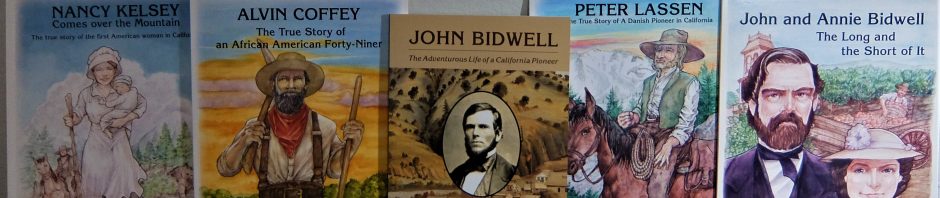

Happy Juneteenth!

Juneteenth (June 19th) is a holiday celebrating the emancipation of enslaved African Americans in the United States. Although only created a national federal holiday in 2021, it has been celebrated annually on June 19 since 1865, marking the date when 250,000 enslaved people in Texas found out that they had been emancipated by executive decree.

Texas was the last area in the South to receive the news that slavery had been abolished. The announcement came over two and a half years after President Abraham Lincoln issued the Emancipation Proclamation. The Confederacy had no desire to inform the enslaved population that they were free, and it was not until Union troops under Major General Gordon Granger arrived at Galveston that the news reached African Americans in Texas.

Californians might think that Juneteenth is not important to California history, but slavery and its consequences is an issue that transcends the South and the Civil War. Slavery was a major topic discussed at the California Constitutional Convention in September 1849 and there were certainly a number of men at that convention who wanted slavery to be legal in California. And even though California entered the Union as a free state, it was possible to bring enslaved people from slave states into California and nothing in California law would make them free.
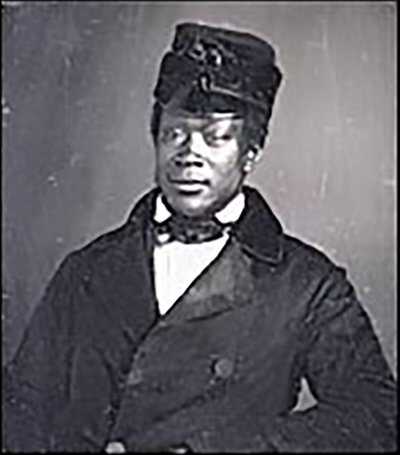
Stephen Hill

I have only explored a handful of stories of blacks, both free and enslaved, in California history. It’s a rewarding topic to dig into, full of stories of hope and courage and determination.

Read about Stephen Hill, who struggled to keep himself free, George Washington Dennis, who purchased his freedom from his own father, and Ida Taylor, who had to wait well past 1865 to find out she was free.

One of the most famous African American pioneers of California (who I have not written about myself), was Biddy Mason, who successfully sued in court for her freedom, and who became a prominent businesswoman in Los Angeles.

And don’t forget Alvin Coffey, the subject of my latest book. Let me know if you would like to get a copy of the book and I will make it happen!

Posted in Uncategorized | 2 Comments

Lola in California

In 1848 Lola left Bavaria for Switzerland, but when King Ludwig failed to join her there, she went on to London and a second marriage. The marriage to a young army officer with a recent inheritance lasted only two years. After the split, Lola decided it was time to leave Europe behind.

For two years (1851-53) she danced and acted on the stage in East Coast cities and then moved on to New Orleans. From there it was only a short ship voyage via Panama to California and fresh fields to conquer.

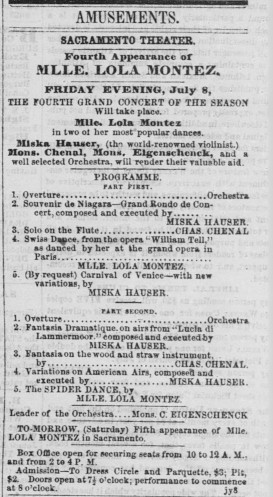
She had by this time developed a sure-fire sensational hit, the “Spider Dance.” Still posing as a Spanish dancer, she wore a tight bodice and a colorful knee-length skirt with multiple flounced petticoats. (Knee-length may sound modest, but it was considered daring, and it showed off her bare legs.)

Pretending to find a spider hidden in her skirt, she whirled and stamped in a frenzy. She lifted and shook her petticoats and her frantic actions drove the men wild. She was a hit on the stage in San Francisco and Sacramento.

She had other dances on offer, but she always concluded her program with the Spider Dance. It was what her public came to see and she would not disappoint them.

Sacramento Daily Union 8 July 1853 Note the Spider Dance at #5.

At this same time she married a California newspaperman, Patrick Purdy Hull, whom she had met en route to California from New Orleans. Marriage seems to have been irresistible to the Divine Lola, though this marriage would be no more successful than her previous two. The wedding was announced in the papers:

Sacramento Daily Union 4 July 1853

Note how she styles herself in her marriage announcement. She usually claimed that her birth name was “Maria Dolores Eliza Rosanna Gilbert,” but the Maria Dolores part was tacked on to give credence to the nickname “Lola.” She was born Eliza Gilbert.

Here she gives her name a French spin. She still gloried in the titles of Countess of Landsfeld and Baroness of Rosenthal, bestowed by her royal lover. “de Heald” refers to the name of her second husband.

And what, you may ask, is a Chainoinesse of the Order of St. Therese? A chanoinesse is a canoness, a member of a holy order. It’s possible that Lola was created a secular canoness as another royal honor, but that is as much as I know.

Posted in Uncategorized | Leave a comment

Lola Montez in Bavaria

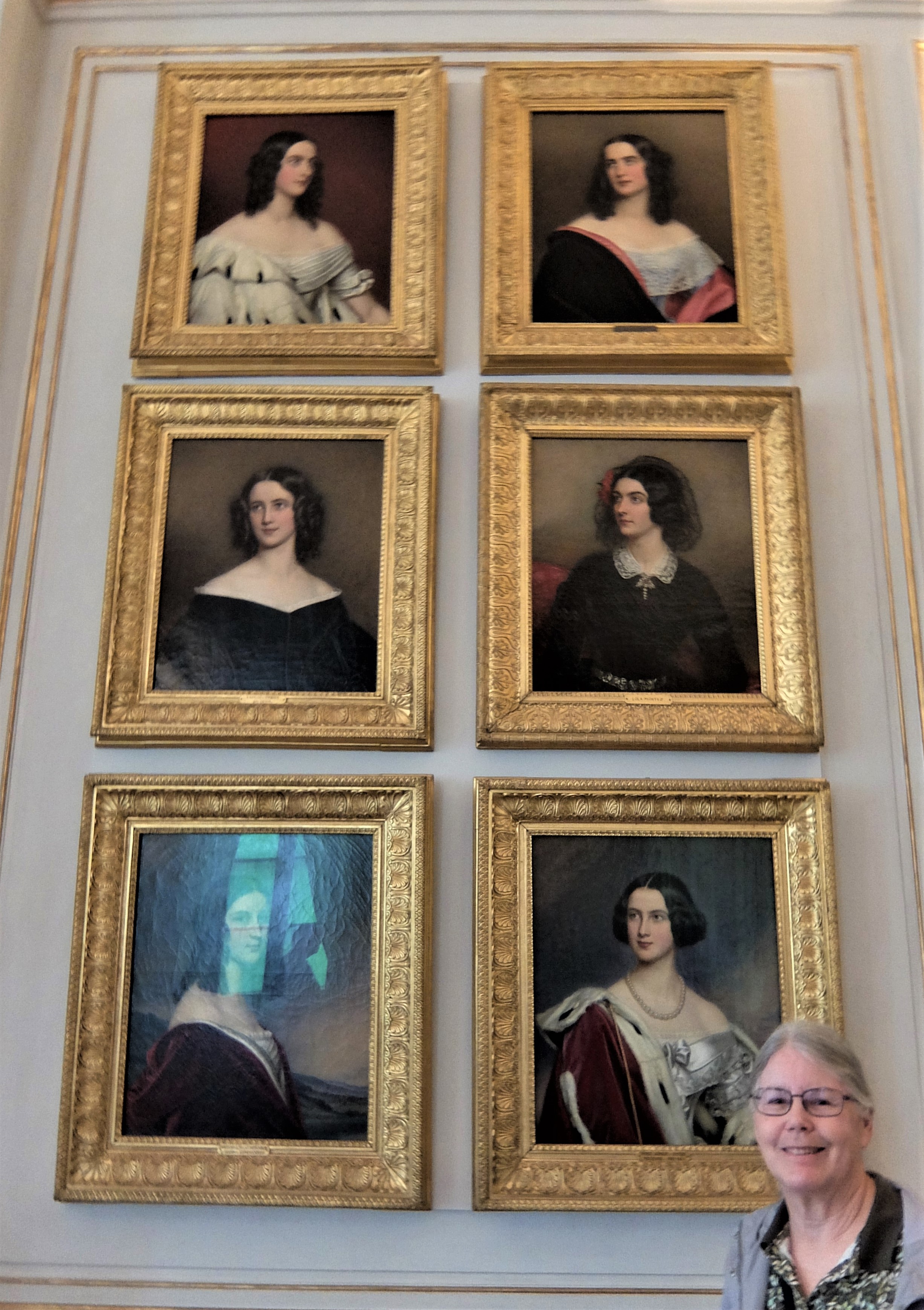
Lola — middle row on right

At Nymphenburg Palace, whom should I run into but that famous adventuress on three continents, Lola Montez.

Lola is featured among 36 other beautiful women in the “Gallery of Beauties,” a collection of portraits commissioned by King Ludwig I of Bavaria. These were noble and middle-class women of Munich whose beauty King Ludwig admired. A few, like Lola, were his mistresses, but most were simply the beauties of his day, and some were his relatives.

And how did Lola, famous in California history, come to be in this exalted company? Ah, what a story Lola could tell!

She was born Eliza Gilbert to Anglo-Irish parents in Ireland in 1821. (She would give her birth year as 1818 but the discovery of her baptismal certificate has disproved that date.)

Her father was posted to India soon after her birth and died of cholera shortly after arriving there. Her mother remarried and Eliza lived in India until sent off to school in England at the age of ten. She was already developing a reputation for willfulness and a short temper.

In 1837 she eloped with Lieutenant Thomas James and returned with him to India. After five years the marriage failed and she returned to England, where she went on the stage as “Lola Montez, the Spanish dancer.” Nothing like an exotic persona to attract notice.

Soon she was dancing across Europe, attracting the gaze of famous and wealthy men. She reached the pinnacle of her European career in Munich when she caught the eye of King Ludwig I of Bavaria. (Not to be confused with “Mad” King Ludwig II, his grandson, builder of Neuschwanstein.)

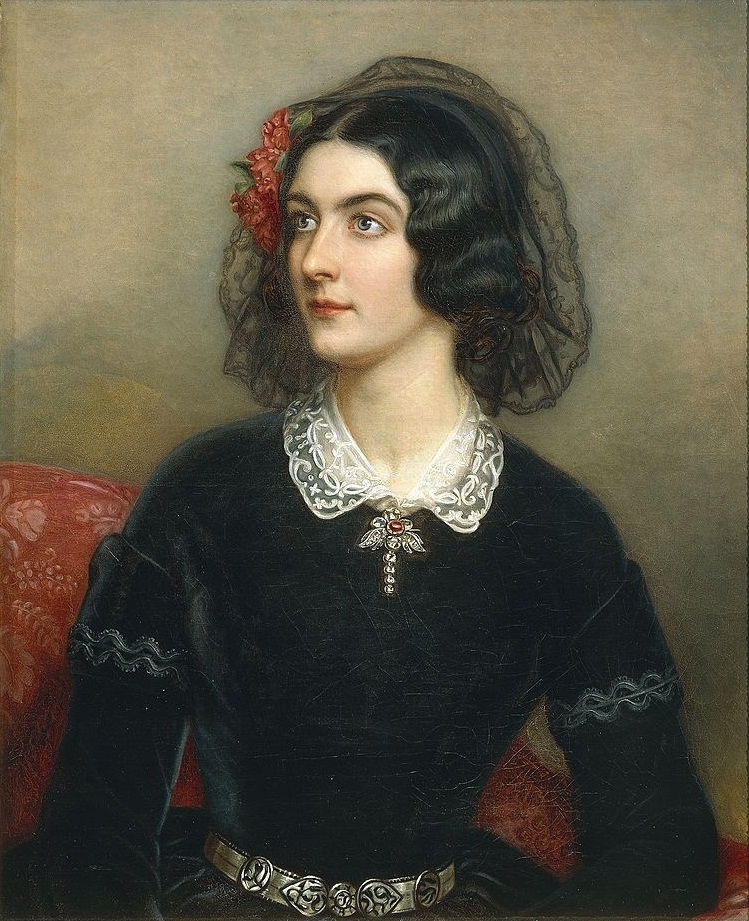
Portrait of Lola Montez by Joseph Karl Stieler

Lola captivated the sixty-year-old king, who showered her with gifts, including the title of Countess of Landfeld. She hoped to become a Bavarian citizen, become a landed noble, and take a permanent position as the king’s courtesan. For over a year she wielded considerable political influence over the king, but her arrogance and hot temper alienated both the king’s council and the people of Bavaria.

1848 was an unlucky year for Lola. Her personal story coincided with the Revolutions of 1848 that swept across Europe, as students and workers revolted against monarchies and authoritarianism, and in favor of democracy, nationalism, and demands for greater freedom. In Bavaria, King Ludwig was forced to abdicate in favor of his son Maximilian, and Lola fled to America.

But Lola knew the strengths of her talents and charms. She would have little trouble reinventing herself in America.

Next time: Lola Comes to California

Posted in Lola Montez | Leave a comment

Bavarian Adventure

I am back from a tour of Bavaria. I saw fairy-tale castles and palaces, lovely Alpine lakes and meadows, medieval towns and baroque churches. The centerpiece of the tour was the Passion Play at Oberammergau, a dramatization of Christ’s last earthly week.

Jean and Nancy at Neuschwanstein

So for the past two weeks I have not been thinking about history in Northern California at all.

I learned about “Mad” King Ludwig II and prankster prince-archbishop of Salzburg Markus Sittikus. The Sound of Music featured prominently in our tour of Salzburg, because guides figure all Americans want to see where it was filmed.

I ate lots of hearty meat-and-potatoes traditional German meals. I drank mineralwasser and apfelschorle. I brought home a bagful of my favorite Ritter Sport candy bars.

But any connection to California? Well, as a matter of fact, there is one. I’ll tell you all about it next time.

Posted in Uncategorized | Leave a comment

My Book about Alvin Coffey

I have been out peddling my book around town. So far I have placed it at Made in Chico, ABC Books, Bidwell Supply Co., the Chico History Museum, and the Bidwell Mansion gift shop. Those places are all in Chico — I need to get out further afield. I like folks to be able to shop local.

It is also available on Amazon. Sales are doing nicely there. I hope some of those buyers will leave me a review. It always looks good to have some five-star reviews.

The day after I received shipment on my books, I was able to introduce it to 4th and 5th grade students in Wheatland, California. I spoke to them about the overland journey to California and the Gold Rush. They were a great audience. I always enjoy speaking to any group, but especially to elementary school students.

One thing I wanted them to understand about the Gold Rush is that the men (it was mostly men) who came seeking gold came from all over the world. Mexicans, Chileans, Peruvians, and Hawaiians. Men from Australia, China, and at least one from Japan. Men from every nation in Europe and every state in the Union. And among those from the United States were black Americans, both slave and free. That is an important part of our history that needs to be better known.

Pretty soon here I’ll be going on a two-week trip, so I won’t be blogging for a while. When I get back I’ll tell you some interesting things about Wheatland, a town located on the site of Johnson’s Rancho, famous in California history.

Posted in Uncategorized | Leave a comment

Yay! My books are here!

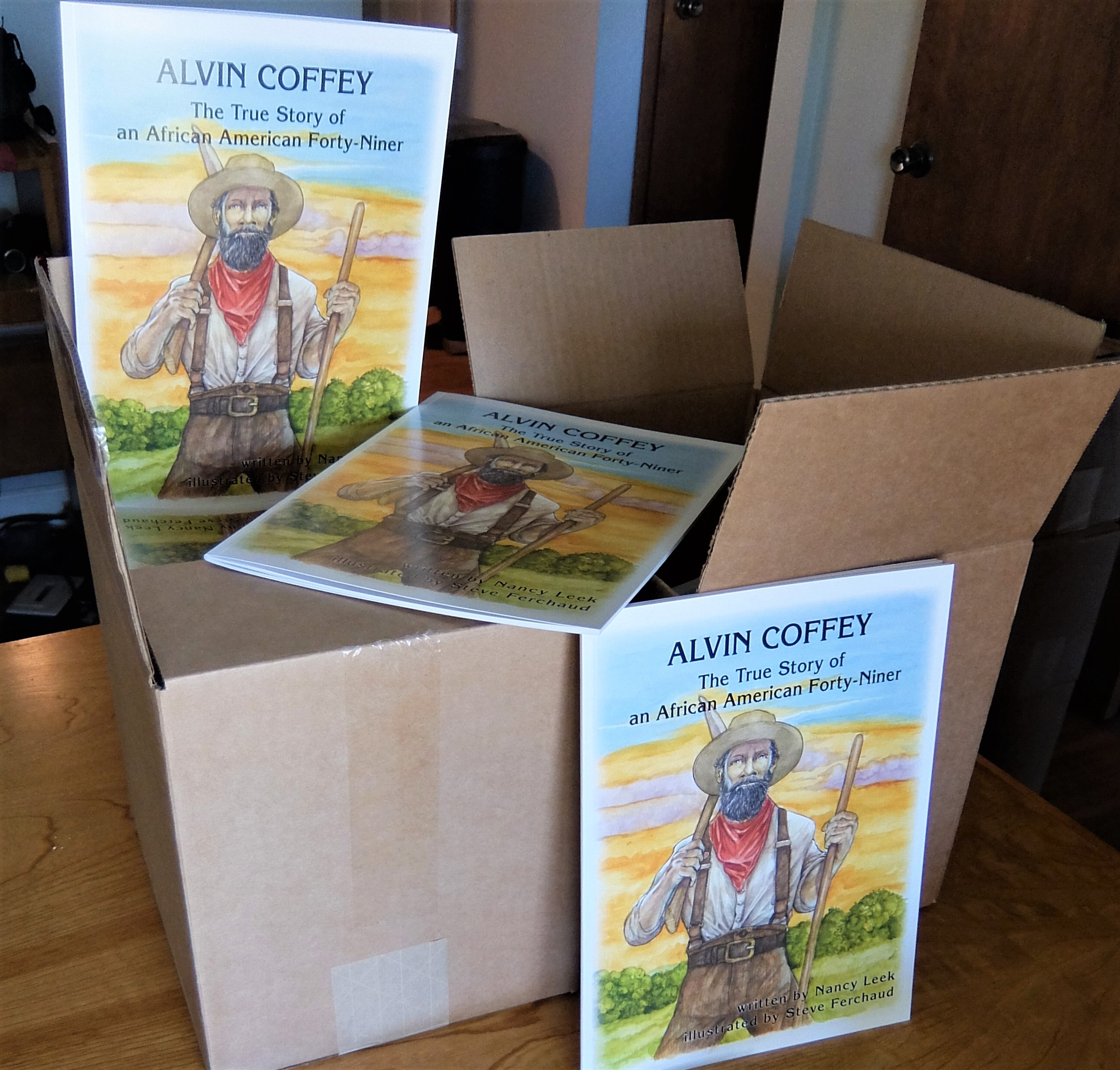
I just picked up my shipment of Alvin Coffey: The True Story of an African American Forty-Niner. It’s real! It’s here! Would you like to get a copy? Boy, do I have them. I will soon have it on Amazon and at various vendors.

Alvin Coffey was a real person, born into slavery, who with determination and hope won freedom for himself and his wife and children. It’s an inspiring story and a chapter in American and California history that needs to be better known.

I am grateful for all the help I received from Alvin and Mahala Coffey’s great-great-granddaughter, Jeannette Molson. Steve Ferchaud did a great job with the illustrations and Carla Resnick made it look professional. I can’t wait to start telling people about this new book.

Posted in Alvin A. Coffey | 2 Comments

On the Nobles Emigrant Trail

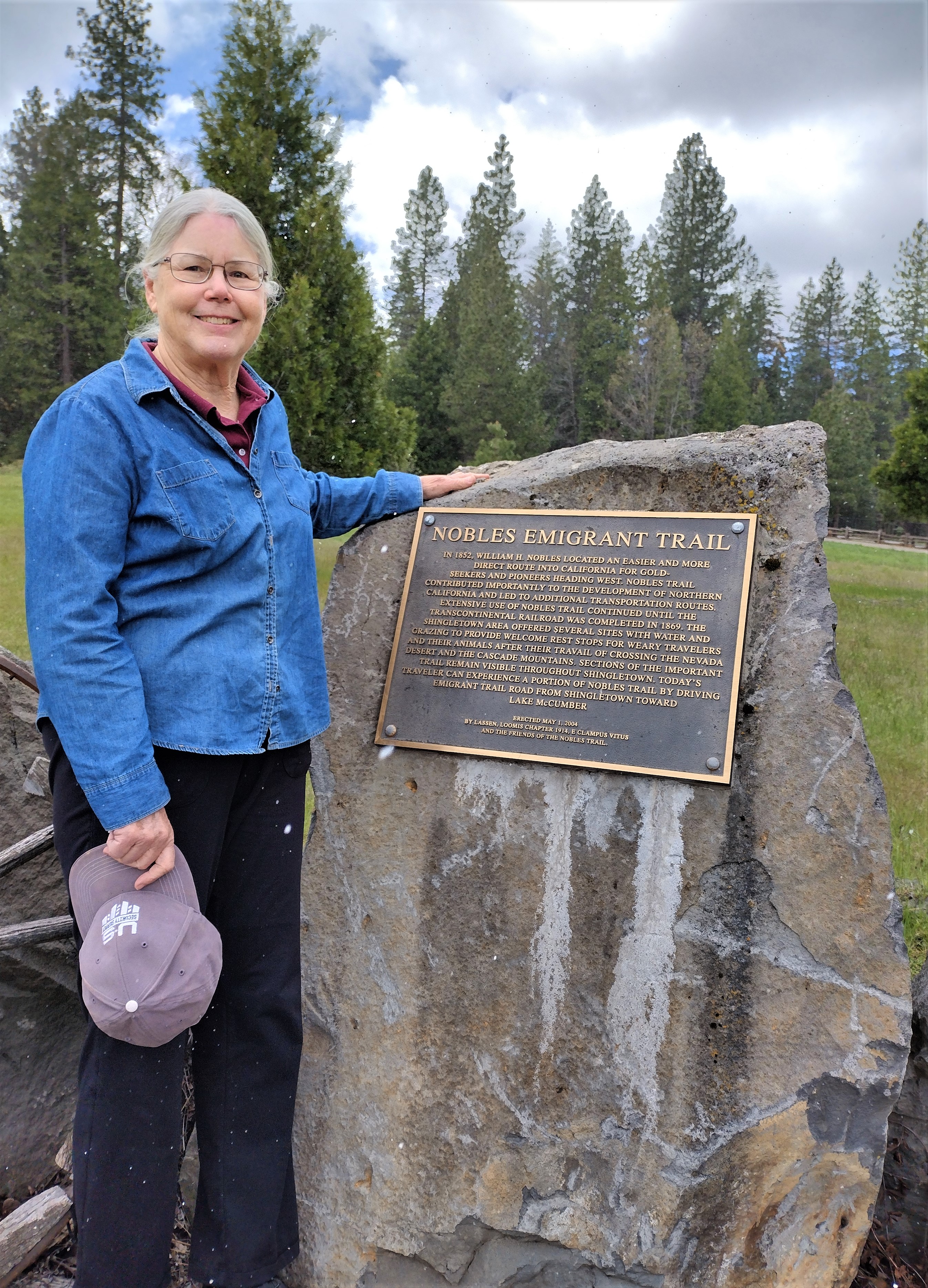
Last Sunday I enjoyed a field trip on a portion of the Nobles Emigrant Trail. This trail, first developed by William Nobles in 1852, proved to be a desirable alternative to the rigors of the Lassen Trail. It brought gold-seekers to the Northern Mines in Shasta County. Thanks to Ken Johnston, who organized the field trip, our group of trail enthusiasts from the Oregon-California Trail Association were able to see a bit of this historic trail.

We started our journey at the terminus — Shasta State Historic Park, formerly Shasta City.

In the spring of 1852, William Nobles convinced the merchants of Shasta City that he had discovered a viable wagon road to their thriving town.  Nobles had explored this new wagon route the previous year and asked for a fee of $2000 to develop the route. The trail branched off from the Applegate-Lassen Trail at Black Rock and headed southwest across the Black Rock and Smoke Creek Deserts to Honey Lake Valley and Susanville.  From there the trail continued westerly through forested and volcanic country, passing Lassen Peak, until it descended to the upper end of the Sacramento Valley at Shasta City. 

We drove about 40 miles from Shasta City to Shingletown, mostly along Dersch Road. Here are some of our stops along the way.

The Canon House marker sits next to Redding Fire Hall No. 3.

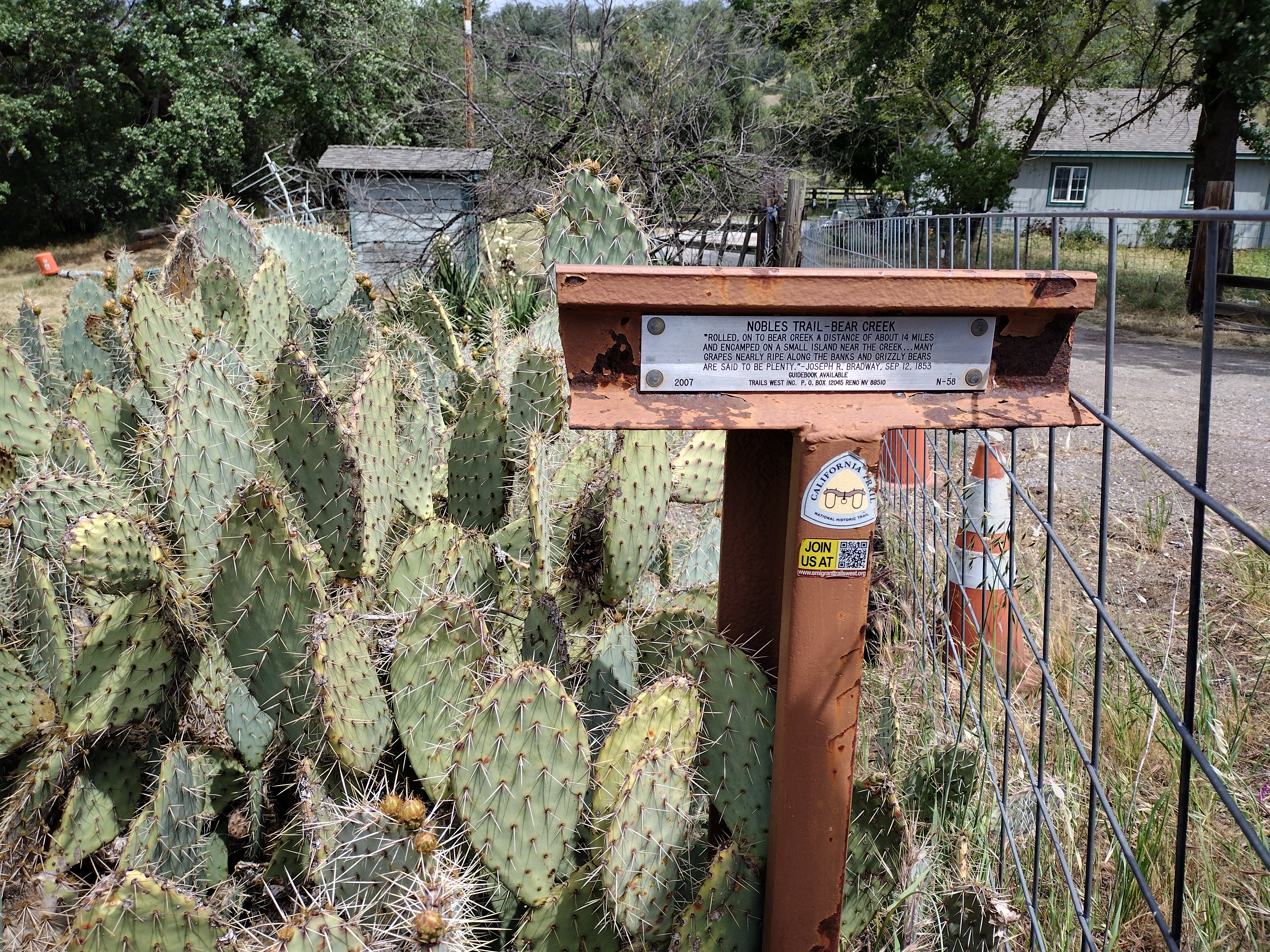
The Bear Creek marker is on the Dersch Ranch.

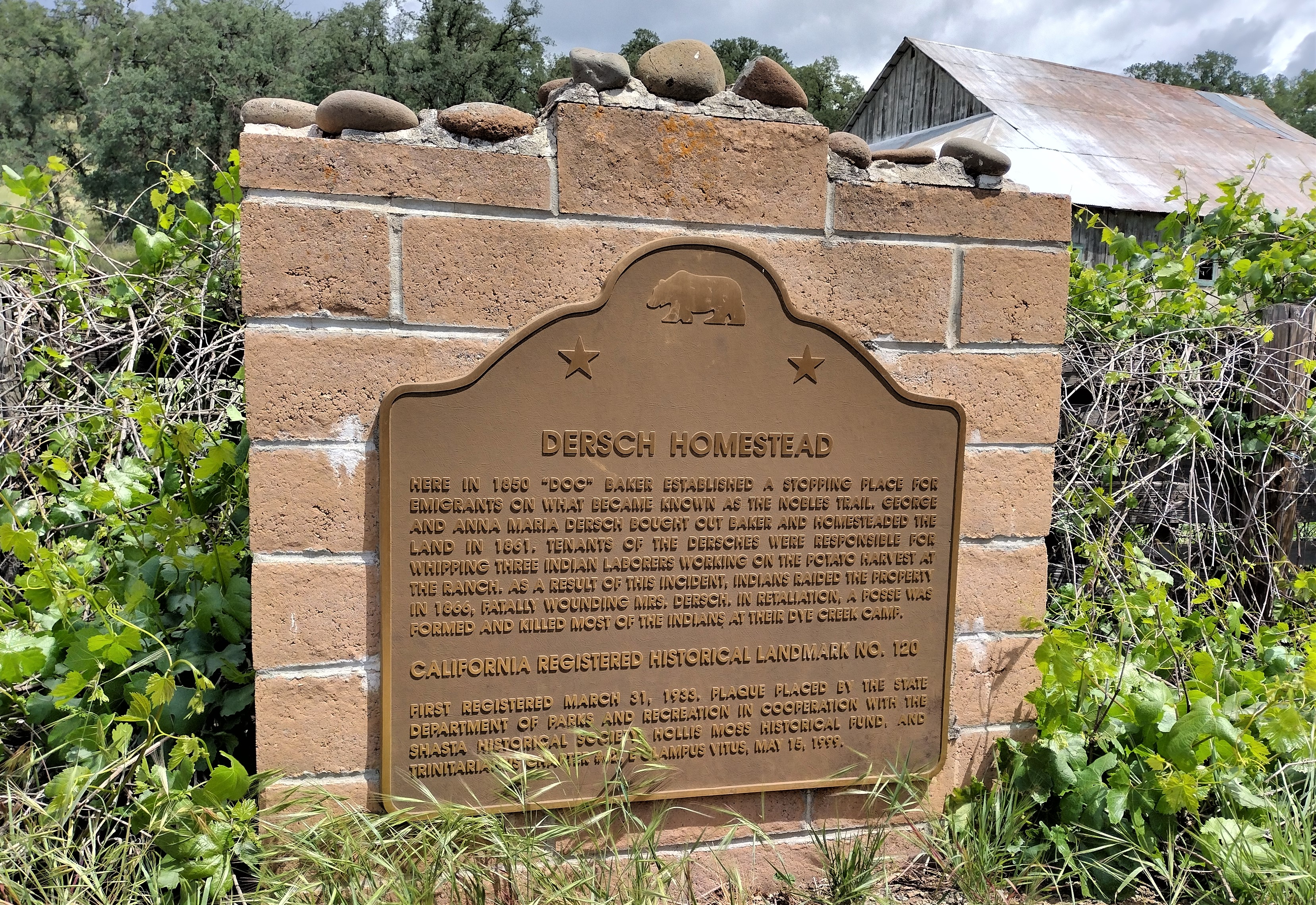
The Dersch Ranch marker reads: DERSCH HOMESTEAD: Here in 1850 “Doc” Baker established a stopping place for emigrants on what became known as the Nobles Trail. George and Anna Maria Dersch bought out Baker and homesteaded the land in 1861. Tenants of the Dersches were responsible for whipping three Indian laborers working on the potato harvest at the ranch. As a result of this incident, Indians raided the property in 1866, fatally wounding Mrs. Dersch. In retaliation, a posse was formed and killed most of the Indians at their Dye Creek camp.

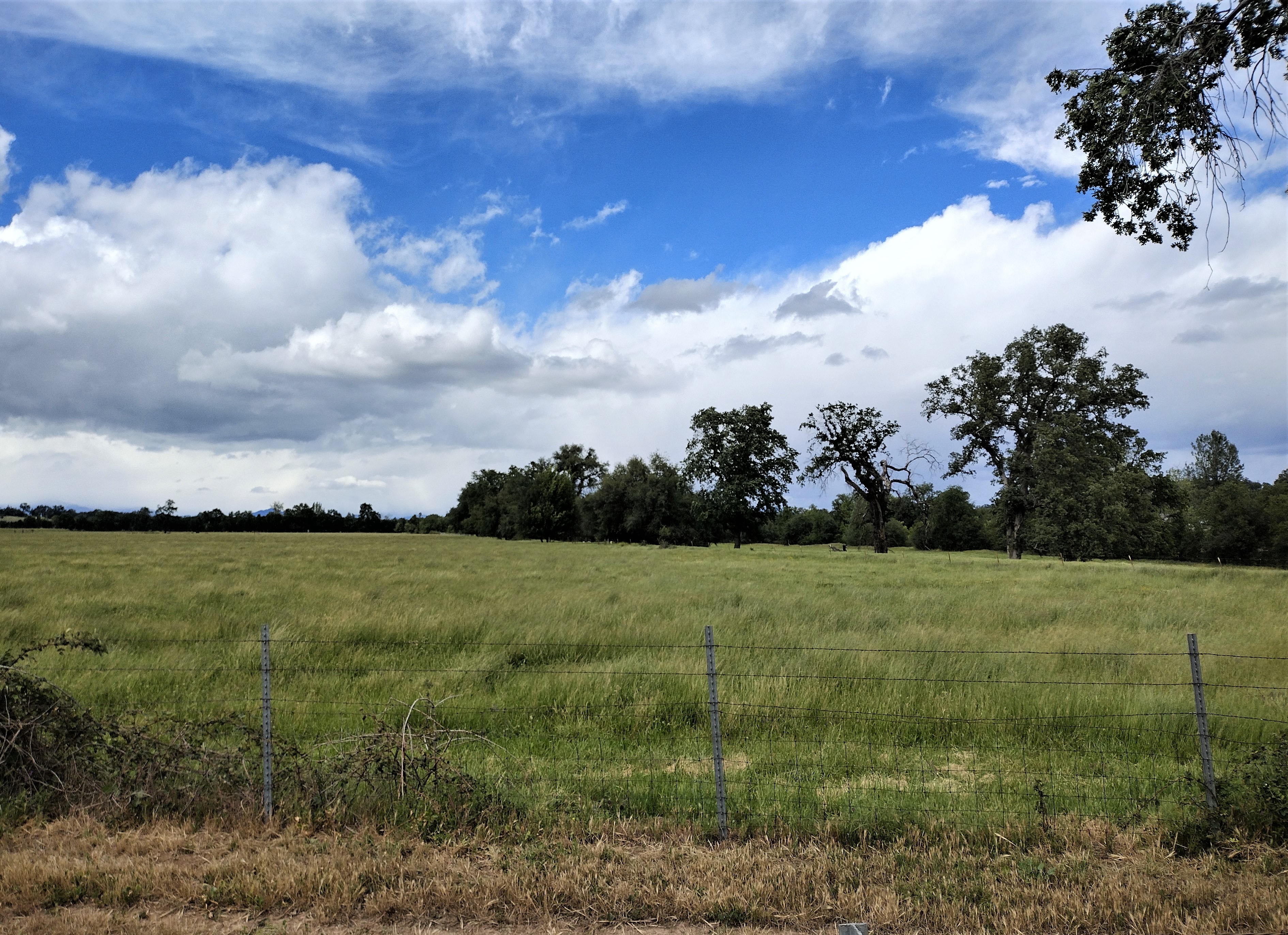
This is the scene across the road from the Dersch Ranch. It’s beautiful country, especially in the spring.

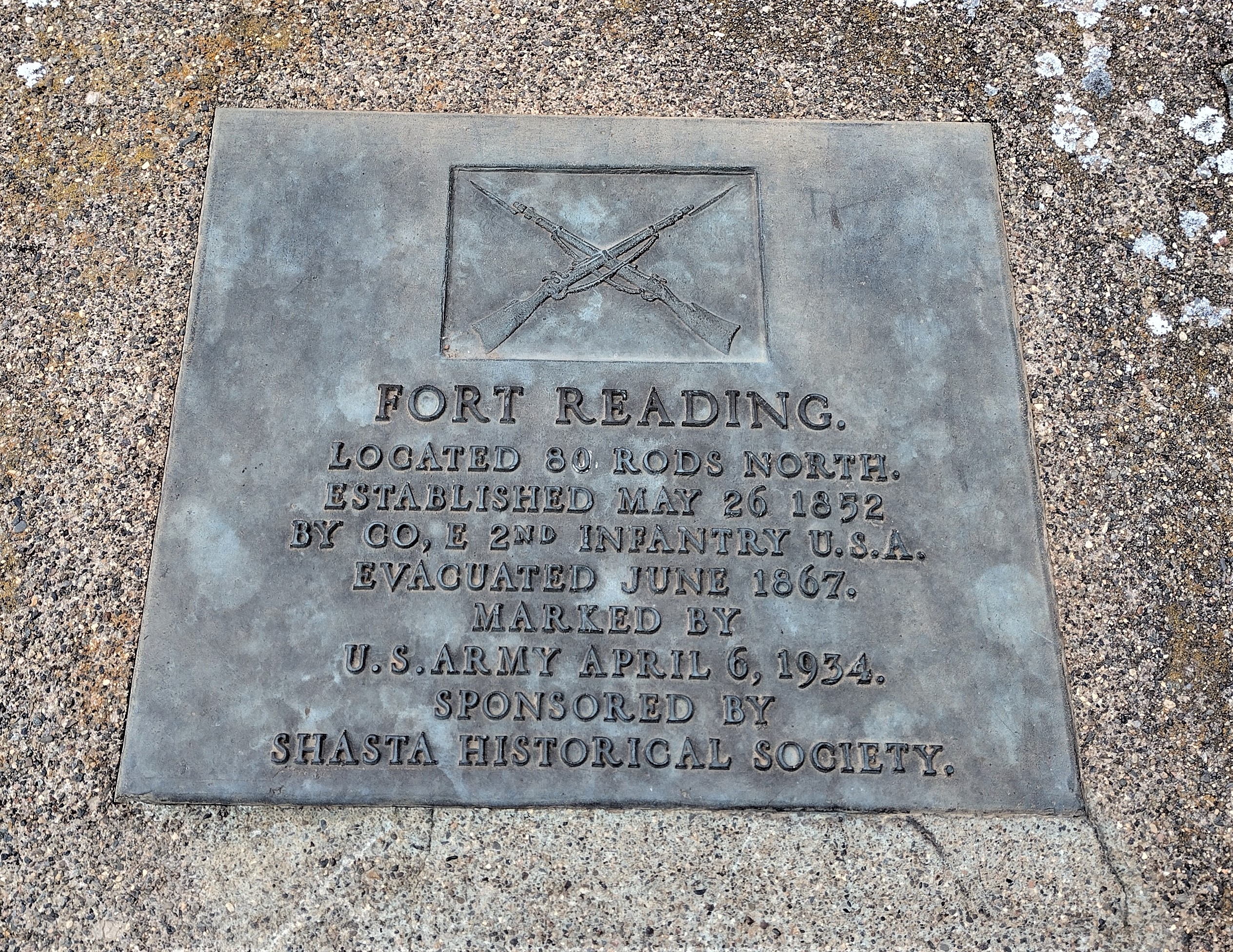
Fort Reading, named after pioneer settler Major Pierson B. Reading, was established on the banks of Cow Creek in 1857. It existed primarily to protect settlers from Indians. Nothing is left of the adobe for buildings.

The view toward the site of Fort Reading.

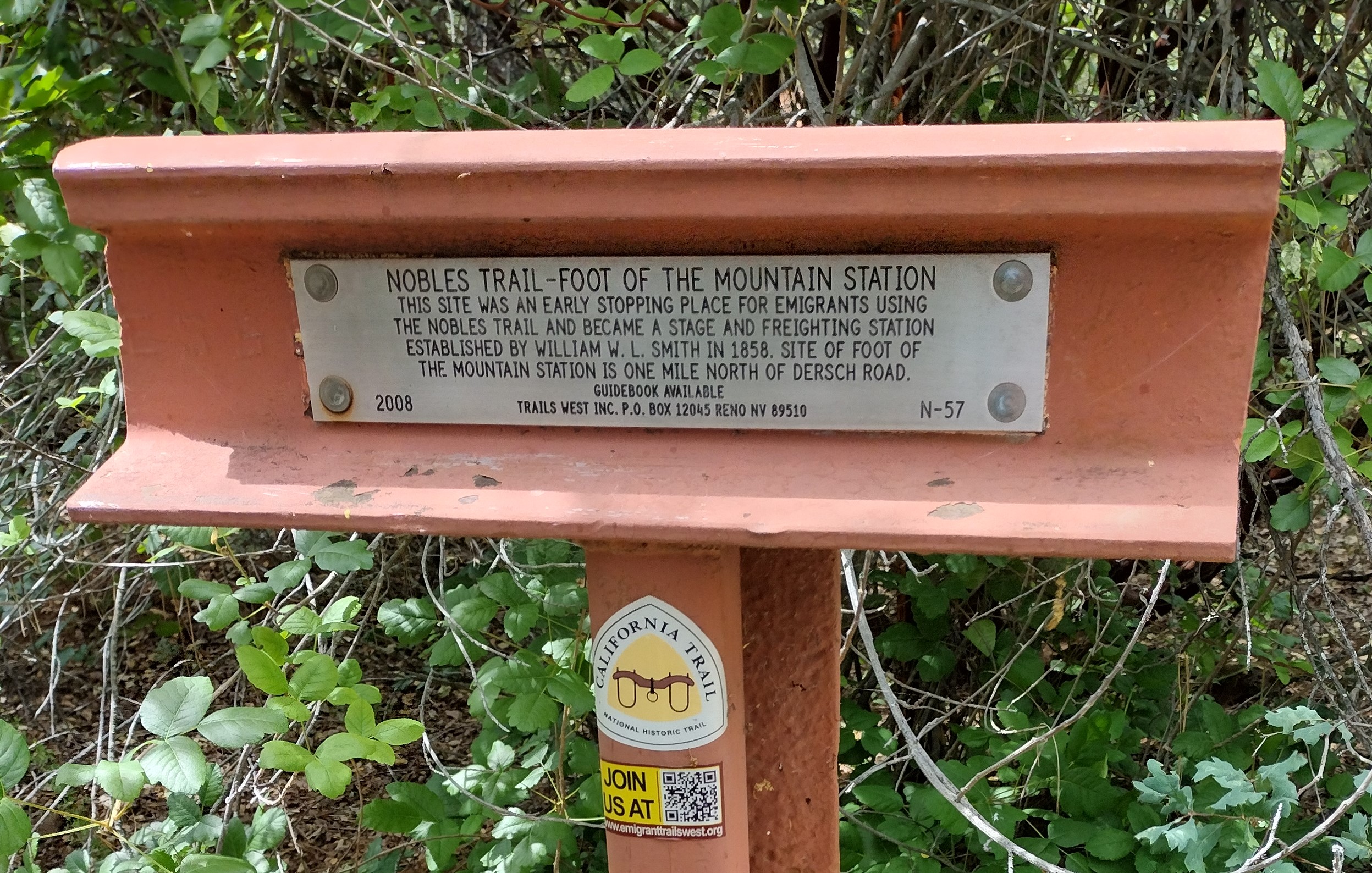
The marker for Foot-of-the-Mountain Station, owned at one time by Phoebe Colburn. All the buildings are gone now.

The trail marker reads: Nobles Trail – Charley’s Ranch “Traveled 15 miles to Charley’s Ranch and camped there. Good water. Drove the stock 2 miles to grass. Here we heard the first chicken crow, and saw the first hog.” John S. Taylor, Sep 2, 1854

End of the trail (for me anyhow) at Shingletown.

The Nobles Trail proved to be one of the easiest of all the wagon routes into northern California and received heavy use right up until the railroad made travel to California a breeze. This wagon road, with its relatively level and easy terrain most of the way, was actually promoted as a railroad route. But it would have brought the business to Redding, and the Big Four, based as they were in Sacramento, weren’t having that.

Posted in Uncategorized | Leave a comment

More about Phoebe Colburn

When Phoebe Colburn died in 1876 she left her dresses to a niece in Mobile, Alabama, and her considerable estate, some $3000, “to her best friend of all others on earth”, Col. William Magee.

Phoebe Colburn probably met William Magee in Alabama. She was born in Mobile between 1818 and 1825, the earlier date being more likely. He was a native of South Carolina, born in 1806, but moved to Alabama in the late 1820s. He served as sheriff in Mobile from 1836 to 1840. From there he went to New Orleans where he engaged in business until 1849, when the Gold Rush drew him to California.

In 1828 he married Miss Margaret Bass in Mobile and they had a daughter in 1830. It is possible that Phoebe was a servant in the Bass household and came with Margaret when she married. Phoebe would have been a young teenager at that time.

Magee left his wife behind when he set out for California, as many men did. It doesn’t look like Margaret ever joined him in California. On the 1860 census he and Phoebe appear to be in the same household and Margaret is not listed. She died in 1869 and he remarried twice in Shasta, to Mary Perry in 1877 and Ann Moore in 1888.

Phoebe may have come to California as early as 1849, when William Magee made the trip via Panama, or he may have sent for her a few years later. We only know that she shows up on the record in 1854 when she buys a house in Shasta City. When did she become free? How did she earn the $700 to buy the house? No one knows.

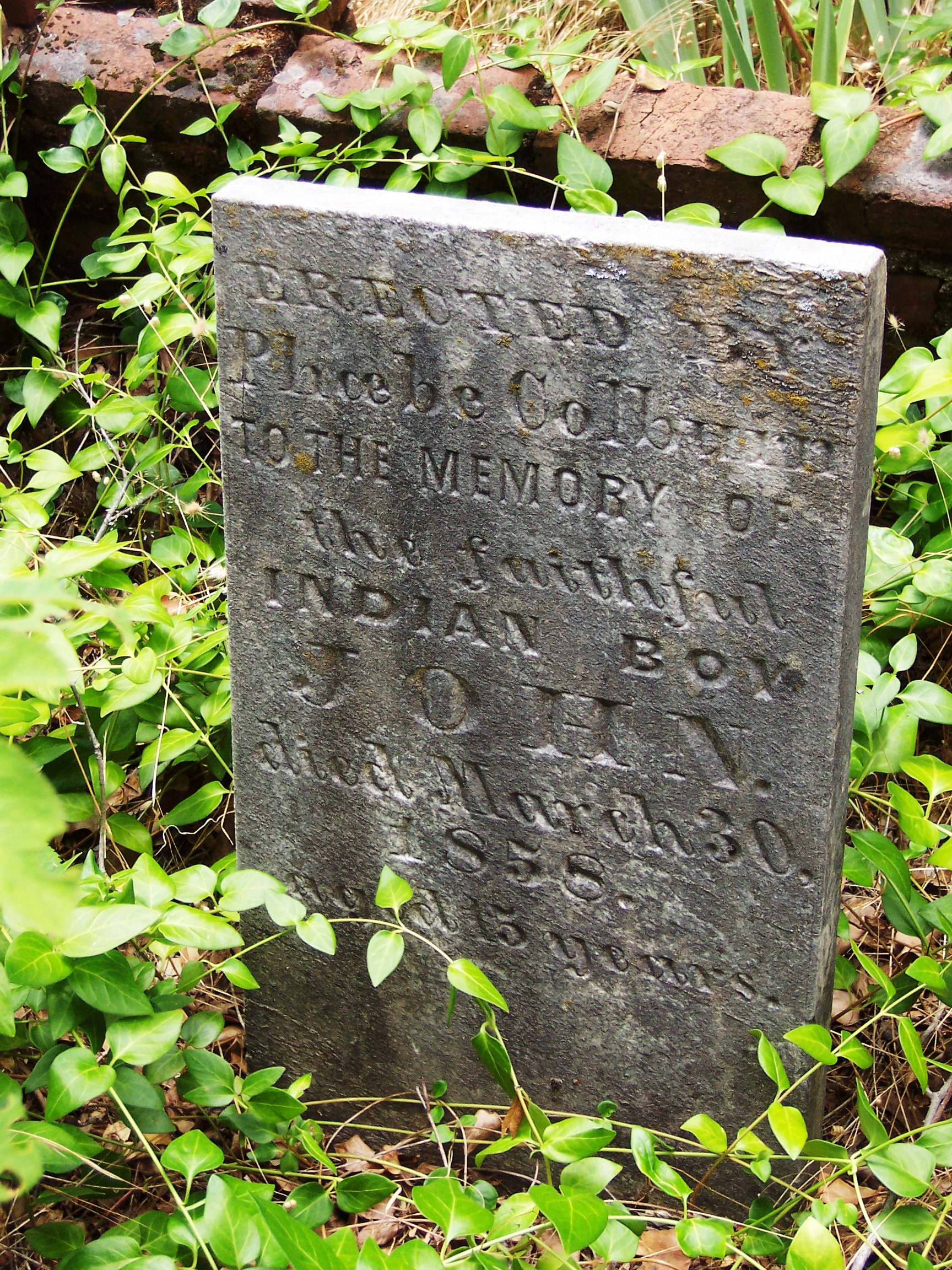
More mystery hovers around another headstone in the Shasta Cemetery. Not far from Phoebe’s grave is the grave of an Indian boy.

Erected by Phoebe Colburn to the memory of the faithful Indian boy JOHN died March 30, 1858 aged 15 years.

Had Phoebe adopted the boy and named him John? Was he an orphan rescued by Phoebe, or was he kidnapped from his family and sold into servitude? The trade in Indian children in the 1850s and ’60s was rampant.

But clearly Phoebe was fond of the boy, however he had come into her care. A headstone for an Indian child can only indicate concern and affection. This tombstone is the only evidence we have that John ever existed.

In the 1870 census another teenage boy appears in the household of Col. Magee, surveyor, and Phoebe Colburn, housekeeper. Along with those two names we see “William Schmidt.” A letter “I” appears next to his name, indicating that he is Indian. His father is not named, but the column labeled “Father of foreign birth” is checked.

So it seems that 14-year-old William is the son of a German father and a native mother. He was born in 1855 or 1856. He may have been a servant in the Magee household, but another column is checked that indicates that he attended school within the last year. Perhaps he is another child that Phoebe took in and looked after.

What became of half-German half-California native William? Possibly he is the William Schmidt who turns up on the Great Register for Nevada County in 1876-78. This William lives at Mooney Flat and is the only voter listed on those two pages of the roll born in California. Men came from all over the States and the world, but not many were born in California in 1855.

These two young men who appear along with Phoebe seem to be telling us that she was a loving, caring, nurturing person who was particularly sensitive to those who, like herself, were marked by race or color. How we wish we knew more!

Posted in Uncategorized | Leave a comment

Phoebe Colburn

Phoebe Colburn — picture of unknown origin

Phoebe Colburn is buried in Shasta Pioneer Cemetery. She is known to have been a free person of color who succeeded in the rough-and-tumble world of the California Gold Rush. What can we find out about her?

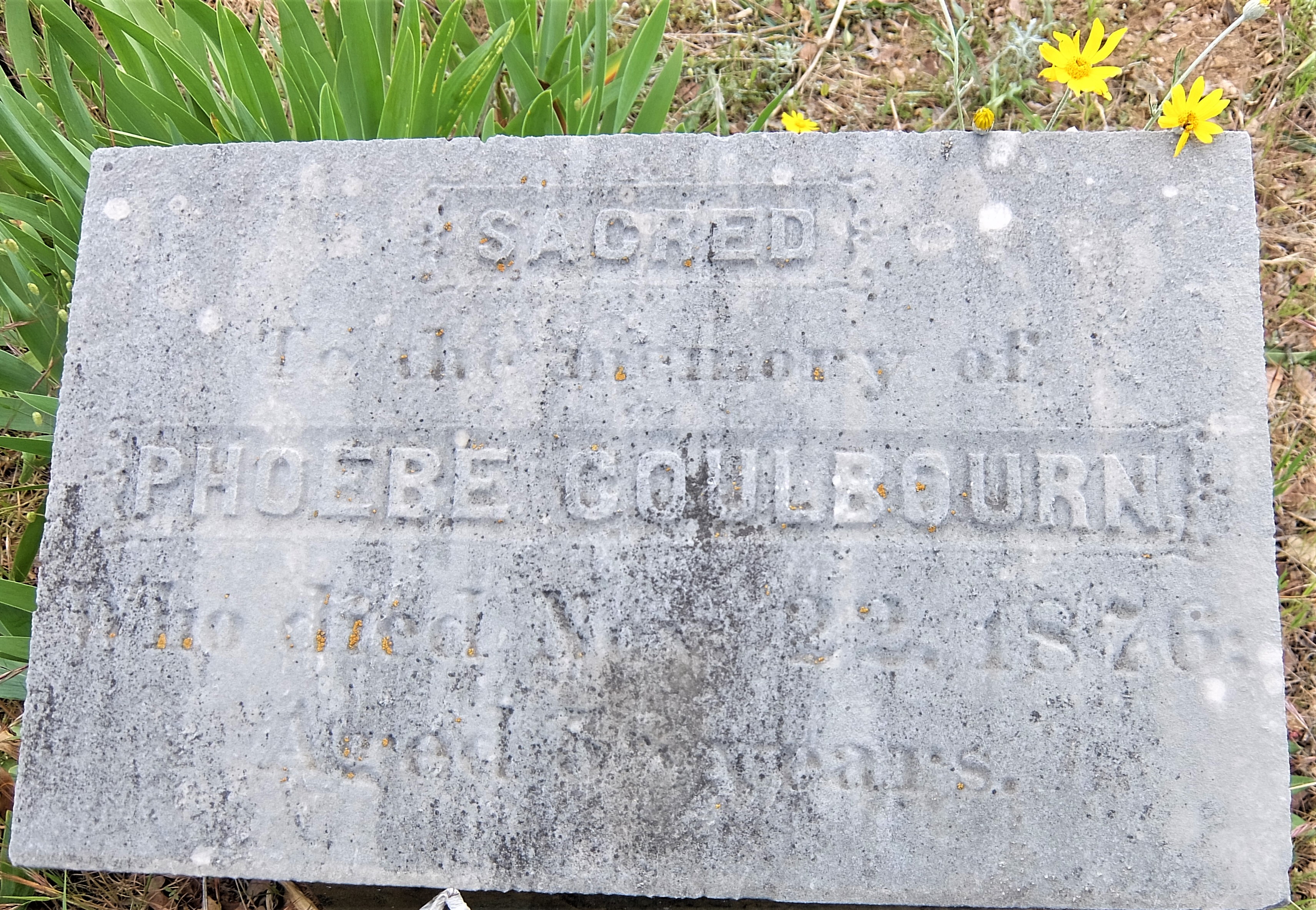
Her tombstone spells her name “Coulbourn” but that spelling doesn’t show up in the newspaper or the census. Perhaps someone decided to get fancy with the spelling of her last name. The tombstone reads:

Sacred to the memory of Phoebe Coulbourn Who died Nov. 22, 1876 aged 58 years.

Phoebe was born into slavery in Alabama. If her tombstone is correct, she was born in 1818. If the 1870 census is correct, she was born in 1822, or maybe 1825 if we believe the 1860 census. Already her life has its mysteries.

How she became free and how she came to California is unknown. She may have come with guide and trailblazer Jim Beckworth, or maybe they are only linked because both were black. She first turns up in Shasta County when she bought a house in Shasta City from Harrison Shurtleff for $700 in 1854. The deed was witnessed by her friend, Col. William Magee. Phoebe could not read or write, so she signed with an X.

Her lack of literacy didn’t prevent her from becoming a shrewd businesswoman. She rented the house to Magee and kept house for him, but lived elsewhere. She went on to engage in a number of property transactions. In 1855 she held a mortgage on the American Ranch (now the town of Anderson).

The next place for Phoebe is at the Foot-of-the-Mountain Station beside Noble Emigrant Trail east of Dersch’s Stopping Place in the early 1860s. William “Billy” Smith owned the place and Phoebe worked for him as a cleaning woman and housekeeper. Smith was having a hard time making the stopping place a paying business and was going into debt. Because Phoebe was thrifty and saved her money, Smith borrowed $500 from her.

But he could not repay the loan. In 1865, he deeded the 40 acres on which the Foot-of-the-Mountain Station stood, plus 240 more acres to Phoebe. Phoebe continued to operate the stopping place.

The building included a bar, a gambling hall, and a dance hall on the top story with six bedrooms off to the side. It also included a wraparound 12-foot veranda and a front entrance with two large 8-foot high glass topped doors that opened into an impressive hall.

Dottie Smith, “Phoebe Colburn was a freed slave who made a fortune.” Redding Record Searchlight, March 26, 2010. https://archive.redding.com/lifestyle/phoebe-colburn-was-freed-slave-who-made-a-fortune-ep-377005305-355322071.html/

Foot-of-the-Mountain Station was a way station on the Nobles Emigrant Trail, some 30 miles east of Shasta City. The buildings no longer stand.

Phoebe sold the property in the late 1860s to a German immigrant named George Schuler and moved back to Shasta City. The 1870 census finds her there, living with Col. Magee as housekeeper. It is notable that she is wealthier than he is — she lists $500 in real property and $2000 in personal property. He only has $350 and $500.

It’s also interesting to see that the census taker first put down a W for White next to her name, and then overwrote that with an M for Mulatto (rather than a B for black). She may have been a rather medium shade of brown, or even fairly light-skinned for her race.

If only we knew more about this enterprising woman!

Posted in Phoebe Colburn, Uncategorized | Leave a comment

A Visit to Shasta State Historic Park

On Sunday I visited Shasta State Historic Park along with a group of trail enthusiasts from the Oregon-California Trail Association. We were in Anderson for a “Spring Symposium” and our field trip was to drive 40 or so miles on the Nobles Emigrant Trail, starting at its terminus, Shasta City.

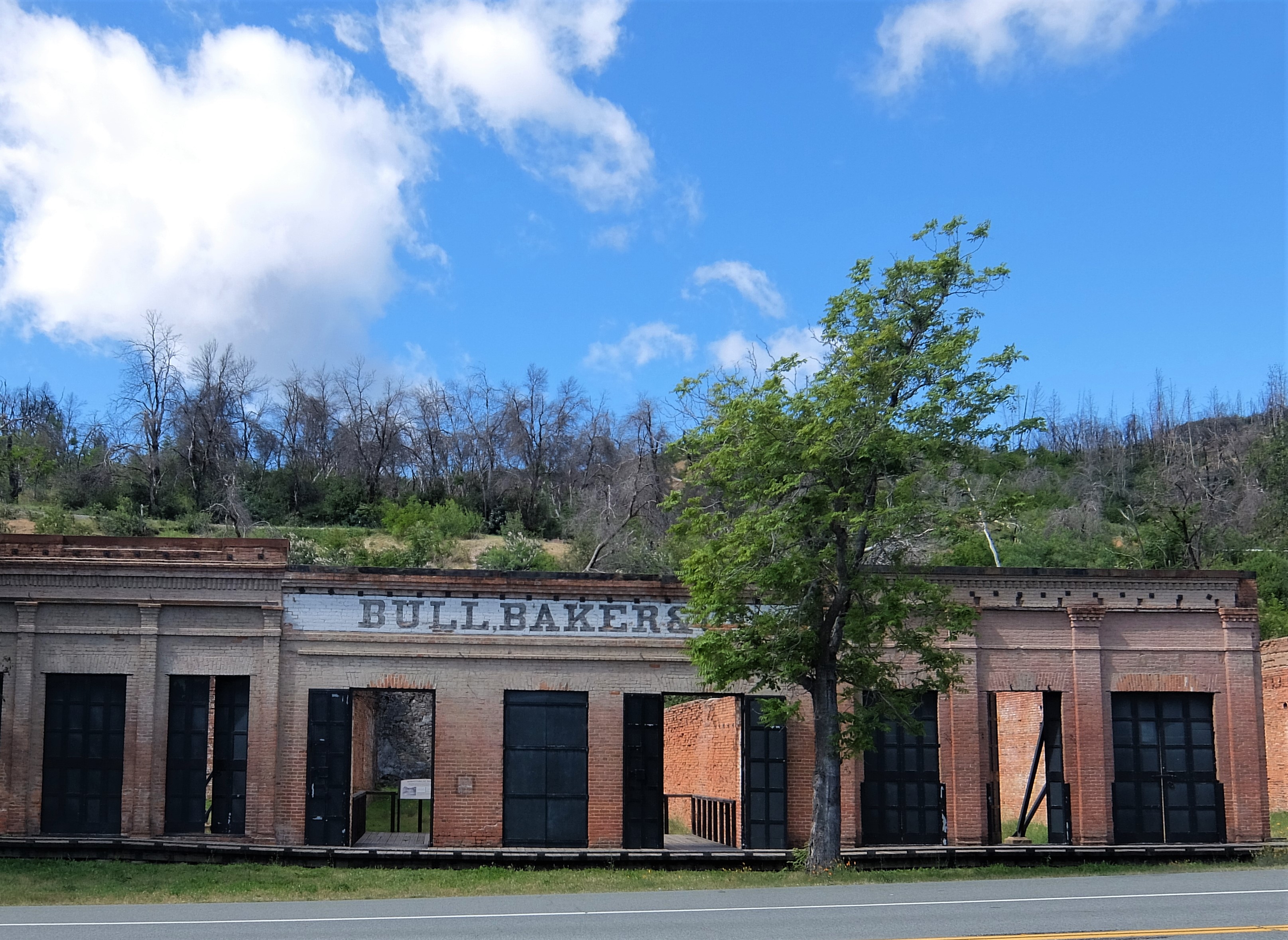
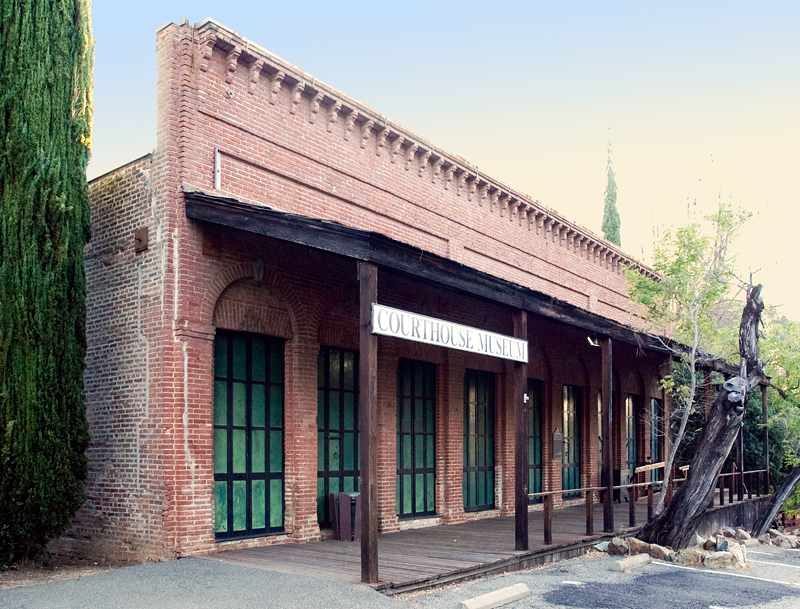
Shasta City, once a thriving mining community and the first county seat, is now a handful of old brick buildings on either side of Highway 299. Most of the park is an open-air display that can be visited any time. The museum, inside the courthouse, is still closed to the public while State Parks readies things like new displays and ADA compliance.

We were fortunate to be given a special tour by parks guide June Morris. She couldn’t take us inside the museum, but she let us take a look at the gallows and guided us around the old cemetery.

The gallows behind the courthouse
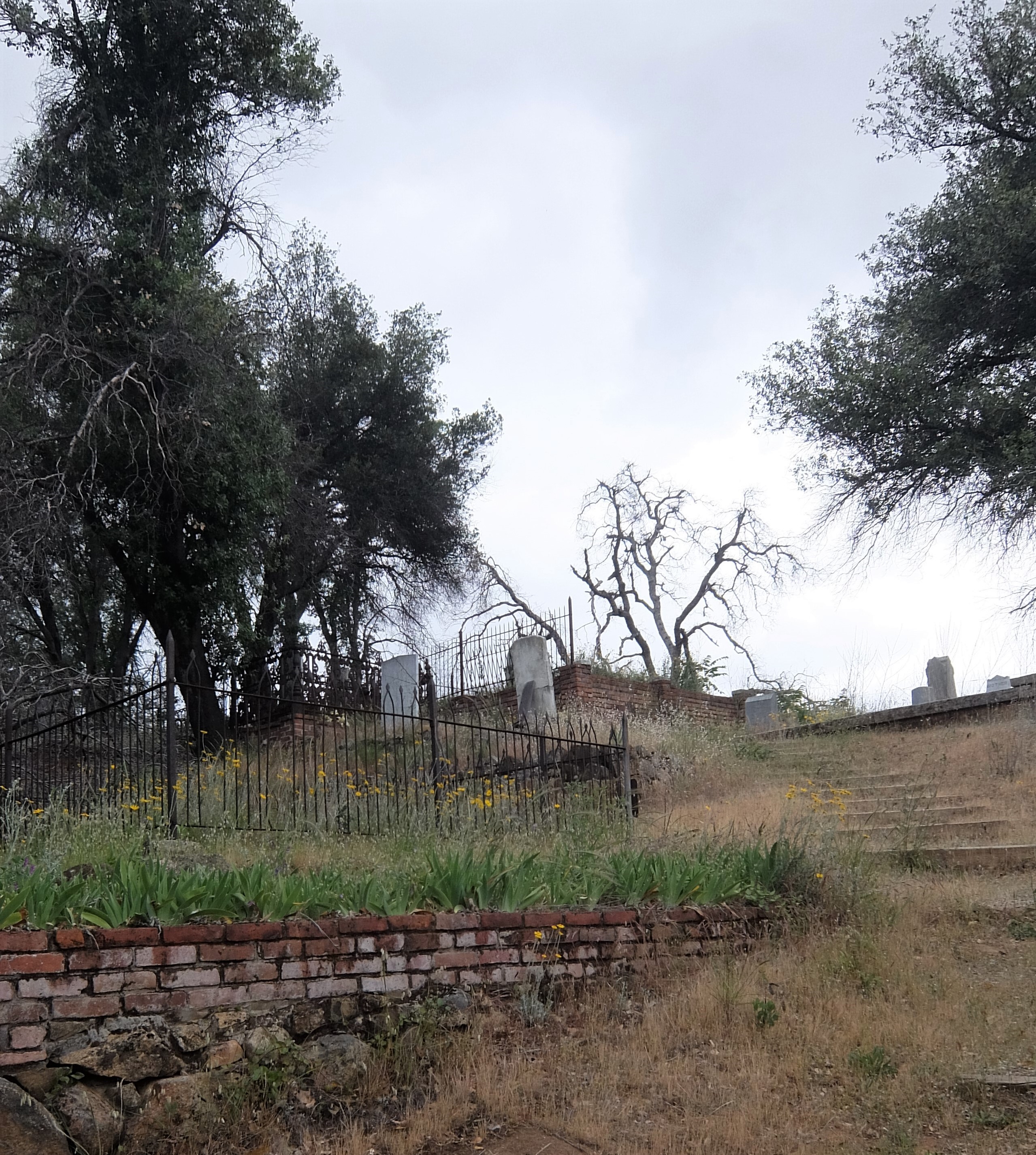
Shasta Union Cemetery
An infant’s grave

The cemetery was hilly, overgrown with weeds and wildflowers, and home to many a sleeping pioneer — not only miners, but wives and children as well.

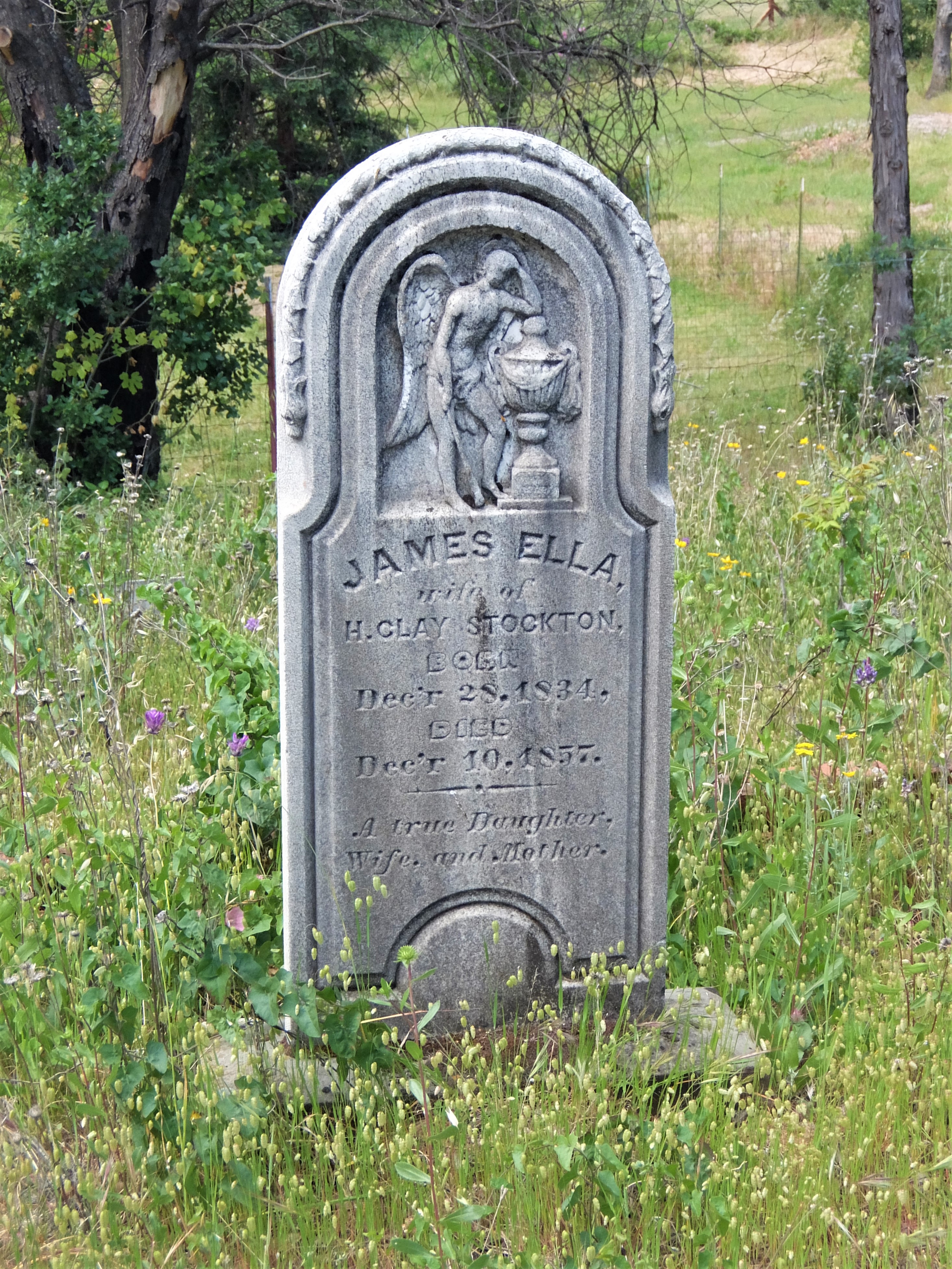
Here is the tombstone for James Ella Stockton, who died at the age of not-quite 24, after giving birth.

When she was born, her father was so certain that the baby would be a boy, that he registered the name as James, only to find out that the baby was a girl. Ella was added to make the name sound feminine.

The image on the tomb is a classic example of tombstone iconography. It shows a mourning angel with a drooping trumpet in one hand, weeping over a funeral urn.

Keep an eye out for the reopening of the Courthouse Museum at Shasta State Historic Park so that you can plan a visit. I am hoping that this summer I can visit again, tour the buildings and museum, reacquaint myself with the inhabitants of the cemetery, and have a picnic in the park.

Posted in Uncategorized | 1 Comment