Jennie Megquier Arrives in San Francisco

There is no portrait of Dr. and Mrs. Megquier, but here is a nice daguerreotype of Alonzo and Martha Doolittle from the Bancroft Library

Jennie Megquier arrived in San Francisco on June 13, 1849. Her husband, Thomas Megquier, was a medical doctor and planned to practice medicine and open a drug store. Jennie knew she could make money running a boarding house, if she could just get a house. (Their name, by the way, was pronounced “Me-gweer.”) She wrote to her daughter:

. . . you may bless your stars that you are not here at present, report says there are six thousand people here that have no shelter, but some are going and coming from the mines, so we got a small room the size of my bedroom in Winthrop for five of us with our luggage, your Father and me lie on a single mattress on the floor with one small pillow. Col. Hagen, wife, and little girl lie on a hard mattress on the bedstead  . . .

. . . some kind of provision are cheap as in the states such as beef pork flour, but vegetables are enormously high . . .We have been here three days and have had nothing to eat but beef, pickled fish, and poor flour bread.

. . . money is plenty as dirt if you have any means of getting hold of it, but we have not been here long enough to tell whether we can make anything or not, but if your Father can get practice there will be no doubt but we can get money enough in a year or two to come home, there is seven million dollars in gold dust in this little place besides thousands of coined money . . .

Jennie would soon find how to make her own way in San Francisco, where, as she wrote:

everyone must do something, it matters but very little what it is, if they stick to it, they are bound to make money.

Posted in Uncategorized | Leave a comment

Mary Jane Megquier — An Apron Full of Gold

In honor of Women’s History Month I am going to re-post some entries from 2015. This the story of Mary Jane Megquier, who came to California in 1849 and fully expected to go home, as she said, with her “apron full of gold.”

Apron Full of Gold: The Letters of Mary Jane Megquier from San Francisco 1849-1856. 2nd edition. Edited and with an introduction by Polly Welts Kaufman.

Mary Jane Megquier, known to family and friends as Jennie, came to California with her husband, leaving her three children behind in Maine with relatives. At first the plan was only for her husband to go — many men left wives and children behind when they headed for the goldfields. But at the last minute Jennie decided to go along. As she wrote to her daughter from New York, “they think some of taking me along with them, it is so expensive getting womens work they think it will pay well . . .” And so it would prove.

Although she missed her children terribly, she thoroughly enjoyed the adventure of traveling to California and living in mining camps and San Francisco. “Women’s work” was hard, but the lively variety she found all around her more than made up for it.

Her letters home, written between 1849 and 1856, are one of the best portraits of life during the Gold Rush from a woman’s point of view. Crossing the Isthmus of Panama was an uncomfortable and often dangerous undertaking, yet Jennie reveled in it, despite the heat, damp, insects, disease, bad food, and lack of comfort. She was no complainer.

Here she is, describing the journey up river from Chagres:

After waiting three or four hours we were stowed into a canoe (Mr. Calkin, Dr. [her husband] and myself) twenty feet long two feet wide with all our luggage which brought the top of the canoe very near the waters edge. We seated ourselves on our carpet bags on the bottom of the boat, if we attempted to alter our position we were sure to get wet feet, notwithstanding our close quarters the scenery was so delightful the banks covered with the most beautiful shrubbery and flowers, trees as large as our maple covered with flowers of every colour and hue, birds of all descriptions filled the air with music while the monkeys alligators and other animals varied the scene, that we were not conscious of fatigue.

Two natives pushed the boat with poles unless the water was too swift for them they would step out very deliberately and pull us along, Was it not a scene for a painter to see us tugged along by two miserable natives. There are ranchos every few miles where you can get a cup of miserable muddy coffee with hard bread of which we made dinner, then we doubled ourselves in as small compass as possible and started, under a broiling sun the thermometer at one hundred.

Arrived at our destination for the night about five o clock where we seated ourselves on the bank to watch the arrival of the canoes, before dark there were one hundred Americans on that small spot of ground all busy as bees making preparation for the night. Our part thought it best to have the natives cook their supper, it was rich to see us eating soup with our fingers, as knives, forks, spoons tables, chairs are among the things unknown, they have no floors, the pigs, dogs, cats ducks, hens, are all around your feet ready to catch the smallest crumb that may chance to fall.

As I was the only lady in the party they gave me a chance in their hut but a white lady was such a rare sight they were coming in to see me until we found we could get no sleep, we got up and spent the remainder of the night in open air, At four we took up our bed and walked, Would to God I could describe the scene. The birds singing monkeys screeching the Americans laughing and joking the natives grunting as they pushed us along through the rapids was enough to drive one mad with delight when we got tired sitting, we would jump out and walk to cut out the crooks which were many, we could never see more than ten rods, sometimes we would find that we were going northeast when our proper course was directly opposite.

At four in the evening we reached Gorgona, another miserable town, where you will find the French, New York and California Hotels, but you cannot get decent food, nor a bed to lie upon at either house. There is a church in town which is not as respectable as the meanest house you have in town . . .

Posted in Uncategorized | Leave a comment

Russian Claims Fort Ross

According to this news story, a Russian politician has called for the return of Alaska and Fort Ross to Russia. Speaking in an interview, Oleg Matveychev, a member of the Duma (parliament), outlined his demands.

He called for reparations from the United States (because, you know, the war in Ukraine is the fault of the U.S.) and the “return of all Russian properties, those of the Russian empire, the Soviet Union and current Russia, which has been seized in the United States, and so on.”

By the way, he also claims Antarctica. “We discovered it, so it belongs to us.”

Alaska was sold to the United States in 1867 for $7.2 million dollars. It was bought and paid for, a done deal, and we are not giving back the 49th state.

What about Fort Ross?

When the Russian-American Fur Company decided to leave California, after having depleted the sea otter population and failed to grow wheat on the foggy coast, they sold the entire establishment to John Sutter.

For the agreed-on price of $30,000 Sutter got “the structures and chattels.” For an additional $3,868.16 he got “various merchandise, provisions, and goods.” He didn’t get the land, since that belonged to the Mexican government. Neither Spain nor Mexico had sold the land to the Russians.

Payment for the fort and all its accoutrements would be made in shipments of wheat to the Russian outpost at Sitka, Alaska. Sutter made a down payment of a mere $400 and for years afterwards let the debt slide. What with the Gold Rush and the loss of most of his vast rancho, he had other things on his mind.

Did he ever pay it off? Does the U.S. still owe that debt to the Russian Empire?

Over the years Sutter had accrued enormous debts and he was never in any hurry to pay them off. But once gold was discovered at his sawmill on the American River, debtors began pressing harder for repayment. Sutter’s son, August, worked with Peter Burnett, lawyer and later first governor of California, to sell off lots in Sacramento to give Sutter some ready cash. According to Sutter’s biographer Albert L. Hurtado,

In January [1849] the Russian-American Company’s agent, William M. Steuart, demanded that Sutter immediately pay nearly $20,000 or face the consequences. Before paying him, Burnett stalled briefly by demanding proof that Steuart was indeed the Russian agent. “We had quite an earnest discussion,” Burnett recalled, but he assured Steuart “that our intentions were to pay the Company as early as possible.”

Burnett was true to his word. On April 13, 1849, Steuart provided the required documentation, and Burnett handed over $19,788 in notes and gold. The Russian debt that had hung over Sutter’s head for eight years was gone.

Albert L. Hurtado, John Sutter: A Life on the American Frontier (2006). p. 244

So, sorry Mr. Matveychev, but we are keeping Fort Ross.

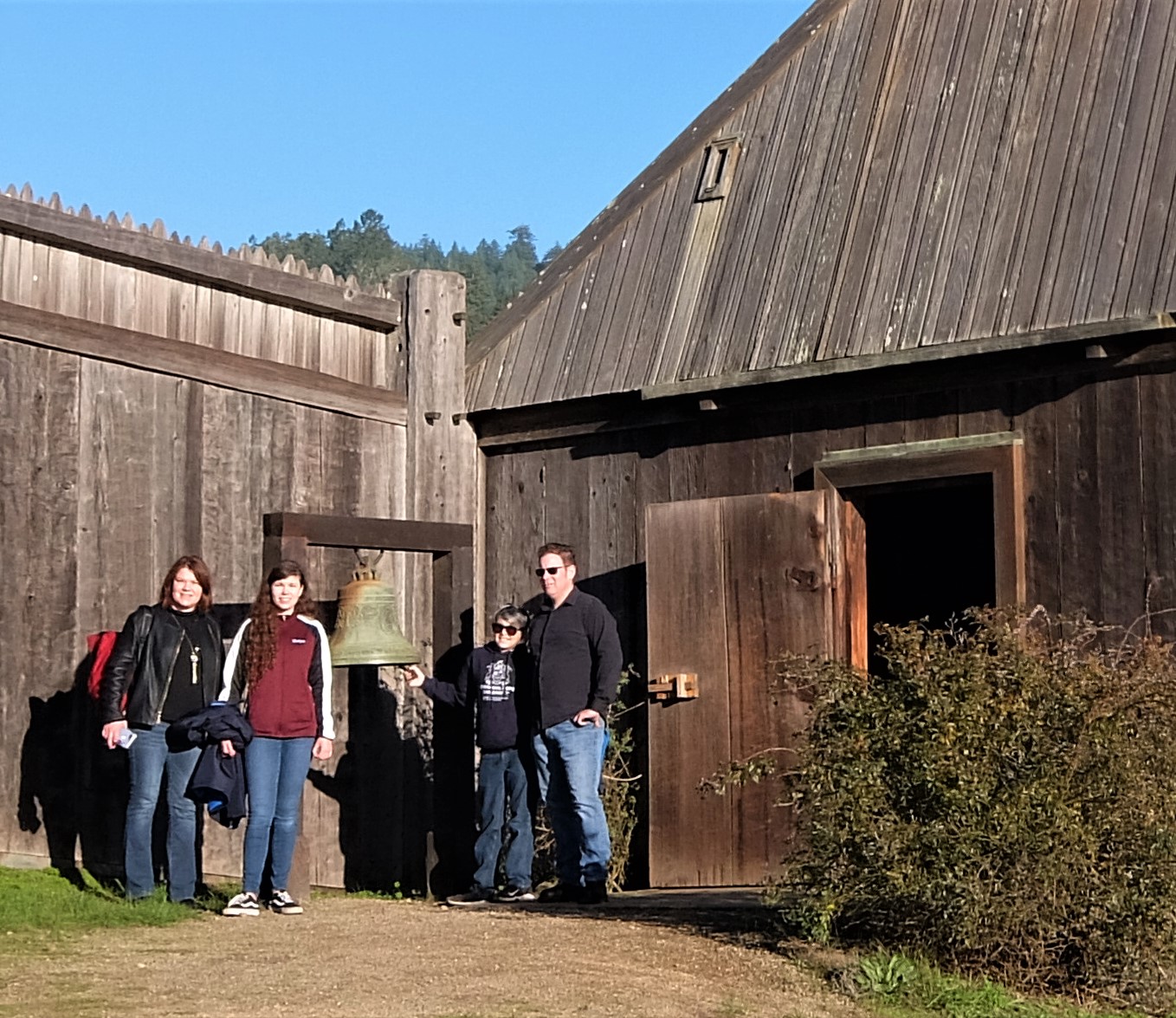
A Russian at Fort Ross — our daughter-in-law Katya, two grandkids, and son Tom.
Posted in Fort Ross, John Sutter, Uncategorized | 1 Comment

Buying Freedom

Dr. William Bassett paid $600 for Alvin Coffey in 1846 and then sold him for $1000 in 1851. How much money would that be today?

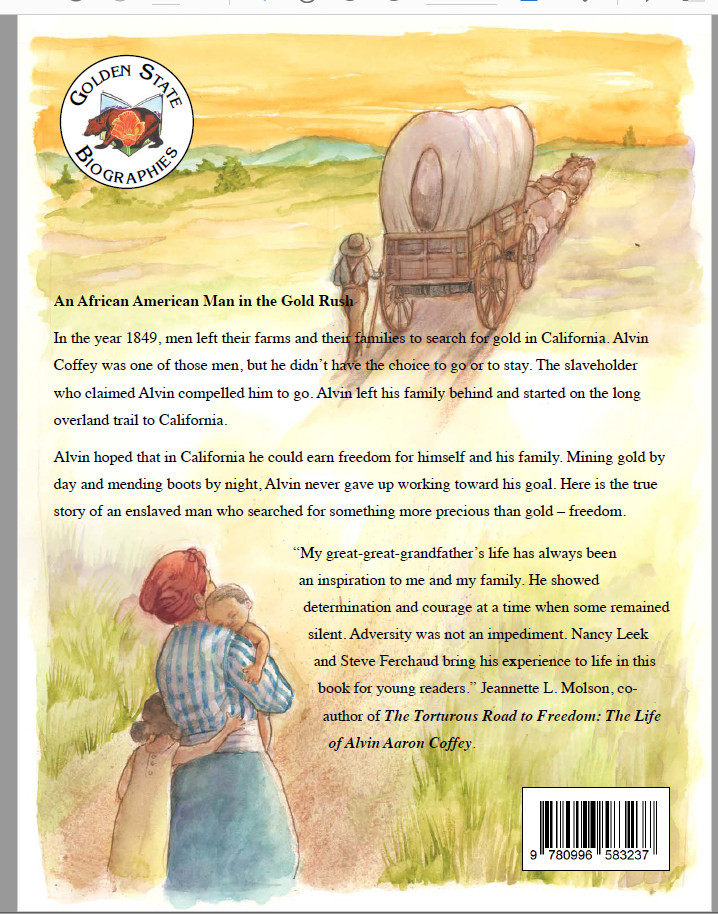
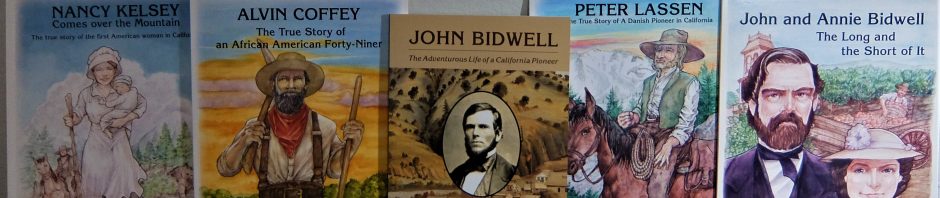
I was asked that question last Saturday when I gave a talk about my books at the Mary Aaron Museum in Marysville (the museum is, by the way, a charming place and well worth visiting). I ended the presentation with a quick look at my forthcoming book Alvin Coffey: The True Story of an African American Forty-Niner.

I mentioned that Alvin paid $1000 to get his Deed of Emancipation. One of the folks in attendance asked me “How much is that in today’s dollars?” Time to check!

Whenever I want to know the value in today’s money of a quantity from earlier times, I turn to Measuring Worth, a reliable economic website. Measuring Worth will not give you a simple answer, but you can count on getting a thorough and dependable one.

Using 1850 as a base year, $600 would be at least $20,500 today, and $1000 would be $24,800. I have to say “at least” because MW will give several different answers, depending on whether you are comparing the cost or value of a commodity, income or wealth, or a project.

They actually have an entire article on Measuring Slavery in 2020 Dollars, which recommends three measures for discussing the value of a slave. “They are: labor or income value, relative earnings and real price.” It’s a lengthy article, but worth reading if you want to understand the economics of slavery in the antebellum South.

Using those three measures, $1000 is either $24,800 (real price of commodities), $285,000 (relative earnings — the ability to purchase goods), or $570,000 (income value — “net value of the future labor services a slave would provide”). However you measure it, buying a slave was a big investment and selling a slave netted the seller a considerable amount of money, comparable to the price of a house.

Alvin Coffey says in his memoir:

Going home in 1851 we went by way of New Orleans. He said, “Let us go to the mint and have our gold coined.” He kept my money ($616) and when we got up into Missouri, he sold me for a thousand more. My labor on his farm amounted to $360, I made $5500 for him in California, he kept my $616 I had saved and sold me for $1000, in this way clearing $6,876 clear profit.

(Alvin also earned money making hay in California.)

The Doctor got 1/5 of that money; 137 tons at $80 a ton amounts to $10,960, and 1/5th of that is $2,196. Now adding this $2,196 to that $6.876 profit he had off of me before and it amounts to $9,072 clear profit. Some say slavery is not profitable!

Coffey, Alvin Aaron. 1901. “Autobiography and Reminiscence of Alvin Aaron Coffey”

$9072 comes out to $310,000 (real price), $2,580,000 (relative earnings), or $5,170,000 (income value). Slavery was profitable indeed!

Posted in Alvin A. Coffey | Leave a comment

A House for Widow Brown

“We reached Red Bluff a hungry, almost barefoot, ragged lot of emigrants. But the people came generously to our aid and gave us food and clothes.” Abbie Brown

When the Brown family arrived in Red Bluff in October 1864, they were, like almost all overland emigrants, trail-worn and tired. The group consisted of Mary Day Brown, the widow of John Brown, her three daughters Annie (20), Sarah (17), and Ellen (10), her son Salmon, his wife Abbie, and their two small children.

The conflict between the Union and the Confederacy was still raging in the East and most Red Bluff residents were supporters of the Union. They knew about John Brown, his failed raid on the arsenal at Harper’s Ferry and his execution by the State of Virginia. They knew “his soul goes marching on.” They were generous in their aid to his remaining family.

Mrs. Brown found a small house to live in — some described it as a shack. Sarah and Annie taught school, but school-teaching was poorly paid. During her time in Red Bluff Mary Brown worked as a nurse and midwife.

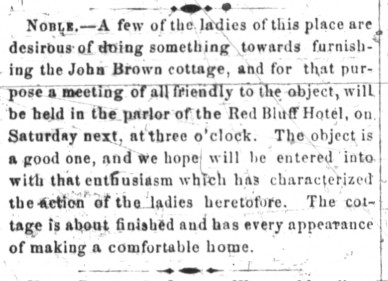
Six months after their arrival a newspaper in San Francisco, the Daily American Flag, published a letter from Red Bluff, sent in by “A Friend of John Brown.” The letter suggested that people should help the Brown family by raising funds to build a house for them. The editor of the Red Bluff Independent agreed.

Red Bluff Independent, 10 April 1865

The editor of the Independent was eager to contribute to the cause. His article continued:

Here is five dollars. How many others will contribute an equal amount, or more or less?  Whoever has twenty-five cents, or twenty-five dollars to bestow in a “good work” let them hand it to Judge Earll for building “The John Brown Cottage.”

Other towns and other newspapers took up the cause, but the money was slow to accumulate. The Independent put out another appeal in October 1865. By mid-January 1866 it reported that the house was nearly finished and that ladies of the town were raising money to furnish it.

Red Bluff Independent, 10 January 1865

The house was nothing fancy — an ordinary frame house painted white. But the modest home was gratefully received by Mrs. Brown and her daughters. The house still stands at 135 Main Street, Red Bluff.

Posted in John Brown, Uncategorized | Leave a comment

John Brown’s Family in Northern California

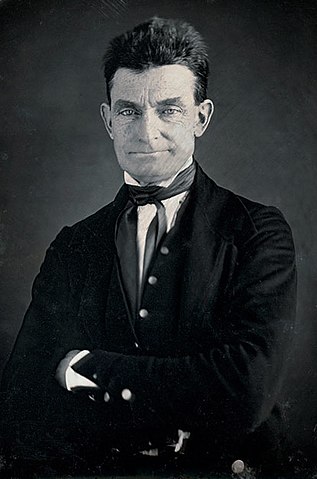
Portrait of John Brown by Augustus Washington

Did you know that there is a connection between John Brown, the abolitionist, and the North State? John Brown, of Harper’s Ferry fame, never came to California. He was hanged by the State of Virginia in 1859. But members of his family came, and their story is told in a new book from the Association for Northern California Historical Research.

When John Brown was executed in 1859, he left behind a widow, Mary Ann Day Brown. She was living with their three youngest daughters, Annie, Sarah, and Ellen, on a small farm in upstate New York, together with their grown son Salmon and his wife Abbie. Life there was hard. The soil was poor and the weather was nearly always cold. They raised their own food and made their own clothing from wool that they sheared from their own sheep. The girls picked blackberries to pay postage for their mother’s letters.

One day Abbie’s uncle came to visit them. He had returned from California and he painted a glowing picture of its healthy climate and fertile soil. In 1863 the family decided to emigrate to California.

They set out on their journey in September 1863 and got as far as Iowa. They thought they might settle there, and rented a farm, but the hard winter that followed convinced them to continue on. They started from Council Bluffs in three wagons: one for Mary Brown and her three girls, one for Salmon and Abbie Brown and their two small children, and one for six Merino sheep.

They traveled the California Trail until they reached Lassen’s Meadow in Nevada Territory. From there they took the new Red Bluff Wagon Road that brought them into the town of Red Bluff in Tehama County. The Brown family would live in Red Bluff from 1864 to 1870.

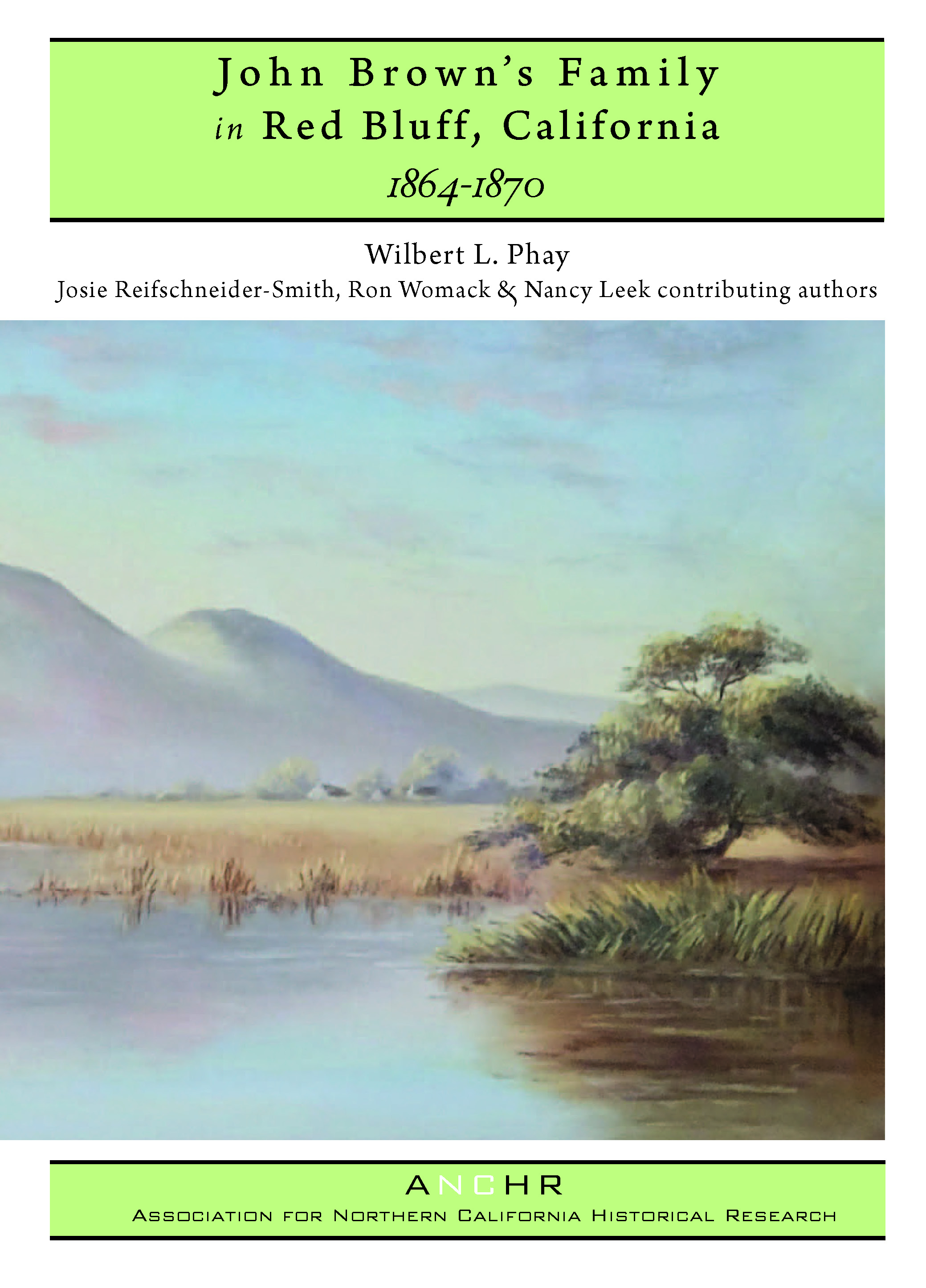
ANCHR’s new book, John Brown’s Family in Red Bluff , has just been printed and will soon be available at various outlets and online at anchr.org. Today (March 5, 2022) two of us, Ron Womack and myself, gave a presentation at the Chico History Museum about the book. It was the first outing for the new book, but we hope to do many more presentations.

The book consists of a thesis on the John Brown house in Red Bluff written by Wilbert L. Phay and published by ANCHR in 1986, plus many more chapters.

More than half the book is new material: background on John Brown, the story of the Brown family’s overland journey, danger on the trail, political rivalries in Red Bluff, and the subsequent history of the family. The ANCHR authors put in hours of research and writing to bring all the threads of the story together in one volume.

I hope you will be reading it soon.

Next time: More on the Brown family in California.

Posted in John Brown | Leave a comment

Moses Rodgers — Black Mining Engineer

Moses Rodgers, age 55

Moses Logan Rodgers came to California in 1849 as a slave. Born in Missouri in 1835, he he was only 14 when he joined the Gold Rush. He mined by day and worked for himself in the evenings until he had earned enough to purchase his freedom. By “great effort, close study and application” he not only freed himself, but gained an education as a mining engineer. (All quotations are from The Negro Trail Blazers of California, by Delilah L. Beasley (1919).)

Exactly how he got his education isn’t known, but Moses became a successful and sought-after miner. To his friends he was “Mose.” He settled at Hornitos, in Mariposa County, where he operated several mines. The respect he earned is evidenced by this quotation from the Merced Star:

“A carload of machinery arrived at the depot last Friday, consigned to the Mount Gaines Mine, Mariposa County. Moses Rodgers, of Hornitos, than who there is no better mining man in the State, has been engaged as its superintendent.  The standing and known energy of the men backing the enterprise are a guarantee that the mine will be carefully handled and worked on a paying basis. The Mount Gains Mine is well known among mining men to the good mining property, and the new arrangement and its undoubted success will mean a great deal for mining in the vicinity of Hornitos”. (Beasley, p. 114)

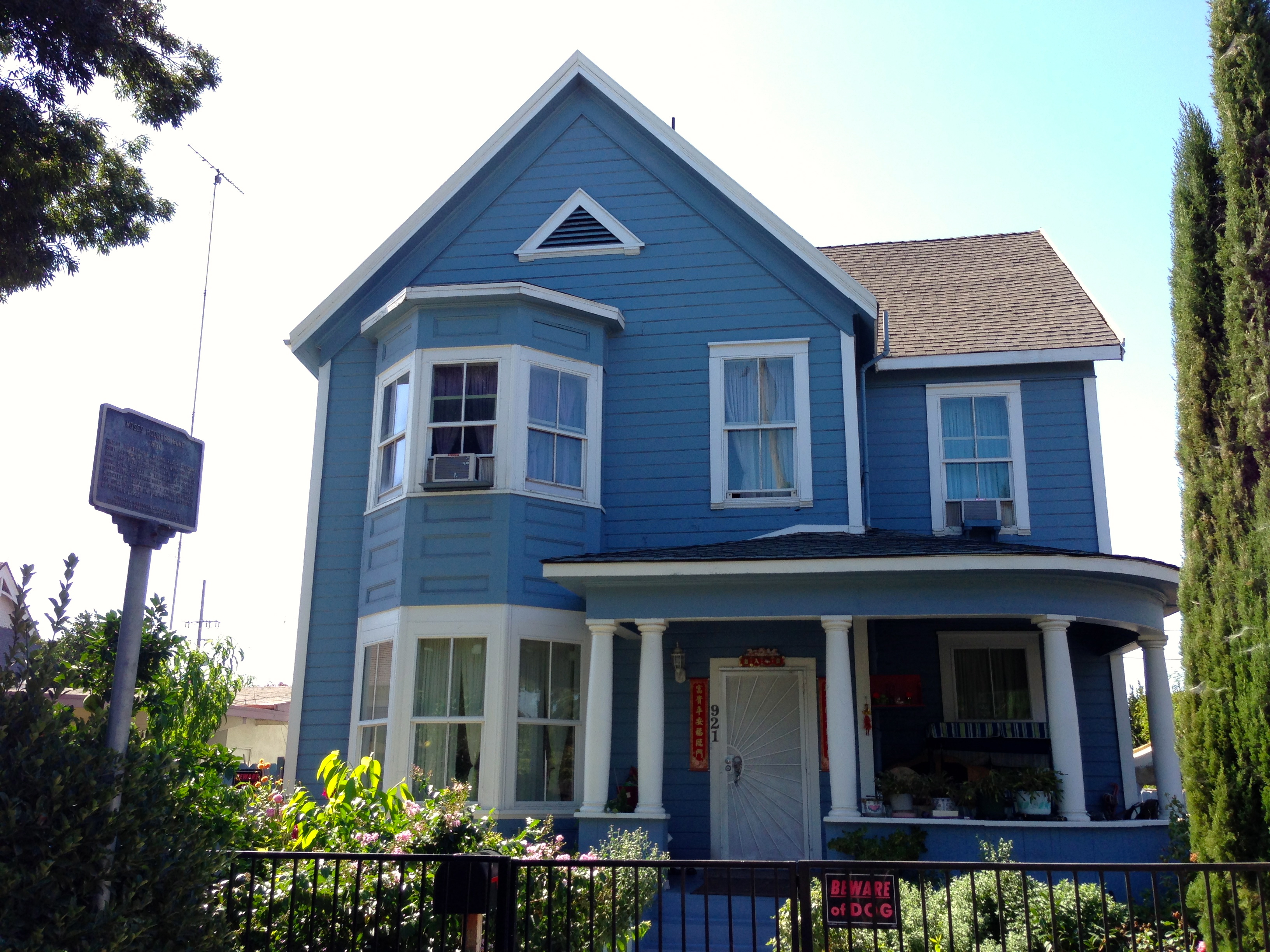
In 1873 he married Sarah Quivers and they become the parents of five daughters. Seeking a better education for his girls, he moved the family to Stockton, where he built a fine home. The house is listed on the National Register of Historic Places.

The Moses Rodgers House in Stockton, California

One of the daughters of Moses and Sarah Rodgers, Miss Vivian Rodgers, was the first African American female graduate of the University of California, Berkeley. She became a teacher in Hilo, Hawaii.

Moses Rodgers died in October 1900 at the age of 65. His obituary in the Merced Star said of him:

He was an expert in his line and his opinion was always sought by intending purchasers of mines. He was a man of honor and his word was as good as his bond.  He was energetic in his younger days and took a great interest in helping along any good enterprise.

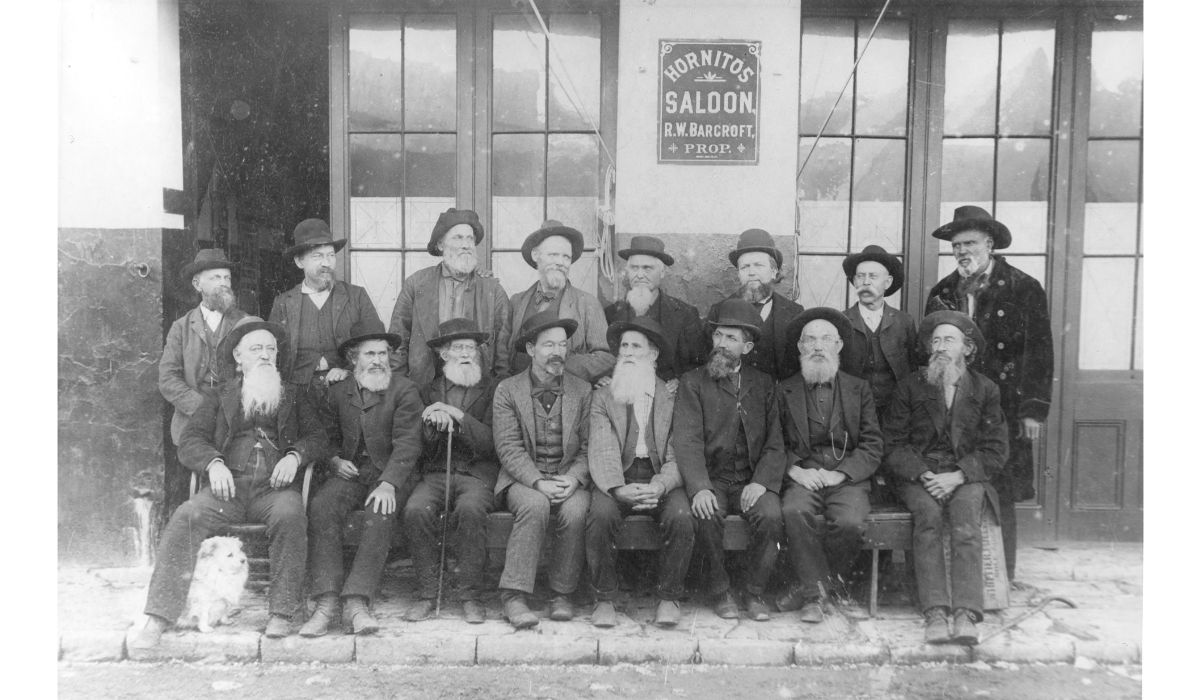
In the photograph below, Moses Rodgers is the tall man in the black coat on the far right. The photo of these “Hornitos old-timers” in front of the Hornitos Saloon was taken in 1890, when Moses would have been 55 years old.

Hornitos Old-timers 1890, Mariposa Museum and History Center
Posted in Uncategorized | 1 Comment

Freedom and George Washington Dennis

One more story from California history for Black History Month.

Southern slave owners who came to California for the Gold Rush usually brought at least one enslaved person with them. Although California was admitted to the Union as a free state in 1850, slavery continued in the state before the Civil War.

One such man was George Washington Dennis. Here is his story, as told by his son Edward Dennis.

George Washington Dennis came to California September 17, 1849, with the gambling party that opened the ‘Eldorado Hotel’ in San Francisco. This party of gamblers was from New Orleans and was composed of the following persons: Green Dennis, a slave trader, from Mobile, Alabama; Joe and Jim Johnson, from Ohio, and Andy McCabe. . . While en route from Panama to San Francisco, the gamblers lost and re-won Mr. Dennis three different times. He was their slave and therefore chattel property.

The Negro Trail Blazers of California. p. 119

Those Louisiana gamblers knew a money-making opportunity when they heard about it. They were doing their own version of a gold rush.

Upon reaching California, the gamblers set up a tent, which they had brought with them, as a hotel and gambling den. The gambling went on night and day. Green Dennis, George W. Dennis’s owner, told him that “that if he would save his money he could purchase his freedom.”

George W. Dennis was given the position of porter of this hotel at a salary of $250 per month. Mr. Dennis, very anxious to secure his freedom and at the same time to start life with a little money, saved the sweepings from the gambling tables and at the end of three month he paid, in five and ten cent pieces, the sum of $1000, and received a bill for himself from Green Dennis, who was his father and also his master.

It staggers the mind that a man would keep his own son as a slave or sell him. But that was slavery in the United States, all legal and customary at the time.

$250 a month seems like a high salary, when you consider that in the States a man might work all year for that amount. But everything was different in California, and that included prices and wages. And those gamblers must have been raking it in. Gambling was the most popular entertainment in gold rush San Francisco.

Notice too that Dennis carefully sifted through the straw and trash that he swept up each day and saved any coins or bits of gold he found. He soon had the price of his freedom.

George W. Dennis had another person whose freedom he wished to buy, and that was his mother. He paid his father $950 for her. Two of the gamblers, Joe and Jim Johnson, went back to the States to get cattle and while there, found his mother and returned with her.

Upon the arrival of his mother in San Francisco, Mr. Dennis rented one of the gambling tables at $40 per day for the privilege of his mother serving hot meals in the gambling house on it. Eggs were selling at $12 per dozen, apples 25 cents apiece, and a loaf of bread $1. While her expenses were heavy, she averaged $225 a day.

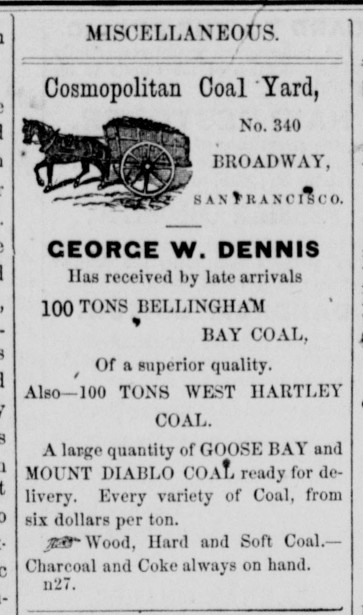
That must have been a good business. She lived a long life in California with her son. George W. Dennis did quite well for himself. He bought and sold land in San Francisco, ran a livery stable, and later was a coal merchant, and prospered.

This advertisement appeared in the newspaper The Elevator, running for several issues in 1868. The Elevator was a Black newspaper begun in 1865 which aimed at the progress and uplift of the Blacks in California.

Dennis married and had a large family of children, and made sure that they each got a good education. When he died in 1916 the San Francisco Call said he was widely known and “probably the oldest negro in California.”
Posted in Uncategorized | Leave a comment

Presentations! I’ve Got Presentations!

I am available to speak to groups and classes about California history and my books. I have a few presentations lined up — maybe you can make it to one of them.

Saturday, March 5th at 10 a.m. at the Chico History Museum. Ron Womack, Josie Reifschneider-Smith, and myself will be talking about ANCHR‘s new book, John Brown’s Family in Red Bluff. That’s John Brown the abolitionist of Harper’s Ferry fame. His wife and some of their children moved to Red Bluff in 1863.

Saturday, March 12th at 10 a.m. at the Lee Burrows Center for the Arts in Marysville. I’ll be talking about history and research and books. I’m looking forward to finding out more about Marysville, a town that is just jam-packed with Gold Rush history.

Saturday, March 19th at 10 a.m. at the Chico Veterans Hall. The DAR has invited me to talk about my books, especially my forthcoming book on Alvin Coffey. The book is not out yet, but the story is worth telling anytime.

Just about my favorite thing to do is talk to 4th grade classes. Fourth grade is when students learn about California history. They have so much history right here in their home towns! I hope that as the world opens up again I will be able to visit classes in person. If you know a teacher who would be interested, please tell them to contact me.

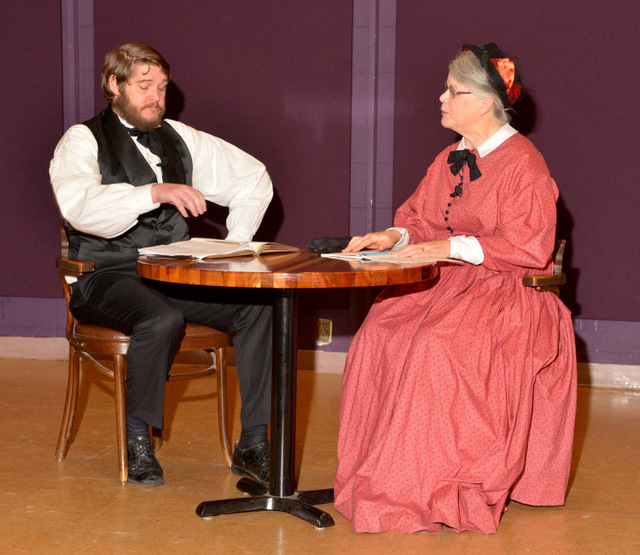
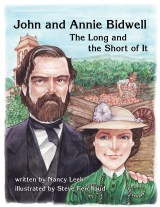
A few years ago Nick Anderson and I came up with a presentation in which I, as a lady reporter, interview Major John Bidwell in 1858. We had a lot of fun with it and Nick really enjoys getting into character as John Bidwell. If you are interesting in this one, give us plenty of notice so that we have time to rehearse.

I enjoy speaking to groups, whether it be to a 4th grade class about John and Annie Bidwell or a group of historically-minded adults about life in old Northern California. Please contact me if you are looking for a speaker. I’d love to meet you!

Posted in Uncategorized | Leave a comment

A Gold Rush Daguerreotype

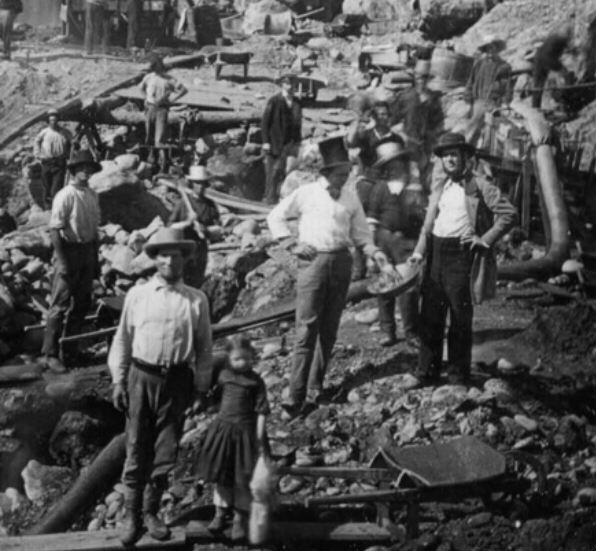
American River Placer Mining, 1852 — Daguerreotype by George H. Johnson

There are some fabulous images from the Gold Rush, and this is one of them. It’s so crowded with activity and life, even though the daguerreotypist must have told them to stand as still as possible.

Look at the variety of hats, the shirts, the beards, and all the wheelbarrows and the mining equipment that I can’t identify. There are even two females in this picture, rarely seen in any Gold Rush scenes.

Front and center stands a little girl, holding her father’s hand. It must be Take You Daughter to Work Day. She is wearing a short-skirted dress and little pantalettes and holding some kind of bag in her hand.

To the left, sitting on a rock, is another young girl, but it is less clear what the relationship is. She looks about 12 to me, but she could be older. She is looking down, away from the camera. Is she shy? Is the young man next to her, her brother, her boyfriend, or ??? We’ll never know.

This daguerreotype was taken by George H, Johnson in 1852. For a closer look at this image, you can find it (among other places) at the Wikipedia article on the California Gold Rush.

Posted in Uncategorized | Leave a comment