Wednesday, 30th. Ascended the N. fork about 16 miles and encamped on it. Buffalo in abundance, killed six.
Another average day. The abundance of buffalo is a boon. They will suffer for want of meat when they get beyond the buffalo herds.
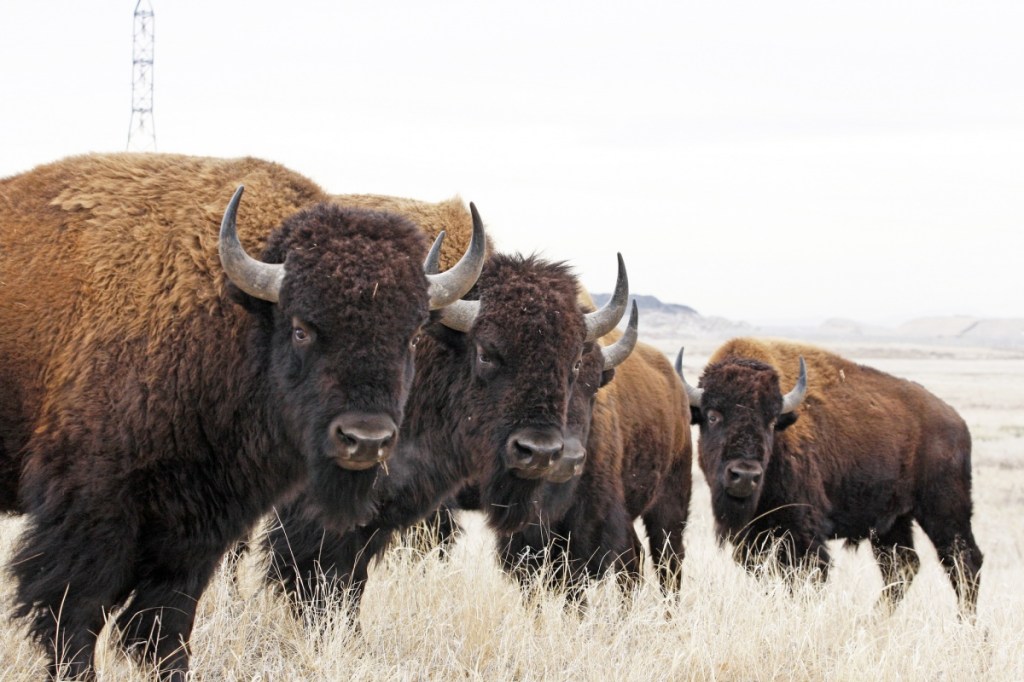
Wednesday, 30th. Ascended the N. fork about 16 miles and encamped on it. Buffalo in abundance, killed six.
Another average day. The abundance of buffalo is a boon. They will suffer for want of meat when they get beyond the buffalo herds.
Tuesday, 29th. Arrived at the N. fork this evening, road good, distance travelled 15 miles.
The Bidwell-Bartleson Party and the missionaries are still traveling up the North Platte River in what is now Wyoming. Nothing exciting going on.
James John, in his journal for this date, notes that they started late, on account of the cattle straying. He remarks on the different kinds of stone here “some limestone, sandstone, granite, red stone, plaster of paris, white and red sand in some places. They present a beautiful appearance.” So there was time to observe and enjoy the scenery.
Although Bidwell calls this mountain range the “Black Hills” what they are traveling next to is today called the Laramie Mountains.

Monday, 28th. Passed an immense quarry of beautiful white alabaster; 3 buffalo killed, distance traveled 18 miles, encamped on a little rivulet affording as good water as ever run.
On the same day, James John wrote in his journal:
Took dinner on the bank of a creek of good water and good grass. Near there is a large cliff was white as snow, a little harder than common chalk and some of the earth is composed of a substance, supposed by the Company to be plaster of Paris.
Alabaster is a form of gypsum and is indeed used in making plaster of Paris.
Father De Smet wrote about the alabaster quarry.
We discovered a curious quarry, which, at first, we took for white marble, but we soon found it something more valuable. Astonished at the facility with which we could fashion this kind of stone into any shape, most of the travellers made calumets of it. I had several made myself, with the intention of offering them as presents to the Indians, so that for the space of forty-eight hours our camp was filled with lapidaries. But the great number of these calumets could not withstand the action of the fire, and broke. It was alabaster.

The dictionary definition of alabaster at Lexico.com says it is a “fine-grained, translucent form of gypsum, typically white, often carved into ornaments.” Its relative softness makes it easy to carve.
A calumet is a ceremonical pipe used by Native Americans. Here’s a picture of one carved out of salmon alabaster.
Sunday, 27th. Day was warm, road hilly, found no water for 20 miles, encamped on a stream affording grass and timber in abundance, cottonwood &c. Found no hard timber.
No water for 20 miles is tough on the animals, but just wait, in another month it will get much worse.
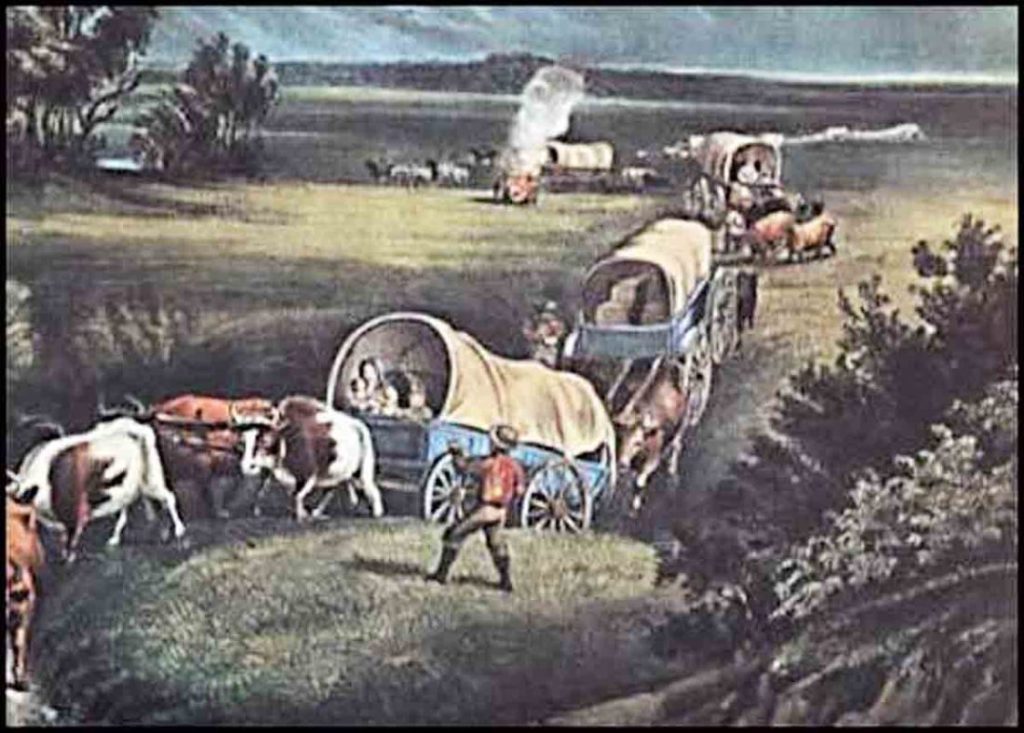
Saturday, 26th. Travelled about 18 miles, and missing our road, encamped on the North fork. At noon we passed the best grass I had seen since I left the frontier of Missouri; it was like a meadow, kind of blue grass — found buffalo, killed three.
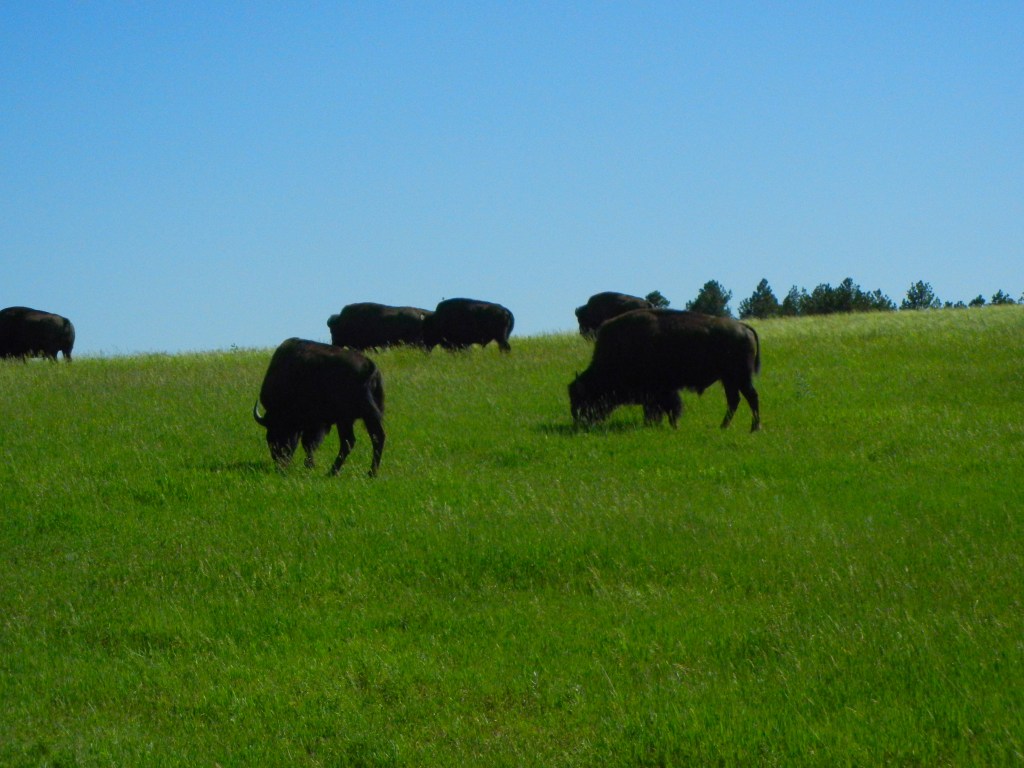
I don’t know if this grass was buffalo grass, but it well may have been, since that was the predominant prairie grass. According to Native American Seed:
Buffalograss is interwoven into American history. Starting with fossil remnants found in Kansas dating back 7 million years ago. Buffalograss (Buchloe dactyloides) was and now once again is the principal forage grass for the American bison, hence the name. Early settlers made use of buffalograss for building their sod homes, while the longhorn cattle grazed it on their way up the Chisholm Trail. It is an important part of the short grass prairie ecosystem. For homeowners with conservation awareness, Buffalograss has become a recognized alternative for turf like lawns.
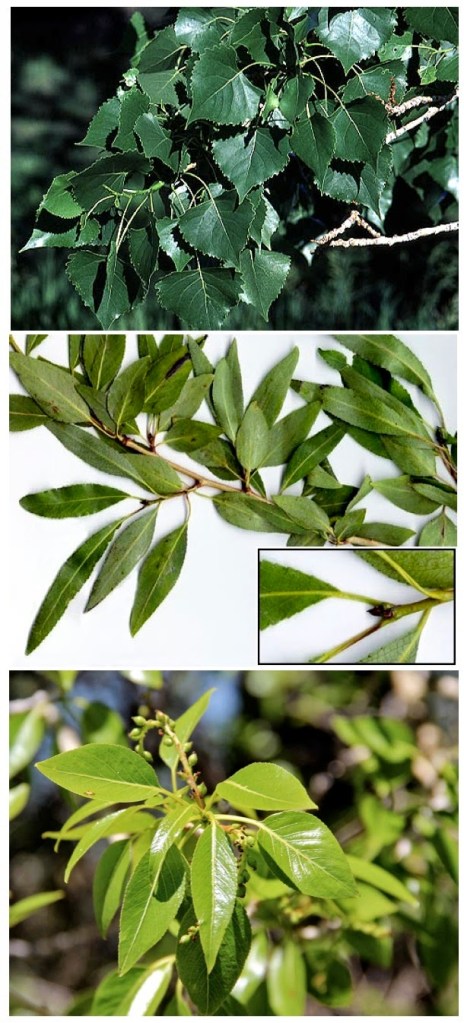
Friday, 25th. Journeyed over hills and dales — encamped on a stream affording plenty of grass, bitter cottonwood timber. It resembles the sweet cottonwood of Missouri, except the leaves are like those of the willow — distance 18 miles.
Cottonwood was useful as fuel, but it was also very important as forage for horses when snow was on the ground. You could keep your horses alive over the winter on cottonwood bark. However, horses would only eat the bark of sweet cottonwood, which they thrived on. Bitter cottonwood was shunned by horses.
For more information on bitter vs. sweet, read this blog entry from a Laramie-based botanist. That’s the source of these photos. Top to bottom: sweet cottonwood, bitter cottonwood, hybrid lance-leaf cottonwood.
Thursday, 24th. Left the Fort this morning and soon began to wind among the Black Hills. Two of our men stopped at the Fort (Simpson and Mast), but two other men with an Indian and his family joined us to travel to Green river.
Encamped having made about seventeen miles — hills here sandy — many wild pears, likewise an abundance of peas, wild — though the bush was dissimilar to to ours, yet the the pods bore an exact similarity, taste, the same.
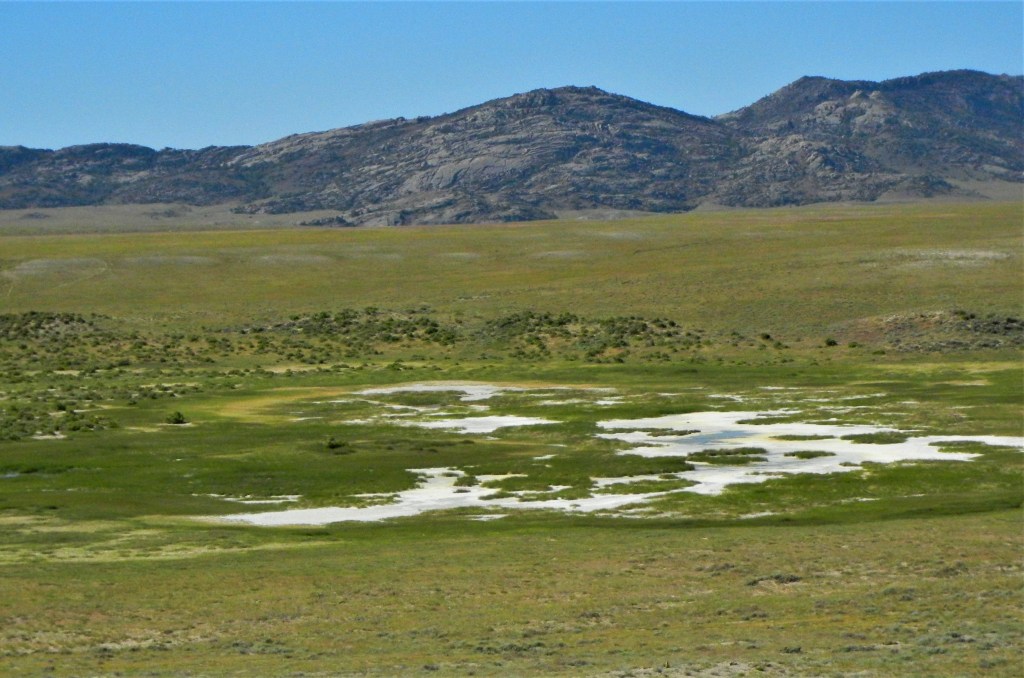
These Black Hills are not the Black Hills of South Dakota, but the lesser known Black Hills of Wyoming, that rise west of the North Platte River (which the Bidwell-Bartleson Party is still following). Here’s a picture, with “Glauber Salts” in the foreground.
This entry raises the question “What could pioneers find to eat along the trail?” Bidwell mentions two wild plants here — wild pears and wild peas. James John, in his diary covering the same period, writes of “a kind of mountain turnip.”
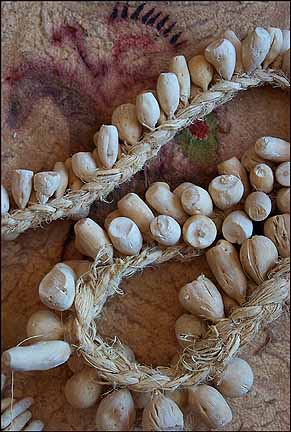
What he called mountain turnip was prairie turnip, or timpsila, as the Lakota Sioux call it. It’s an edible tuber, Psoralea esculenta, that can be dried and stored. It was a staple food of the Plains Indian peoples.
Wednesday, June 23rd. Remained at the Fort; the things of Mr. Shotwell were sold at auction.
You remember poor Mr. Shotwell. I suppose what little money was realized by the sale of his effects went to buy supplies for the company.
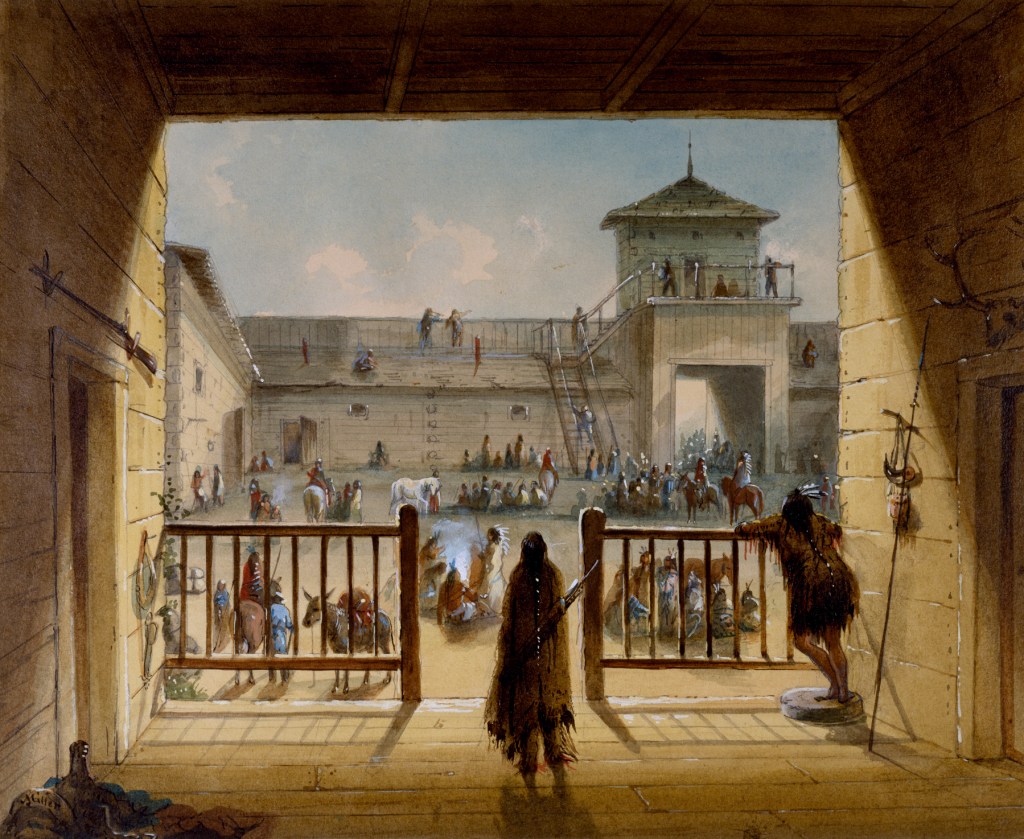
In 1849, as the pressure of emigration grew in the West, the U.S. government decided it needed a string of forts along the Oregon Trail to protect and assist emigrants. With the fur trade in decline, the American Fur Company was looking to get rid of the fort. For $4000 the army purchased the site, and began building barracks, stables, guard houses, and cookhouses. The adobe fort, although only eight years old, was dilapidated and infested with vermin. It was used as temporary shelter by the army, but was soon torn down and replaced.
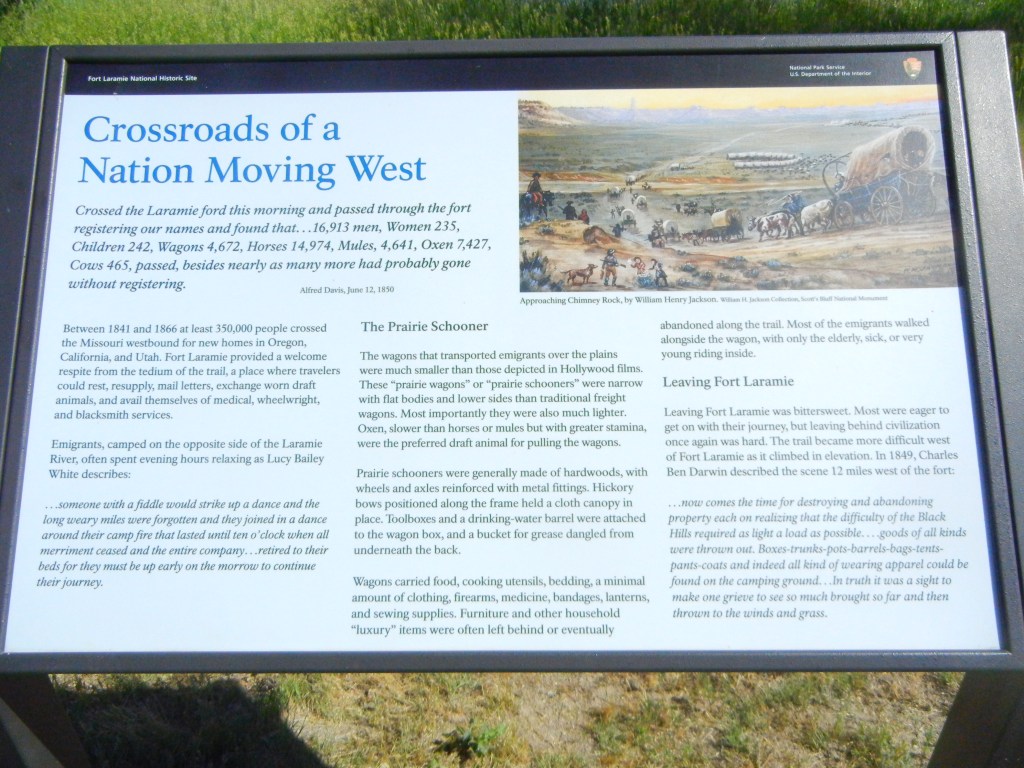
Today Fort Laramie is a national historic site and a number of the army post buildings have been reconstructed and restored. Nobody is sure exactly where Fort William and Fort John were located, but the best guess is that they were close to the river where the officers quarters are today.
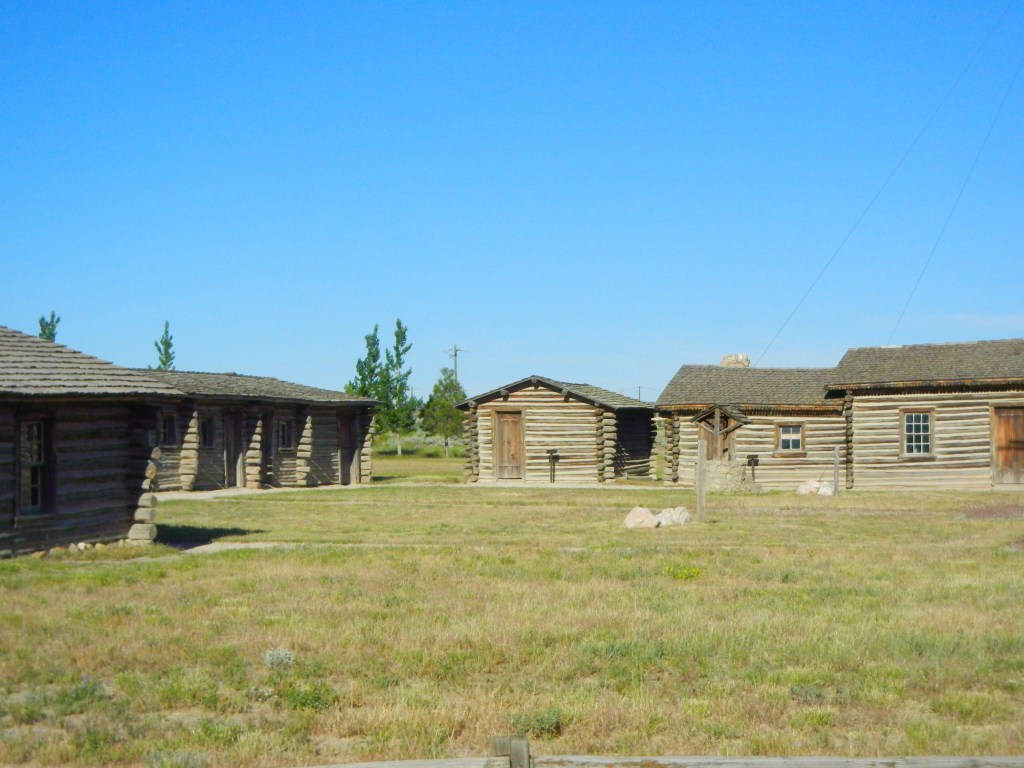
Fort Laramie NHS is chock-full of history and well-worth a visit.
Tuesday, June 22nd. Eight miles this morning took us to Fort Larimie, which is on Larimie’s fork of Platte about 800 miles from the frontiers of Missouri. It is owned by the American Fur Company. There is another fort within a miles and a half of this place, belonging to an individual by the name of Lupton.
The Black Hills were now in view; a very noted peak, called the Black Hill mountain, was seen like a dark cloud on the western horizon. The country along Platte river is far from being fertile and is uncommonly destitute of timber. The earth continues, as we ascend, to become more strongly impregnated with Glauber Salts.
Bidwell didn’t have the spelling of Laramie right, but then, neither do we. The river is named after Jacques La Ramee, a French-Canadian fur trapper. The fort lay at the confluence of the Laramie River and the Platte in present-day Wyoming, and was the most important economic hub in the region.

All emigrants on the trail were happy to get to Fort Laramie, and the Bidwell-Bartleson Party was no exception. Arrival at the fort meant that the journey was one-third completed. It was an opportunity to trade for needed goods, get travel advice, and send mail back to the States.
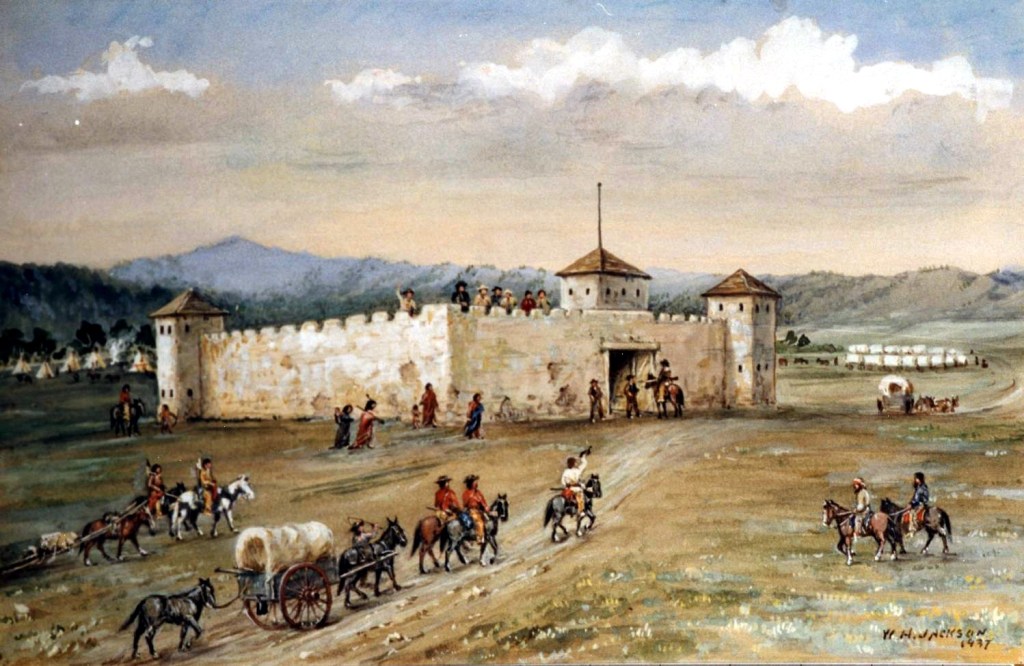
Over time, three forts had been built on this site. The first, called Fort William after its builders, fur traders William Sublette and William Anderson, was built of logs in 1834. The second, called Fort John after John B. Sarpy, an American Fur Company officer, was constructed in 1841 out of adobe bricks. Both were more commonly called Fort Laramie, and it was Fort John that John Bidwell saw when he arrived in June 1841, although it probably wasn’t complete.
Monday, 21st: We had an uncommonly good road today — an abundance of cottonwood timber — traveled late, having taken a stride of 27 miles.
Twenty-seven miles is a lot for one day. But the “road” (more like a trail) was good, the weather was pleasant, and the day was the longest of the year, so that they could “travel late.”



 goldfields