The Death of General Bidwell

DSCF6810 (3)

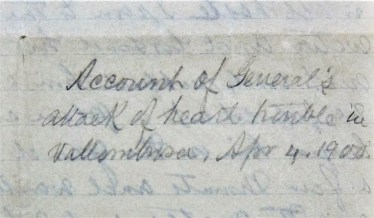
Account of General’s attack of heart trouble in Vallombrosa, April 4, 1900

The following account was written for Annie Bidwell by one of her maids, Florence, who had gone with General Bidwell on the morning of April 4, 1900. I don’t know Florence’s last name. The account can be found in the John Bidwell Collection in the California State Library.

DSCF6806 (3)

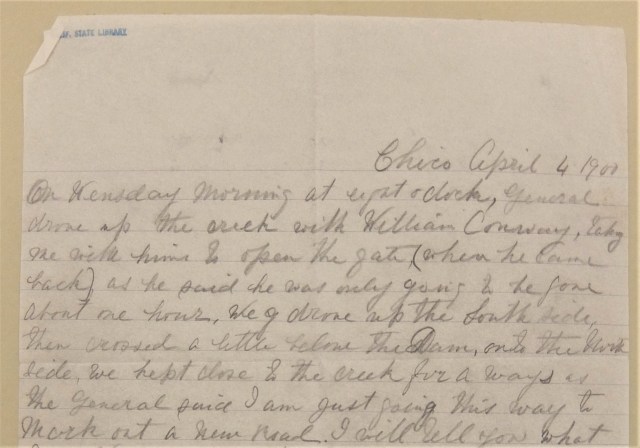
Chico April 4, 1900

On Wednesday morning at eight o’clock, General drove up the creek with William Conway, taking me with him to open the gate (when he came back) as he said he was only going to be gone about one hour. We drove up the South side, then crossed a little below the Dam, onto the North side. We kept close to the creek for a ways as the General said I am just going this way to mark out a new road. I will tell you what to do William and then I will leave you to your self as I am not going to stop today.
Mechoopda Band

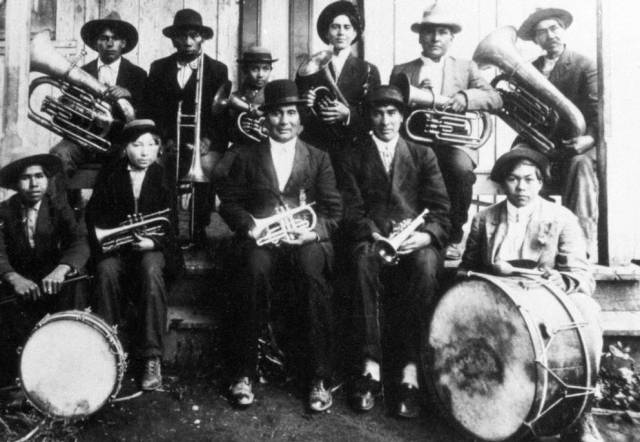
The Mechoopda Band. William Conway is at the center of the front row, holding a trumpet. Photo courtesy of Special Collections, Meriam Library, CSU Chico.

When we got down to where Harry was working the General told William to put on his rubbers and help him out of the wagon. I got into the front seat and held the horses when the General got to the ground he gave a little stamp and said there, I am as spry as a young boy. Now William our Log has burned pretty well but we will take the chain and pull it over a little way. Now Harry get your horses. They pulled it over and then the general took the crow bar and showed William how to knock the fire out of the root without putting out the fire. He then had William take the big ax and chop off a big knot from the stump they were burning. He then called Harry and had him pull the logs that were on the ground a little uphill to the spot where they were when he was take sick. He and Harry sawed a little while and then quit.

The General then went back to see how William was getting along then went and done a little more sawing, then quit and walked around a little while. Then he turned to me and said are you cold Florence, for I was sitting right in the shade with the North wind blowing hard. I told him I was and he had Harry drive the horses to the South side of the log in the sun and I was only there a few minutes watching the General as he poked around the fire and started a little blaze as the chips fell down from William’s ax.

It seems strange but I never took my eye off the General that morning. I followed every movement just with the thought the ground is so uneven and so many little rock and limbs lying around from the tree they were burning so as to warn him if he should happen to go near anything he would stumble over. While watching him he laid the crowbar down and stood for a moment with his hand on the stump as if thinking. Then he called to Harry and said, Harry you take the horses, and Florence you come here. Of course I waited for Harry to get to the horses before I let go of the reins as they were very restless.

William looked up and said I think there is something the matter. The General was then walking to the log with his head held down as if he had the neuralgia. I said Jump Billy and I jumped at the same time leaving the horses alone for Harry had not yet got into the wagon. We both got to the General at the same time. I said he has got neuralgia Billy hold him up. He was then sitting like he does when he had that pain. He had hold of him only a few seconds when he dropped his head back and gasped for breath like as if he were having a fainting fit. I said to William he has fainted and started Harry to town in all haste.

I ran to the creek and got some water and loosened his clothes around his neck and rubbed him as best we could. When we fixed up a place as best we could and laid him on the ground he seemed better in a few minutes and wanted to know what was the matter and what were we all doing. We said keep quiet General you will be all right in a little while and as he commenced to rally he wanted to be propped up and complained of too much weight on his chest though there was nothing there. As he got a little better he asked for some water then he complained of being cold and to cover him up. When you got to the spot and you now what. . .
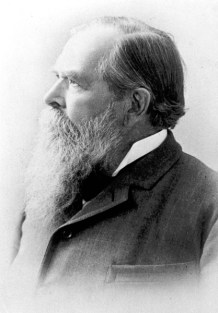
Bidwell1890The account breaks off there, although there must have been a little more to it. The General was taken home in the wagon and died later that day. His heart attack came as he was doing one of the jobs he loved best — road-building.

Posted in Uncategorized | Leave a comment

Another Cartoon from the Wasp

stage

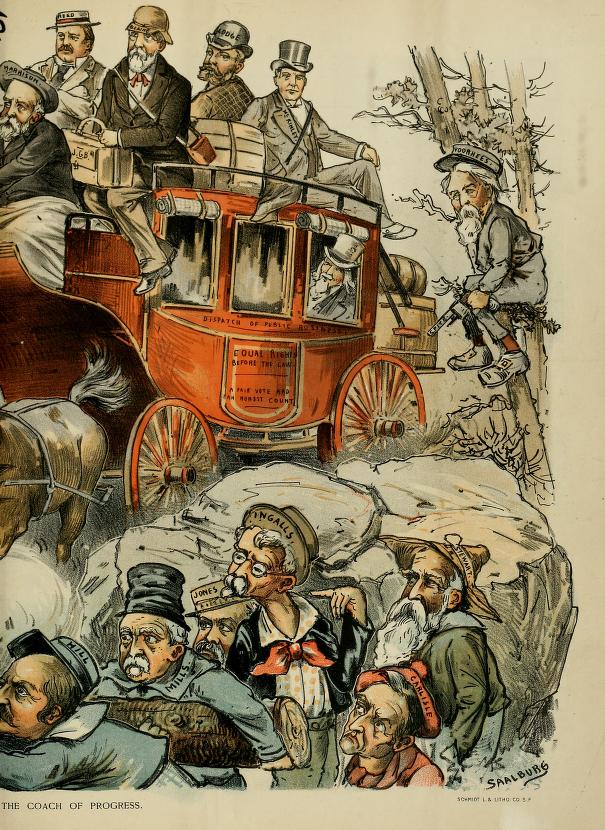
I am putting this one up just so you can admire the artistry of the cartoonist Charles Saalburg. It appeared in the Wasp on February 7, 1891.

Sometimes the Wasp explained the cartoons, but I couldn’t find anything in this issue. The cartoon deals with national politics and I think they assumed that the readers would understand the issues and know the players. I am not going to attempt to explain every figure, but I will point out a few things.

The driver of the “Stagecoach of State” is President Benjamin Harrison, and next to him is his Vice-President, Levi Morton. Two of the men riding on top at the back are Senators Henry Cabot Lodge and William McKinley, both Republicans. (The Wasp favored the Republicans.) Riding inside the coach is Uncle Sam.

waspjanjune1891unse_0148

Each of the horses is labeled with the name of a bill. Foremost among the opponents of Harrison’s plan of progress is former (and future) President Grover Cleveland (Democrat), with his boulder of Vengeance.

waspjanjune1891unse_0149

Other Democrats are shoving in logs labeled Ignorance and Capricious Obstruction. I don’t know who all of them are, but the one in the middle is Republican Senator John J. Ingalls of Kansas, who was getting a lot of criticism in the Wasp at the time.

If you would like to look at more of these cartoons, you can access the Wasp at the Internet Archive. (A fabulous resource, by the way.) Here is the link for the California State Library collection. On the left, search the collection for Wasp, or for Wasp 1890 (or some other year) for a particular year.

Enjoy!


Posted in Wasp | Leave a comment

Bidwell Cartoon

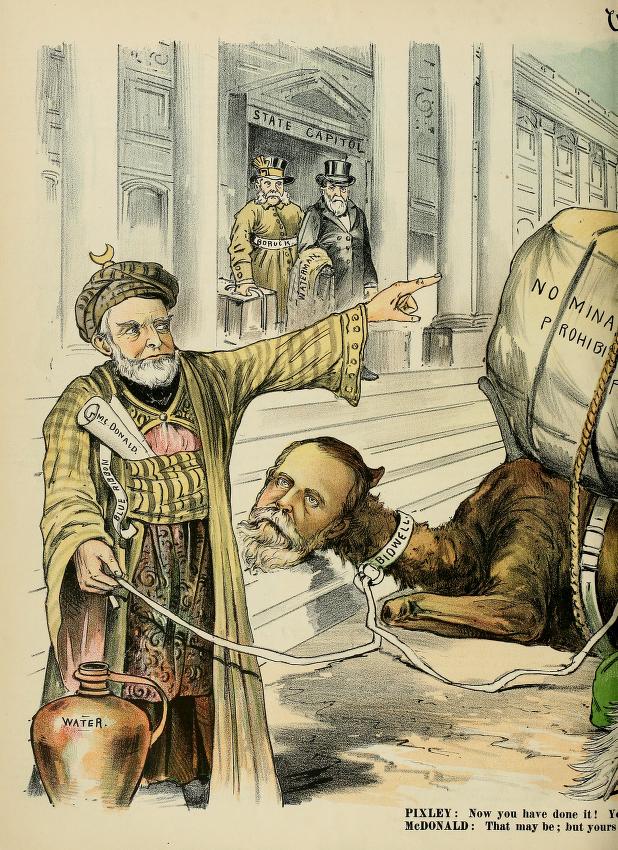
John Bidwell is struggling to carry the burden of two nominations for governor of California in this cartoon by Charles W. Saalburg from The Wasp, August 23, 1890.

Bidwell camel

Most of the political cartoons that appeared in the Wasp over one hundred years ago require explanation, and this one is no exception.

The caption at the bottom reads:

Pixley: Now you have done it! You have burdened him with too heavy a load!

McDonald: That may be; but yours was the straw which broke the camel’s back!

waspjulydec1890unse_0190

DAC18900509.1.8-3759-1024-1005-2801-251wA

Daily Alta California, 9 May 1890

On the left we have Dr. R.H. McDonald, a leader in the California Prohibition Party. (Note his jug of water.) At their convention in San Francisco on May 9th, the Prohibitionists had nominated General Bidwell to be their candidate for governor. On the steps of the capitol, departing Gov. Waterman looks on. (I am not sure who the other man is).  Bidwell is faltering under the load of dual nominations.

waspjulydec1890unse_0191

On the right we have Frank M. Pixley, the colorful editor of the Argonaut, a rival publication to the Wasp. Pixley was an attorney and journalist and in the mid-1860s had been the Attorney General of California. Although a staunch Republican for most of his career, in 1890 he took a fling with a small nativist third party — the American Party.

SFC18900806.1.7-1618-356-731-1597-365wA

San Francisco Call, 6 August 1890

Although General Bidwell did not seek the nomination of the American Party, the convention gave it to him anyway and put his name on their ticket. He wasn’t present at the convention in San Francisco.

In his diary for August 5 he writes:
Events: at ll a.m. received telegram from L.W.McGlauflin, delegate in American Convention at S.F. – At 5 p.m. another saying I was nominated.

The election was no sooner over than the American Party faded into obscurity.

And why is Bidwell depicted as a camel?

camelThe Democrats have their donkey, the Republicans have their elephant, and the Prohibitionists chose as their mascot the camel.  After all, a camel is “dry;” he drinks only water and plenty of it, and can survive for a long time in a parched desert.
Don’t you wish we had political cartoons this fun to look at today?


Posted in Prohibition Party, Wasp | Leave a comment

The Wasp — California vs. Florida

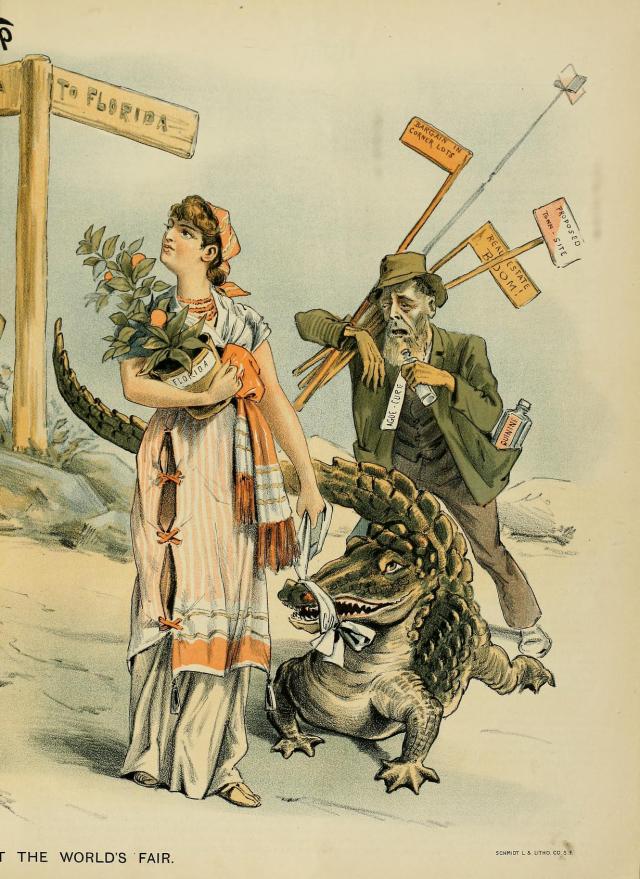
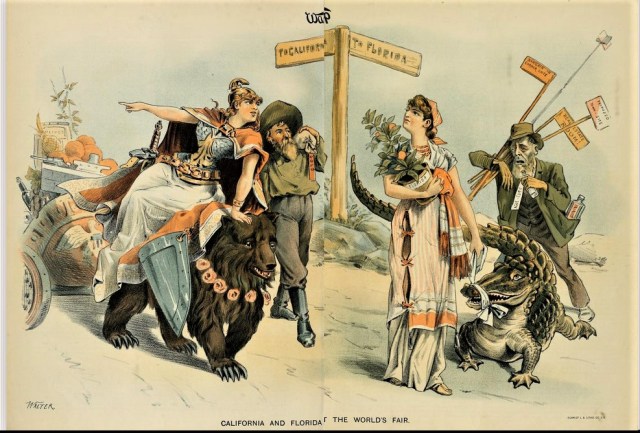
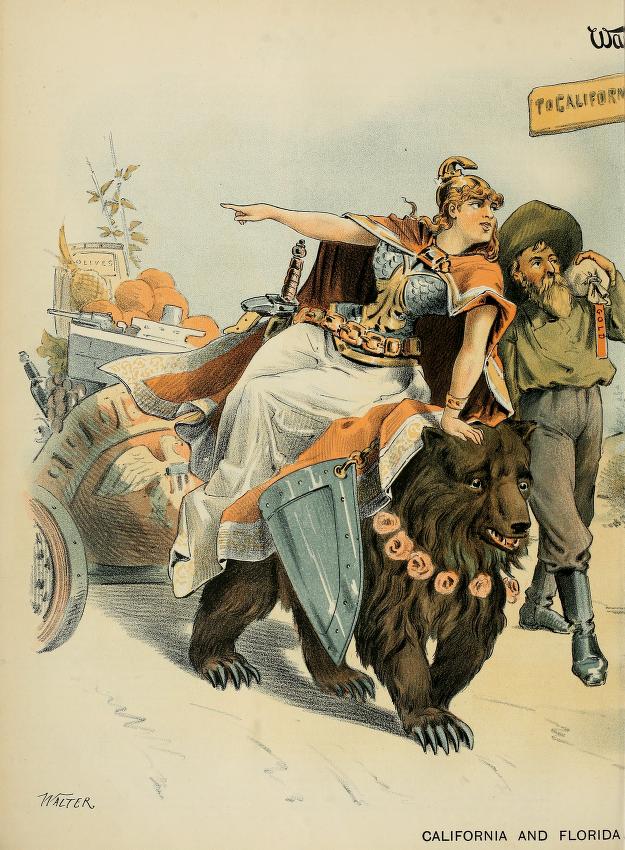
Here is another cartoon showing “California,” as she is depicted on the State Seal.

CalvcFlo

The Wasp, 19 July 1890

The Wasp didn’t always explain its cartoons, but this seems to have reference to a short item in the paper:

Word comes from Chicago that California cannot have ten acres of ground space at the World’s Fair, because Florida might ask for that much room and the commissioners be unable to allow it.

Florida as portrayed here is hardly the equal of California. California has her magnificent bear; Florida has a healthy but lowly and dangerous alligator. California is accompanied by a hardy miner with a sack of gold over his shoulder, while Florida’s companion is a seedy-looking real estate promoter with a bottle of quinine in his pocket to fight off malaria. Florida’s little orange tree can’t compete with California’s chariot full of large oranges, olives, grapes, wine, and a pineapple.

A closer look at the pages:

waspjulydec1890unse_0100

debw047

Statue of Minerva in Heidelburg

California is dressed in her garb as Minerva (or Athena), with helmet, breastplate, shield and sword. Note the fashionable wasp-waist in the illustration.

Florida is nice enough looking, but not a rival in beauty or fashion for California.The_Great_Seal_of_the_State_of_California

waspjulydec1890unse_0101

Posted in Wasp | 1 Comment

The Wasp

waspaugdec187601unse_0007top

Looking for an entertaining and historical way to spend a few hours? Time will fly while you peruse the pages of The Wasp, San Francisco’s premier satiric periodical, digitized by the California State Library and available online at the Internet Archive.

The weekly Wasp began publication in August 1876 and continued into the 20th century; the online collection goes up to 1920. As stated in its first issue, “Its mission, as the name will indicate, signifies a busy,  industrious life, ever on the wing in search of news and ever ready to inflict a justifiable sting upon those who will abuse public trust.” It sought to be “fearless, bold, and independent, not owned or controlled by any men or party of men . . .” and took jabs equally at Democrats, Republicans, and third parties.

It was notable for its outstanding full-page color political cartoons and numerous line sketches and comics. I’ll show you some of these in upcoming posts. Many are now obscure, referring to long-dead controversies and long-forgotten public figures. But others are timeless and a delight to behold. Here’s one — the cover of the January 1st, 1881 issue:

waspvol61881unse_0009

The decade of the 1870’s had been a tough one, overshadowed by the Panic of 1873 and the Long Depression that lasted through the decade. Here California looks to the dawn of a brighter day as Hard Times fade away behind her. California is depicted as she is on the State Seal, as Minerva, goddess of wisdom, with the California grizzly bear at her feet and her shield embossed with the miner’s pick and shovel.

I hope you’ll enjoy The Wasp as much as I have.

Posted in Uncategorized | Leave a comment

Thomas Bidwell — The Rest of the Story

Thomas Bidwell kept up his correspondence with his brother, John Bidwell, from St. John’s College through 1854. Some of the letters were written in Spanish, as an exercise in improving his language skills. He wasn’t quite sure what to do with himself after college. St. John’s was a Catholic school, and he seems to have considered the priesthood; he mentions studying theology and some of his letters are signed “Thos. J. Bidwell S.J.” But he dropped the S.J. after a while — I don’t know why.

Thomas’s health was not strong — he may have suffered from tuberculosis. After graduating from St. John’s in 1855, he decided to return to California. There he could work again for his brother and the climate would be better for his health. At first he managed the Rancho Chico orchards.

In 1859 he married America Ray, known as Merrie. She was only fifteen when they married, but that wasn’t unusual at the time. They had one daughter, Lillie.

bidwellstore

Bidwell’s Store on the corner of Broadway and 1st Street (now Tres Hombres)

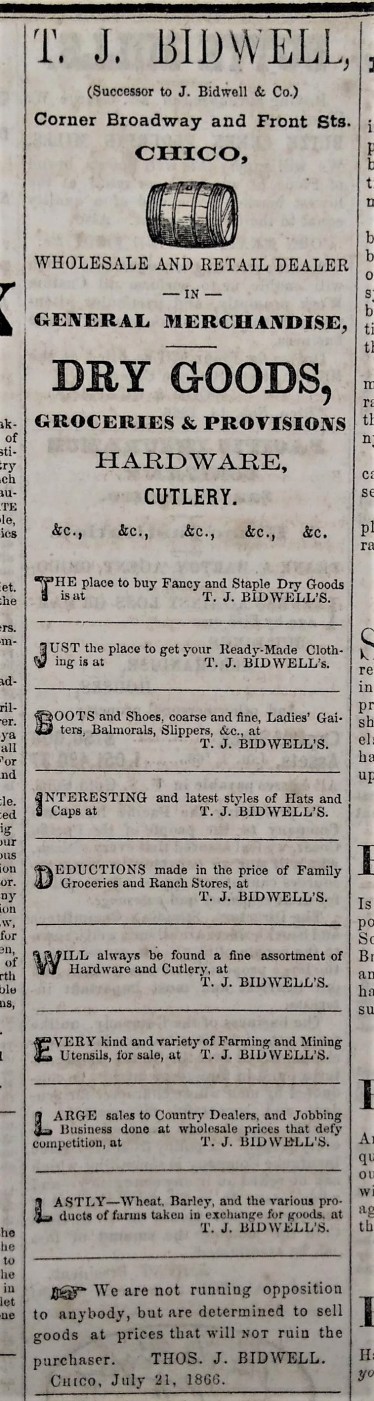
When John Bidwell was elected to Congress in 1865 he turned his store over to Thomas, who bought him out. Here is the ad he ran in the Chico Courant — note how he spells out his name starting with “The place to buy Fancy and Staple Dry Goods”. He also served as the postmaster — the post office was inside the store.

tjBidwell

Chico Courant

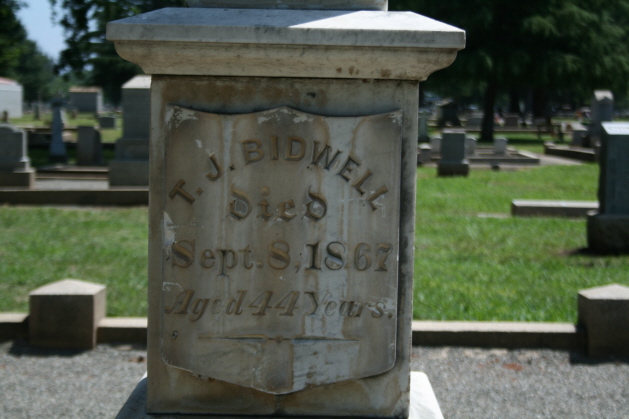
When John Bidwell returned from Congress in 1867 he hurried to see his brother. He wrote to Annie that “he was so emaciated and looked so feeble that I thought he could not live more than a few days at most.” He survived a few more months, but died on September 8, 1867.  He was buried in Chico Cemetery.

37460362_124321888388


Posted in Thomas Bidwell, Uncategorized | Leave a comment

Table Mountain 2020

DSCF9252 (2)

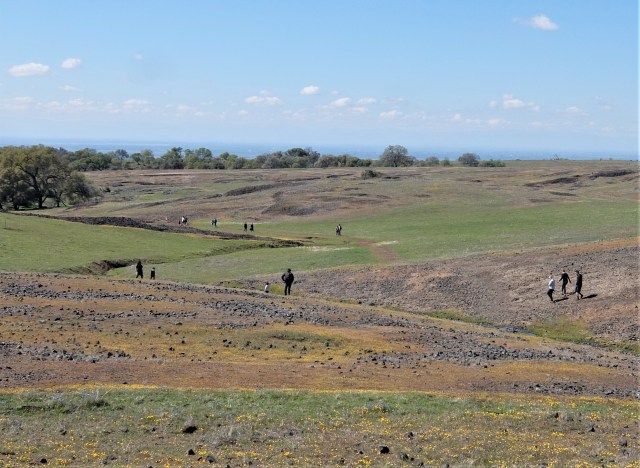
Lots of people came out to enjoy the day

My daughter, granddaughter, and I made our annual pilgrimage to Table Mountain today to look at the wildflowers. We knew it wouldn’t be the best year for them — no rain in January and February made the display kind of skimpy. But it was worth going anyway — the flowers were blooming, just not so many of them, the sun was shining, and it was a great day to get outdoors.

DSCF9260

Frying pans, lupine, and popcorn flower


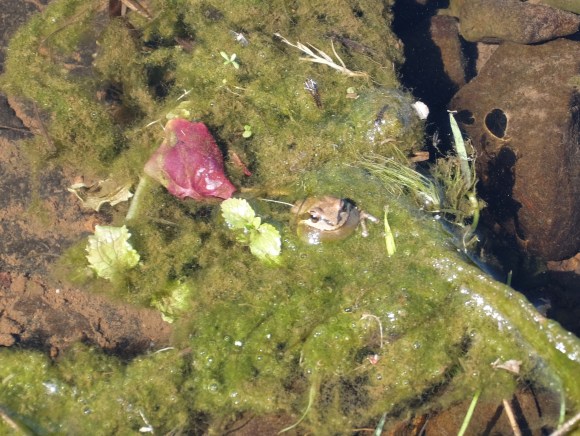
Fewer flowers than some years, but more newts. Sometimes we can only spot one in the pool — today we were delighted to see seven or eight. Some cute little frogs too.

DSCF9265

Snug as a frog in algae

DSCF9268 (2)California pipevine — I only know one place to find it, although there must be others.
So if you are tired of being confined to the house and want to get out of doors, Table Mountain is a great destination. Plenty of room for everyone.


Posted in Uncategorized | 2 Comments

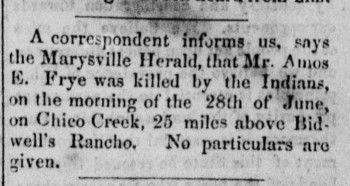
Thomas Bidwell and Amos Frye

Thomas Bidwell, studying at St. John’s College in New York, says he wrote often to his brother John, but got few letters in return. Unfortunately, what few letters John Bidwell did write have been lost, so all the news we have of Rancho Chico is second-hand. This letter tells us of an exciting incident that happened in the summer of 1852, when John Bidwell went on an expedition to recover stolen cattle.

St. John’s College  Sept 26 /52

Dear Brother,

Your letter dated San Francisco Apr. 7 reached me yesterday morning. This is only the 2nd or 3rd that I have received from you since I left California. I have written very often notwithstanding.

I have of late felt very uneasy about you. About the 1st of Sept. it was stated in the Herald that the Indians from the mountains above your house had come down to drive off some of your cattle, that you had mustered what men you could, pursued them, killed a good number, & recovered your cattle again, but that Frye was killed. Is all this true? Poor Frye! he was a good fellow.

NJNC18520710.1.1-3679-5340-701-373-350w

Nevada Journal 10 July 1852

Free-Vintage-Chicken-Graphics-GraphicsFairyFrom your letter I learn that Barber is still with you. I suppose his ardor for the welfare and increase of the chickens & sheep is not cooled. You must by this time have an immense number of fowls. Did the two pigeons that Capt. Sutter gave me, do well?
There is no news of any importance afloat that will not reach you much sooner by other means than by letter.

The last news I had from home – all were in good health, except mother who it seems is gradually declining, as it is quite natural that she should at her age – for she is not far this side of 80.

Wesly [husband of their sister Laurinda] built a very good house. He did talk of coming on to N. York to see this part of the country however he has not yet come.

Write soon, I am very busy and have not much time to write and even when I have I find it a dry tasteless job. What can you expect from a college? A place above all others most destitute of news.

My respects to all with whom I was acquainted especially Barber, Frye (if alive).

Anxiously awaiting another letter from you

I remain ever your most affectionate Brother, T. J. Bidwell

Amos E. Frye was born in 1808 or 1809, making him ten years older than John Bidwell. He had traveled with the Bidwell-Bartleson Party in 1841, but had turned back when they reached the Rocky Mountains. He was a valuable and respected employee, as Thomas Bidwell mentioned in other letters.

Frye was the first man buried in Chico Cemetery. The exact location of his grave is unknown, but is probably somewhere along the southwestern border of the cemetery.

According to newspaper reports, he was part of Bidwell’s expedition to arrest two Indian men who had stolen five head of valuable cattle. As the group lay in wait at dawn, someone fired a gun, and the element of surprise was lost. In the ensuing battle Amos Frye lost his life, as did eleven Indians. Many years later Bidwell told his wife Annie that Frye was “shot in artery and died instantly . . . had to bring him on a horse & he was the 1st man buried in Chico Cemetery.”

Posted in Amos Frye, Thomas Bidwell, Uncategorized | Leave a comment

Brother Tom Goes East

Thomas Bidwell was only in California about six months. In the Spring of 1850 he decided that he wanted to return to college and resume his studies at St. John’s College in New York, now Fordham University.

Here are two letters to his brother John: one from San Francisco when he is looking for passage that he can afford, and one written a month later from Chagres on the eastern side of the Isthmus of Panama, while waiting for a ship.

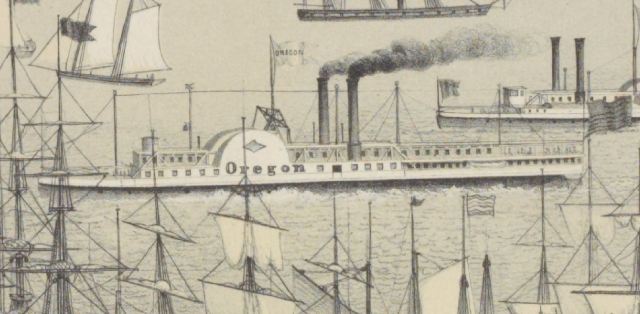
Thomas isn’t kidding when he says that the price of a ticket on the steamship Oregon is “very high.” According to the website Measuring Worth, $275 in 1850 would be worth $3397 today.  Maybe comparable to traveling first class by air to Europe? (I have never flown first class, so I don’t know. Expensive, anyway.) The Oregon was the ship that brought John and Thomas Bidwell to California; it was a top-of-the-line ship.

Thomas includes news of Miss Helen Crosby, who has married Samuel J. Hensley. Miss Crosby and Hensley were also on the Oregon coming to California, and the two men were rivals for the lady’s affections. Click the links to learn more of those stories.

Oregon_(ship,_1845)_(NYPL_Hades-1803842-1659381)

Steamship Oregon

San Francisco  Apr. 24 / 51

My Dear Brother

I reached this city yesterday evening (Wednesday) in safety. As yet I know not on what ship I shall sail as the price of tickets is very high ($275) to Panama on the Oregon, there are some other craft that go cheaper – I don’t know whether I shall go to San Jose or not, the passage there & back by stage is ($40) by steamboat ($30) which would take about ½ of the ($10) that I was to collect of Maj. D.

I may get a few dollars of Mr. Wilson and may not, he says it is doubtful – so I shall either have to take a poor but cheap boat, or a steerage passage, or return until better times, perhaps the latter.

Hensley is married to Miss Helen Crosby. W. says she married him to escape the importunities of Maj. H. and the persecutions of her mother! Hensley loves her so devotedly that he cannot bear to see her extend to others the ordinary civilities of a lady!

I am glad they are married – affections as pure and disinterested as yours, never would have met with a due requital from that family. I hope you will marry one that marries you not your bulls nor bullion.

Dr. Conkling & Mr. Wilson send their compliments. Remember me to the capt. of the Dana when you see him. He gave me a free passage to Sac. city. My compliments to all without exception.

I shall remain ever your affectionate brother,    Thos. J. Bidwell

Halfway through his trip Thomas writes again to his brother. They are stuck in Chagres, “a filthy disgusting hole” of a town, until they can get another ship to take them up the eastern seaboard.

We think of the Civil War beginning ten years later with the seizure of Fort Sumter in Charleston Harbor, but the troubles started much earlier than that. South Carolina frequently threatened to secede from the Union, and 1851 was just one of the years before the Civil War began that South Carolina was talking disunion and the federal government was discussing the blockading of her ports.

Chagres, May 31st, 1851

Dr Brother, We reached this point in safety about 5 days ago. We had a very pleasant though a very long trip. We were 25 days from San Francisco to Panama. I hope we shall not be obliged to wait here long for it is a filthy disgusting hole. We must however in all probability wait until the 8th of June as several of the ships that formerly plied between this port and N. York have been chartered for the purpose of blockading Charleston and Savanna. Dr. Jones, an old acquaintance of yours sailed in company with us from San Francisco. He has with him about 150 or 200 lbs. of gold dust, but his riches are very far from rendering him respectable. He is proud, cross, peevish, fretful, petulant, suspicious etc. etc. etc.

Present my compliments to Mr. Frye, Barber, Morford and in short to all those with whom I am acquainted. Do Barber’s disasters lay any complaints? (eggs) My Coyote is well. Farewell for the present I shall write soon after reaching N. York.

I shall expect to hear from you as often as practicable.

Yours affectionately, Tho. J. Bidwell

Peevish petulant Dr. Jones had plenty to worry about, carrying that much gold. In 1850 gold was worth about $20 an ounce, and there are twelve troy ounces to a pound of gold. With 150 pounds, Dr. Jones has some $36,000 — at a time when a pair of shoes sold for a dollar.

I don’t know the story behind Barber’s egg-laying “disasters.” I especially would like to know what “My Coyote” was. Not a live pet, I guess, but what?

13770969-coyote-or-canis-latrans-or-american-jackal-or-prairie-wolf-vintage-engraving-old-engraved-illustrati

Posted in Thomas Bidwell, Uncategorized | Leave a comment

Of Cattle and Mules and Potter and Cats!

An “uncertain state of affairs” on Rancho Chico — the price of beef is low, old Mr. Potter is sick and near death, too many of the former employees were nothing but a “gang of loafers and idlers,” the cooking is “miserably done,” and Thomas Bidwell is in desperate need of some cats to keep down the mice population. Read on!

Chico Jan. 6th 1851

Dr. Brother,

I received yours of Dec. 20 a few days ago. Thus far I have acted in strict accordance with your directions. I have sold several head of cattle at tolerable prices from $120. to $160. The price of beef is at present very low in the mines. It sells for from 20 to 35 cts. Mr. Frye has proved a most useful man to the ranch and is deserving both of commendation and reward. He thinks that the hog speculation would be altogether too uncertain to engage in. There will in all probability be “a rush” towards the Scott River mines [Siskiyou County] in the Spring and as mules are selling pretty low at Marysville Mr. Frye thinks it would be a good investment to buy a few. He has accordingly gone down to purchase a few.

Considering the uncertain state of affairs here I did not think proper to send to the mountains to get out timber for either a bridge or house, so that I discharged the two young men of whom I wrote – of all the gang of loafers and idlers that Stout left here not one remains except Charley Haskell who is doing pretty well. He is employed at $75.00 pr. month. I have here a vaquero at $50.00 pr. month and that is all. If you could hire a cook and get rid of the Alfreds I think you would do well. You would save at least $1500.00 a year. Besides they do nothing but cook and that is so miserably done that I am ashamed to charge for meals.

The man with whom I bargained for the cattle has not returned as he promised. Perhaps he was “gasing” – the boys are all happy and content.

We have just got through branding and marking the wild cattle. There are I think about 125 head in all.

I have done nothing towards fitting up the house for the accommodation of travelers; in fact I have not the means. Mr. Potter is now sick and very low. It is thought he can scarcely recover. He is insane a great deal of the time. He is afflicted with the Iresipelis [Erysipelas].

cats-20Bring home a few cats if you please. The mice are actually worse here than the rats ever were at Sac. City! They, like some of our neighbors, are bent on our ruin – nothing is safe from them – not even our noses at night.

Let this touch your heart my dear brother, and induce you to bring home one cat at least (pregnant if possible) i.e. (in a family way).

Yours ever,  Thos. J. Bidwell

DSCN4374 (2)

Posted in Uncategorized | Leave a comment