The Mysterious Death of Peter Lassen — Part 2

Peter Lassen (or Larsen, since his father’s name was Lars) was born near Copenhagen in 1800.  He became a blacksmith. In 1830 he applied to the king for permission to immigrate, probably because the depressed European economy made it hard to find sufficient work. Or maybe he was just restless.

He arrived in Boston, and later moved to St. Louis, Missouri. In 1839 he joined an emigrant party to Oregon. From Oregon he took ship down the coast and got off at Bodega Bay and traveled overland to Sutter’s settlement, where he easily found work as a blacksmith.

So by the time of his death in 1859 he had been in California nearly 20 years and was well-known and respected. For now I’ll skip over his subsequent peripatetic career in California. By the late 1850s he had lost his Rancho Bosquejo (at Vina) and had relocated to Honey Lake Valley near Susanville. (See my Ever Been to Nataqua? post for more information.)

In the winter of 1858 Lassen and friends heard about a silver strike in the Black Rock Desert of Nevada, which at that time was part of the Utah Territory. It was a region that Lassen was familiar with from the days when he guided emigrants along the Lassen Cutoff of the California Trail. Peter Lassen, Edward Clapper, and Lamericus Wyatt* set out to do some prospecting on April 19, 1859. The plan was to rendezvous with another group of prospectors at Black Rock Springs. When Lassen’s group got there, they didn’t meet the other group, so they set up camp to wait.

canyont

This photo, from the Black Rock Explorers Society website, shows the canyon where the deaths took place.

Just at daylight on April 26th gunshots rang out and Wyatt and Lassen sprang to their feet. Going to rouse Clapper, Wyatt found him already dead, shot through the temple. According to Wyatt, who was the only survivor, Lassen said he would stand lookout while Wyatt gathered up their things and got the horses. A moment later, Lassen was shot and fell, gasping, “They have killed me.”**

Taking nothing but his rifle, Wyatt sprang onto his horse and rode without food or rest for 48 hours (so he claimed) until he arrived back at Susanville and reported the deaths. Twenty men immediately set out for the camp to recover any horses and property, and to assess the situation.

Wyatt blamed the ambush on Paiute Indians. He claimed that a Paiute had come to the camp the evening before, asking for ammunition for his muzzle-loading rifle. Over the objections of Wyatt and Clapper, Peter Lassen gave the man bullets and powder, remarking that he had always been friendly with the Paiutes, they knew old Uncle Pete, and no harm would come of it.

If that really happened, then it made it easy for Wyatt to pin the blame on Indians, and by extension, Peter Lassen himself, who had so foolishly supplied the Indian with the ammo to kill him the next day. But other people questioned this scenario. If Indians did the deed, why did they not loot the camp, as they typically did? When the posse arrived, nothing had been taken from the camp.
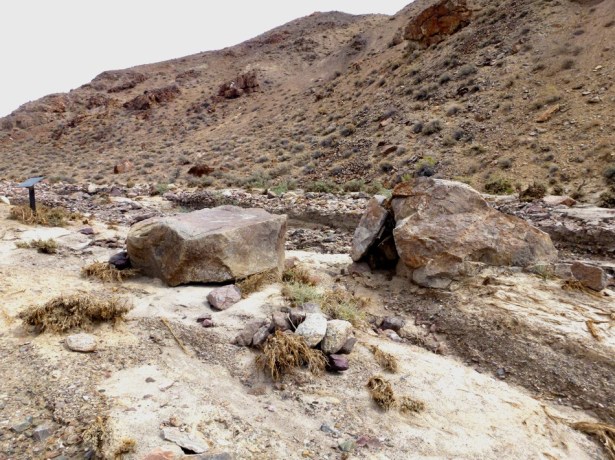
bigrock

Site of the camp, again from the Black Rock Explorers Society website. Note the historical marker on the left.

So if not Paiute Indians, then who? Let’s explore that in the next episode.

*Wyatt’s first name also shows up as Americus, LaMarcus, and similar variations.

** As reported in the Downieville Mountain Messenger, and quoted in History of Lassen County. See Ken Johnston, Legendary Truths: Peter Lassen and His Gold Rush Trail in Fact and Fable, p. 287, which is the source of most of my information.

Posted in Peter Lassen, Uncategorized | Leave a comment

The Mysterious Death of Peter Lassen

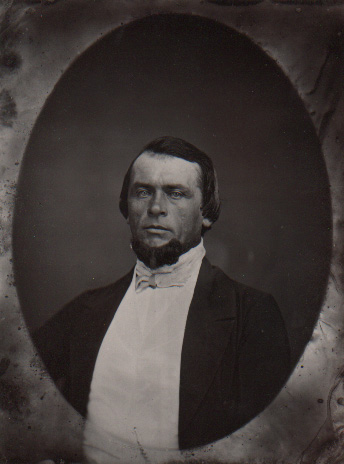
330px-Peter_Lassen-portraitOn April 26, 1859 — 158 years ago — Peter Lassen was murdered at Black Rock Canyon in what is now Nevada. He had gone prospecting for silver with two men, Edward Clapper and Lamericus Wyatt. Clapper also lost his life in the ambush that occurred early on the morning of April 26. Wyatt escaped and quickly fled back to Honey Valley, where he reported the deaths. He stated that Lassen and Clapper had been murdered by Paiute Indians.
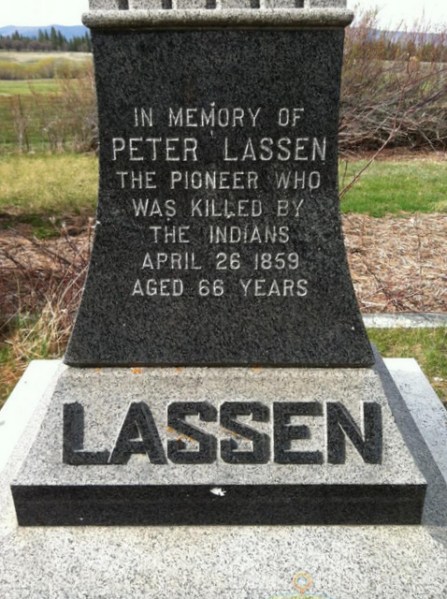
But had they? It was easy enough to pin the blame on Indians, and for many years that story stood. It is even stated on Lassen’s grave marker. But many historians have doubted Wyatt’s story.

If Wyatt was the murderer, what was his motive? Or was there some third party? lassengrave-001Disgruntled immigrants, led astray by Peter Lassen, have been suggested.
Stayed tuned and I’ll tell you more about the life and death of Peter Lassen, the California pioneer from distant Denmark, who met an untimely death in the desert.

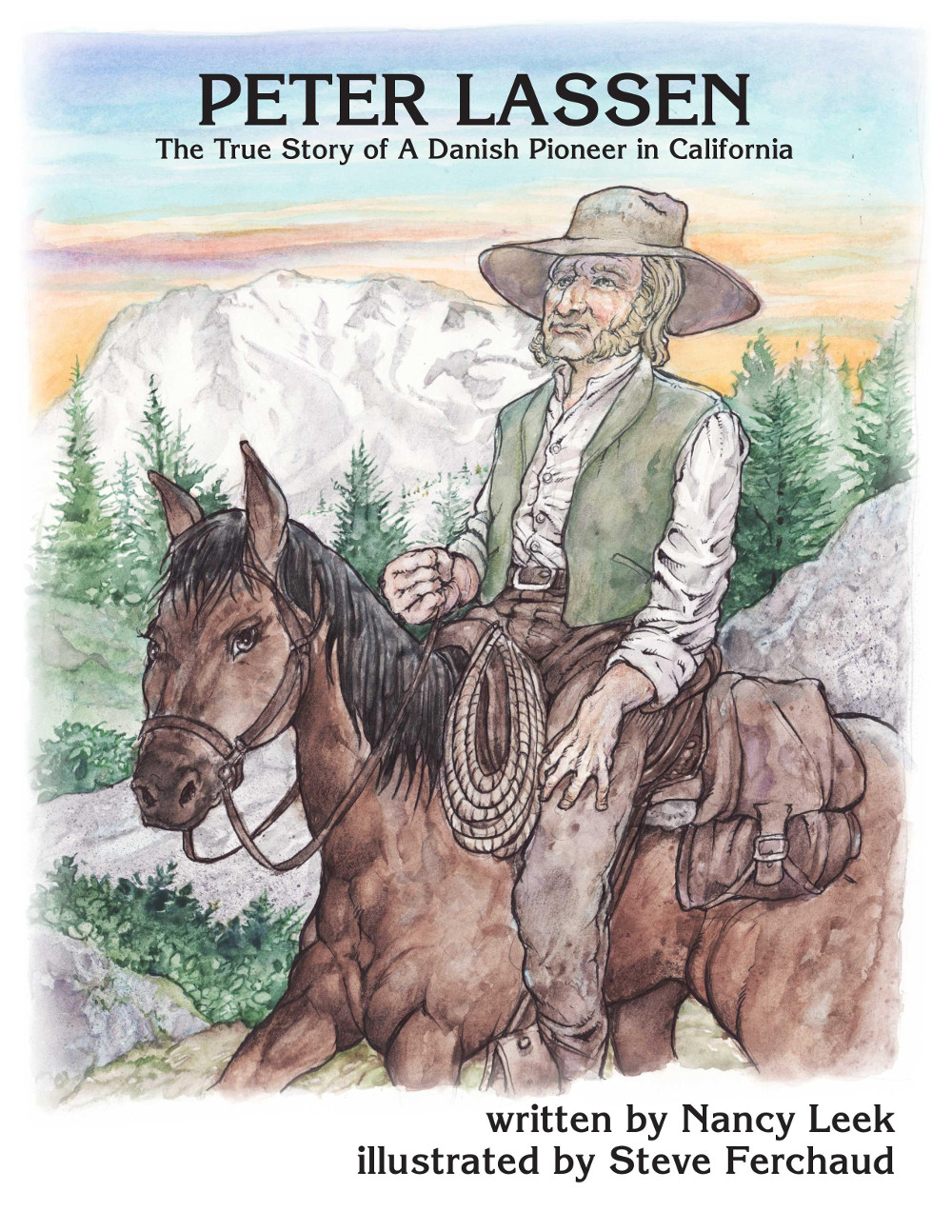
And if you want a fun and accurate book about Peter Lassen, check out my book Peter Lassen: The True Story of a Danish Pioneer in California. It’s available from my website, from local bookstores and gift shops, and on Amazon.


Posted in Peter Lassen, Uncategorized | 8 Comments

The Liberty Bell Comes to Chico

I read an article in the April 2017 issue of Smithsonian about the 1915 national tour of the Liberty Bell to promote war bonds (“Saved by the Bell” by Stephen Fried). Even though the U.S. had not yet entered World War I, the trip was organized “as President Wilson, former President Theodore Roosevelt and other leaders felt the need to whip the nation into a patriotic frenzy to prepare for the war to end all wars.”

On its 4-month long rail journey the bell stopped in 275 American cities and towns, but according to the map that accompanies the article, only 12 of those towns were in California. Among them were Red Bluff, Chico, Marysville, and Sacramento. The bell spent four months at the Panama-Pacific International Exhibition at San Francisco.

Everyone flocked to see it when it came to town. As Theodore Roosevelt said, ” Can any puerile, peace-talking molly-coddle stand before this emblem of Liberty without a blush of shame?”

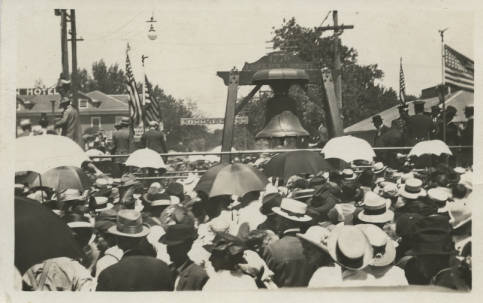
The Bell came to Chico on Friday, July 16, 1915.  The Chico Record headline the next day proclaimed: 5000 of Patriotic Citizens of Chico View Liberty Bell. That number included folks from Oroville, Gridley, Biggs, Durham, and “fifty school children of Hamilton City.” Banks and stores closed for business so all could view the bell.

Liberty_Bell_visits_Chico

The Liberty Bell in Chico. Photo courtesy Special Collections, Meriam Library, CSU Chico.

The special train carrying the bell and its escort of Philadelphia officials arrived at 1:05, an hour and ten minutes late, and remained in Chico fifteen minutes. During the stop members of the party on the train tossed souvenirs, a basket of peaches and apricots was presented the visitors by the Chico Development Committee and patriotic airs were played by the Park band.

Even Mother Nature herself got into the act:

As if in an exuberant, patriotic mood, Mount Lassen gave vent to its American spirit and fired a salute of steam and smoke as the Liberty Bell train passed down the valley toward Chico.

What a sight that must have been!

Posted in Uncategorized | Leave a comment

Gold, Grizzlies, and Mexican Land Grants

DSCF0461

Take a trip back in time to hear John Bidwell recount his adventures in California. You’ll hear about gold mining, grizzly bears, and how he acquired a Mexican land grant. The year is 1858, and John Bidwell is 39 years old. He holds the rank of major in the California Battalion. He has been in California since 1841, and has been living on Rancho Chico for nearly ten years.

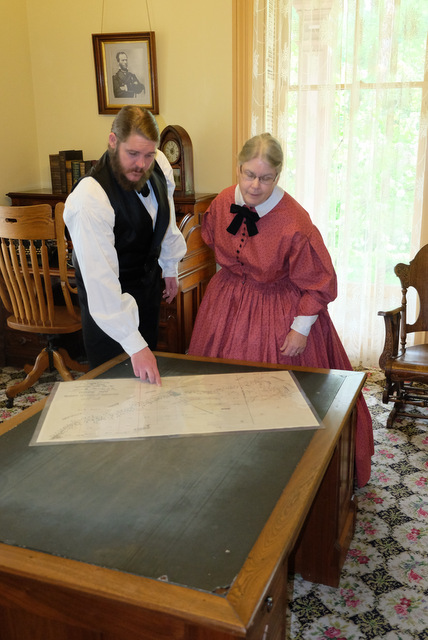
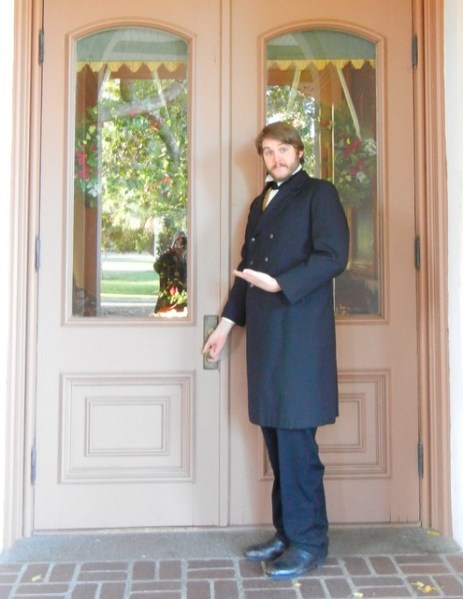
Nick Anderson, who portrays John Bidwell at events at Bidwell Mansion, and myself — Nancy Leek — as a lady reporter from San Francisco, will enact an interview with the proprietor of Rancho Chico.

Everything you will hear is either a direct quote from Bidwell or an abridgement of his words. All the incidents really happened to him – no need to make anything up. The only fictional element is the lady reporter. Bidwell was interviewed several times during his life, but not as early as 1858, and not by a lady (as far as I know).

It will be lots of fun! Come to the Chico Museum next Saturday, April 22, at 10 a.m. to hear John Bidwell himself tell his story.

Posted in Uncategorized | Leave a comment

Costume Time

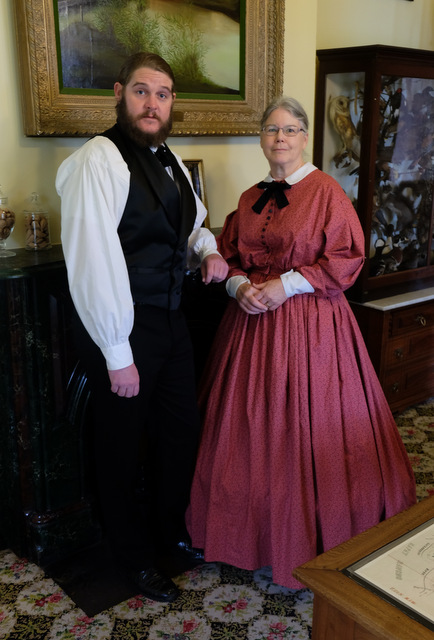
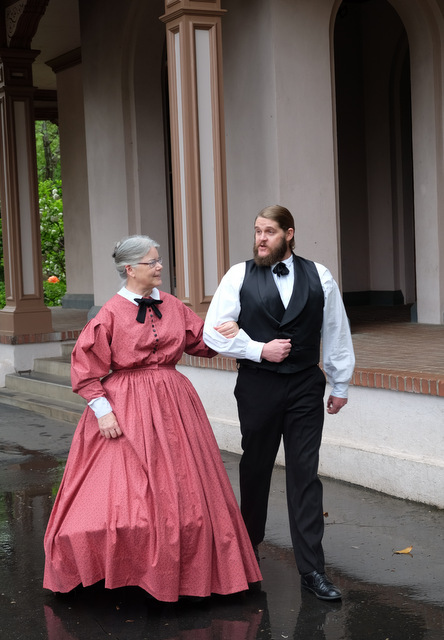
Here’s the dress I spent a good part of two months working on—

(actually half the time was on the underpinnings of the dress)

DSCF0469

We look serious because this is the 19th century, when no one smiled for photos 🙂

Nick Anderson is portraying John Bidwell, and I am a fictional lady reporter from San Francisco. I have given myself the name “Mrs. Letitia Norris.” I will be interviewing Major Bidwell on April 22 at 10 a.m. at the Chico Museum.

I made Nick’s shirt and vest too, so that he would always be ready to play John Bidwell for the Bidwell Mansion Association.

DSCF0484


Posted in Uncategorized | 3 Comments

Bidwell, Kelsey, and Mary Ray King

I haven’t been blogging much lately, but I have been working on several projects—-

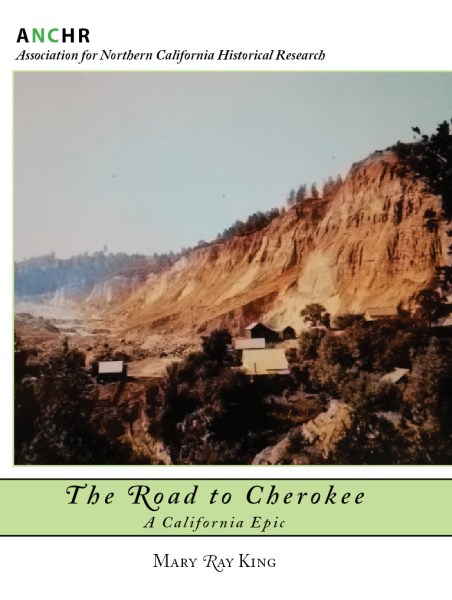
An article for The Diggin’s: If you live in Butte County you probably know that The Diggin’s is the quarterly journal of the Butte County Historical Society. Editor Nancy Brower asked me to turn my biographical introduction for The Road to Cherokee, about the author, Mary Ray King, into an article for the journal. It will be out this month.

cover-for-nancyWhen I wrote the introduction, I used up every bit of information I could find about Mary Ray King. Since then I was able to meet with her granddaughter, Deborah King, and find out more. I learned that early in her career she wrote short stories under the name Ray McIntyre King. In the early 20th century the reading public had a voracious appetite for short stories and Mary Ray helped feed that appetite.
I also expanded on a sensational court case that Mary Ray took part in. You’ll have to read The Diggin’s to find out why rejected marriage licenses and foreign-born suitors caused the court to take the twin Hunter girls away from their parents.

nancykelsey

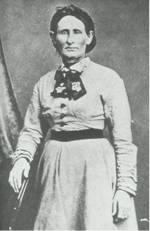
Nancy Kelsey

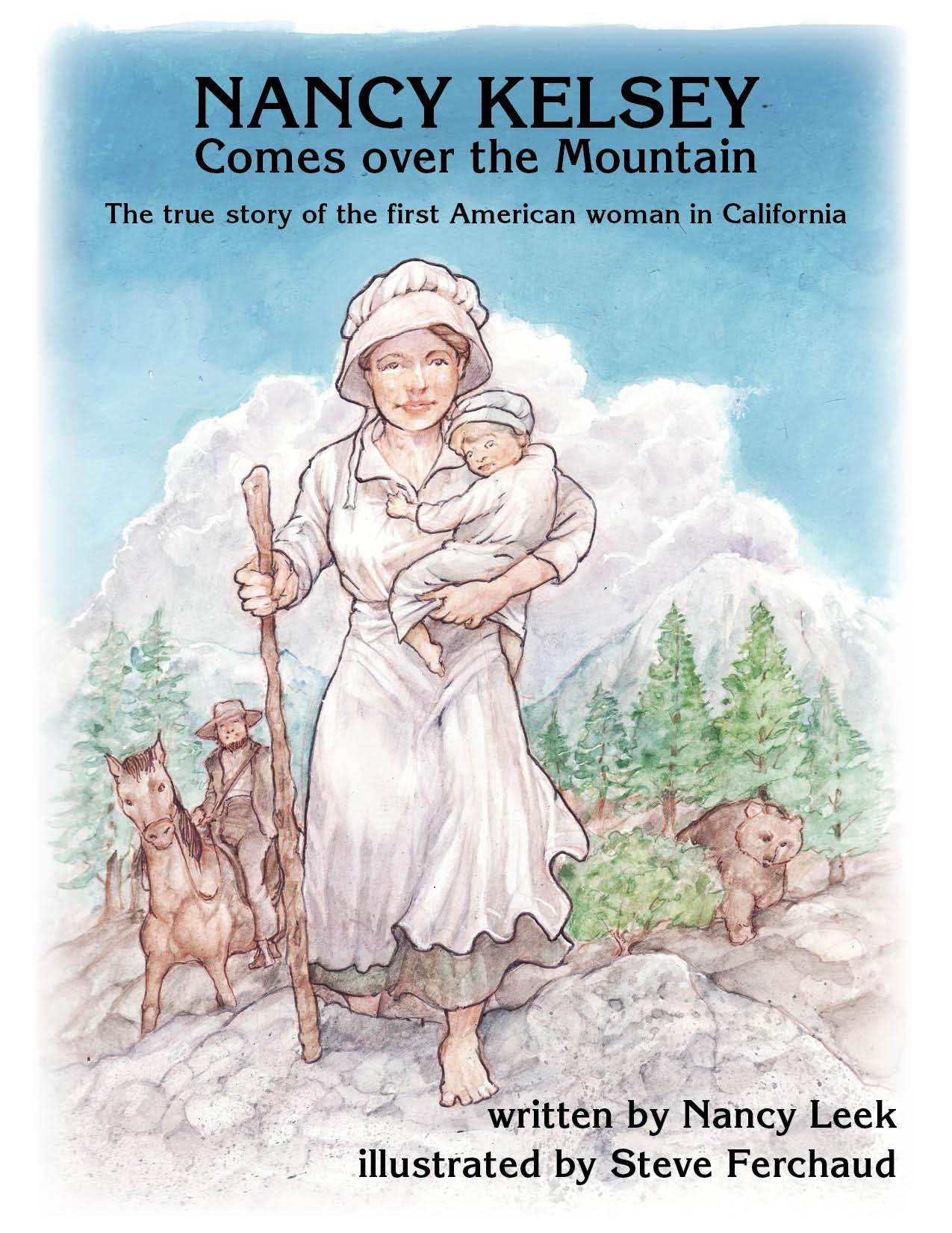
A new picture book biography: I loved working with Steve Ferchaud and wanted to do another book with him. Nancy Kelsey was the first American woman to cross the Sierra Nevada mountains into California, and she did it barefoot and carrying a toddler. I want to show what pioneer life was like on the California Trail and how an ordinary woman from the backwoods of Kentucky took part in the Bear Flag Revolt and others events in our history.

Look for my new book in the fall of 2017. I’ll keep you posted on how things come along as Steve creates the illustrations and brings Nancy and Ben Kelsey to life.

bidwell2013 002

Nick as Bidwell

An event at the Chico Museum: John Bidwell is coming back to Chico, and I will be interviewing him at the Chico Museum on Saturday, April 22 from 10 to 11 a.m. Don’t miss A Conversation with Major John Bidwell: Rancho Chico, 1858! Nick Anderson will portray John Bidwell.

It turns out that writing the script was the easy part — it’s all based on the actual words of John Bidwell himself, telling about his trip to California, the discovery of gold, the Mexican War, and grizzly bears — lots of grizzly bears.

The tough part was making a costume for myself! I take the role of Mrs. Letitia Norris, widow and lady reporter for a San Francisco newspaper. I have come to Rancho Chico to interview one of California’s most prominent citizens.

There are hours of work in a 19th century costume. I not only had to make a period dress, but I had to make the corset and hoop skirt to go under it. The reproduction fabric came from Debbie’s Quilt Shop in Paradise. I’ll post a picture as soon as I get it hemmed — that’s the last thing to do.

Posted in Uncategorized | 1 Comment

One Last Thought from Nicholas Dawson

On how to NOT get rich in California:

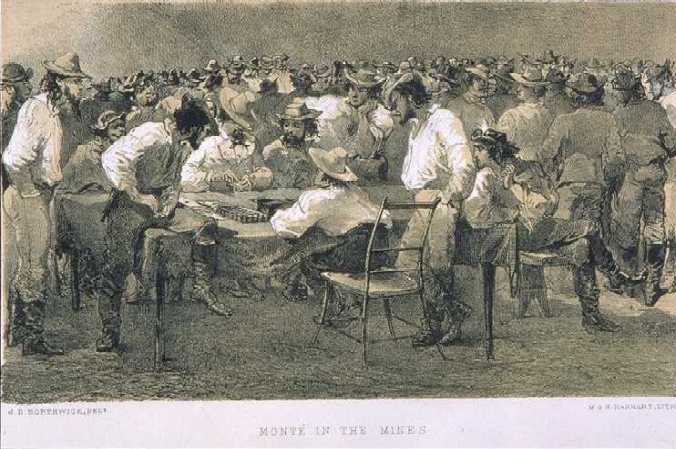
While I was slowly accumulating, the majority of fortune seekers in California were saving nothing. If they mined, they were shifting from place to place, or squandering money in impracticable ventures, such as turning rivers out of their channels; or else they lost as fast as they made by bucking at monte.

Monte-in-the-mines

“Bucking at Monte”

If freighting, they must have a mule team and feed it; put up at a boarding house while in Stockton; pay a dollar for a meal and twenty-five cents for a cigar or glass of whiskey at the tavern tents stuck up at every water hole along the road. Many, especially those from the North became homesick immediately upon arriving at the diggings, and if they had money enough to pay their way back, would auction off their paraphernalia and take the back track. Many who would gladly have got away had to stay; and even now some men stay in California because too poor to get away. Those who made the most were those who fleeced the miners.

Nicholas Dawson was proud of his ability to save money by “the most slavish labor and rigid economy.” He went home with $1600 in gold dust.

How much would $1600 be worth today? According to Measuring Worth, $1600 in 1850 would have the purchasing power of $50,100 today. Enough to give a man with a family a good start in Texas.

(All the information about Nicholas Dawson has been taken from Narrative of Nicholas “Cheyenne” Dawson (Overland to California in ’41 & ’49, and Texas in ’51), Number Seven of the Rare Americana Series Printed & Published by the Grabhorn Press of San Francisco in May, 1933.)


Posted in Nicholas "Cheyenne" Dawson, Uncategorized | Leave a comment

Beautiful Northern California

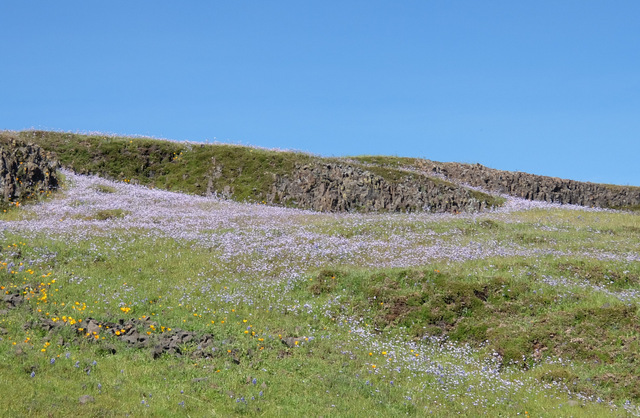
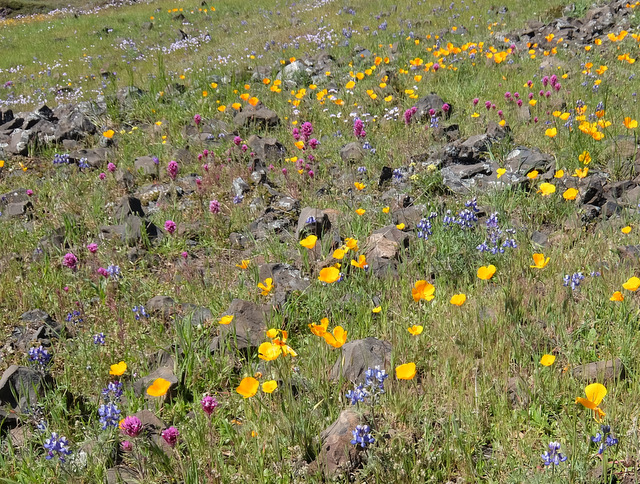
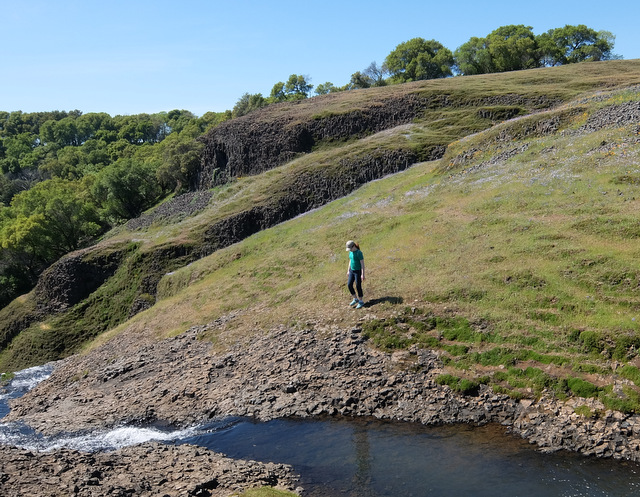
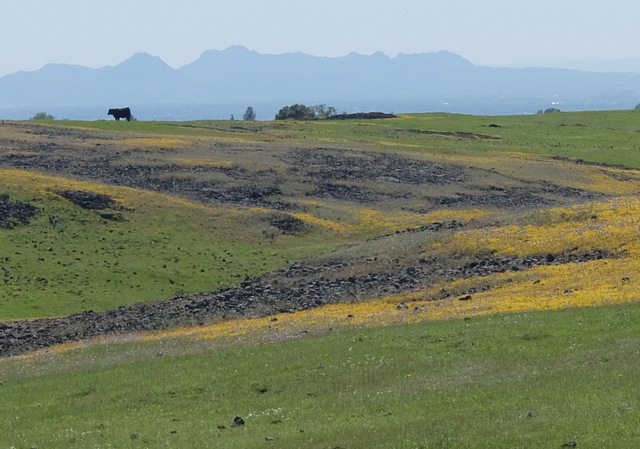
It’s a rainy night all over the North State, so here is some beautiful scenery from Table Mountain to brighten your evening. We were there on a sunny Tuesday and hope to go again soon.

DSCF2990-001

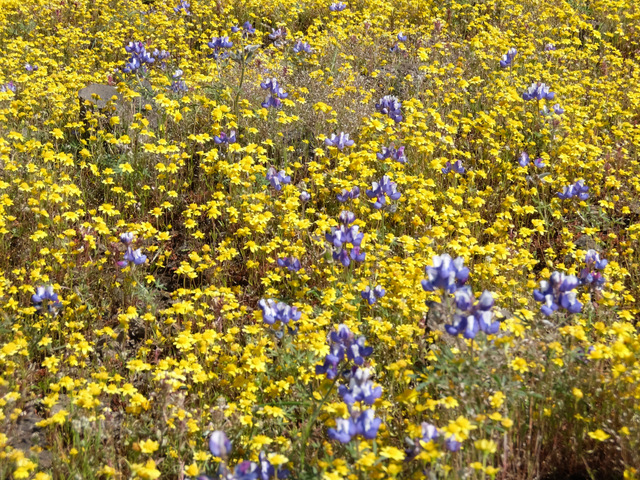
Goldfields and lupine

DSCF2981

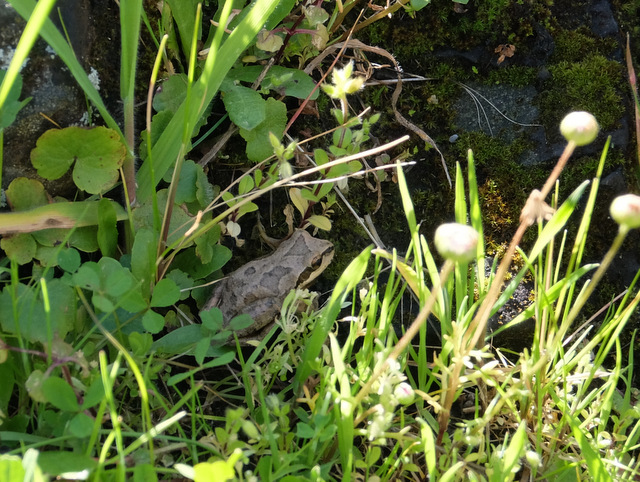
A little Pacific chorus frog

DSCF2976-001

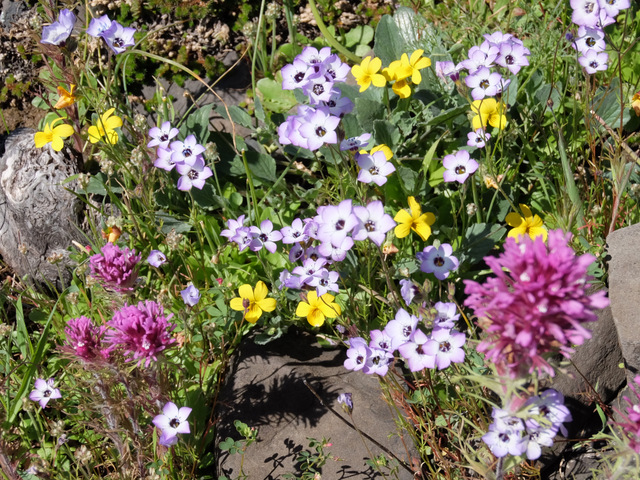
Cascades of bird’s eye gilia

DSCF2962-001

Bird’s eye gilia, oakwoods violets, and purple owl’s clover

DSCF2957

Frying-pans, lupine, and owl’s clover

DSCF2967

Wandering near the top of Phantom Falls

DSCF2988-001

Looking across Goldfields to Sutter Buttes

Posted in Uncategorized | 2 Comments

Nicholas “Cheyenne” Dawson Heads for Home

In the spring I began to think of home, sweet home. I put my Stockton lots in the hands of an agent, sold part of my teams, and left the rest in charge of John Crow. I had now about $1600 in gold dust. I had earned my money by the most slavish labor and rigid economy, footing it always except when the wagons were empty, wearing my clothes long without washing–for no washing was to be hired–never spending a cent except for absolute necessities.

“Cheyenne” Dawson started for home in April 1851, traveling by the Panama route to New Orleans. There he exchanged his gold dust for coin and traveled by steamboat up the river until he arrived home in Arkansas.

DawsonMemoirs12b-photo

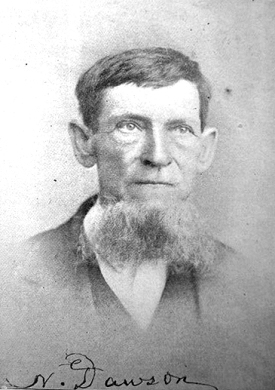
Nicholas “Cheyenne” Dawson in his later years, in Texas.

He sought a healthier climate for himself and his family in Texas. He bought a farm near Austin, cleared the land, built a house, broke the soil, and worked hard at farming and stock-raising. He settled down to raise a family and never went wandering again.

In 1894 he sat down to write his memories of his adventures on the trail and in California. After the deaths of Nancy Kelsey (1896) and John Bidwell (1900) he believed himself to be the last surviving member of the Bidwell-Bartleson emigrant company, but actually Michael Nye outlived him by three years.

Nicholas Dawson died on November 24, 1903.


Posted in Uncategorized | 2 Comments

Dawson in the Gold Rush

Nicholas “Cheyenne” Dawson and his three comrades were not getting rich at gold digging. So they decided to try a new occupation–droving.

Droving meant going down to the ranches and buying up cattle to herd back to the mines. Dawson went to Monterey, to his old employer Job Dye, and bought a herd at $20 a head. When he reached the Stanislaus River he sold them for $40 a head, which sounds like a good profit,but the cost of hiring vaqueros and the difficulty of getting the cattle to cross rivers made it a hard job, one that Dawson had no wish to repeat. He lamented that “almost every night the beeves would stampede, and I got almost no sleep.”

When he got back to camp, he and his three friends dissolved their partnership and went their ways.  Dawson and a man named John Crow bought a wagon and four yokes of oxen and “went to freighting.”

We got from five to ten cents a pound, according to the distance. We camped out, did our own cooking, and soon had made enough to buy another team. The diggings were from thirty to one hundred miles distant, and to some of them we had awful roads, but we made it pay.

CharlesMWeberYoung

Charles M. Weber in 1850

Dawson and Crow were operating out of Stockton, and one day Nicholas got up the courage to visit Charles W. Weber, the proprietor of Stockton, owner of a large land grant, and a wealthy man. Weber had come to California in 1841 in the same company as Dawson.

One day when I was feeling a little braver than usual I went to see him, ragged and dirty freighter though I was. “Cheyenne Dawson!” he exclaimed joyously, when he recognized the object before him; and then could not find enough to do for his old mule-eating comrade. He offered to give me a ranch off his grant, and, though I remonstrated, ordered his clerk to make out deeds to me for the two best central lots in Stockton.

Though Weber was anxious to get me into more congenial employment, I was too independent to accept favors, and continued my freighting. The winter of 1850 was remarkably dry, and I freighted all winter, doing better than I had done in the summer, as freights were more plentiful and prices better.

In the spring I began to think of home, sweet home.

Posted in Nicholas "Cheyenne" Dawson, Uncategorized | Leave a comment