On the Trail — September 9-12, 1841

Thursday, 9th. The part of the Company that remained yesterday went on and overtook the 2 wagons. Capt. Bartleson & Hopper returned, bring intelligence that they had found the head of Mary’s river — distance about 5 days’ travel. Distance traveled today about 12 miles S.W. direction. The Indians stole a horse — day cool.

It would be much more than 5 days before they got to Mary’s river (the Humboldt River). They traveled for two days, then the Kelseys abandoned their two wagons.

Sunday, 12th. Mr. Kelsey left his wagons and took his family and goods on pack horses, his oxen not being able to keep up.
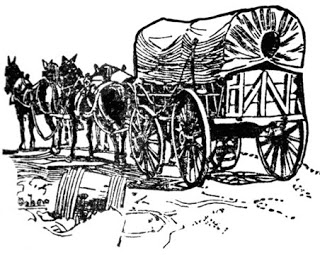
covered-wagons-1Two more days of travel and the other members would do the same. It was just too slow and difficult for the weary oxen to drag the wagons through the sand. Moreover, it was pointless since they no longer had any food to eat in them. Nicholas Dawson recalled:

Though we had been eating very sparingly for several weeks, our last provisions had been consumed just before we reached Salt Lake, and since, we had been subsisting on what game we could kill, and when no game was to be had, an ox out of our train.

They traveled onward, “between salt plains on the E. and high mts. on the W” across what is now Nevada, probably wondering why they hadn’t reached Mary’s River yet. Sometimes they found a spring, sometimes the land was “destitute of water.” The entire expedition was teetering on the edge of disaster.


Posted in Uncategorized | Leave a comment

Bidwell Book Reprint!

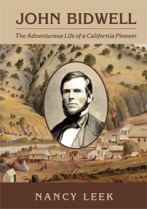
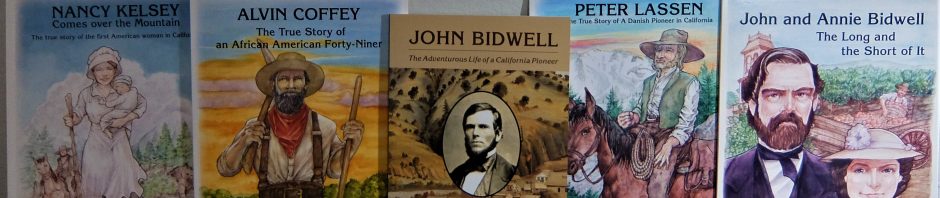
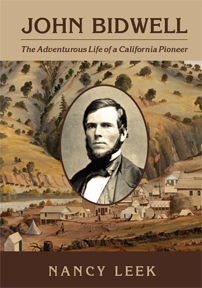
bidwellbookMy first book, John Bidwell: The Adventurous Life of a California Pioneer, has been reprinted. The initial print run was 1000 copies. All are gone, except for those that wait to be sold on store shelves.
The book is published by the Association for Northern California Historical Research. When we were first talking about publishing, I asked Heather Lyon, of Lyon Books, how many copies she thought we should print. She said one thousand, and told me that we could sell that many in four or five years.

Well, it’s been six years, but not a bad prediction, and I appreciate the support Heather gave me on this project. Likewise I appreciate all my readers and all of you who have taken an interest.

There are no changes to this second printing, except that now there is a price on the back cover. Previously there was no price indicated. The price is $19.95, the same as it has been all along.


Posted in Uncategorized | Leave a comment

On the Trail — September 5-8

The Company was a little north and west of the Great Salt Lake, and near to Pilot Peak, as they made their way slowly across a region inhabited by only a few Shoshone Indians.

2014-06-29_05_37_10_View_of_Pilot_Peak_from_Leppy_Pass_Road_in_northwestern_Tooele_County,_Utah

View of Pilot Peak from Leppy Pass Road in northwestern Tooele County, Utah

Sunday, 5th Grass having become scarce, we concluded to move on a little every day to meet Capt. B & H [Captain Bartleson and Charles Hopper]. Traveled about 6 miles and encamped by a beautiful cedar grove.

The next two days they continued ahead 7 miles each day, traveling slowly, waiting for their scouts to return with news of Mary’s River.

Wednesday, 8th. Exceedingly cold; ice in our water buckets. Part of the Company remained on account of the cold — 2 wagons with owners being contrary, went on.

In James John’s diary he notes that “six waggons stayed in camp and two went on and expected to meet the next day.” So at this point, for 33 people, they have eight wagons. The men were organized into messes of five or six men, and this would give them more than one wagon per mess. Benjamin Kelsey, traveling with his wife and baby daughter, had two wagons. But there was not much left in those wagons.

Posted in Uncategorized | Leave a comment

On the Trail — August 28-29, 1841

From John Bidwell’s journal:

Saturday, 28th. Company remained here. A Shoshonee Indian came to our camp; from him we learned that there were more Indians not far off who had horses. Several men and myself went in search of them. Having gone about 5 miles, up hills and down hills covered with thick groves of cedar (red), we unexpectedly came to an Indian, who was in the act of taking care of some meat — venison — which he had just killed; about half of which we readily purchased for 12 cartridges of powder & ball. With him as a pilot we went in pursuit of other Indians; he led us far up in the mountains by a difficult path, where we found two or three families, hid as it were from all the world, by the roughness of nature. The only provision which they seemed to have was a few elderberries and a few seeds; under a temporary covert of bushes, I observed the aged Patriarch, whose head looked as though it had been whitened by the frosts of at least 90 winters. The scars on his arms and legs were almost countless — a higher forehead I never saw upon a man’s head. But here in the solitude of the mountains and with the  utmost contentment,  he was willing to spend the last days of his life among the hoary rocks and craggy cliffs, where perhaps he, in his youthful gayety, used to sport along crystal streams which run purling from the mountains.  Not succeeding in finding horses, we returned to camp.

The Shoshone Indians inhabited present-day northern Utah and southern Idaho, living in small bands of a few hundred at most. Bidwell, as usual, is curious about the Indians, but not disparaging about their way of life.

Sunday 29th. Capt. Bartleson with C. Hopper started to explore the route to the head of Mary’s river, expecting to be absent 8 or 9 days — the Company to await here his return.

All that the Bidwell-Bartleson Party knew about this region was that they had to find Mary’s River (as it was then called). The Humboldt River was the only way to cross what is now the state of Nevada. If the whole group were to go wandering around looking for it, the exploration might be fatal, so they sent off two men on a scouting trip, and the rest stayed where they had water and grass for their animals. For the next several days Bidwell’s journal is terse:

(30th) Nothing of importance occurred — (31st) No success in hunting — (1st) An ox killed for beef — (2nd) Idle in camp.

They were running low on provisions. Bidwell doesn’t say whether they had anything left in the way of flour or beans or coffee, but if they were not completely out, they were getting close. They had not been able to get anything from Fort Hall. Meat was scarce, and they began slaughtering oxen for beef.

Tough times ahead.

Posted in Uncategorized | Leave a comment

This Desolate Region — August 26-27, 1841


Thursday, 26th. Traveled all day over dry barren plains, producing nothing but sage, or rather, as it ought to be called, wormwood, and which I believe will grow without water or soil. Two men were sent ahead to search for water, but returned a little while before dark, unsuccessful.

Our course intersected an Indian trail, which we followed directly north towards the mountains, knowing that in these dry countries the Indian trails always lead to the nearest water. Having traveled till about 10 o’clock p.m. made a halt, and waited until morning. Distance about 30 miles.

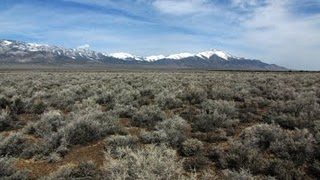
sagebrush

This was one of those days when they traveled all day in the hot sun, hoping to find fresh water, and saw nothing but sand, salt, and sagebrush. Another day like that might have killed them all. They were wise to follow the Indian trail.

Friday, 27th. Daylight discovered to us a spot of green grass on the declivity of the mountain towards which we were advancing. 5 miles took us to this place, where we found, to our great joy, an excellent spring of water and an abundance of grass. Here we determined to continue ’till the route was explorer to the head of Mary’s river and run no more risks of perishing for want of water in this desolate region.

Reminds me of this song:

Posted in Uncategorized | Leave a comment

Bidwell Birthday Bash!

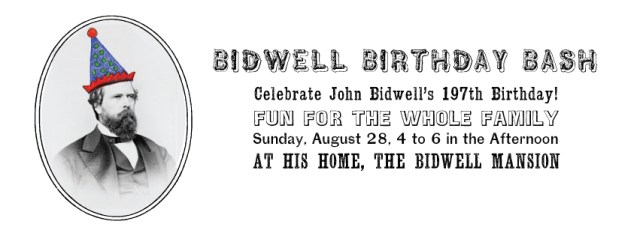
BidwellBirthday_facebook

The Bidwell Mansion Association invites you to a PARTY! Help us celebrate John Bidwell’s 197th birthday. Tickets are $5 for adults and teens, $2 for children, and kids under 4 are free. Enjoy a concert by the Chico Community Concert Band, birthday cake and ice cream, games on the lawn, a cakewalk, entry to the ground floor of Bidwell Mansion and dramatic vignettes inside the mansion.

If you crave some dinner, the Madison Bear BBQ Wagon will be there with a burger and chips for $6, and a cool drink for $1.

John and Annie will be on hand to welcome guests. The program inside the mansion will feature:DSCF0262

John Bidwell reminiscing with his old trail mate Nicholas “Cheyenne” Dawson about their 1841 trip to California in his office.

Annie Bidwell and her friend Belle Royce in the library discussing women’s rights and women’s wiles.

kitchenFlorence Proud and Ruby English in the kitchen arguing over cream and cake.
All the vignettes are based on diary entries, letters, and recollections of the characters themselves. Take a trip back in time to see and hear Bidwell Mansion come alive!

It all happens this Sunday, August 28, from 4 to 6 p.m.  See you there!


Posted in Uncategorized | Leave a comment

On the Trail — August 22-24, 1841

On August 22 the men who had gone to Fort Hall returned. They had been unable to obtain a guide to take them across the desert. (Cue the ominous music.)

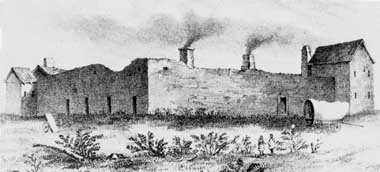
Fort Hall, 1849

Interior of Fort Hall in 1849

They reported on the emigrants who had opted for going to Oregon rather than California:

The families that went into Oregon had disposed of their oxen at the fort and were going to descend the Columbia river with pack horses — they in exchange received one horse for every ox. Their waggons they could not sell. They procured flour at 50 cents a pint, sugar at same price, and other things in proportion.

High prices on the Oregon Trail.

On the 23rd they passed by the Great Salt Lake. Water was scarce.

Tuesday, 24th.  Cattle strayed this morning to seek water–late start–day was warm–traveled about 10 miles in a W. direction, encamped where we found numerous springs, deep, clear, and somewhat impregnated with salt. The plains were snowy white with salt. Here we procured salt of the best quality. The grass that grew in small spots on the plains was laden with salt which had formed itself on the stalks and blades in lumps, from the size of a pea to that of a hen’s egg. This was the kind we procured, being very white, strong and pure.

Ten miles in a day was good progress under those conditions.  Oxen could pull a wagon at 2 or 3 miles per hour for about 5 hours a day, so 15 miles a day was pretty much the maximum. On a very good day they might make 18 to 20 miles. But these were not good days.

Day after day of 10-15 miles a day would wear a team down. They had to eat, they had to have water, and they had to have rest.

By the time Bidwell & Co. got to the Great Basin, they had been traveling for nearly four months. The last few weeks had been especially hard on the animals. They couldn’t keep up this pace — not on salty water and dry grass. Bidwell and his friends were finding that they had to rest the animals more and more often, and indeed on the 25th they would stay put, giving the oxen a chance to recuperate. But they couldn’t afford to delay either, so the next day they harnessed up the oxen and got on the trail again.

Posted in Uncategorized | Leave a comment

On the Trail — August 21, 1841

Saturday, 21st. Marched off in a NW direction, and intersected our trail of Thursday last, having made a complete triangle in the plain. At this intersection of the trails we left a paper elevated by a pole, that the men returning from Fort Hall might shun the tedious rounds we had taken. Found grass and water which answered our purpose very well, though both were salt. Distance ten miles.

Having passed unawares through Cache Valley, they reached the point at which the Bear River emptied itself into the Great Salt Lake. Thomas Fitzpatrick had told them to turn west before they reached the lake, in order to find the Humboldt River, so they headed northwest, crossing their tracks in the process.

forthall

Fort Hall in 1849

They were still waiting for the men who had gone to Fort Hall. These four men were supposed to come back with provisions, and (they hoped) a guide to help them cross the desert. Clearly they could have really used a guide. But it would get worse before it got better.


Posted in Uncategorized | Leave a comment

On the Trail — August 19, 1841

John Bidwell and friends were traveling slowly southward through Cache Valley, in what is now northern Utah. Sometimes they followed the Bear River, other times they had to leave the river and “journey over hills and ravines, going to almost every point of the compass to avoid them.” It was August, the weather was hot, and basically they were lost. The only water they found on the 18th was so salty they could not drink it.

Thursday, 19th. Started early hoping soon to find fresh water, when we could refresh ourselves and our animals, but alas! The sun beamed heavy on our heads as the day advanced, and we could see nothing before us but extensive arid plains, glimmering with heat and salt. At length the plains became so impregnated with salt that vegetation entirely ceased; the ground was in many places white as snow & perfectly smooth — the mid-day sun, beaming with uncommon splendor upon these shining plains, made us fancy we could see timber upon the plains, and wherever timber is found there is water always. We marched forward with unremitted pace till we discovered it was an illusion, and lest our teams should give out we returned from S. to E. and hastened to the river which we reached in about 5 miles.

It sounds like they were wandering around the Bonneville Salt Flats, but that area is further west. They were actually a few miles north of the Great Salt Lake, in a similar desert region that is still largely uninhabited, although irrigation has made farming viable.

A high mountain overlooked us on the east and the river was thickly bordered with willows — grass plenty but so salt our animals could scarcely eat it; salt glitters upon its blades like frost. Distance 20 miles.

You have to feel sorry for those poor oxen and mules, with nothing it eat but dry salty grass.

Posted in Uncategorized | Leave a comment

California’s First Newspaper

Pioneer-Newspaper-Photo-03

The first newspaper published in California, the Californian, appeared on August 15, 1846, 170 years ago today. The publishers were Walter Colton and Robert Semple.The first issue announced the declaration of war against Mexico by the United States.

Walter Colton, from Vermont, came to California by ship in 1845. He was a chaplain in the U.S. Navy and the first American alcalde of Monterey. His book Three Years in California is a classic in the literature of the Golden State.

Robert B Semple came over the California Trail in 1845 from Kentucky. He was active in politics and publishing, served as president of the first California Constitutional Convention, and held a Mexican land grant in Colusa County.

The Californian was a single sheet, with the news on one side in English and the other side in Spanish. It was published weekly in Monterey on cigarette paper, the only paper available. In 1848 it merged with Sam Brannan’s California Star in San Francisco to become the Alta Californian.

If you want to look at the Californian, you can access it on the California Digital Newspaper Collection.


Posted in Uncategorized | Leave a comment