Christmas with the Bidwells — 2023

A distinguished guest will be visiting Bidwell Mansion for the holidays this year. “Christmas with the Bidwells” will feature a great (and controversial) American and one of history’s most famous military men.

General William Tecumseh Sherman was an old friend of John Bidwell’s. Their friendship went back to when they first met in 1847, just after the Mexican War, when Sherman was an army lieutenant and Bidwell was surveying ranchos. Through the decades they kept in touch and Bidwell keenly followed Sherman’s career.

On Friday, December 15th, General Sherman will talk over old times with his friend Bidwell.

Byron McLaughlin, who has many years experience with Civil War reenactments will portray Sherman. Bidwell will be played, as usual, by Nick Anderson. They will have plenty to talk about and you can listen in. You won’t want to miss it.

In addition to this historic encounter, at “Christmas with the Bidwells” you can enjoy live music in the parlor, delicious refreshments in the Visitor’s Center, carols by the Chico High School Madrigals, and Bidwell Mansion itself, all decked out in holiday splendor.

Tickets are $35 each and children under 12 are free. Purchase of a ticket includes a one-year membership in the Bidwell Mansion Association, a very special way to begin or renew your membership. Tickets are available at https://www.bidwellmansionassociation.com/event-tickets.html

Please join us in celebrating the holiday season at beautiful Bidwell Mansion.

Posted in Uncategorized | Leave a comment

Give the Gift of Reading!

Detail from Sunday in the Mines, by Charles C. Nahl, Crocker Art Museum, Sacramento

As a librarian and devoted book reader, I have always given the gift of books. Everybody needs a good book (or many good books) for Christmas!

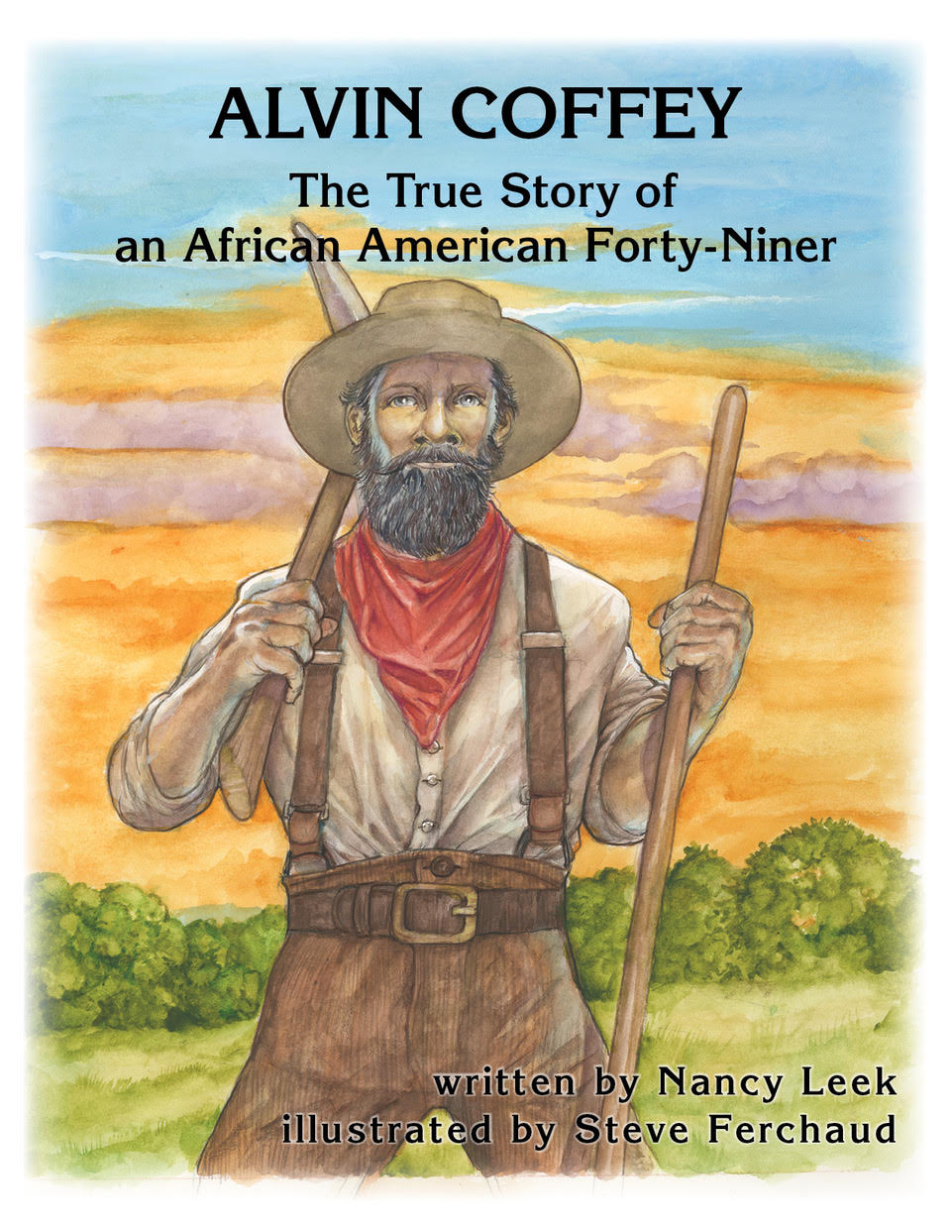
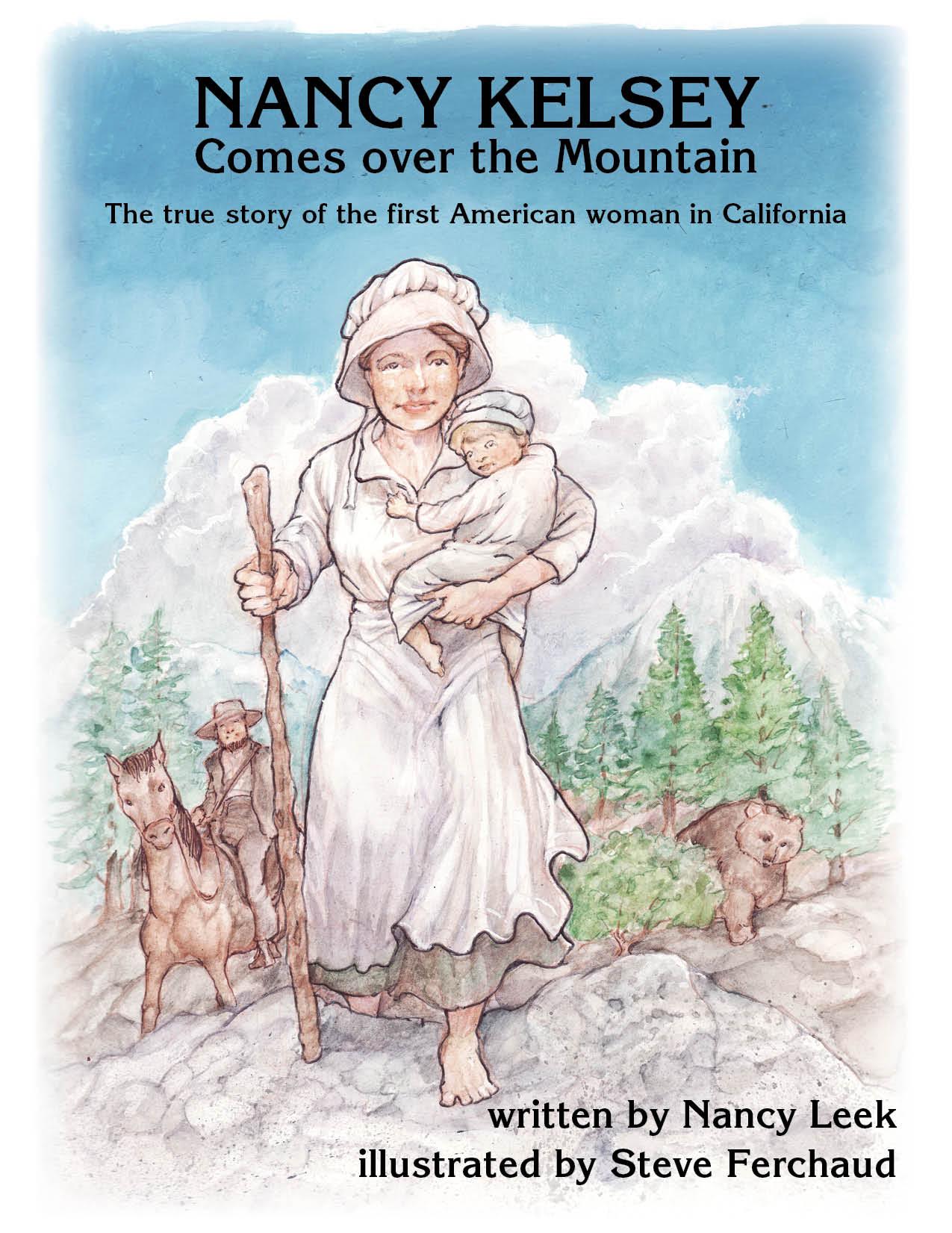
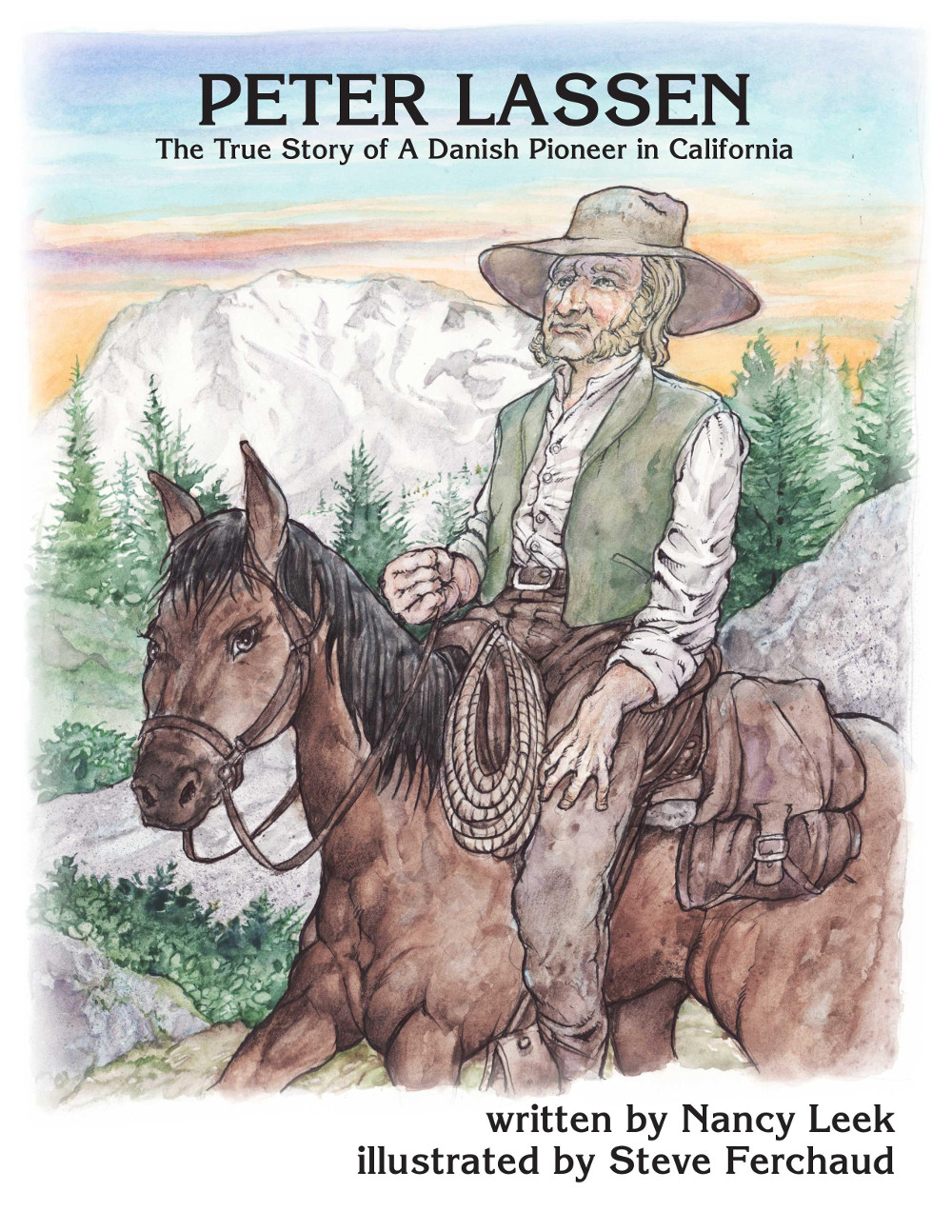
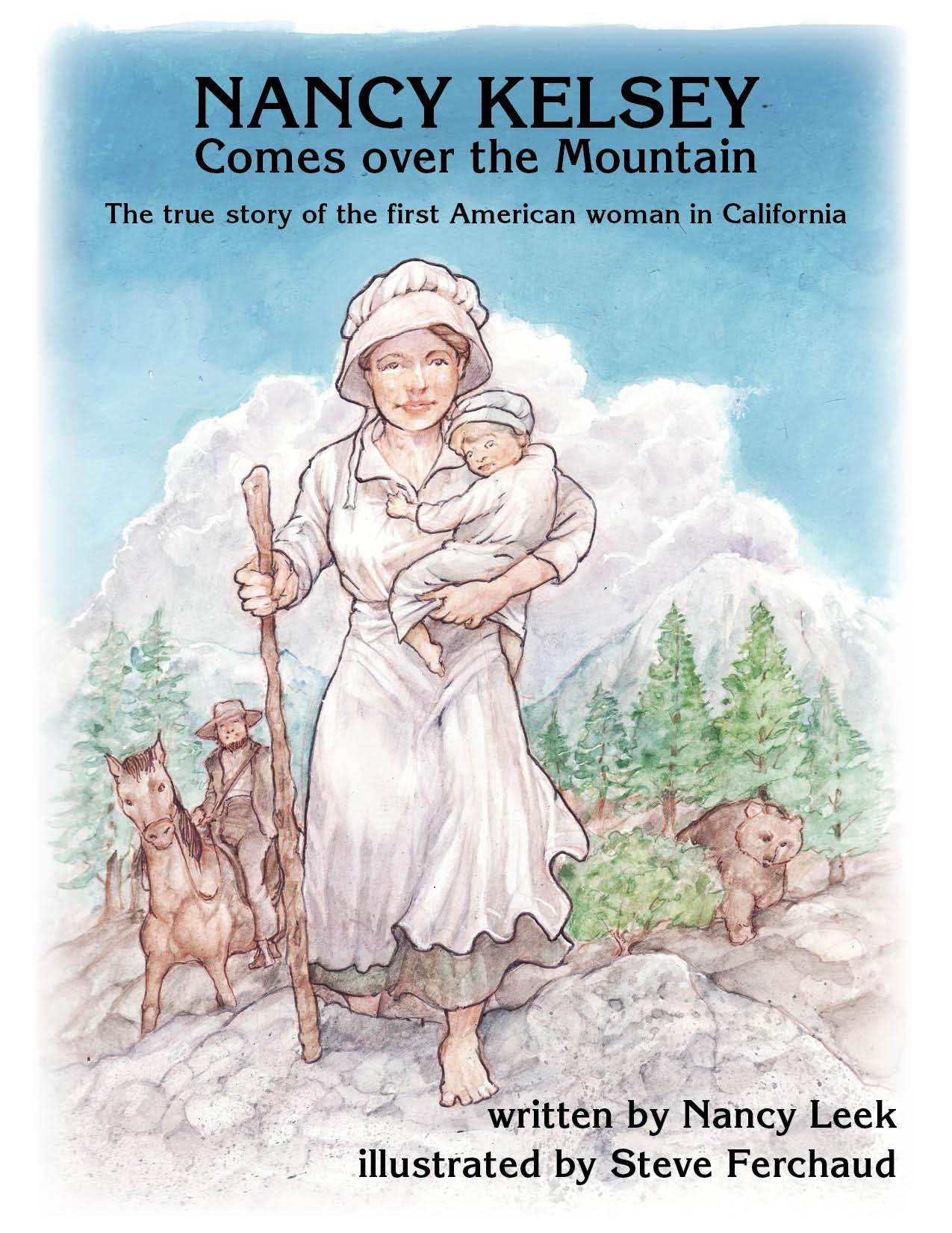
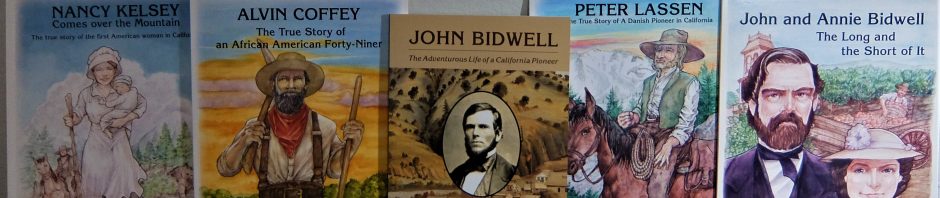
So if you are shopping for books this holiday season, please consider my books as gifts for children or adults. My Golden State Biographies are perfect for the 4th grade teacher in your life, or for any young reader who loves true stories and great adventures. Let them read about John and Annie Bidwell, Peter Lassen, Nancy Kelsey, or Alvin Coffey.

You can order online on Amazon or at anchr.org. Chico vendors like Bidwell Mansion, Chico History Museum, Made in Chico, and Bidwell Supply Co. carry my books, as well as Treasures from Paradise and the Rusty Wagon in Orland. The Tehama County Genealogical and Historical Society is selling great local history books at the Tehama County Library.

The Association for Northern California Historical Research publishes one or two books every year. At the ANCHR website you will find a host of titles about Northern California history, including the latest publication, Bidwell Park by Paul Belz. History makes great gifts!

There’s more information about where to buy and how to order my books on the My Books tab at the top of this page. So when you are making your holiday gift lists, consider the wonderful gift of good books.

Happy holiday reading!!!

Posted in Uncategorized | Leave a comment

Armistice Day

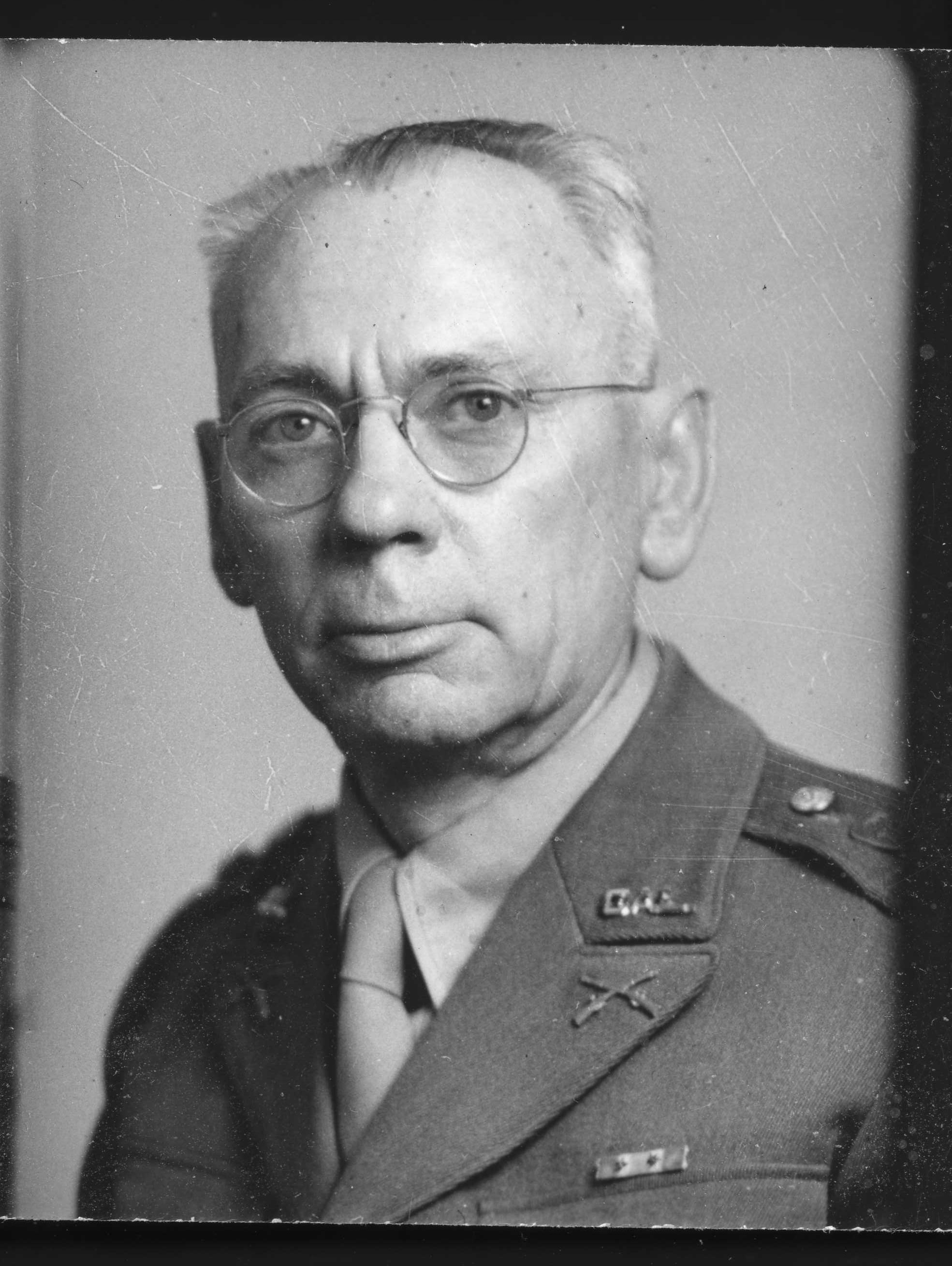
My husband’s grandfather, George Robert DeBeque, was a veteran of the First World War. He was commissioned on June 28, 1917 and served in France as a captain in the Engineer Corps, having been a mining engineer in civilian life.

He kept a diary during the war, writing his entries in small, neat script. His entry for November 11, 1918 reads:

At office early. Terms of armistice have been accepted and was signed about 5 A.M. this morning. S.O. 20 of this Army is being proposed now (8:30 A.M.) and will order to cease firing on the line at 11 A.M.

#

Was at headquarters of 4th Corps at ___ville just before noon. A few minutes before 11 o’clock our artillery opened up with full force — must have turned every gun loose. A farewell shot for the Boche. At 11 o’clock firing ceased on both sides — and thus ended the “Great War” the bloodiest and most frightful and cruel catastrophe that has ever befallen this world. Let us hope and pray that its frightfulness will never be repeated.

The Kaiser, the author of all this murder and misery, has abdicated and has fled to Holland, like a dirty, cowardly cur. On the road back to Toul all the soldiers were happy, singing and shouting — Poilus, Yanks, and Italians.

The big guns cease to boom along the front.

(Toul is a town in northeastern France. Poilu (literally, “hairy one”) was a nickname for a French soldier.)

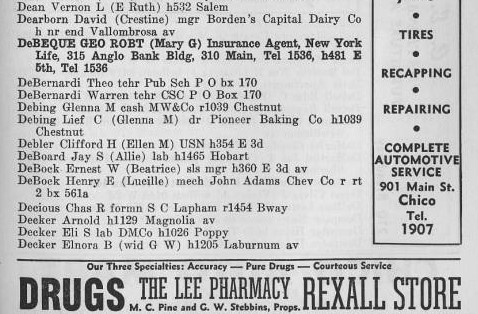
After the war Robert DeBeque went back to his home state of Colorado, where he resumed his profession of mining engineer. He went down to Mexico in 1920, but left when the revolution of 1921 got too hot for foreigners. In 1923 he married Mary Grace Baker, and they moved to Grass Valley, California. When mining took a downturn in the Great Depression, Robert began selling insurance. In 1942 they moved to Chico, California, where they lived until his death in 1956.

Chico City Directory 1948
Posted in Uncategorized | Leave a comment

The Presidential Visit to Cherokee

Cherokee, circa 1880

President Rutherford B. Hayes and his party only spent one day in Butte County and most of that day was taken up by a visit to the mining town of Cherokee. Carriages and wagons wound their way across the valley, past Pence’s Ranch, and up into the hills. A “double-ender” wagon (I’m sorry I don’t have a picture of one) drawn by “six powerful horses” carried the General of the Army (Sherman) and several other gentlemen. President Hayes and his wife, General Bidwell, and the ladies followed in a carriage. They received a raucous and enthusiastic welcome from the citizens of Cherokee.

Chico Weekly Enterprise 28 September 1880

Cherokee was reached amid the booming of heavy blasts [from the mine], the strains of marital music furnished by a local band, the firing of some anvils, and the shouts of residents and visitors from Oroville, Dogtown, Yankee Hill, and other settlements.

Cherokee was a booming, bustling mining town. I’m not sure of the population in 1880, but it could have been 2000 or more. The Spring Valley Mine employed upwards of 500 men, and the town boasted 17 saloons, 8 hotels, 2 schools, a racetrack, a skating rink, and a brewery.

The distinguished visitors were treated to a banquet held on the picnic grounds. They sat down to a table “teeming with delicacies and fairly groaning with luscious fruits grown in the mountain vineyards,” and served by a bevy of bright-eyed young ladies.”

But minus General Bidwell’s famous casaba melons. Bidwell had sent a wagon on ahead loaded with watermelons and casabas, along with a water wagon to sprinkle the dust. According to Helen Sommer Gage,

When they got about half way there, the dust began and the watering had stopped. The water wagon and the melon wagon had gotten in the wrong road and had gone up towards Paradise instead of Cherokee. The General was very disturbed, and he said “My, my, ladies and gentlemen, I feel badly that we have all of this dust.”

My mother happened to be riding in the carriage with them and she said General Sherman in this drawling voice said, “Well, General Bidwell, don’t feel too badly about it. Because otherwise we wouldn’t have known what wonderful sand we had in Butte County.”

Helen Sommer Gage, Recollections of Early Life in Chico and General and Mrs. Bidwell (1972)

If you drive today on Durham-Pentz Road past Butte College to Pentz Road, you can understand the mistake the two wagon drivers made. Left turn, you are on your way to Paradise, right turn and you are heading to Cherokee. (The name of the original ranch owner was Manoah Pence, but the government changed the spelling to Pentz when a post office was established.)

Coming Next: Gold for the First Lady

Posted in Rutherford B. Hayes, Uncategorized, William Tecumseh Sherman | Leave a comment

Historical Halloween at Bidwell Mansion

Join me for a guided evening tour of the Bidwell Mansion on Sunday, October 29. We’ll delve into the rich and intriguing history of 19th-century American mourning. I’ll be sharing the tour guide gig with Adrienne Glatz, who has shared her wealth of knowledge about Victorian mourning customs with me.

Tours will be held starting at 5:30 p.m., 6:30, and 7:30. Tickets are Adult: $7 and Youth 18 and Under: $4

You may also enjoy refreshments in the Visitors Center while channeling your inner Victorian through Halloween and history-inspired crafts. Guests are encouraged to embrace the theme by donning black attire or Victorian-inspired costumes for a truly immersive experience.

Tickets can be purchased at www.bidwellmansionassociation.com/event-tickets.html or at the door. However, we suggest you purchase early as each tour is limited to 20 people.

Please call 530-588-0476 or email info.bidwellmansionassociation@gmail.com for more information.  

John Bidwell’s coffin on the veranda of Bidwell Mansion, surrounded by floral tributes, April 1900.
Posted in Uncategorized | Leave a comment

“I am always ready for California”

John Bidwell urged General Sherman to stop over in Chico, enjoy a rest, and see his ranch. But Sherman had urgent business and couldn’t stay.

Here is his letter of apology–

San Francisco, Cal.  Oct. 8 1877

General John Bidwell

            Chico, California

My dear sir,

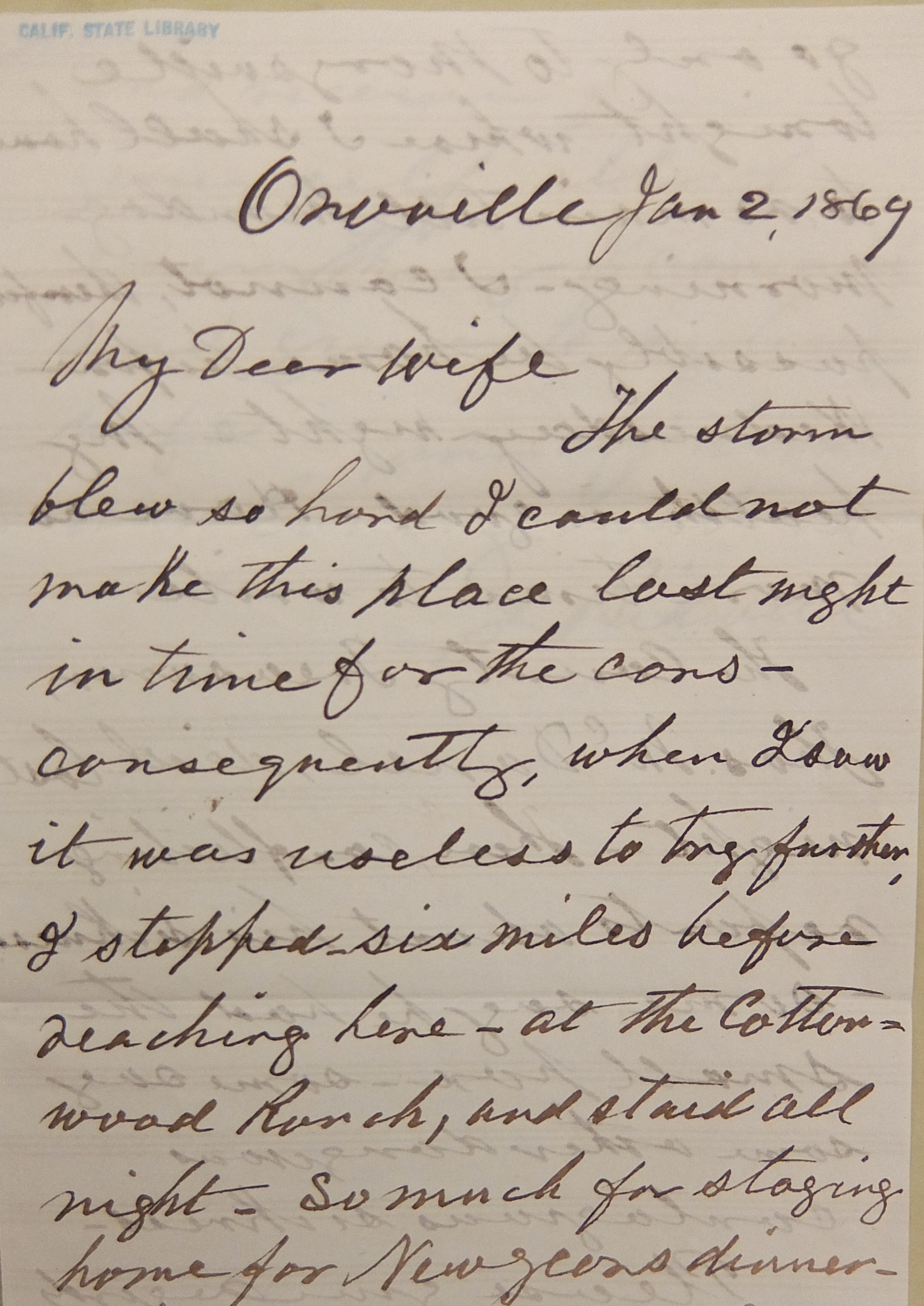
            I owe you an apology for having passed Chico without stopping, and it seems like a dream when you came aboard the train. I was not fairly awake, having lost sleep for the previous two night in the stage over the very rough road from Roseburg to Redding. I have always desired to visit your place, preferably in the spring and thought I could do so on this trip. But we were so delayed that on reaching Reading [?] I had but a single day in San Francisco to send my son Tom home to resume his studies. I had to come here to arrange for his passage and Major Hammond had come up to Redding in a Special Car to bring me down.

            I rec’d your two most kind letters of Oct. 3. somewhere on the Road where there was no telegraph. The moment we reached Redding I made a telegraph to you explaining the situation.

            Now I beg you to excuse me and I promise to come to Chico and it is not very improbable that I may bring President Hayes. He wants to come to California and he particularly promised to come with me and I am always ready for California. If this succeeds I am sure you will not find fault with my passing Chico this time. I see Mr. Kennedy often at the Club in Washington and will explain to him fully. The drought which has been so hard in the Southern part of your state has I am told been easy on you. I suppose however that you are now so rich, that you hardly feel for poor folks.

            My best love to the ladies, and believe me always,

                        your friend

                                    W.T. Sherman

Courtesy of California State Library

Notes:

There was no rail connection between Roseburg, Oregon and Redding, California. At the time of this letter the terminus of the California portion of the Oregon and California Railroad was at Redding. Sherman had to take a stagecoach to make the connection. A stagecoach journey may seem picturesque to us now but really it was a rough and bumpy ride. Hence Sherman hadn’t gotten a good night’s sleep for two days.

Sherman’s reference to “Reading” confuses me. He definitely writes “Reading” and not “Redding,” and I don’t know whether he means that city or some other place.

Sherman’s son Tom graduated from Yale University in 1876 and in 1877 began studying law at Washington University School of Law in St. Louis, Missouri, where the Sherman family lived. At this writing Tom was in California and about to go home to begin his legal studies.

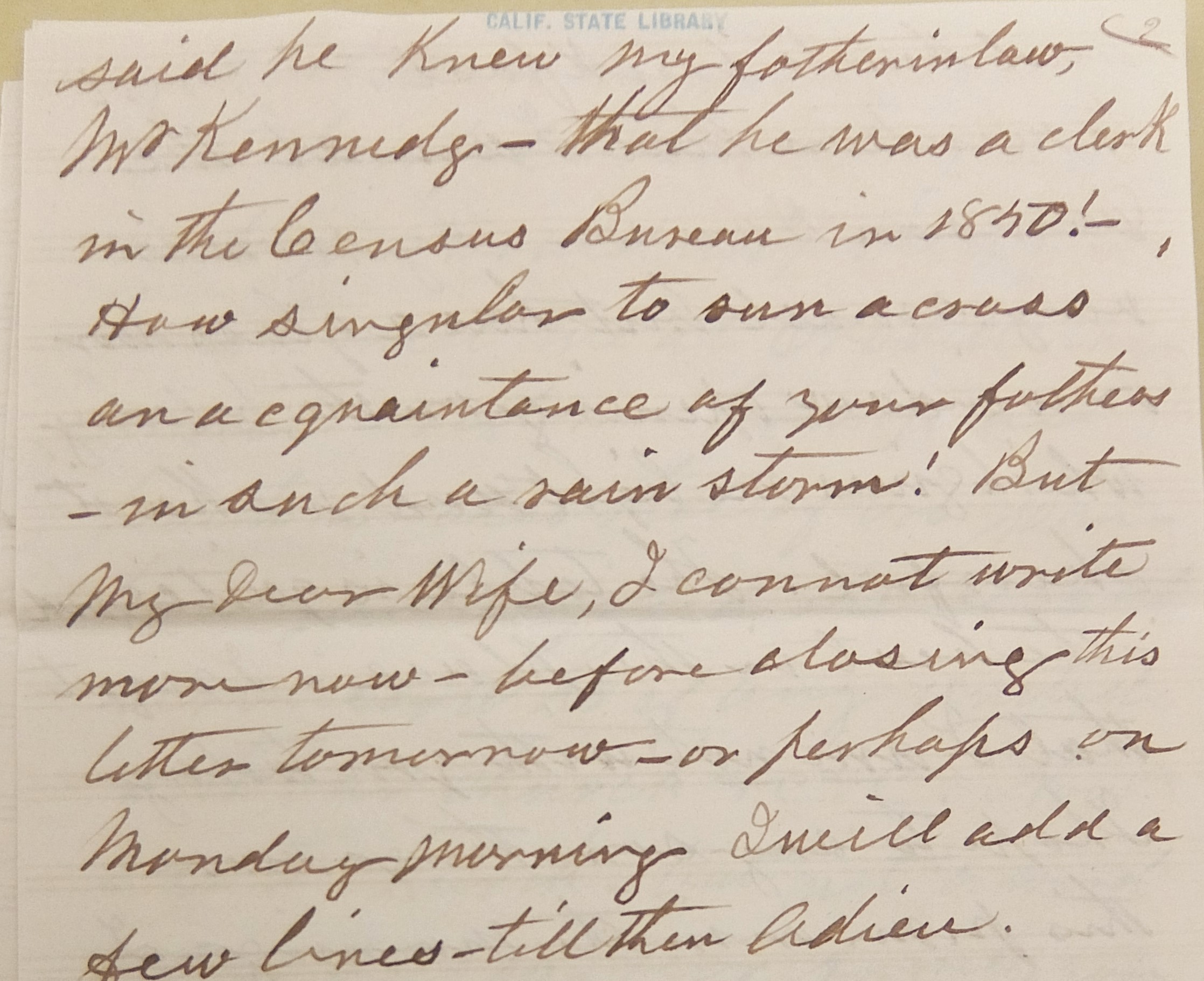
“Mr. Kennedy” was Annie Bidwell’s father, Joseph C.G. Kennedy, the director of the U.S. Census Bureau.

You can see from this letter than General Sherman and President Hayes were already discussing a tour of the western states, which would happen three years later in 1880. General Sherman would be back. As he said, he “was always ready for California.”

Posted in William Tecumseh Sherman | Leave a comment

General Sherman and General Bidwell

John Bidwell first met William Tecumseh Sherman in California in 1847 when Sherman was a first lieutenant in the U.S. Army and Bidwell was a surveyor and a major in the California Battalion. I’ve written about that encounter, as told in Sherman’s memoirs, elsewhere.

They saw each other off and on in the following years. Sherman was a banker in San Francisco from 1853 to 1857, and Bidwell, who often had business in the City, probably saw him there. Sherman’s army career took off with the Civil War and by the end of the war his fame was only second to General Grant’s. Both Grant and Sherman attended the wedding of John Bidwell and Annie Kennedy on April 16, 1868.

In 1877 Sherman made a trip to the West Coast to inspect Army posts. Everyone hoped to see him and speak to the hero. But he could be elusive. On his journey by stagecoach and train from Oregon to San Francisco he passed through Chico. An item in the Chico Enterprise announced his imminent arrival.

Chico Weekly Enterprise 5 October 1877

John Bidwell wrote in his diary:

Sat. October 6.
Wife, sister and self went to Depot to see Gen Sherman. He did not get out of car so no one but myself saw him, for he called me into his room.

It seems that General Sherman, having had some sleepless nights, was still in bed. He was not properly dressed to meet the ladies, let alone the crowd that had gathered at the depot. When he reached San Francisco he wrote Bidwell a letter of apology.

Courtesy of the California State Library

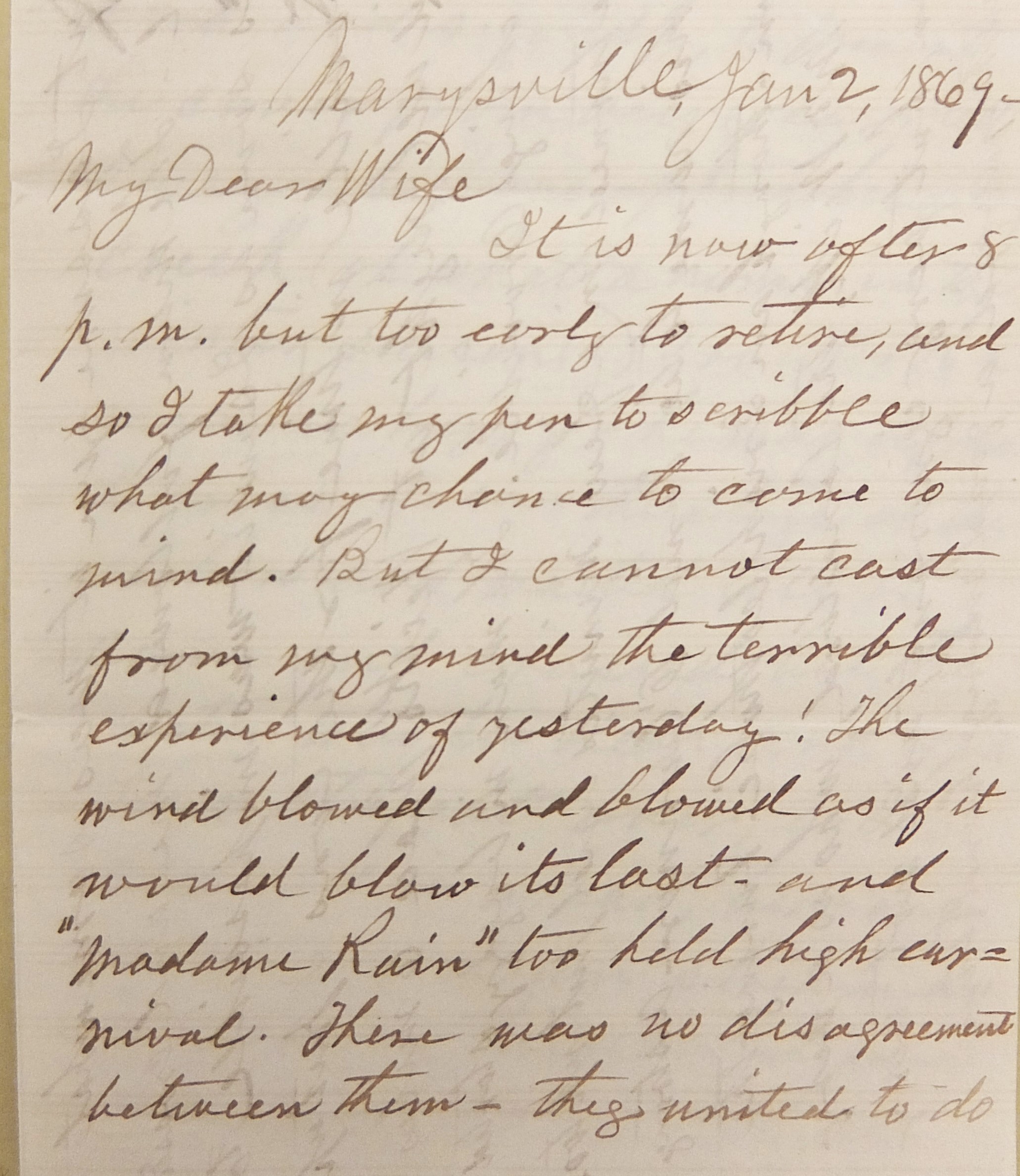
As you can see, his handwriting is not the easiest to decipher. But I have been working on it and next time I will give you a complete transcription.

Posted in William Tecumseh Sherman | Leave a comment

Puncture Vine

Puncturevine in a nearby field, before it went to seed

Puncturevine, AKA goatheads, caltrops, devil’s thorn, and tribulus terretris. You’ve seen and and you hate it. I hate it. Everybody hates it.

It is the bane of cyclists, gardeners, and barefoot children everywhere. With its sharp penetrating thorns and prostrate habit, it is the worst weed ever. How did it get here?

I have been told by some people that puncturevine was imported and planted around Chico on the orders of Annie Bidwell so that the local Indians, the Mechoopda Maidu, would have to wear shoes.

That would be a nasty thing to do, but it’s not true. To promote that idea is a scurrilous slander of Mrs. Bidwell. To be sure, she wanted the Indians on Rancho Chico to adopt and adapt to European-American ways, and with that goal she promoted education, Christianity, and Western customs. But she had nothing to do with puncturevine.

How do we know?

The University of California put out a bulletin in May 1932: The Puncture Vine in California, by Ethelbert Johnson. Puncturevine is not a native plant; it originally came from Europe to the U.S. It spread throughout the Southwest during the latter 19th century. It first appeared in southern California around 1903, spreading up from Arizona. At that time it doesn’t seemed to have reached northern California, but the weeds ability to hitchhike on car tires and railroad cars accelerated its spread throughout California. In 1920 the State Department of Agriculture reported that:

It has now spread over a large area in the Upper San Joaquin Valley, and is found in a nearly unbroken line along- the railroads northward to San Joaquin County. In the Sacramento Valley it has been found at Woodland, Durham, and Marysville, and is reported as widespread along the railroads in Tehama County.

So you can blame the railroads for its spread, but not Annie Bidwell. If it had invaded the ranch, she would have hated it as much as you or I do.

Posted in Uncategorized | Leave a comment

An Early Picture of Sutter’s Fort?

Here’s a puzzle for you. Is this an early sketch of Sutter’s Fort?

It looks kind of like Sutter’s Fort, but not big enough. It’s captioned “View of Fort Sutter.” But is that really what it is?

I had never seen this picture before. A couple of weeks ago I had a pleasant conversation with a gentleman at the Tehama County Museum History Rendezvous, who asked if I knew anything about it. I didn’t. He kindly shared these pictures with me.

The two drawings are by Titian Ramsey Peale, an artist who accompanied the U.S. Exploratory Expedition (also know as the Wilkes Expedition) on its round-the-world tour from 1838-1842. Titian Peale was the son of American polymath painter Charles Wilson Peale. (I love it that Peale named his sons Raphaelle, Rembrandt, Rubens and Titian, after his favorite artists, although I do not recommend that anyone name their son Titian today.)

In the fall of 1841, as the Wilkes Expedition explored San Francisco Bay, Captain Ringgold took some men into the Sacramento Valley. They explored the Sacramento River as far north as the Feather River and visited with John Sutter at his settlement of New Helvetia. The date on these two sketches is October 19, 1841. Is this what Sutter’s Fort looked like at that date?

Probably not. Captain Sutter was in negotiations to acquire Fort Ross. He had need of anything and everything he could get from the Russians: lumber, nails, fittings, tools, agricultural equipment, weapons, livestock, boats — everything. With all that, he told Peale and Ringgold, he planned to build himself a fort.

Why did he need a fort? John Bidwell, who arrived just a month later in mid-November 1841, later stated that Sutter felt threatened by the Mexican-Californians, who had begun to sense that they didn’t need a foreigner in their midst who was gathering other foreigners around him. As Bidwell said, “These threats were made before he had begun the fort, much less built it, and Sutter felt insecure.”

Titian Peale wrote in his journal that Sutter met the expedition and “conducted us to his house.” He says that Sutter “is now building extensive corrals and houses of adobes.” But nothing about a fort.

You can imagine Sutter, hospitable and expansive, telling his visitors about his grand plans to acquire Fort Ross and all its accoutrements, and then build a fort that would secure his position in the heart of California. Peale in response creates a picture of what that fort might look like, with its bastions that resemble those at Fort Ross. “Yes,” says Sutter, “that’s just what I need, except I will make it even bigger and better.” And so he did.

It’s only my conjecture, but it fits what we know of Sutter’s early situation and of the explorers who visited him in 1841. If you are interested in learning more about the Wilkes Expedition, you can read Sea of Glory, America’s Voyage of Discovery: The U.S. Exploring Expedition, 1838–1842 by Nathaniel Philbrick (New York: Viking, 2003). It’s a fascinating tale of exploration from the Americas to Antarctica to the islands of the South Pacific, although the account is skimpy when it comes to the expedition in California. If you really want to get into it, the Smithsonian has made Wilkes’s own account (all five volumes) available online. California is in volume 5.

Posted in Uncategorized | Leave a comment

Special Events

I am just back from a trip to Chicago and Wisconsin to visit with some of my family. Here’s a picture of my two college girls on an architectural boat tour of Chicago. Nothing beats spending time with grandkids.

On Saturday I will be at the History Keepers and Seekers Rendezvous at the Tehama County Museum, in the town of Tehama, just west of Los Molinos. It’s a fun event with something for every history buff, from spinning and weaving, to flint-knapping, to antique cars and trucks. Live music! Great raffle prizes! Don’t miss it.

I’ll be there with other authors. It’s a great chance to meet the writers who bring history alive. I’ll have my books and books from the Association for Northern California Historical Research for sale. Come and say Hi!

I’ll be at the Dairyville Orchard Festival too, on Saturday October 21st. More music, plenty of yummy food, and artisans from around the North State.

On Tuesday, September 26th I’ll be speaking about local history to the Durham Rotary Club. If you need a speaker for your group, let me know. I love sharing history.

Posted in Uncategorized | Leave a comment