Merry Christmas from the Butte Record, 1857 (3)

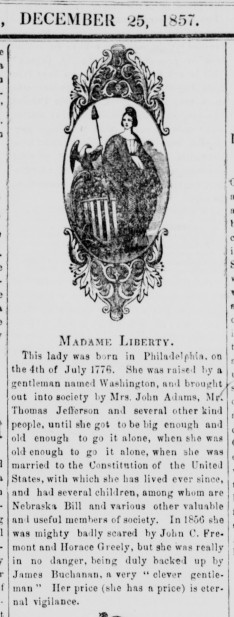
Lady Liberty takes center stage in this clever item.

This lady was born in Philadelphia, on the 4th of July 1776. She was raised by a gentleman named Washington, and brought out into society by Mrs. John Adams, Mr. Thomas Jefferson and several other kind people, until she got to be big enough and old enough to go it alone, when she was married to the Constitution of the United States . . .

Mrs. John Adams was Abigail, a suitable lady to introduce a young woman to the world. The Constitution was written in 1789, making the young lady 13 years old when she was “old enough to go it alone.”

. . . the Constitution of the United States, with whom she has lived ever since, and had several children, among whom are Nebraska Bill and various valuable and useful members of society.

The “Nebraska Bill” (Kansas-Nebraska Act of 1854) was much in the news in the 1850s. It repealed the Missouri Compromise and created two new territories. Its popular sovereignty provision led to a violent uprisings as pro-slavery and anti-slavery activists flooded into the territories to influence the vote.

In 1856 she was mighty badly scared by John C. Fremont and Horace Greely, but she was really in no danger, being duly backed up by James Buchanan, a very “clever gentleman.” Her price (she has a price) is eternal vigilance.

John C. Fremont was the first presidential candidate of the new Republican Party and Greeley was his running mate. Buchanan is now ranked as one of the worse presidents, but he was a Democrat, so the editor of the Butte Record endorsed him.

Quiz time: Who said, “The price of liberty is eternal vigilance?” This familiar quotation is usually attributed to Thomas Jefferson, but it seems he never said or wrote it. According to researchers at Monticello.org, it can be traced back, ultimately, to John Philpot Curran’s statement, “The condition upon which God hath given liberty to man is eternal vigilance; which condition if he break, servitude is at once the consequence of his crime and the punishment of his guilt.”

Posted in Uncategorized | Leave a comment

Merry Christmas from the Butte Record, 1857 (2)

Note: When I wrote yesterday’s post, I said that this Christmas pictorial appeared in 1856. It was actually 1857, and the post has been corrected.

This one is almost like a rebus:

A tree on one side and a house on the other equals a small town, with a barrel in the center signifying the chief entertainment in that place. Put a sun above, and there you have it — Bangor by the light of a rising sun.

Butte Record 5 May 1857

Miss Julia Budson is most likely fictional, but Ned Pratt was a real person, the driver of the stagecoach on the Marysville to Bangor route.

The Butte Record was a Democratic paper, so the editor here compliments Ned on his political advertising. Ned turns up in news stories every so often, and here’s a good one.

Butte Record 11 November 1857

Posted in Uncategorized | Leave a comment

Merry Christmas from the Butte Record, 1857

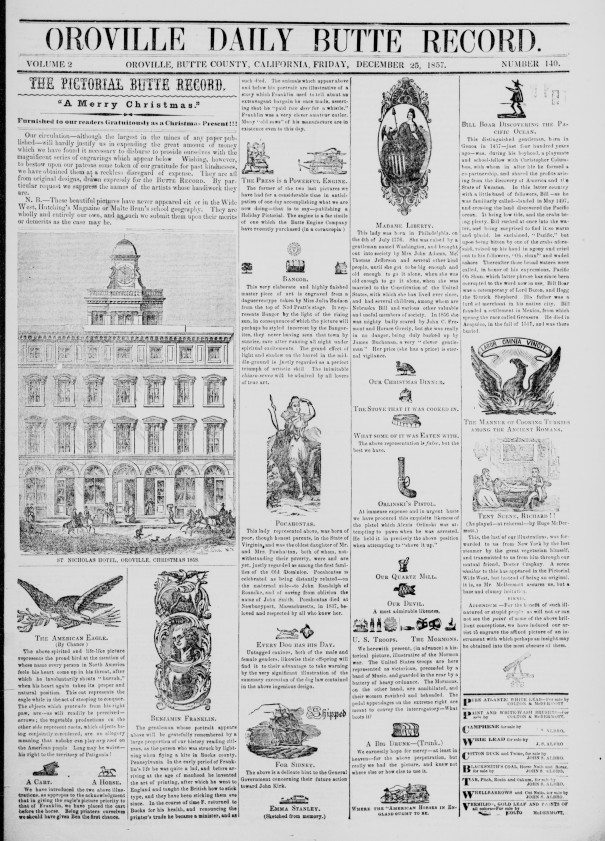
The Oroville Daily Butte Record had some fun for its readers on Christmas Day, 1857, which it “Furnished to our readers gratuitously as a Christmas present!”

Using standard newspaper engravings that were usually seen in advertisements and patriotic announcements (“obtained at a reckless disregard of expense”), the editor, George Crosette, put together fake news stories and entertainments for his readers. I’ll share some of these for your Yuletide amusement over the next few posts.

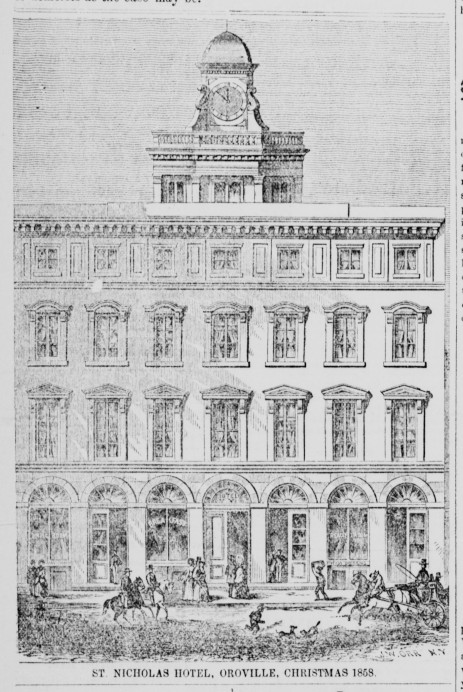
The page starts off with a grand illustration of the new Hotel St. Nicholas, located on the corner of Montgomery and Huntoon Streets.

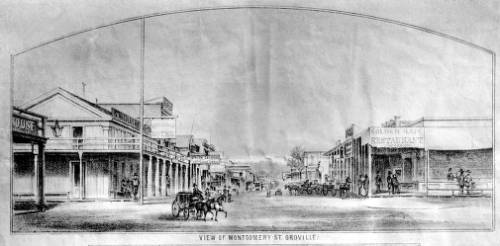
Oroville in 1856 had nothing so magnificent. I doubt any building in Oroville at the time was more than two stories high. The real St. Nicholas Hotel can be seen on the left in this drawing:

sc20261 Courtesy of Special Collections, CSU Chico, and the Pioneer Museum, Oroville.

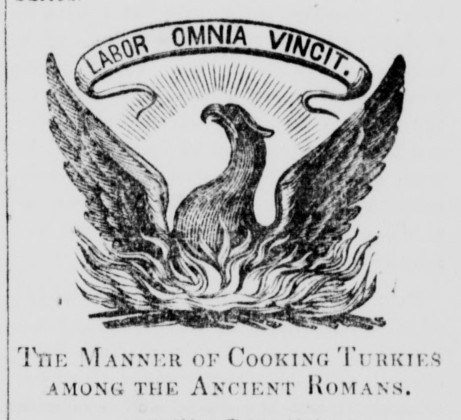
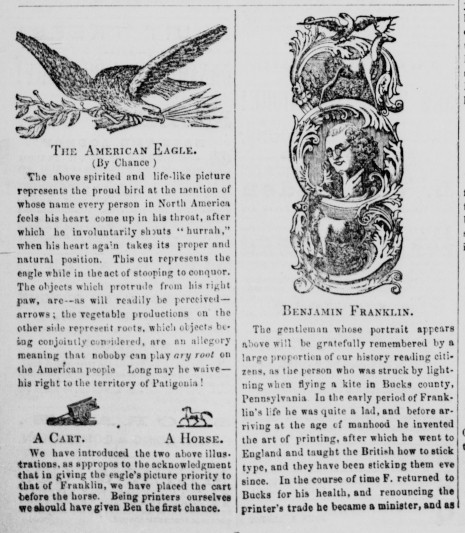
Here the American eagle is shown with arrows clutched in “his right paw,” while “the vegetable productions on the other side represent roots” (actually an olive branch) as an “allegory meaning that nobody can play any root on the American people.” I am sorry to say I can’t explain the pun.

Then there is a cart and a horse, because “by giving the eagle’s picture priority to that of Franklin, we have placed the cart before the horse.” Benjamin Franklin being, of course, the patron saint of American printers.

Franklin is shown with two deer, one above and one below his portrait, because he said he once “paid two deer for a whistle.”

How the readers must have groaned at this desperate pun.

Stay tuned for more merriment from the Christmas issue of the Butte Record.

Posted in Uncategorized | Leave a comment

Books for the Holidays!

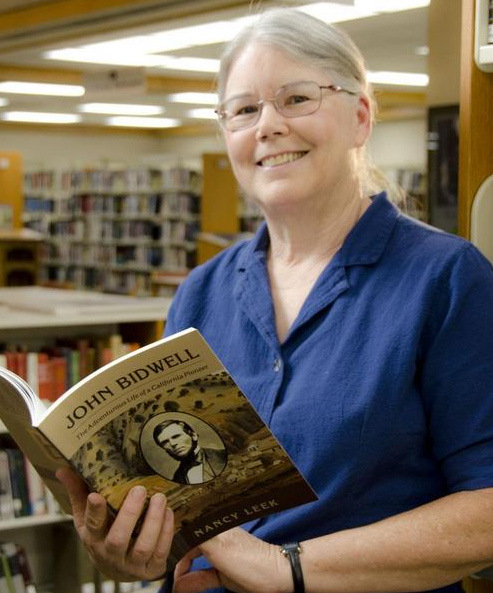
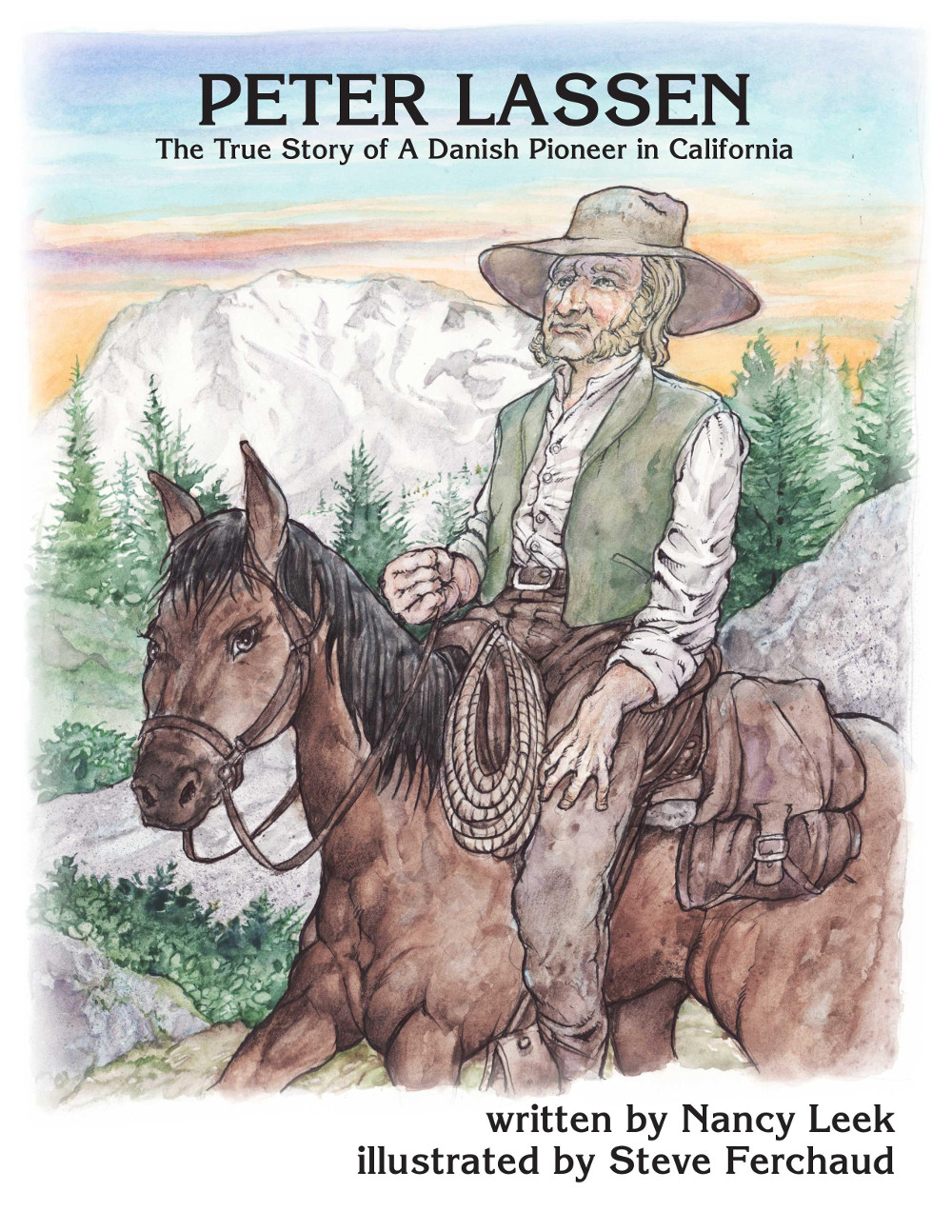
My books are available for holiday shopping! You can order by contacting me at goldfieldsbooksca@gmail.com, or by shopping at some of our great North State businesses like Made in Chico, ABC Books, Bidwell Mansion (open Wednesdays and Saturdays), The Rusty Wagon in Orland and Treasures from Paradise.

A great place to order my books and other fabulous books on Northern California history is ANCHR.org. History is best when shared!

My books are on Amazon and if you order there it comes straight to me and I put the book in the mail right away.

There’s more information about where to buy and how to order my books on the My Books tab at the top of this page.

Happy holiday reading!!!

Posted in Uncategorized | Leave a comment

Christmas with the Bidwells — 2021

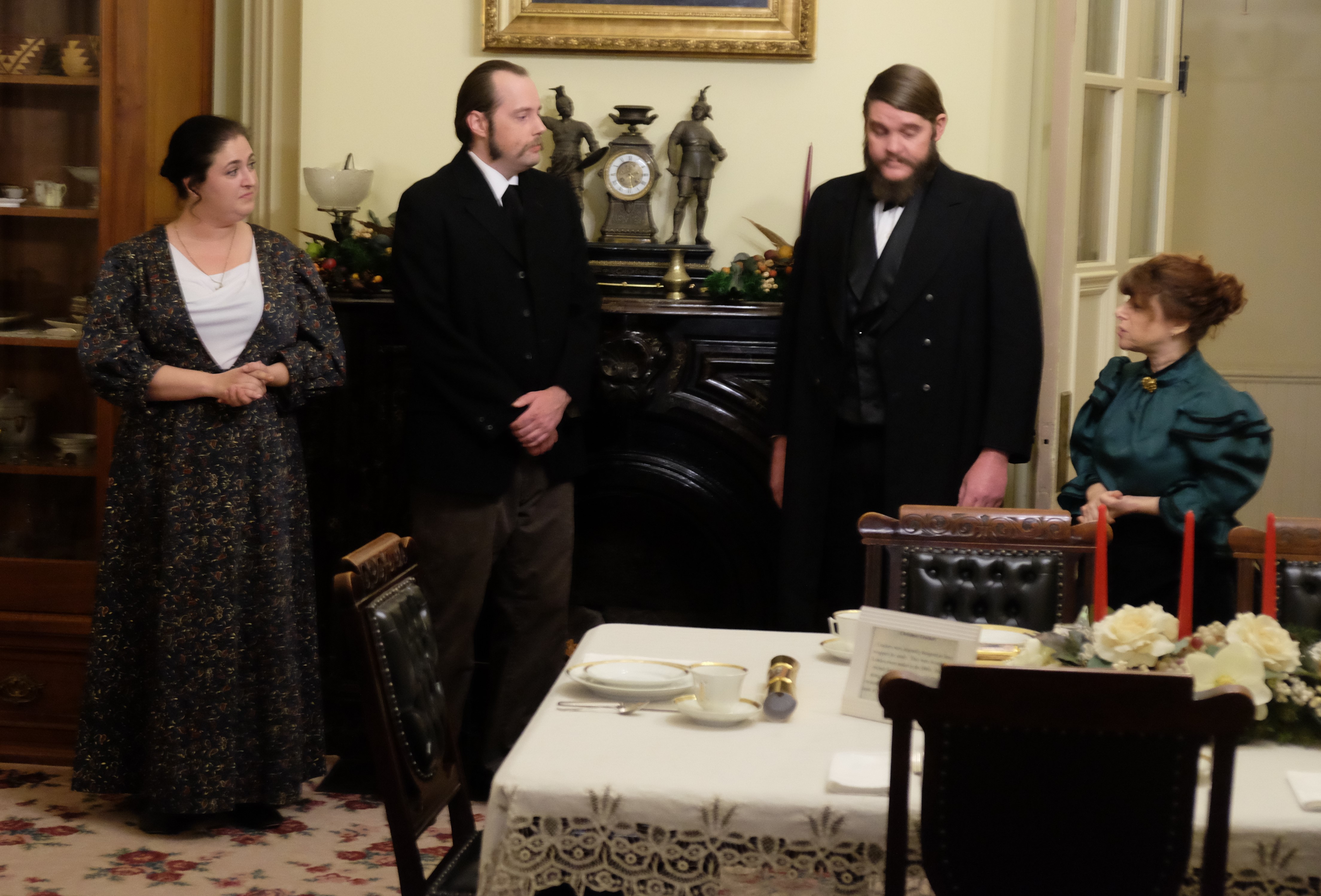
Left to right: LaShona Haskell as Mrs. Swasey, Mike Swann and Mr. Swasey, Nick Anderson as John Bidwell, and Robyn Engel as Mrs. Bidwell

Just like last year, the Bidwell Mansion Association is not able this year to host a live holiday event at Bidwell Mansion for members and guests. But do not despair! A virtual holiday extravaganza is in the works, coming soon to the BMA YouTube channel.

In the meantime, you can enjoy last year’s virtual “Christmas with the Bidwells.” In this YouTube video you will tour General Bidwell’s office, find out what’s cooking in the kitchen with Florence the cook, hear stories from Peter the coachman, and listen to Annie tell you about her plans for Christmas shopping. You’ll also enjoy piano and fiddle music in the parlor, just like John and Annie might have done.

Adrienne Glatz plays Annie, Nick Anderson is John Bidwell, Mike Swann is Peter, and that’s me as Florence the cook. Video recording by Elizabeth Quivey, editing by Adrienne Glatz, and music by Alicia Glatz (piano) and Joel Quivey (violin).

The new “Christmas with the Bidwells” is on its way and will be ready soon. Happy Holidays to you!

Posted in Uncategorized | Leave a comment

Thanksgiving Dinner at Bidwell Mansion

Each year John Bidwell noted Thanksgiving Day in his diary. He always recorded who gave the sermon at the Thanksgiving church service and who were the guests at dinner. Sometimes he notes sending turkeys to two or three families. But he never says what they ate for their feast.

Annie Bidwell was not as diligent a diarist as her husband, but when she wrote, she often recorded the menu, or at least some of the dishes. In 1890 they dined at the home of Emma Hobart on Thursday, so they had their own festive dinner on Friday.

Fri., Nov. 28 [1890]

Perfect day. Rev. Mr Murrish & wife, Rev & Mrs Reames, Rev & Mrs Green dined with us at one O’Clock today. Came at noon, left about 4 P.M. Had excellent dinner closing with ice-cream, plum-pudding, coffee, shelled Eng walnuts, & almonds: raisins, Japanese Persimmons, pears, apples, grapes, etc. Guests seemed happy & we enjoyed having them to “Thanksgiving Dinner” – if on Friday.

Annie writes about dessert and after-dinner fruit and nuts, but nothing about the meat or vegetables. They surely had plenty of those too.

1910: Annie Bidwell and the workers who built the Presbyterian Church sitting at the dining room table. CSU Chico Meriam Library Special Collections

In 1903, after the General’s death, Annie noted another Thanksgiving dinner.

Thurs., November 26. [1903]

Thanksgiving Day. Places: Church, ll A.M. Union Services at Presbyterian Church. To dinner – Sister, brother Tom, Willie, Cora, Guy, Eva, Joseph, Dr. Gatchell & Cousin Ella Gatchell. Col. Royce, his mother & wife. Rev. & Mrs. White & babe.

Good dinner. Plum pudding, ice-cream with water ice layer in blocks – 3 blocks of it. Fruits -Jap. persimmons, pears, muscat & other grapes. Apples, oranges (Reuben’s grove),pomegranates, almonds, pecan-nuts, Eng. Walnuts, hazel nuts -all from Ranch Chico – our first new olives.

Young People’s Union Social at our house this evg. 300 said to be present. Much music, joy, etc.  Weather: Faultless!

I’d like to see that “ice cream with water ice layers in blocks.” Sound quite elegant.

Posted in Uncategorized | 1 Comment

Halloween in Chico — 1899

“Last night being Halloween the Normal students cut up shamefully.”

So wrote John Bidwell in his diary for November 1, 1899. What did those students get up to? The Chico Weekly Enterprise can tell us.

Hearing that some of the students were planning to pull some pranks, the college president, Dr. Charles C. Van Liew, warned the young men against attempting any tricks at the school, and even went so far as to hire a constable, Peter Knudson, to guard the building on Halloween night.

Shortly after nine o’clock, Knudson, who was inside the Normal building, saw a crowd of young men and boys approaching, and as soon as they were near enough he warned them to keep away, at the same time informing them that he was a regularly appointed officer. Apparently however the :”gang” paid no attention to his command, but made every attempt possible to get into the building.

So they went and “borrowed” a wagon from a blacksmith’s shop, filled it with shakes, and hauled it to the steps of the Normal building, wresting the gates off their hinges to get into the grounds. They dumped the shakes in front of the door, then went inside and got to work.

By dividing their forces they succeeded in getting inside the building, and when the rooms were opened this morning it looked as though a cyclone had been at work. Chairs were piled promiscuously in every direction and all was disorder.

When the morning session was called to order it was discovered that the piano had been filled with handkerchiefs, blotting and scrap paper of all descriptions. Even the Bible had not escaped, but some fellow had deposited his soiled collar within the sacred pages.

To say that Dr. Van Liew was indignant when he discovered this morning what had occurred would be drawing it mild, and he will make an example of the perpetrators if he secures positive proof of their identity.

Chico Weekly Enterprise, 11 November 1899
Chico State Normal School — the scene of the crime

Oh those Chico State boys!

Posted in Uncategorized | Leave a comment

Margaret Hecox Discovers Gold

Margaret Hecox came to California overland with her husband Adna and four children in 1846. It was a long and arduous journey, but at least they did not take the Hastings Cut-Off (as did the Donner Party). They met Lansford Hastings and he suggested it, but they had a guide, Old Caleb Greenwood, who advised against it.

Margaret M. Hecox, Discoverer of Gold

As they came down the western slope of the Sierra Nevada, Mrs. Hecox discovered gold:

In a little valley by the Yuba River we went into camp for a day or two. How pretty it was at this place and, although we were all tired out, we enjoyed everything, feeling happy that we were now so near our journey’s end.

It was on the Yuba River that Mrs. Aram and I discovered what we afterwards knew to be gold. We were busy at our washing down near the stream, when something brightly gleaming in the water attracted our attention. It looked like sands of gold. I gathered my apron full of the shining specks and carried it to Mr. Hecox, saying I thought it was gold.

He laughed at me and seemed to consider it a good joke. This made me angry and I threw it away. I have always been sorry that I did not keep it and wait until I could have it tested. I am sure now that it was gold. It was just like the dust they brought from the mines two years later.

Let that be a lesson to the men out there to listen to their wives.

The same day Mrs. Aram called to me in an excited manner, “Mrs. Hecox, do come here quick; I do believe I have found gold!” And so it proved to be the pure metal. It was thoroughly tested at the time. The men marked the spot, some of them declaring that they would return some day and search for more of it; but they never did.

The piece that Mrs. Aram found was about the size of a silver dime. The specimen I believe is still in the possession of Mrs. Aram’s daughter.

Mrs. Aram’s little nugget was given more credence than Margaret Hecox’s specks of gold dust. But they were both gold and if those emigrants had staked a claim there and then, they might be hailed as the discoverers of gold in California, rather than James Marshall.

This account comes from the book California Caravan: the 1846 Overland Trail Memoir of Margaret M. Hecox, edited and with an introduction by Richard Dillon, published by the Harlan-Young Press in San Jose in 1966.

Posted in Uncategorized | 2 Comments

John Steele Goes Home

John Steele left California in June 1853, after almost three years as a gold miner. His intention was to land at Acapulco and journey to Mexico City, and then to the Gulf where he could take another ship to the States. He wanted to see something of the country and people, and practice his Spanish. But the day he left San Francisco the papers announced that a military coup in Mexico City had thrown the country into a revolution. It was not a good time to tour Mexico. He took the Nicaragua route instead.

John Steele — photo from findagrave.com

In the introduction to his narrative Steele writes:

Returning to Wisconsin, the author spent some time in study, and was engaged in teaching in southwest Missouri when the Civil War began; joined the Union Army, and at the close of the war became a minister in the Methodist Episcopal church; and is now a member of the West Wisconsin Conference.

This journal, written without thought of publication, has been laid aside through all the busy intervening years. Recently, having occasion to refer to it, the author was impressed with the fact that here was faithfully delineated the everyday life and experience of the average miner, and under conditions which only California, in that early day, could furnish. (p. 117-118)

He spent the last dozen years of his life in Lodi, Wisconsin, where his account was published in 1901 as a 90-page pamphlet. It has become a classic of California Gold Rush literature.

Here are the various incidents, just as they happened: ludicrous, solemn, serious, tragic, inexpressibly sad, but always interesting. (p. 118)

John Steele died in Lodi on October 6, 1905.

Posted in John Steele | 2 Comments

John Steele’s Last California Adventure

On June 18, 1853, John Steele received a letter from an old friend, Edward D., who was studying at the University of Wisconsin (founded in 1848). Many of Steele’s friends had left the goldfields; he was feeling lonely and he wanted to further his education. It was time to go home. But his adventures in California were not yet over.

He bid farewell to Capitan Juan, the headman of the Indian village, and a few other friends. He took the stage to Sacramento and then a steamboat to San Francisco, where

. . . . an incident was added to my experience, which emphasized the adage, “Eternal vigilance is the price of liberty,” and other things. (p. 327)

He had been accompanied on both the stagecoach and the steamboat by a burly stranger who seemed to know that he had been for some time in the mines and was now going home. The man was friendly and suggested a hotel they could stay at, but Steele had already chosen the Atlantic Hotel near Long Wharf as his stopping place. The stranger agreed that it was a good place and followed him there. He also tried to get Steele to join him in a drink, but Steele refused. You may recall that he was a temperance man and did not drink alcohol.

Long Wharf, early 1850s. California History Room, California State Library.

The next day Steele went to buy his return ticket home.

It was early in the forenoon and on a thronged street when I again met the stranger. We recognized each other, and in passing he unawares crowded me against a door, which was on a level with the sidewalk, and with a sudden push thrust me inside.

Instead of the usual revolver, I carried two single shooters in a place prepared inside my coat; and with my right hand trying to prevent his shutting the outer door, with my left hand I cocked one, drew it, but just then saw another man, standing in a side door, and as I raised the pistol he disappeared and shut the door.

In an instant I drew the other pistol with my right hand, when the man who had pushed me in disappeared through a door on the opposite side and it was shut.

Bewildered, I stood for a moment with a cocked pistol in either hand, and on regaining presence of mind, saw that the room was only about six feet square, but containing three doors. Coming in from the street there was a door on the right and left, through which the men had disappeared. (p. 329)

Steele went back out the front door, and meeting a policeman, tried to get him to arrest the man who had assaulted him. The policeman brushed him off. So Steele went on his way, congratulating himself that he was still alive and “in possession of my liberty, passage and expense money.”

Steele had a few choice words for law enforcement (or the lack thereof) in San Francisco.

The city government at that time was entirely in the hands of the saloon element, gamblers, and thugs. Up to this time more than twelve hundred murders had been known and registered, and there were reasons to believe twice that number had been committed; and yet not a criminal had been brought to justice. Policemen, police courts, officers of all grade were implicated in crime, even to Judge Terry of the United States District Court. (p. 330)

It’s no wonder John Steele felt it necessary to carry two pistols to protect himself against thieves and murderers. He could have ended up a corpse in doorway.

George Northrup posing as a gold miner with tools and two pistols.
Posted in John Steele | Leave a comment