Take a guess — What were the best-selling items at John Bidwell’s store?
When I wrote a biography of John Bidwell in 2010, I wanted to include a photo of a page from his 1849 store ledger. I paged through the ledger at the California State Library, looking for a good representative page. But there were a couple of problems.
One was simply that half the ledger was written in pencil. Too hard to read.
Secondly, on many pages almost all the purchases were for brandy or other alcoholic beverages. I wanted my book to be suitable for young readers — I needed a page that showed a variety of products.
I settled on this one, with brandy, yes, but also sugar, flour, vinegar and quinine:
But this one is more typical:
That’s a lot of brandy!
Brandy, at $6 a bottle, was far and away the best-selling beverage. Miners could also buy ale or porter ($3), wine ($4), or whiskey ($6). I imagine that if you wanted to get drunk, brandy was the quickest way. Not to mention that it was also considered to have medicinal value.
It’s no wonder when ordering supplies from George McKinstry that Bidwell wrote “Let the cargo consist in a considerable quantity of Liquors in Bbls (barrels) & cases both” and “It will be necessary to send a few empty bottles.” (10 July 1849)
Keep in mind that this was long before John Bidwell met and married Annie. He was a businessman who knew his market and how to supply it.
January 24, 1848 is the date usually given for the discovery of gold at Coloma on the American River, where James Marshall found those first few flakes of gold in the millrace. It may have been a few days earlier, or a few days later, but January 24 is the date most generally accepted. And everyone knows that James Marshall was the man who discovered gold and touched off the California Gold Rush.
But how many know the names of Peter and Jennie Wimmer? They have just as good a good claim to be gold discoverers, and Jennie was the only person in the camp who actually had experience in gold mining, and knew gold when she saw it. In fact, she had been telling the men for some time that the shiny specks in the water were gold. But what would a woman know about that?
Jennie Wimmer
Elizabeth Jane “Jennie” Cloud Wimmer was born In Virginia in 1822. In 1838, when she was 16 yeas old, her family moved to north Georgia where Jennie helped her mother run a boarding house for miners. In her free time Jennie went out with her gold pan to do a little prospecting for herself. She developed a good eye for the signs of gold-bearing ore.
She moved to Missouri with her first husband and two children. After his death, she married widower Peter Wimmer, who had five children of his own. In 1845 they joined a wagon train headed for California. Peter went to work for John Sutter and became James Marshall’s assistant in the building of the sawmill at Coloma. Jennie was hired to cook for the men.
There is some debate whether it was Marshall by himself, or Marshall and Wimmer together, that first spotted gold in the tailrace of the mill. Marshall liked to take sole credit, but Peter Wimmer claimed he allowed James Marshall the credit since Marshall was the one who picked up the little nugget.
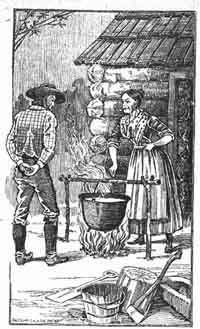
J.W. Marshall and Mrs. Wimmer Testing Gold. From California Gold Book; Its Discovery and Discoverers by W.W. Allen and R.B. Avery, published in San Francisco in 1893.
But there is no doubt that Jennie Wimmer was the first to test it. Although others were skeptical, thinking it might be iron pyrites that had been found, she recognized the first nugget as true gold. In an interview published in the San Francisco Bulletin in 1874 she stated: “I said, ‘this is gold, and I will throw it into my lye kettle, and if it is gold, it will be gold when it comes out.’”
Jennie was making soap that day with lye she had made from wood ashes. She threw the nugget in the kettle with the mixture of lye and grease, and left it overnight. After she took off the soap, the nugget of gold was found in the bottom of the kettle the next morning, even more bright and yellow than when it had gone in.
No one could doubt it. There was gold in the American River, and soon gold fever would sweep the nation.
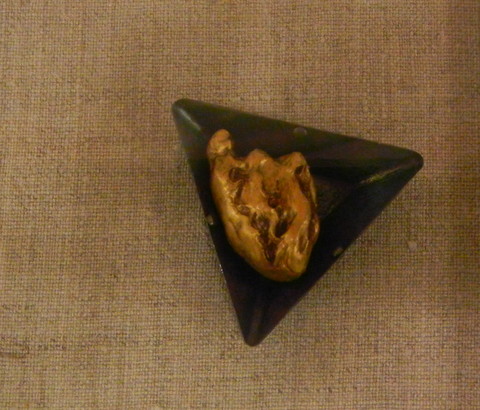
The Wimmer Nugget. Bancroft Library, University of California, Berkeley.
That first little nugget of gold remained in James Marshall’s possession after he showed it to John Sutter. In gratitude for her assistance, he gave it to Jennie Wimmer. She carried it in a leather bag around her neck for the next 40 years.
Today it is on display at The Bancroft Library at the University of California Berkeley campus. The little nugget is about the size of the end of my thumb.
The fortunes of the Wimmer family fluctuated through the years, as did those of so many pioneer families. They lived in various locations in California. Three more children were born into the Wimmer family, bringing the total to ten. Jennie Wimmer died in San Diego County in 1885.
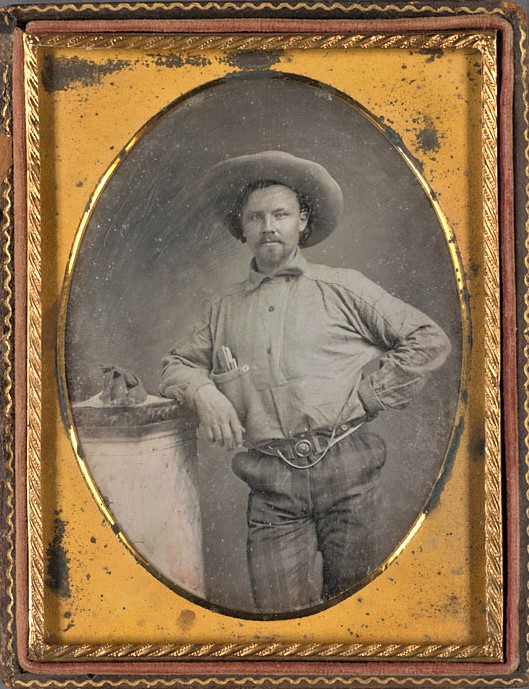
Say you’re a young miner, come to Bidwell’s Bar to dig for gold in 1849. You are generally a strong and healthy young man, but the work is hard and your meals are not exactly mom’s home cooking. Beef and beans and biscuits are your daily fare; sometimes you have rice with molasses, or rancid butter or cheese. You drink tea or coffee, when you can get it, with a little sugar. Dried apples, stewed up into applesauce, make a treat.
Alonzo J. Doolittle. Courtesy of Bancroft Library
What’s missing from this diet? Fresh fruits and vegetables. Potatoes, onions, cabbage, and carrots are expensive and rarely seen. You have managed to ward off scurvy though, because you bought a jar of pickles at Bidwell’s Store.
What if you get sick or injured? Is there a doctor in the camp? There may well be, although his training and credentials might be sketchy. But he can bandage a wound or set a broken bone, so you are glad to know that he is on hand in case of accident.
If you are sick, the available treatments are limited. If you came to California on the Panama route, you might have picked up a case of malaria. A dose of quinine will help. Quinine was available and used to treat all kinds of chills and fevers in addition to malaria.
Other medicines you could buy at Bidwell’s Store were:
Seidlitz powders. This was a best-selling digestive treatment. The packet contained tartaric acid, potassium sodium tartrate, and bicarbonate of soda, which fizzed when mixed together in a glass of water. It was good for evacuating the bowels.
Brandreth pills. A purgative that was said to cure many ills. It contained sarsaparilla and other herbs, and would do a powerful job of cleaning out your digestive tract.
Bitters. A herbal remedy that was supposed to aid digestion. Ingredients varied; quinine, which has a strongly bitter flavor, was often included.
Ipecacuanha. An emetic. It would make you throw up. If you are old enough, you may have kept syrup of ipecac in the medicine chest in case your child ingested something they should not have.
Laudanum. An alcoholic tincture of opium, the favorite medicine of the Victorian era. It doesn’t show up in the Bidwell Store ledger, but on a shopping trip to Sacramento on 6 July 1849, Bidwell bought a vial of laudanum for $1.00 from Dr. A.J. Ward.
He also stocked up on Seidlitz powders, Brandreth’s pills, bicarbonate of soda, spirits nitre, castor oil, olive oil, lime juice, and a half-pound licorice ball. According to Bancroft’s Pioneer Register, Dr. Ward was a physician at Sutter’s Fort in 1847-48.
When John Bidwell or his partner George McKinstry went shopping for goods to supply their store at Bidwell’s Bar, Sam Brannan & Co. wasn’t the only business they patronized. There were a number to choose from, and they went to whichever one had the goods they needed. And they needed plenty.
Placer Times 28 April 1849
Sam Brannan advertised heavily and usually led the way. Then there were Samuel Hensley and P.B. Reading, both good friends of John Bidwell, and Priest, Lee & Co., prominent Sacramento merchants. I haven’t seen any receipts from Murray & Lappeus. But note Peter Slater, where you could combine grocery shopping with bowling.
These were businesses that first had their premises at Sutter’s Fort, and later moved to the Embarcadero on the Sacramento River, where Old Town Sacramento is now.
Other merchants they dealt with were W.H. McKee (later McKee & Dring) where they bought sailcloth, calico, and thread, and Magnant & Kearny, who sold tools and groceries. Oliver Magnant was a French Canadian who came to California with the overland Stevens Party in 1844. Here’s a receipt:
California State Library
This receipt is faint, but it reads as follows:
Feather River Mining Co. Bot of Magnant and Kearny Aug. 2nd 1848
Salt $1.00
2 Bags 1.50
1 Shovel 6.00
1 Crow Bar 6.00
1 Pick 6.00
4 Tin Pans 12.00
2 Stew [?] Pans 6.00
2 Butcher Knives 2.00
4 Jack ditto 2.00
As you can see, they bought tin pans for $3.00 each. Pans were sold for anything from $10 to $16. A butcher knife cost $1.00 in Sacramento, and they sold them for $2.00.
One item that puzzles me is the pick. Here one pick costs $6.00, and in 1849 another receipt shows 8 picks bought for $48.00 — still $6.00. In the ledger the only two picks sold were $5 and $6. It ought to have been more. And maybe it was — we don’t have all the sales records. We do know that picks were in high demand. On 10 July 1849 Bidwell wrote to McKinstry asking for:
50 Picks, these should be of the medium size, not the largest – or smallest – these if sent soon will sell well.
When news of the gold discovery on the American River reached Sutter’s Fort, John Sutter did his best to keep it quiet. He knew if word got out his sawmill would never be finished and his crops would never be harvested. He sent John Bidwell to San Francisco to have the sample assayed, but he asked him to keep the news to himself.
Undoubtedly John Bidwell did his best.
But the news leaked out. On March 15, 1848 the Californian newspaper published the news, although many were skeptical that there was anything much in the report. It would be another two months before the rush to the hills began.
Meanwhile, Sam Brannan was buying up all the picks, shovels, crowbars and pans he could find. Flour, salt, knives, gunpowder, blankets, and foodstuffs of all kinds — anything that a man heading to the mines might want, Brannan stocked at his store at Sutter’s Fort.
Then he went to San Francisco and famously rode around Portsmouth Square with a flask of gold in his hand, shouting, “Gold, gold from the American River!” The rush was on, and Sam Brannan was ready for it.
So when John Bidwell and George McKinstry wanted to buy goods to sell at their own trading post on the Feather River, they first went to Brannan’s store at Sutter’s Fort. A receipt records that on June 23rd and July 6th, 1848, goods such as 200 pounds of flour, 6 pounds of lead, bags of salt, a bottle of pepper, knives, forks, buckets and fish line were “Bot of S. Brannan & Co.” by George McKinstry. John Bidwell was up on the Feather River, looking for gold.
California State Library
(Brannan’s name is on the third line. Kemble and Rolfe were his agents. The word “bought” was typically abbreviated as “Bot.”)
Powder (gunpowder) sold for $3.00 a pound at Brannan’s store in the summer of 1848. In 1849 Bidwell sold it for $12.00 a pound at his store on the Feather River. The Emigrant’s Guide to California (1849) lists the price of gunpowder in the States at $.22 a pound ($5.50 for 25 pounds — the recommended amount.).
Flour, which sold for $.02 a pound in the States, cost $.14 a pound at Brannan’s store in Sacramento, and $.50 a pound at Bidwell’s Bar.
The list goes on and on, and we will see more examples of inflation as we continue. It’s no wonder that immigrants to California marveled at the prices and wondered how they could possibly get by.
A great many people have crowded upon this stream since you left. About 300 people have arrived from Oregon inpressly [sic] for Gold digging. I have heard of the arrival of several companies from the States – and have seen some of the people among whom was Mr. Farwell, formerly in this country.
In case nothing has transpired since you left to prevent starting a trading post at some point on your return, and you have not made other engagements, I think Mr. Farwell would answer the purpose.
John Bidwell to George McKinstry, 30 September 1848
John Bidwell had discovered gold on the Feather River in June 1848 and by September “a great many people” had crowded on the stream, even before most Americans could get there in 1849. He was doing well at mining, using a crew of local Indians, but he could see that he could do even better with a trading post to sell goods to the miners.
Luckily for the historian, John Bidwell saved a ledger from his store, and he saved a folder full of receipts from his buying trips to Sacramento. These sources give us a good idea of what the miners were eating, what tools and clothing and medicines they could purchase, and what the prices were like.
Bidwell started by bringing beef cattle and flour up to Bidwell’s Bar to sell.
I have been up to my Ranch, moved camp down to the bend of Feather river with a quantity of meat and coarse flour, and have come down to take up the things that were sent up in the canoe. Tomorrow I shall land in the “diggings”.
John Bidwell to George McKinstry, 19 June 1848
I don’t know exactly what was “sent up by canoe,” but this was the beginning of his trading post at Bidwell’s Bar. It would make him a rich man.
“Diggings” or “diggins” was such a novel word he put it in quotation marks. His Ranch was not Rancho Chico, but a farm he had started in 1845 on Little Butte Creek. He bought cattle from Theodore Cordua at New Mecklenburg (Marysville) for $25 a head. That’s probably where he bought the flour as well. Cordua had a large ranch, which produced so much more food than he could use, that in 1847 he built a schooner to ship his produce to Mexico or Hawaii. The Gold Rush would solve that problem, but bring a new crop of troubles to Mr. Cordua.
In the next few posts I will explore Bidwell’s shopping trips to Sutter’s Fort and beyond, look at what the miners were buying from Bidwell’s store, and compare some prices. We will never know just how much money Bidwell made as a storekeeper, but we will get an idea of what it cost to be a gold miner.
I do not think there was ever a more wicked war than that waged by the United States on Mexico. I thought so at the time, when I was a youngster, only I had not moral courage enough to resign. –Ulysses S. Grant, 1879
Grant was a young officer in his twenties when he fought in the U.S.-Mexican War. John Bidwell, who served in the California Battalion, agreed with him, calling the war “an unjustifiable war.”
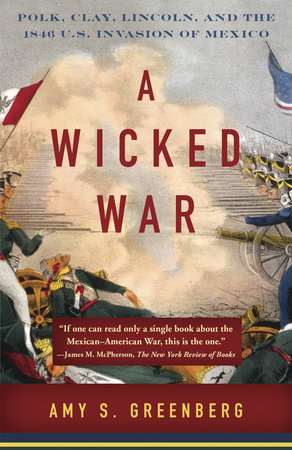
In A Wicked War: Polk, Clay, Lincoln, and the 1846 Invasion of Mexico, author Amy S. Greenberg uses extensive research and good storytelling to bring to life the people, the conflict, and especially the political pressures that involved the United States in a war of aggression against a neighboring republic.
James K. Polk was a dark horse candidate for president in 1844, but he had tapped into the Zeitgeist of Manifest Destiny. Americans wanted expansion — they wanted more land, land for farmers, land for slaveholders, the resources those lands held and the ports on the Pacific. Polk believed in Manifest Destiny. For Polk, the issue was “a perfect marriage of politics and conviction.” It would win him the presidency.
Texas, which had declared itself an independent republic, was asking for annexation to the United States. But the previous administration had waffled on the issue, not wanting to aggravate Mexico, which still claimed Texas, and reluctant to open more territory to slavery. Polk had no such qualms. He was willing to claim the lie that Mexico had insulted and robbed the United States in order to further a war. For the first time, the United States began a war for empire.
Greenberg follows the army into Texas and Mexico, but her focus is on the political, rather than the military, battle. She has almost nothing to say about the war in California. She draws deft portraits of the major players: Polk, his intelligent and devoted wife Sarah, Henry Clay, Nicholas Trist, who negotiated the treaty with Mexico, Abraham Lincoln, and his rival for office, John J. Hardin. If Hardin had survived as a war hero, Lincoln might never have won his own dark horse candidacy.
A Wicked War is exciting, well-written history, and for me it illuminated the political background of the conquest of California. I heard about the book by listening to the History of California podcast, and was happy to find that my public library has the book.
Today in History — Courtesy of the Sacramento History Museum:
Copy of a lithograph of Sutter’s Fort in 1849 by George Victor Cooper from the Robert B. Honeyman Jr. Collection, courtesy of the Bancroft Library, UC Berkeley.
December 28, 1848
On this day in 1848, John Sutter Jr., in an effort to raise capital to pay off his father’s looming debts, started to sell portions of Sutter’s Fort. Priest, Lee, and Company purchased the rooms along the north wall east of the Central Building for $3,500 for their mining equipment store. Dr. Victor Fourgeaud bought the northeast corner rooms for $1,700.
The rooms along the south wall east of the main gate were sold to Hensley, Reading, and Company for $6,500. Pierson B. Reading and Samuel Hensley rented the properties to David Dring who operated a dry goods store, Peter Slater who had a saloon and bowling alley, and the southeast bastion (tower) became a hospital (which was later one of the main cholera hospitals in the city during the October-November 1850 cholera epidemic).
The Central Building was purchased for $7,000 by Alden Bayley and Michael McClellan, who converted the former administrative hub for New Helvetia into a hotel on the main floor and a saloon, gambling parlor, and bowling alley in the basement. The rest of Sutter’s Fort was sold by April 1849.
Most of these men were already renting the rooms that they bought at this time. Sam Brannan had a store at Sutter’s Fort too.
On one of my forays into the archives at the California State Library, I came across a trove of receipts saved by John Bidwell from his trips to buy supplies for his trading post at Bidwell’s Bar on the Feather River. Picture in your mind Sutter’s Fort, and then imagine John Bidwell and his partner George McKinstry going round the various businesses that had set up shop there, buying all kinds of necessary items to stock their own store. Here are a few of the receipts, with transcriptions (not all from the same trip):
Mr. Bidwell
Bought of McKee & Dring
10 pairs of shoes @ $7 $70.
¼ oz. Quinine @ $60 15.
1 piece Mantua 12. (probably “manta,” a type of cloth)
1 roll of Copper 6.
1 lb. of Salts 2.
1 Rope 3.00
9 pieces of Prints @ $14 126. (more cloth)
3 “ “ “ @ $11 33.
12 pairs Pantaloons @ $4 48.
3 “ “ 12.
20 pairs of Blankets @ $20 400.
5 Scotch Caps @ $1 5.
$732.—
Rec’d Payment
Wm. H. Smith
for McKee and Dring [on reverse] Oct. 14th 1848
Messrs McKinstry, Bidwell
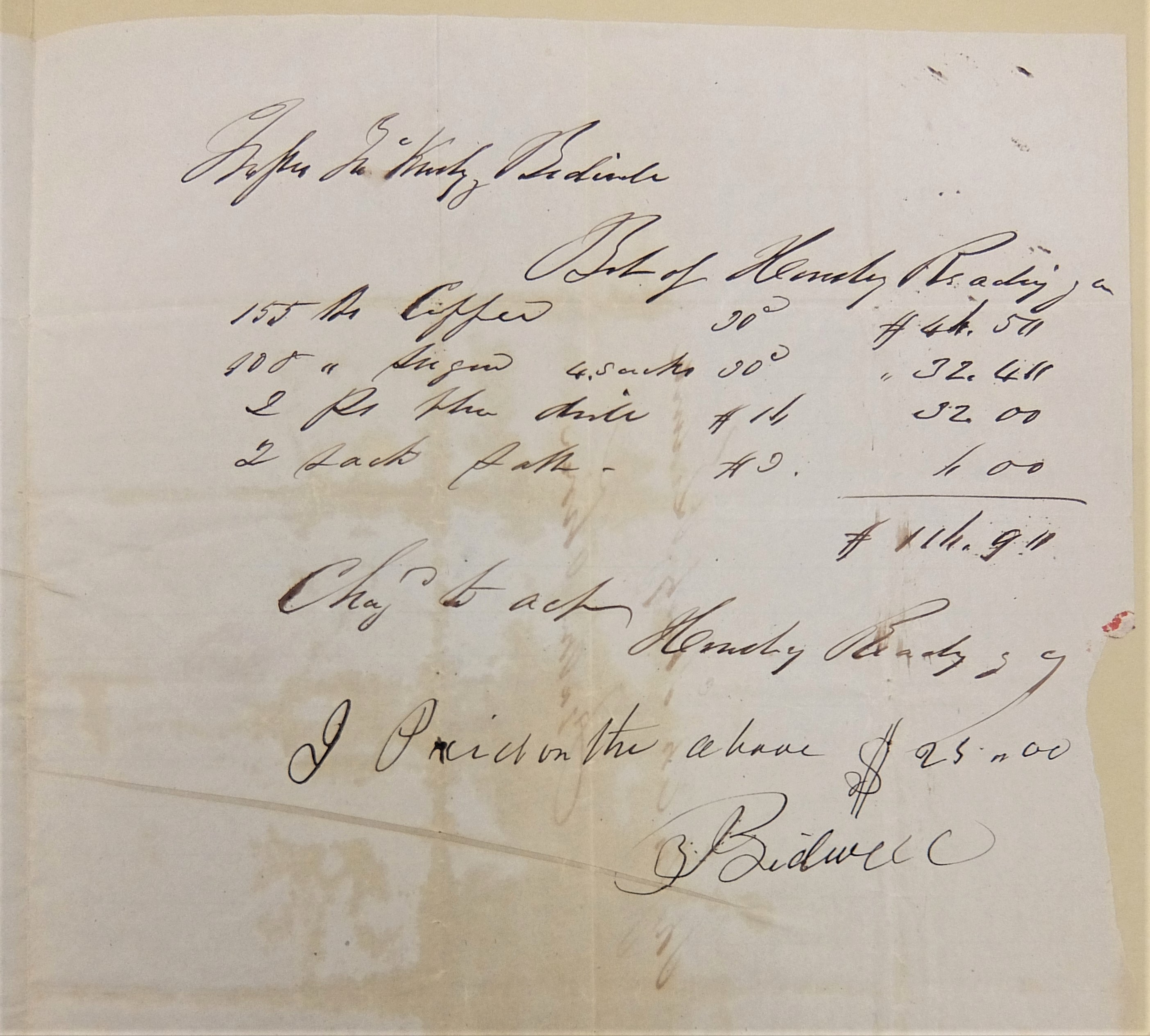
Bot of Hensley Reading & co.
155 lbs Coffee 30¢ $46.50
100 “ Sugar 4 sacks 30¢ 32.40
2 pc. blue drill $16 32.00 (fabric similar to denim)
2 sack salt 1.00
$111.90
Chag’d to acct. Hensley Reading & co.
I Paid on the above $25.00 J. Bidwell
Sacramento City July 6, 1849 [Priest & Lee had moved out of the Fort by this time]
Mr. Bidwell
Bought of Priest, Lee & Co.
7 8/12 Doz. Fancy Shirts @$12 $92.00
4 pr. Blankets $20. 80.00
2 doz. Pants $16 32.00
1 sack nuts 50 # $30 15.00
4 cases Brandy $20. 80.00
1 Canister Powder $4 4.00
303.00
Received Payment Priest, Lee & Co.
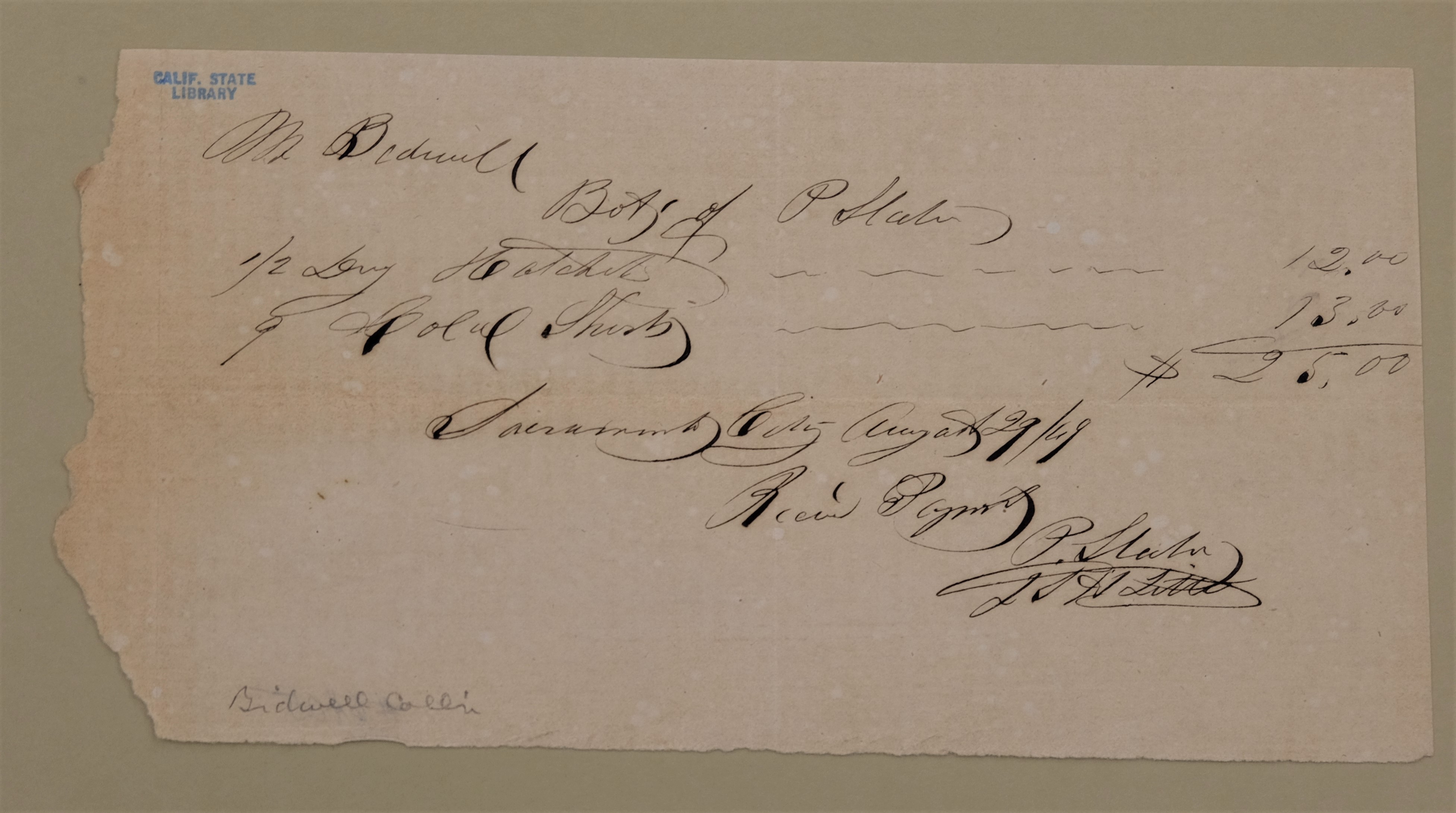
Mr. Bidwell Bot of P. Slater
½ doz. Hatchets 12.00
9 Col’d Shirts (colored) 13.00
$25.00
Sacramento City August 29 / 49
Rec’d Paymt. P. Slater [other name unreadable]
Unfortunately, these receipts do not answer the question: Did John Bidwell go bowling at Sutter’s Fort?
On April 14, 1846, the Donner and Reed families set out from Springfield, Illinois, for Independence, Missouri, to commence their journey to a place that had been advertised to them as “the best land under heaven.” Around this core would gather eighty-seven men, women, and children, from a 70-year-old matriarch to several babes in arms. Their journey has become the most well known of all the emigrant wagon trains that set out for California.
Because the Donner Party is so famous, it is a story I have never felt called upon to deal with. Everyone knows about the Donner Party disaster. It has not only been the subject of numerous books, but has been the basis of a graphic novel, a poetry sequence, and an opera. No one needs my two cents’ worth.
If you want to read about the Donner-Reed Party, I can recommend this book as one of the best in that crowded field. Michael Wallis gives a gripping account of the journey, with all its mistakes and setbacks, and of the tragedy in the mountains and the rescue of the survivors.
The subtitle of the book: “The Donner Party in the Age of Manifest Destiny,” is a bit misleading. There is little analysis of the larger context of the USA under the spell of Manifest Destiny. But as a straightforward and thorough account of the Donner experience, this book fills the bill. Wallis has done his research and every detail from every journal or archeological dig is here.
Reading this account is an exercise in “if only.” Even though they were an early wagon train on the California Trail, setting out before the great rush for gold, there had already been successful treks by emigrant parties. As I read, I couldn’t help thinking, “If only they had set out even a week earlier, if only they hadn’t taken such large and over-loaded wagons, if only the had not taken the Hastings Cut-off (a terrible mistake, but not an irretrievable one), if only they had abandoned their slow-moving wagons sooner, if only the storms had not come so early that year to the Sierras.”
The fate of the Donner Party was a terrible lesson for subsequent emigrants of the pitfalls and perils of the journey they were undertaking. This book will keep you reading until the last snowflake melts from the mountains.
Lincoln Steffens, notable muck-raking journalist of the late 19th and early 20th century, was born in San Francisco in 1866 and grew up in Sacramento, where his father owned a prosperous store. There in Sacramento he watched as the city “grew and changed with the State from a gambling, mining, and ranching community to one of farming, fruit-raising, and building.”
One chapter of his autobiography tells the story of his ‘miserable merry Christmas” when he was ten and the family had just moved to a new house. Here’s the condensed version; perhaps it will remind you of the unbearable excitement your own childhood Christmases.
What interested me in our new neighborhood was not the school, nor the room I was to have in the house all to myself, but the stable which was built back of the house. My father let me direct the making of a stall, a little smaller than the other stalls, for my pony, and I prayed and hoped and my sister Lou believed that that meant that I would get the pony, perhaps for Christmas. . . My father, sounded, said that some day we might have horses and a cow meanwhile a stable added to the value of a house. “Some day” is a pain to a boy who lives in and knows only “now.”
My good little sisters, to comfort me, remarked that Christmas was coming, but Christmas was always coming and grown-ups were always talking about it, asking you what you wanted and then giving you what they wanted you to have. Though everybody knew what I wanted, I told them all again. My mother knew that I told God, too, every night. I wanted a pony, and to make sure that they understood, I declared that I wanted nothing else.
“Nothing but a pony?” my father asked.
“Nothing,” I said.
“All I want is a pony,” I said. “If I can’t have a pony, give me nothing, nothing.”
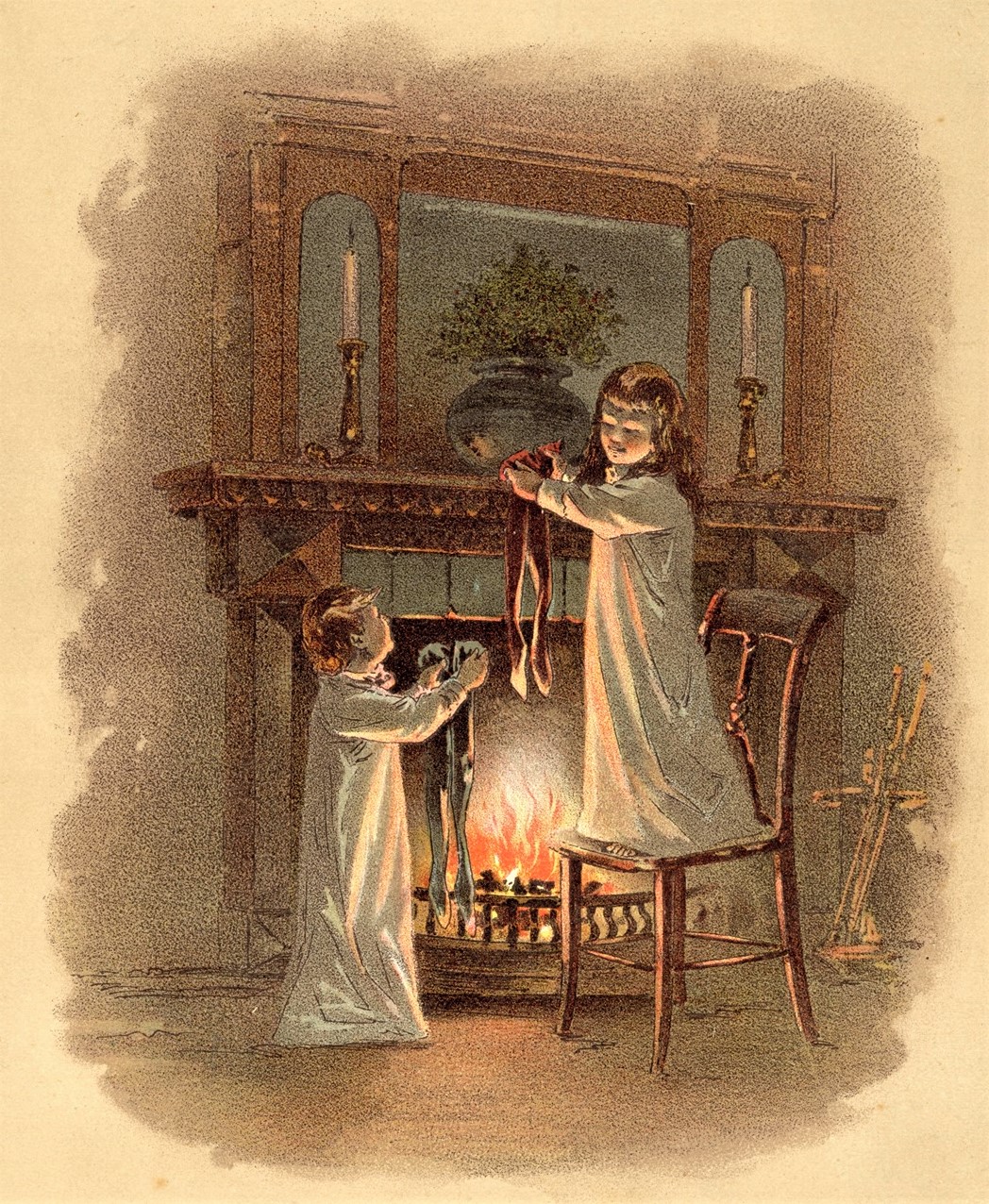
Now I had been looking myself for the pony I wanted, going to sales stables, inquiring of horsemen, and I had seen several that would do. My father let me “try” them. I tried so many ponies that I was learning fast to sit a horse. I chose several, but my father always found some fault with them. I was in despair. When Christmas was at hand I had given up all hope of a pony, and on Christmas Eve I hung up my stocking along with my sisters’, of whom, by the way, I now had three.
Christmas morning came, and the children rushed to look at their stockings and gifts. Lincoln’s stocking hung loose and empty, with no pile of presents, like his sisters, sitting on the floor. He went out to the stable — no pony. In despair he sat in the stall, weeping. Nothing could comfort him, not his sisters’ sympathy or his mother’s attempts to soothe him. Then—
After — I don’t know how long — surely an hour or two — I was brought to the climax of my agony by the sight of a man riding a pony down the street, a pony and a brand-new saddle, the most beautiful saddle I ever saw, and it was a boy’s saddle; the man’s feet were not in the stirrups; his legs were too long. The outfit was perfect; it was the realization of all my dreams, the answer to all my prayers. A fine new bridle, with a light curb bit. And the pony! As he drew near, I saw that the pony was really a small horse, what we called an Indian pony, a bay, with black mane and tail, and one white foot and a white star on his forehead. For such a horse as that I would have given, I could have forgiven, anything.
But the man, a disheveled fellow with a blackened eye and a fresh-cut face, came along, reading the numbers on the houses, and, as my hopes — my impossible hopes — rose, he looked at our door and passed by, he and the pony, and the saddle and the bridle. Too much. I fell upon the steps, and having wept before, I broke now into such a flood of tears that I was a floating wreck when I heard a voice.
“Say, kid,” it said, “do you know a boy named Lennie Steffens?”
I looked up. It was the man on the pony, back again, at our horse block.
“Yes,” I spluttered through my tears. “That’s me.”
“Well,” he said, “then this is your horse. I’ve been looking all over for you and your house. Why don’t you put your number where it can be seen?”
“Get down,” I said, running out to him.
He went on saying something about “ought to have got here at seven o’clock; told me to bring the nag here and tie him to your post and leave him for you. But, hell, I got into a drunk and a fight — and a hospital, and — ”
“Get down,” I said.
He got down, and he boosted me up to the saddle. He offered to fit the stirrups to me, but I didn’t want him to. I wanted to ride.
“What’s the matter with you?” he said, angrily. “What you crying for? Don’t you like the horse? He’s a dandy, this horse. I know him of old. He’s fine at cattle, he’ll drive ’em alone.”
Lennie Steffens rode his pony up and down the street, then brought him back to the stable, where he fed him and watered him, and with his sisters’ help, “curried and brushed him, curried and brushed him” over and over.
Happy and now hungry for dinner, he went in to eat.
I could laugh. My mother said I still choked and sobbed now and then, but I laughed, too. I saw and enjoyed my sisters’ presents till — I had to go out and attend to my pony, who was there, really and truly there, the promise, the beginning, of a happy double life. And — I went and looked to make sure — there was the saddle, too, and the bridle.
But that Christmas, which my father had planned so carefully, was it the best or the worst I ever knew? He often asked me that I never could answer as a boy. I think now that it was both. It covered the whole distance from broken-hearted misery to bursting happiness — too fast. A grown-up could hardly have stood it.
Best holiday wishes from me to you, for a Christmas bursting with happiness!













 goldfields