A Visit to the Haggin Museum

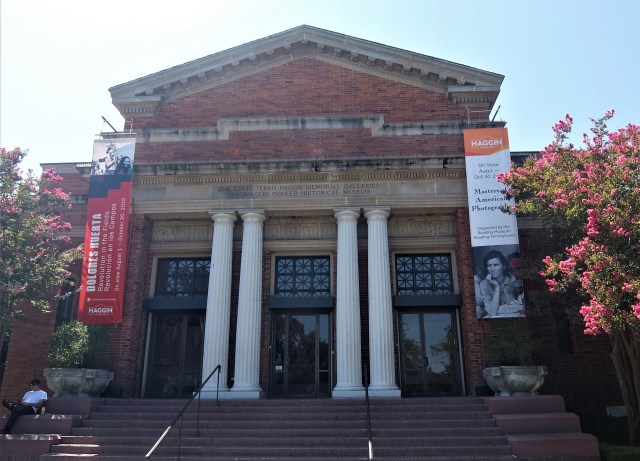
I travel quite often from our home in Chico to our son’s home in Livermore (because that’s where the grandchildren are). Traveling down I-5 we pass through Stockton. I have never had any reason to stop in Stockton, until I found out about the Haggin Museum.
DSCF7721

What a gem! Stockton is very lucky to have such a fine museum. And luck has played a significant role in the creation of the Haggin Museum. According to Wikipedia:

The San Joaquin Pioneer and Historical Society wanted to build a history museum, but was unable to raise sufficient funds to do so. Robert McKee offered the group $30,000 in honor of his wife, Eila Haggin McKee, if the museum would be named for her father Louis Terah Haggin and if they added a wing to house his art collection. The museum opened its doors to the public on 14 June 1931, Flag Day.

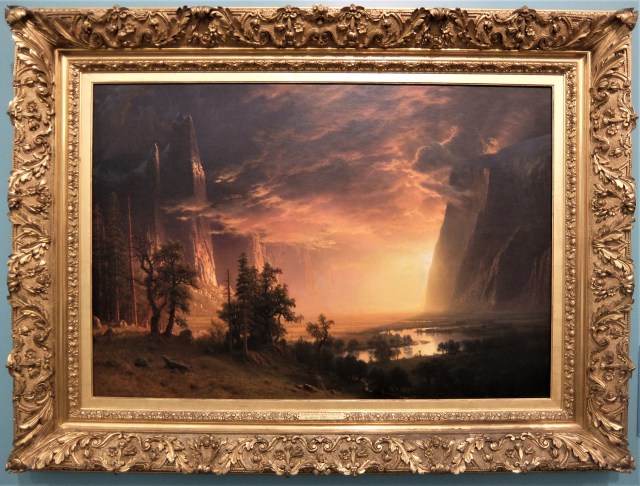
So Mr. Haggin never lived in Stockton, but his fine collection of 19th century European and American does reside there. It’s an especially good place to see paintings by Albert Bierstadt.
DSCF7712

Sunset in Yosemite Valley, by Albert Bierstadt

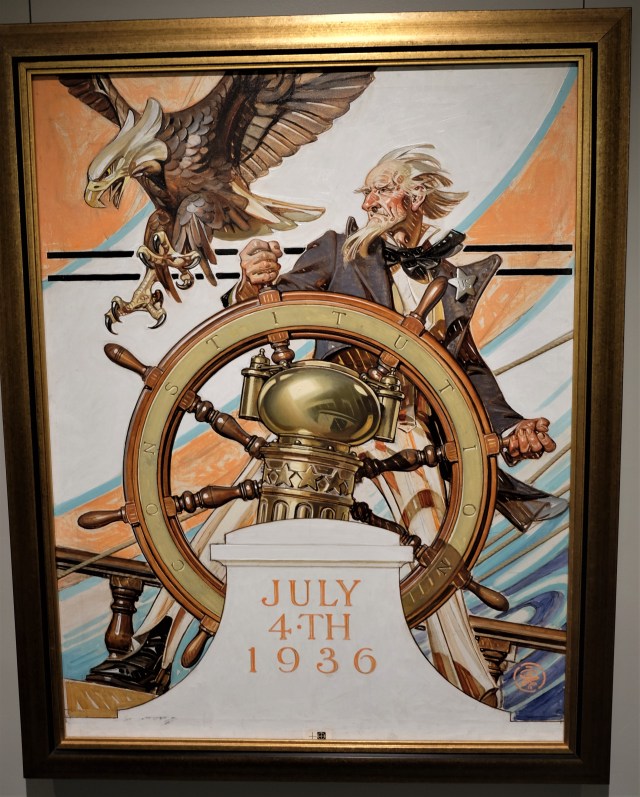
The museum also has an extensive collection of the works of the American “Golden Age” illustrator, J.C. Leyendecker, which also came to them by luck. Leyendecker never lived in Stockton either, but his sister did, and she left her collection to the museum. If 19th century French art is not your thing, then go to the upstairs gallery to see Saturday Evening Post covers and advertising art for Kellogg’s cereals and Arrow shirts.

dscf7720.jpg

J.C. Leyendecker — Is it any wonder that we all eat cereal for breakfast now?
DSCF7714

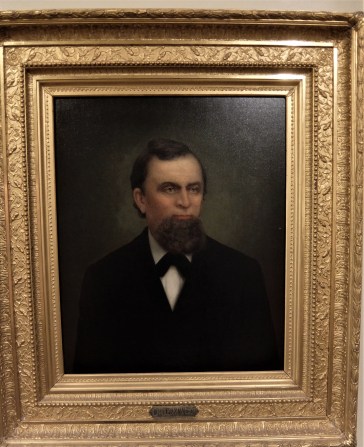
Charles Weber, member of the Bidwell-Bartleson Party and founder of Stockton

And then there is local and California history, farm machinery, boats, old fire engines, a World War II Jeep (one of 275 bought by the students and teachers of Stockton High), and traveling exhibits. Something for everyone!

The museum is easy to get to — close to I-5 on Pershing Ave. Directions and hours are here.  Put it on your list of places to visit soon.

The museum is set in a city park so you can have a picnic or run some energy off the kids. There is also a lovely rose garden.


livermore-aug26 (27)

A Saturday Evening Post cover by J.C. Leyendecker 

Posted in Uncategorized | 2 Comments

A Quick Visit to Rough and Ready

DSCF7697 M

DSCF7688 MIf you drive along Highway 20 from Marysville to Grass Valley, you see a sign that points left and says “Rough and Ready 2 miles”. I have meant to take that turn for a long time now, and last Friday I finally did.
The town of Rough and Ready was once a thriving mining community of over 3000 people. Now there are only a few hundred in the area, but they are an independent-minded bunch, and proud of their little town.

They have quite a sense of humor too.


dscf7691-m.jpg

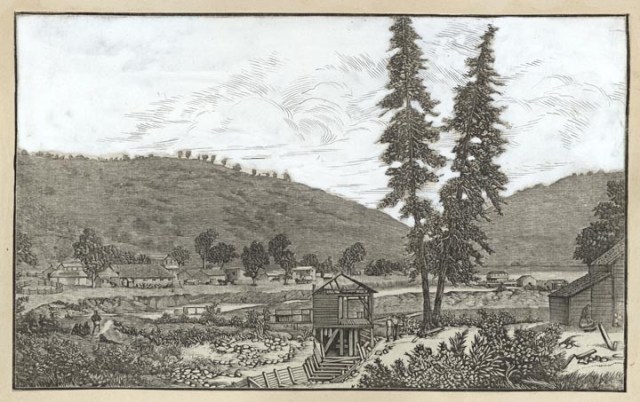
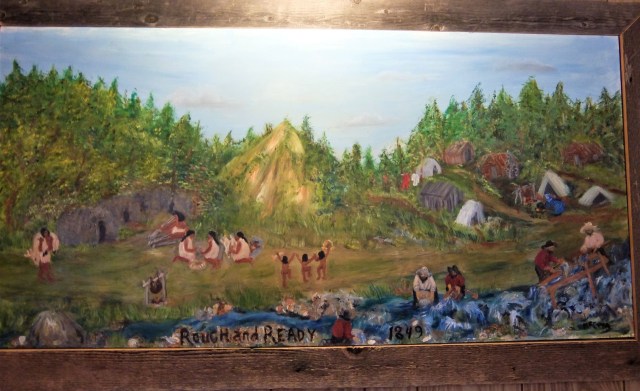
A copy of an original painting depicting Rough and Ready in gold rush days.

Rough and Ready got its name from General Zachary Taylor, known as “Old Rough and Ready.” The first settlers were a company of gold seekers from Wisconsin who arrived in the fall of 1849, led by Captain A. A. Townsend, who had served under Taylor during the Black Hawk War of 1832. Townsend’s company of 49ers was the “Rough and Ready” Company in honor of their leader and the President.

Discontent and disputation over a proposed mining tax and no government services led to an independence movement. On April 7th, 1850, at a mass meeting, the townsfolk voted to secede from the Union and declared itself the “Independent Republic of Rough and Ready.” Colonel E. F. Brundage was elected president of the new republic and a Constitution was written and signed.

DSCF7686 M

The original blacksmith shop

Alas, the republic was short-lived. As July 4th approached, the miners began making preparations for the big day (and the 4th of July was a very big day at that time, the biggest and noisiest holiday of the year.) How could they celebrate the independence of a nation they had left? What was worse, as “foreigners”, they were running into refusals when they tried to buy liquor from nearby towns for the celebration. The independence movement was called off and Rough and Ready rejoined the Union, just in time to celebrate Independence Day.

Rough and Ready still has a few old buildings from the Gold Rush era. Mr. Weldon Travis, who stopped his pickup truck to see what we were doing, kindly invited us up to the grange hall to learn some history of the town.

DSCF7694 M

The Secession Days Celebration takes place on the first Sunday in June (June 2, 2019.) Formerly it was the last Sunday in June. This is a family-friendly event with a pancake breakfast, chili cook-off, craft fair, blacksmith demonstrations, kids’ activities, and The Original Saga of Rough and Ready re-enactment melodrama. Go to Rough and Ready for a fun-filled day of history and excitement!


Posted in Rough and Ready, Uncategorized | Leave a comment

August 27, 1847

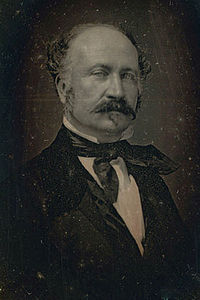
200px-John_Augustus_Sutter_c1850

John Sutter in 1850

John Sutter needed lumber. He was always building — on his fort, around the fort, up at his farm. He also planned to sell lumber to the settlers who were coming into California  in increasing numbers. He needed a sawmill.

In his New Helvetia Diary, where he kept a daily record of events and comings and goings at the fort, John Sutter wrote:

Aug. 27: Made a contract and entered in partnership with Marshall for a sawmill to be built on the [American] fork.

John Bidwell wrote out the contract, although he had his doubts about the advisability of the plan. He had inspected the site at Coloma himself, and thought that the American River canyon was too rocky and narrow for safely rafting lumber downstream to Sutter’s Fort. Later he would write:

I wrote the contract between Sutter and him [Marshall] to build the mill. Sutter was to furnish the means; Marshall was to build and run the mill, and have a share of the lumber for his compensation. His idea was to haul the lumber part way and raft it down the American River to Sacramento, and thence, his part of it  . . . . down to San Francisco for a market. . . . It is hard to conceive how any sane man could have been so wide of the mark, or how anyone could have selected such a site for a sawmill. Surely no other man than Marshall ever entertained so wild a scheme . . . and no other man than Sutter would have been so confiding and credulous as to patronize him.

But in the end it didn’t matter. Marshall, who was a skilled carpenter and wheelwright, hired Indians and soldiers from the Mormon Battalion to get the sawmill built. It was coming along nicely until January 24, 1848, when Jim Marshall found little flecks of gold in the tailrace of the mill.

And the rest is history.

sutter's millCSL

Sutter’s Mill


Posted in Uncategorized | Leave a comment

The Grass Valley Museum

grassvalley2019 M (8)

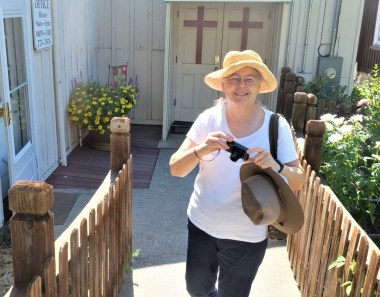
Me and my floppy hat go to Grass Valley

I don’t think I have to tell California readers that Grass Valley is a beautiful place to visit. Gold Rush history, the homes of Lola Montez and Lotta Crabtree, the historic Holbrooke Hotel, a handsome and well-preserved downtown, a grand old Carnegie library, great shopping, and a used book paradise, all go into making this a great day or weekend trip. Add to that Empire Mine State Historic Park and the North Star Mining Museum and you have more than you can take in on one day.

DSCF7642 M

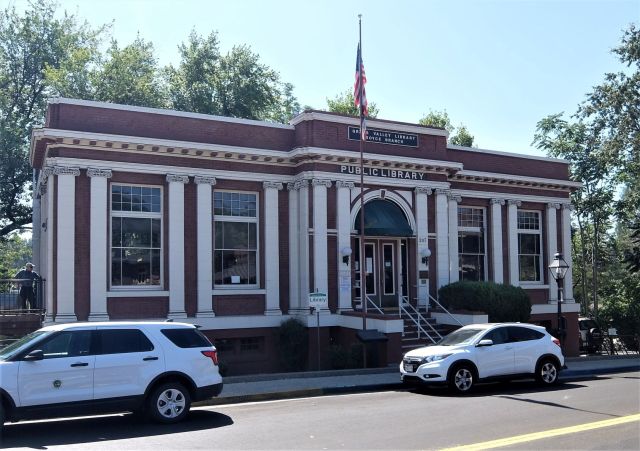
I do like a Carnegie Library (1916) that is still being used as a library.


But not many people visit the Grass Valley Museum, and that’s too bad, because it is another wonderful step back in time.

grassvalley2019 M(53)

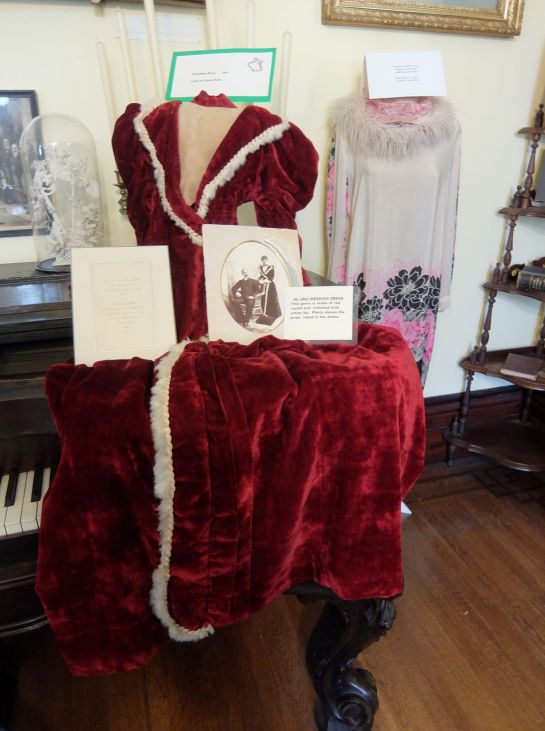
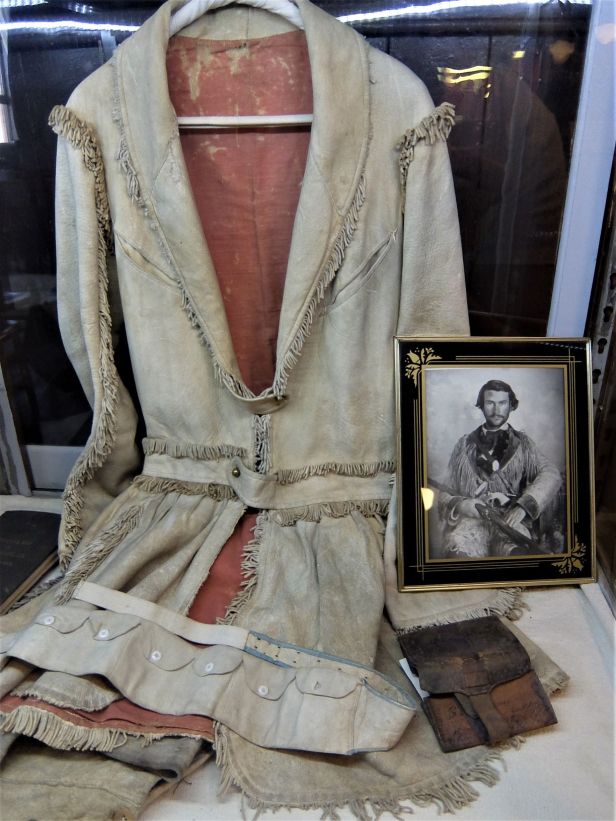
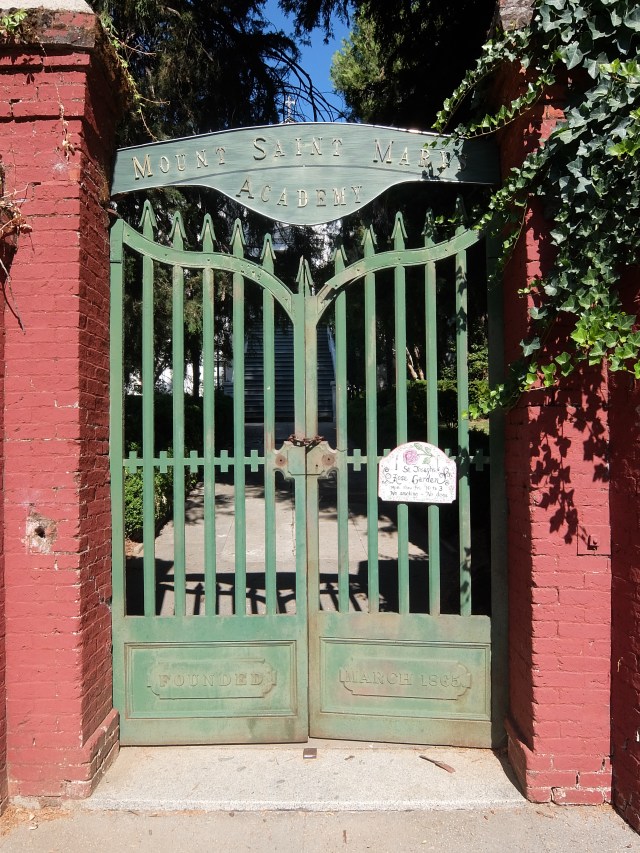
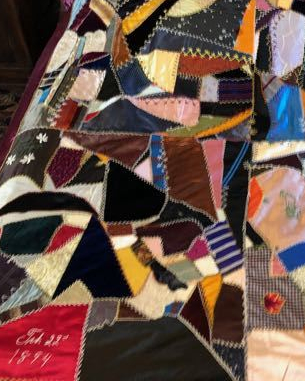
The museum is on the second floor of a building that was once Mount St. Mary’s Convent and Academy, run by the Sisters of Mercy. Today the museum holds mementos of its years as a convent and girls’ school, as well as artifacts from Grass Valley’s gold rush history — Victorian furniture, knick-knacks, and musical instruments, vintage costumes and christening gowns, paintings and china.

DSCF7676(2)

A red velvet wedding dress

DSCF7677 (2)

A buckskin suit that belonged to Simon Storms

DSCF7683 (2)

The bathtub that Lola Montez used to provide water for her pet bear


And be sure to have a Cornish pasty at Marshall’s Pasties. That’s a taste treat you just can’t get anywhere else.

DSCF7659 M


Posted in Uncategorized | Leave a comment

A Quest for a Grotto

Our trip today to Grass Valley was not only a fun day trip to an historic California town, it was also a quest to find where this picture was taken.

marjorie-at-convent-emailsize

This postcard-size photo shows a class of girls at a Catholic school for young women. My husband’s mother is second from the right, front row, just in front of the statue of St. Bernadette. The location is a Lourdes Grotto, a shrine to the Virgin Mary.

Marjorie’s family lived for a time in Grass Valley and I remember her saying that she attended Mount St. Mary’s School, run by the Sisters of Mercy. The school is now the St. Joseph Cultural Center and Grass Valley Museum. The museum is open Wednesday through Saturday, 12:30 to 3:30.

DSCF7629

dscf7628.jpg

DSCF7674

The museum focuses on the convent and school, but also includes many other artifacts from Grass Valley history. It is packed full of paintings, china, furniture, vintage clothing, dolls, and numerous other items. Anyone can find something there to interest them, and the museum is free (though of course they appreciate donations).

It’s a handsome old building, surrounded by lovely gardens, and well worth visiting. The only problem is: it does not have a grotto. As far as the docent knew, it never had a grotto. So where was that picture taken?

A little sleuthing on Internet turned up several photos from the Center for Sacramento History. The grotto was at St. Joseph’s Academy in Sacramento, downtown on G Street between 8th and 9th. Alas, the original school and grotto are no more. But here is a very similar photo that shows the grotto about the same time:

grotto2

We still have some researching to do, to figure out when Marjorie attended which school, because I have an idea that she attended both. It may be time to start looking at school archives and city directories.

Posted in Uncategorized | Leave a comment

Historic Quilts at Bidwell Mansion

DSCF7574

A beautiful quilt show is coming to Bidwell Mansion State Historic Park on September 7th, 8th, and 9th. Annie’s Star Quilt Guild will be sharing historic quilts and reproduction quilts from the 19th and 20th centuries. Quilts will be displayed inside the mansion and in the visitor’s center.

According the the press release from State Parks:

The Bidwell Mansion State Historic Park will provide special quilt tours on September 7th, 8th, and 9th at 10:00 AM only. Quilt tours will cost $6 per guest and are an hour long. Those interested in the quilts exclusively are advised to attend the special quilt tour time to be able to fully experience the remarkable techniques and patterns. Space is limited; please call Bidwell Mansion at 530-895-6144 for reservations. The quilts will be on display during regular tour hours; however, the time to view quilts will be limited.

The quilts in the visitor’s center will be free to see anytime that BMSHP is open. The quilts in the Mansion can be seen on any hourly tour, but the 10 a.m. tours will focus on the quilts, with a guide from Annie’s Star Quilt Guild.

Bee's QuiltOne special crazy quilt made in 1894 by Bee Patrick of Patrick Ranch features a Bidwell Mill flour sack as backing, a real bit of local history.

If you want to use Bidwell Mansion flour sacks as your quilt backing, The General’s Store in the the Visitor’s center has reproductions for sale. They also make great dish towels or pillow covers.

Another one of my favorite quilts is not as old, but is very special to our family.

My husband’s grandmother, Bertha Yeager, favored the “flower garden” quilt pattern that is pieced using little hexagons. I inherited this quilt top, and my daughter Jean finished it by hand-quilting around each little hexagon. You can see how carefully she selected her fabrics. It’s a family treasure.

DSCF7583

See you at the Quilt Show!

Posted in Uncategorized | Leave a comment

“His First Dollar”

See what your teenager thinks of this–

John Bidwell received a letter from S.S. Boynton, editor and publisher of the Oroville Register in 1884, asking him “how he earned his first dollar by work when a boy.” Boynton was writing to a number of prominent local men with this question, intending to publish the answers.

John Bidwell wrote:

DSCF4616 (2)

John Bidwell Collection, California State Library

My first, by chopping hard beech four feet wood at 37 1/2 cents per cord in Ashtabula Co. Ohio. My next, in my 13th year, by hauling wood and charcoal @ $6 per month.

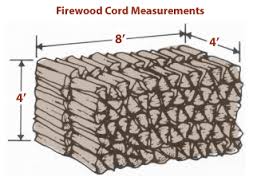
cordSo, for chopping hard beech wood into four foot lengths he received 75 cents for two cords. A cord of wood, in case you haven’t bought one in a while, is a stack 4′ by 4′ by 8′. A hefty amount for a twelve year old boy. I don’t know how long it would have taken him to cut that amount of wood by hand, but it certainly would have built muscle.
How much would his six dollars a month be worth today? To get an idea of how much Bidwell’s 1832 money would buy in 2018, you can go to Measuring Worth, or the Consumer Price Index. The first gives a value of $182, and the other $175. At $10 a hour, that would be 17 or 18 hours of work, and if you have been to the grocery store lately, you can get an idea of how much that would buy. It would certainly be a significant addition to the Bidwell family’s income.

I haven’t found online access to the Oroville Register for 1884, but it’s possible it exists on microfilm. I’ll check Meriam Library next time I am there. I would be interested to know what other replies editor Boynton received and if he published a series of the answers.

And next time your young man is looking for some money to spend, send him out to chop wood. By hand. It builds character.

Posted in Uncategorized | Leave a comment

Bidwell Meets Grant

grant

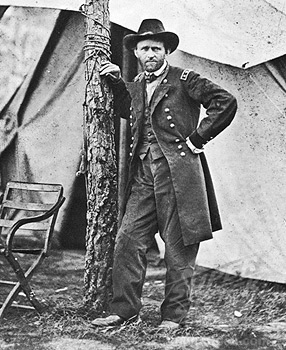
General Ulysses S. Grant.

Even more than President Lincoln, John Bidwell wanted to meet General Ulysses S. Grant. It took some wrangling to get a pass from Edwin Stanton, the Secretary of War, but Bidwell got it, and then he hurried off to meet Grant where he was engaged in one of the bloodiest battles of the war, the Battle of Cold Harbor.

I started on the 11th of June for the Army of the Potomac. Embarking in the Government Mail Steamer at Washington, we descended the Potomac to Chesapeake Bay; thence to the month of, and up York River to the Pamunky; and up the Pamunky to the While House, which was at that time the base of supplies for the army. Fifteen miles over a dusty and uneven road perfectly lined with transportation wagons and troops, took me to Lieut. Gen. Grant’s headquarters, near Cold Harbor, which is about nine miles from Richmond. . . .

Gen. Grant is a man of medium, or a little less than medium stature, possessing regular but by no means imposing features, whiskers inclined to be sandy, blue eyes, hair light brown, and artless and modest in his deportment. Nothing of pretension or ostentation about him. I was informed by members of his staff, who all seemed ardently attached to him. that he would not tolerate anybody about him who put on airs. Everything went to show that he is a plain, practical man. One so wholly unassuming could never rise except by real merit.

The composure and coolness of the man were truly indescribable. It seemed as if nothing could ruffle him or throw him off his balance. To see a man quiet and undisturbed in a country village or at his own fireside would be nothing remarkable. But to see him most perfectly so under the responsibilities of a vast army, in the presence of a powerful and desperate foe. and just on the eve a grand movement. an entire change of base, is indicative of more than common powers. His very looks inspired me with hope and confidence.

ulysses-grant

General Grant, painting by Samuel Bell Waugh

I was anxious to know if the Army of the Potomac was properly sustained by the government. and in answer to my inquiry, if he was supplied with everything he needed. Gen. Grant said he had “plenty.” I then asked “have you plenty of men?” He answered “plenty.”

“There is then,” said I, “no doubt about the result of this campaign. I hope?” Said he, “I can whip Lee with one hand tied.” The same confidence and spirit seemed to pervade the whole army, and my faith in the military ability of Gen. Grant, and the courage and endurance of his army, is such, that I can say to you, fellow citizens, in all confidence, that Richmond will be taken.  

(Weekly Butte Record, 20 August 1864)

Richmond was taken, but not until April 2, 1865.

Posted in Uncategorized | Leave a comment

Lincoln through Bidwell’s Eyes

480px-abraham_lincoln_o-84_by_brady_1864.jpg

Lincoln photographed by Mathew Brady in 1864

John Bidwell believed fervently in the Union cause. In 1864 he was one of the California delegates to the Republican National Convention in Baltimore on June 7-8, where Lincoln was renominated for president.

Upon his return home, he spoke to the Butte County “Lincoln and Johnson Club” on August 10th, 1864, about his experiences. He was pleased to have met with President Lincoln and gave this description, as reported in the Weekly Butte Record:

While at the Capitol. I had the pleasure of several interviews with the President. I found him to be a man possessed of that great and most precious of all natural gifts, plain common sense. Still he was not exactly the man I had expected to see. I had been told that he was continually inclined to jest, and that he did not appear to appreciate the magnitude of our national troubles. Suffice it to say that much injustice has been done Mr. Lincoln in reference to his personal traits. What are called jokes should in most instances be styled apt illustrations. He is calm, reflective, quite fluent in speech, and evidently feels the weight of the responsibility resting upon him. The more I saw of him the better I was pleased, and the more he looked like a President.

(Weekly Butte Record, 20 August 1864)

Posted in Abraham Lincoln, Uncategorized | 1 Comment

Happy Birthday, John Bidwell!

Bidwell1866-w-hatAugust 5th marks 200 years since the birth of John Bidwell, California pioneer and founder of Chico.  So wish him a “Happy Birthday!” (wherever he is), and maybe pay a visit to his home, Bidwell Mansion State Historic Park sometime soon.
Looks pretty good for 200, doesn’t he? Evidently, he was the type that ages well. According to Annie Bidwell’s diary entry for August 5, 1893:

General’s birthday. 74 –
Scarce a gray hair in his rich brown hair, and not a bald place! Dressed in white today he is the picture of freshness, roses on his cheeks & happiness in his eyes, and fun & wisdom in his conversation.

That “rich brown hair” with “not a bald place” is certainly better than most men in their 70s can claim. It must have been all the casaba melons he ate.

DSCF7369

The Bidwell Mansion Association had a party for General Bidwell on Sunday, August 4th. Here are a few photos from the event:

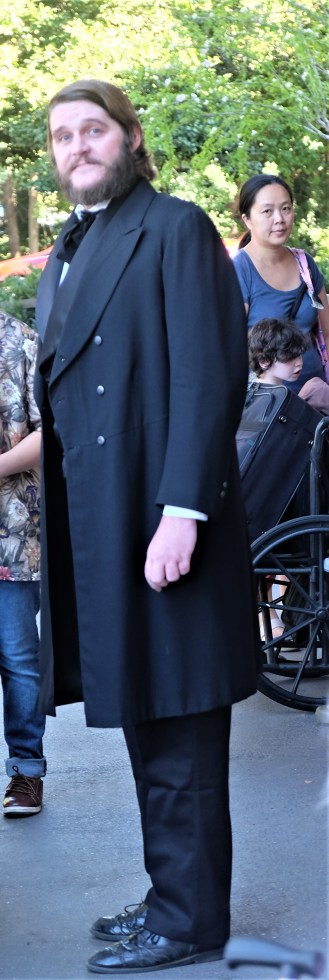
bidwell-200- (75)Nick Anderson is the man himself.
Nick has portrayed John Bidwell since 2013. He delights in being the General and is always ready and willing to play the part. The BMA is happy and grateful to have him on board.


bidwell-200- (70)


Robyn Engel is our current Annie Bidwell. It’s not easy to find a woman who can measure up to Annie in height, so we are very glad to have Robyn on the crew.

Robyn and Nick also played John and Annie in the Pioneer Day Parade.


Free ice cream and cake were served, and Inday’s provided Filipino food for those who wanted to purchase it. There were games on the lawn, photo opportunities with John and Annie, and music by the Chico Community Band.

Inside Bidwell Mansion visitors viewed three historical authentic vignettes.

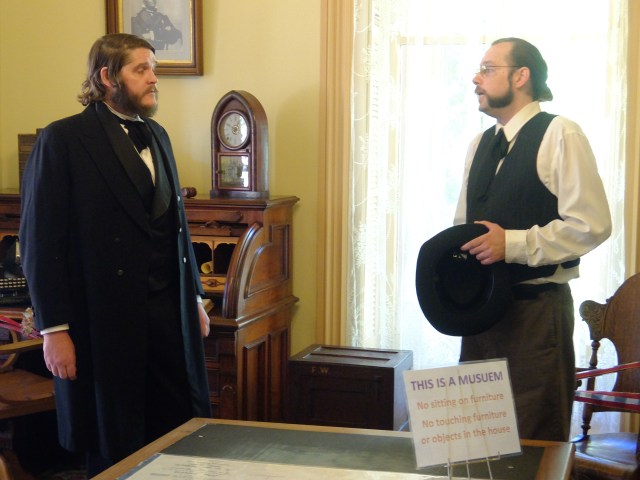
General Bidwell (Nick Anderson) discussed cannery workers and chewing gum with his cannery foreman, Mr. Field (Mike Swann).

DSCF7374

Annie’s friend Belle Royce (Lisa Saldano) asked Annie (Robyn Engel), “Why are you such a fraud?” (Was she?)

DSCF7373 (2)

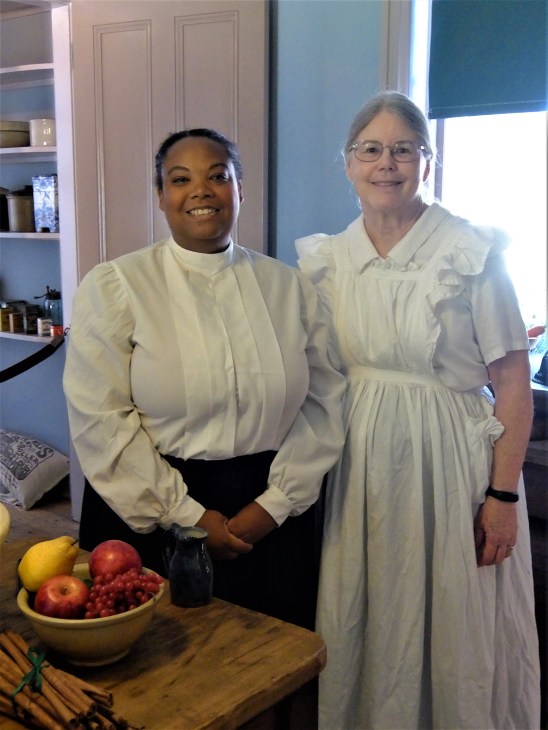
Ruby Daily, Annie’s secretary (Marquita Goodman), got the better of Florence Proud, the cook (Nancy Leek), in the kitchen.

DSCF7375 (2)

The Bidwell Mansion Association owes a big Thank You to everyone who helped out, participated, and enjoyed the birthday party.

bidwell-200- (78)

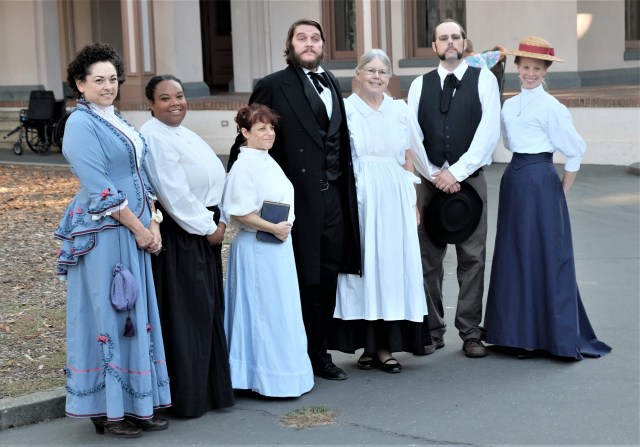
Left to right: Lisa, Marquita, Robyn, Nick, Nancy, Mike, and Adrienne Glatz, president of the BMA.


Posted in Uncategorized | 2 Comments