On the Trail — August 14-15, 1841

Traveling southward on the Bear River, toward the Great Salt Lake:

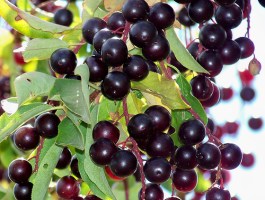
Saturday, 14th. Left the river on account of the hills which obstructed our way on it; found an abundance of choke cherries, many of which were ripe. Road uncommonly broken, did not reach the river; distance about 14 miles.

Bidwell and friends would have recognized and welcomed chokecherries; they grow all chokecherriesover North America. Here is a website about preparedness and edible wild foods where you can learn more. At this point in their journey, in mid-August, is when chokecherries ripen and are ready to pick.

Sunday, 15th. Continued our journey over hills and ravines, going to almost every point of the compass in order to pass them. The day was very warm — the grass had been very good, but it was now very much parched up. Having come about 15 miles, we encamped on a small stream proceeding out of the mountains at no great distance from us. But we were surprised to see it become perfectly dry in the course of an hour; some of the guard said there was plenty of water in it about midnight.

They were still waiting for the men who had gone to Fort Hall to return with provisions and information.

Posted in Uncategorized | Leave a comment

A Visit to Coloma

DSCF1601

The original site of the sawmill on the bank of the American River.

Coloma is the site of Marshall Gold Discovery State Historic Park, where James Marshall in January 1848 first found flecks of gold in the tailrace of the sawmill he was building for Captain John Sutter. My husband and I took our two grand-daughters on an excursion there yesterday.

For California history enthusiasts, it is a great place to visit, although I do not recommend it on a hot August afternoon. A variety of buildings and mining equipment are spread throughout the park. Walking between them in the heat is desiccating, and leads to spending too much time in the air-conditioned gift shop.

DSCF1598

Today’s sawmill is only a short way from the site of the first one.

The last time I was here, more than twenty years ago, they were working on a replica of Sutter’s Sawmill. The completed mill is a fine sight. The original was in the process of being built when Marshall found gold. His Mormon workers stayed on to finish the job before they went looking for gold for themselves, and then made their way over the Sierras to seek their families and their church at the Great Salt Lake.

DSCF1614

The Mormon Workers Cabin

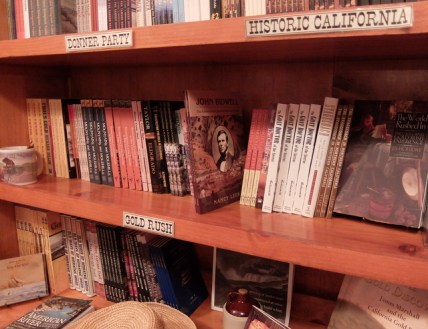
Some of the buildings are replicas, but many are original. The two stone Chinese stores with iron doors, the Mormon workers cabin, the remains of the jail, the Monroe home and the blacksmith shop are all authentic. There is a fine museum, replica Indian dwellings, and a Nature Center. Pretty much something for everyone. We had a good time, in spite of the heat.  And I found my book for sale in the gift shop!


DSCF1613

The museum has a display of artifacts belong to James Marshall: Marshall’s rifle (a fine-looking piece), Marshall’s walking stick, Marshall’s milk can. And . . . Marshall’s batea, the first batea I’ve ever seen.


If only John Bidwell had seen this batea, the Gold Rush might have happened much sooner, and John Bidwell and his friend Pablo Gutierrez would be heralded as the discoverers of gold. Click here to read the story of the batea.

DSCF1605

That’s a batea!


Posted in Uncategorized | Leave a comment

On the Trail — August 11-12, 1841

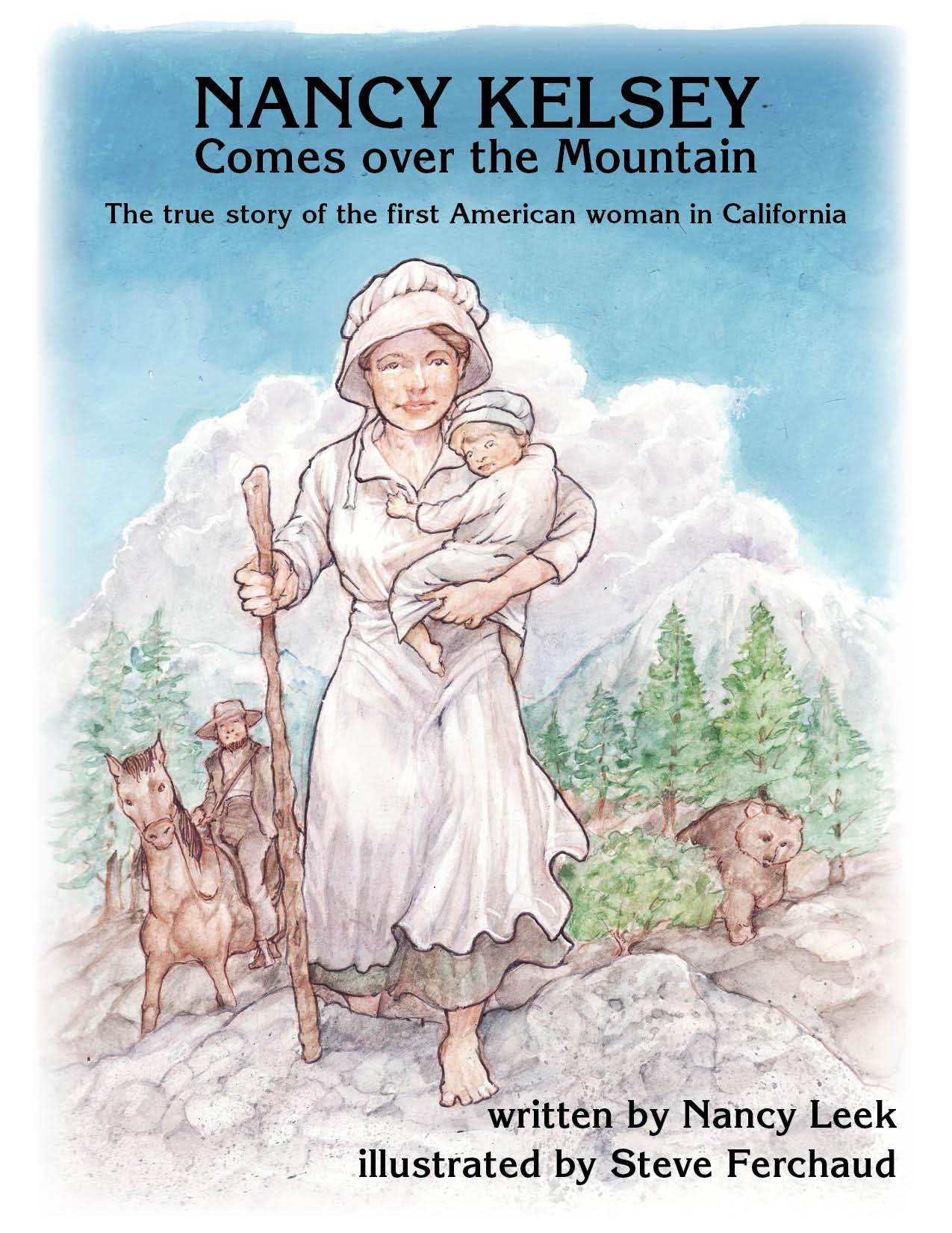
After traveling 6 miles the morning of August 11th, the company halted at the parting of the ways. Father DeSmet and his missionaries, along with their guide Tom Fitzpatrick were going on up into Idaho. Half the the emigrants in Bidwell’s group decided to go along with them and continue to Oregon, this being the safer route. Bidwell recorded that “the California company now consisted of only 32 men and one woman and child, there being but one family.” The family was Ben and Nancy Kelsey and their little girl.

Oregon Trail

Monument along HW 28 designating the location of the “parting of the ways’ for those emigrants who chose to take the Seminole Cutoff. From https://walkingtheoregontrail2012.com/

Four men out of the company went as far as Fort Hall with the Oregon group to seek provisions and, if possible, a guide. The California company proceeded a few miles down the Bear River and camped to await their return. John Bidwell and Jimmy John decided to go fishing. I have combined here his journal entry and his later account in The First Emigrant Train to California.

I, in company with another man (J. John), went some distance below the camp to fish in the river; fished sometime without success-–concluded we could spend the afternoon more agreeably. The day was uncomfortably warm, could find no place to shelter us from the burning sun, except the thick copses of willows–these we did not like to enter on account of the danger of falling in with bears. (Journal)

Looking across the valley they could see a mountain with inviting patches of snow.

Supposed the snow not more than 4 miles distant; set out without our guns knowing they would be a hindrance in ascending the mountain. (Journal)

They walked and walked, but the mountain never seemed to get any closer. Bidwell suggested they return to camp, but Jimmy gave him a scornful look and kept walking.

I called to him to stop, but he would not even look back. A firm resolve seized me to overtake him, but not again to ask him to return.

The rocks were sharp, and soon cut through our moccasins and made our feet bleed. But up and up we went until long after midnight, and until a cloud covered the mountain. (The First Emigrant Train to California)

In the dark, above the timberline, they crawled under a stunted tree and lay there shivering. They had no coats or blankets to keep them warm.

Day soon dawned, but we were almost frozen. Our fir-tree nest had been the lair of grizzly bears that had wallowed there and shed quantities of shaggy hair. The snow was still beyond, and we had lost both sight and direction. But in an hour or two we reached it. It was nearly as hard as ice.  (The First Emigrant Train to California)

John Bidwell cut a large piece out with his knife and wrapped it in his handkerchief. They decided to take a shorter but steeper route back to the camp.

At first the way was smooth and easy but soon we were sliding down in the snow and mud with our buckskin suits wet and bedraggled. This way soon led into a most rugged canyon and thickets so dense that it became impossible to pass through them except in the trails of the grizzly bears. . . . We carried our sheath knives in our hands at every step, for we knew not at what instant we would meet a bear face-to-face. (A Journey to California)

snow

Steve Ferchaud’s illustration of the snow adventure.

The two footsore adventurers limped across the hot valley until at last they came into camp about noon.

They supposed without a doubt, that the Blackfeet had got us, had been up all night in guard, every fire had been put out, they had been out twice in search of us and were about to start again when we arrived. We were received with a mixture of joy and reprehension.

Their first questions were “Where have you been?” “Where have you been?” I was able to answer triumphantly, “We have been up to the snow!”  and to demonstrate the fact by showing all the snow I had left, which was now reduced to a ball about the size of my fist. (The First Emigrant Train to California)

He was lucky that someone didn’t beat him over the head with that chunk of ice.
Posted in Uncategorized | Leave a comment

On the Trail — August 7, 1841

Traveling through the Bear River Valley:

Saturday, 7th. This morning we were obliged to make an inland circuit from the river, the bluffs approaching so near the river as to rend it impossible to continue along its banks. We, however, reached it again by a most beautiful defile, and beautifully watered by a small rivulet proceeding from a spring. In the afternoon we again left the river on account of the hills, and did not reach it again until dark. The bluffs were exceedingly high, and no person could ever believe that wagons ever passed these huge eminences of nature, did he not witness it with his own eyes. But the pleasing view we had from their top, just as the sun was going to sleep behind the western mountains, paid us for all our trouble.

Over and over, Bidwell uses the word “beautiful” as he continues this description of their trek, where the Bear River meanders along the Wyoming-Idaho-Utah border. After traveling across the arid landscape of western Wyoming, the Bear River valley was an oasis of good water, plentiful grass, and abundant game. He mention a “beautiful little lake” which they could see to the south, and if that was Bear Lake, then it gives us a pretty good idea of where they were on August 7th.

Posted in Uncategorized | Leave a comment

Happy Birthday, John Bidwell.

John Bidwell was born oBidwell1866-w-hatn August 5th, 1819 in Chautauqua County, New York, near the shores of Lake Erie. Today is his 197th birthday.
As he noted in his diary in 1898:
BIRTHDAY (79th) – Florence had an extra good dinner.

The Bidwell Mansion Association will be holding a somewhat belated birthday party for General Bidwell on Sunday, August 28th, 4-6 p.m.

Join us at his home, Bidwell Mansion, for fun and tours, food and music, dramatic vignettes and games on the lawn.

Happy Birthday to the Prince of California Pioneers! (as one of his biographers called him).

Posted in Uncategorized | Leave a comment

On the Trail — August 4-6, 1841

From John Bidwell’s Journal:

Wednesday, 4th. Did not travel.

Well, that’s succinct. They had just struggled over a high divide to get from the Green River to the Bear River. They had come to a valley with water and grass for the livestock. It was a good place to stop and take a break. Jimmy John, in his journal, had more to say.

Today we did not move from the camp, but lay by and caught a good number of trout, some of which were 18 inches in length. There is a great number wild geese here and other fowls, and antelopes.

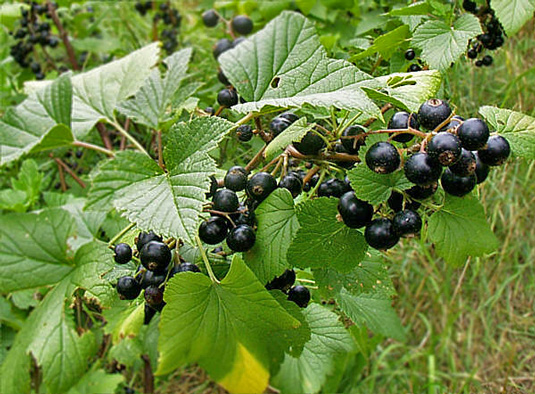
Thursday and Friday, the 5th and 6th, they continued downstream, continuing to enjoy trout, wild geese, and antelope. Bidwell noted on the 6th that they “found many kinds of wild currants, red, black, yellow &c., some of which were excellent quality.”

They were doing well, making 16 to 25 miles a day. But tougher times lay ahead.

savage-landscape-1

Bear River Valley–a photo taken by Charles R. Savage in 1869.

Posted in Uncategorized | Leave a comment

On the Trail — July 30, 1841

Wedding bells on the Oregon Trail!

Friday, 30th. Traveled about 5 miles and encamped. Guess what took place; another family was created! Widow Gray, who was sister to Mrs. Kelsey, was married to a man who joined our Company at Fort Larimie. His right name I forget; but his everywhere name, in the mountains, was Cocrum. He had but one eye–marriage ceremony performed by Father De Smet.

His “right name” was Richard Phelan, and he was a fur trapper who, with his one eye, spotted the widow Gray and took a fancy to her, which is probably the reason he joined the Bidwell-Bartleson Party at Fort Laramie. His courtship was successful. Since Phelan is an Irish name, he was no doubt a Catholic, and thus the couple was married by Father De Smet, and not by the Rev. Joseph Williams.

The man’s name was Phelan, but his nickname, or “everywhere name” as Bidwell says, was Cockrum.  Or maybe it was Cockrel—that’s the name Jimmy John records. I have no idea what the origin of that name would be.

I haven’t found a first name for Mrs. Gray, but she was the sister of Samuel Kelsey’s wife Lucy, who was traveling with her husband and three children. Mrs. Kelsey was undoubtedly happy to have her sister’s help with the kids. Both sisters with their families would go on to Oregon.

Lucy Kelsey was only 23 years old at the time, so the “Widow Gray” must have also been in her twenties. The Rev. Mr. Williams mentions the marriage, and says that Mrs. Gray “had left her husband in Missouri,” alive or dead he doesn’t say. What became of the couple is anyone’s guess.

Posted in Uncategorized | Leave a comment

On the Trail — July 26-29

Monday, 26th. Left Green river – moved off in a W. direction – distance 12 miles — encamped on a branch of Green river called Ham’s fork. Land high, dry, and barren, except upon the streams, which afford grass in abundance; also black currants, which though not delicious are acceptable.

The next day Bidwell recorded nothing more than “Advanced upstream about 12 miles,” and then he dittoed this entry for the next two days. Nothing very exciting going on. They were in the southwest corner of what is now Wyoming, approaching the Wyoming-Idaho/Utah border. The weather was hot, and the land dry, but the river provided water and grass for their livestock.

black_currant_1

Wild Black currants

Black currants, even if they were not very sweet or delicious, would have provided vital nutrition for the travelers. Black currants have an extremely high level of vitamin C, as well as good levels of potassium, phosphorus, and iron. Excellent for keeping scurvy at bay, and scurvy is always a danger when people are living primarily on meat, as these pioneers were.

Posted in Uncategorized | Leave a comment

On the Trail — Prices

John Bidwell and friends did some trading when they met with Fraeb’s company of hunters and trappers at the Green River rendezvous. In his journal Bidwell records some of the prices for goods:

I will not omit to state the prices of several kinds of mountain goods. Powder which is sold by the cupful (pint) is worth $1 per cup. Lead 1.50 per lb., good Mackanaw blankets 8 to 15 dollars; sugar $1 per cupful; pepper $1 also; cotton and calico shirts from 3 to 5$; rifles from 30 to 60. In return, you will receive dressed deerskins at $3, pants made of deerskins $10, beaver skins $10, moccasins $1; flour sold in the Mts. at 50 cents per cupful, tobacco at $2 per lb., butcher knives from 1 to 3$. A good gun is worth as much as a horse; a cap lock is preferred, caps worth $1 per box.

I don’t imagine much cash traded hands. Instead the men would have been bartering. Perhaps Bidwell’s group still had items like sugar and pepper, gunpowder and lead to sell, and the mountain men had deerskins, moccasins, and flour and tobacco for those who had run out of supplies. Prices were high, but where else could they go to trade? If you needed it, you paid for it.

Posted in Uncategorized | Leave a comment

On the Trail — July 24-25, 1841

Saturday, 24th. Remained at this encampment and continued our traffic with the hunters. Chiles sold his oxen, 2 yoke, and wagon, another also was left.

The hunters, or fur trappers, bought all the alcohol brought by Bartleson and others, as well as other items, like Chiles’s wagon and ox team. Bidwell doesn’t say what they used to pay for it. It seems unlikely that they had money, but they probably had goods the travelers could use, such as weapons, ammunition, and clothing. Maybe this is where Bidwell picked up the buckskin suit he later says he was wearing.

The Rev. Joseph Williams described the party of hunters in his recollections:

We lay on the Green River bottom, where we fell in with Mr. Frap who was on a hunting expedition. This man, with nine or ten of his company, was afterwards killed in a skirmish with the Sioux Indians. His company was mostly composed of half-breeds, French, and Dutch, and all sorts of people collected together in the mountains, and were a wicked, swearing company of men.

In “The First Emigrant Train to California,” Bidwell relates what became of Fraeb’s party.

Years afterwards we heard of the fate of that party; they were attacked by Indians the very first night after they left us and several of them killed, including the captain of the trapping party, whose name was Frapp. The whisky was probably the cause.

Indeed, the alcohol and the resulting drunkenness would have drawn the attention of Indians. And since by the time Bidwell wrote this recollection he was a Prohibitionist, he does not fail to point the moral.

Posted in Uncategorized | Leave a comment