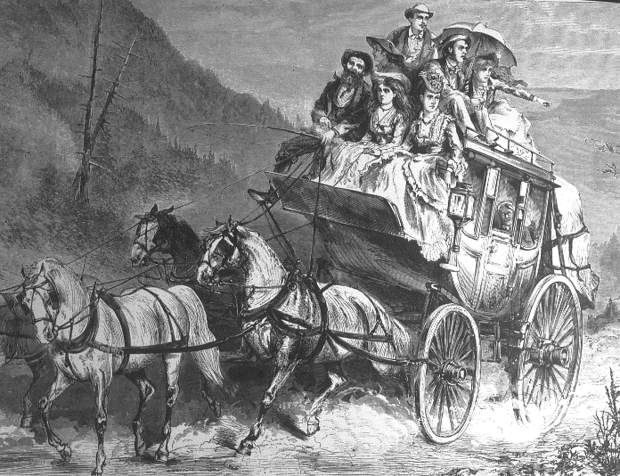
Joe Finnicum, the Chico Stage Driver

stagecoachharpers

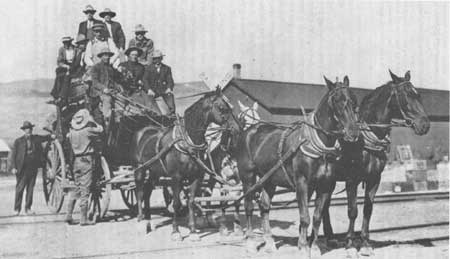
Pres Longley wrote a poetical tribute to Joe Finnicum, a local stage driver. The poem appeared in the Chico Enterprise, on December 23, 1892.

JOE FINNICUM IN POETRY

Joe Finnicum, the Jehu,
Who drives upon the grade,
From Chico up to Powelton,
Moves onward undismayed.

Joe goes off when he’s loaded,
Goes off just like a gun,
And his team is never goaded,
But dash off just for fun.

He likes to hall the widows,
For they’re talking all the time,
And Joe still holds that kissing
Should not be called a crime;

And when the pretty maidens come,
So handsome, tall and slim,
They climb upon the forward seat,
And ride along with him.

They say they like to ride with Joe,
For his rig is nice and “nifty,”
They say he loves the feminines,
From fifteen up to fifty;

He holds the pretty schoolma’ms on,
While dashing ‘round the curves,
And whatever else he may not have,
You bet he’s got the nerves.

The term “Jehu” for a fast driver comes from the Bible; Jehu was a king noted for his chariot-driving. So we read in Kings 9:20 “the driving is like the driving of Jehu the son of Nimshi; for he driveth furiously.” In fact, Jehu even drove right over the body of the notorious queen Jezebel. Joe is a different sort of jehu; he is beloved of the ladies.

Joe Finnicum was a real person.  “Finnicum the stage-driver” is mentioned in a news story in the Sacramento Daily Union from August 14, 1886.

A Joke with a Back Action.—The Chico Register has the following : Samuel West, the forger, and another man were sent down from Chico some days ago, by Finnicum, the stage-driver. The Deputy sheriff at Chico did not think to say which was West and which was not to Finnicum, and the shrewd rascals noticing this, put up a job on the county officials. They changed names and offenses for the time being, and the ” vag.” answered to the name of West when he was spoken to. At the end of fifteen days the ” vag.” was turned loose, as he had served out his time, and yesterday, when West was called up to plead he stated that he was not West, but that he had skipped the country under his —the ” vag’s” names of Hines. Deputy Sheriff Guidery at once telephoned to Chico asking for a description of the two men, and when the reply came sure enough West was gone, and the ” vag.” was there in his place. He thought it a rich joke on the officers, but District Attorney Gray turned the joke on him by having him indicted for assisting a prisoner to escape, and for the offense he is liable to be sent to State Prison for the next five years.

Posted in Stagecoaches | 2 Comments

Bidwell’s Admission Day

In September 1889 John Bidwell wrote to his friend E. Nelson Blake:

Your memory is good — true, 39 years ago we brought the news of California’s admission into the Union. Where are those who were our fellow passengers? Except for yourself, I cannot recall the name of one living! We ought to be thankful that our lives have been spared to behold the wonderful march of events of this prolific age!

Unfortunately, Blake’s letter to Bidwell recalling the great day does not survive. Blake had a very good memory for his California days, and it would be nice to have his recollections.

Headline of the Daily Alta California, Extra Edition, Oct. 18, 1850.

Headline of the Daily Alta California, Extra Edition, Oct. 18, 1850.

Both were passengers on the steamship Oregon, arriving on October 18, 1850 with the news that California had become the 31st state on September 9th. Bidwell was traveling in a first class cabin, while Blake, a farm boy on his way to the goldfields, was in steerage.

Bidwell carried with him the statehood documents. Traveling with him were his Maidu valet Rafael, Samuel J. Hensley, H.A. Schoolcraft, who had traveled to Washington with Bidwell, Mrs. Elijah Crosby and her daughter Helen, and Bidwell’s brother Thomas. By 1889 all these but Helen Crosby, who had married Hensley, had passed away.  And John Bidwell, who had been Hensley rival for her hand, had forgotten all about her.

The Oregon steamed into San Francisco Bay, firing cannons and decorated “from stem to stern and from the taffrail to the maintop” (as the Daily Alta California reported) with fluttering flags to announce the long-awaited news. Jubilation erupted throughout San Francisco as the citizens celebrated with bonfires, marching bands, booming cannons, and all-night balls.

We don’t make much of Admission Day presently, which is too bad. If you want to celebrate, there is an event on Wednesday, Sept. 9th at 11:00 a.m. in Oroville at the Liberty Pole at Montgomery and Huntoon Streets.

Posted in Uncategorized | Leave a comment

Stage Drivers: The Beaus of the Road

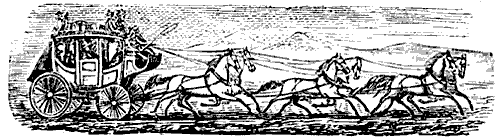
awf_stagecoach-illustration_500x140More of the recollections of D. F. Crowder, from “The Eventful Yesterdays: The Story of Early Chico,” Chico Enterprise, January 1, 1918.

The big event of the day in ’56 at the Bidwell Rancho was the arrival of the stage coaches which ran regular up the valley from Sacramento. They were great, lumbering Concord coaches with sometimes four, but more often six horses to them. The animals were changed about every ten or twelve miles and the time made by these coaches was good. One came from the north and one from the south each day. When it came time for them to arrive little knots of men would gather in the road and peer north and south for a glimpse of the rising dust. Then someone would shout “Here she comes!” and soon the galloping horse covered with foam would dash up in front of the hotel.

A Concord coach in Idaho.

A Concord coach in Idaho.

There would be a groan of the brakes, the stage would stop and tired dust-covered travelers would alight to stretch their legs and ask the news. But it was not for long for the horse would be changed rapidly, the mail was thrown into the boot and away with the crack of a whip the horses would dart down the long trail which soon was lost in the mass of oaks which lined its path.

Famous stage driver George Monroe.

Famous stage driver George Monroe.

I learned in the years that followed that stage drivers were top crust. They were the beaus of the road and women passengers vied with each other to ride with them. They were generally dressy, good-looking young fellows, and wore long leather gauntlets on their wrists and little white Stetson hats. In later years whenever there was a dance in Chico or any social affair the stage drivers always lead the grand march or were the lions of the evening. And this not without reason, for in those days stage driving required a deal of skill and knack and besides some personal bravery for stages were constantly being held up and robbed, often with an attendant lass of life.

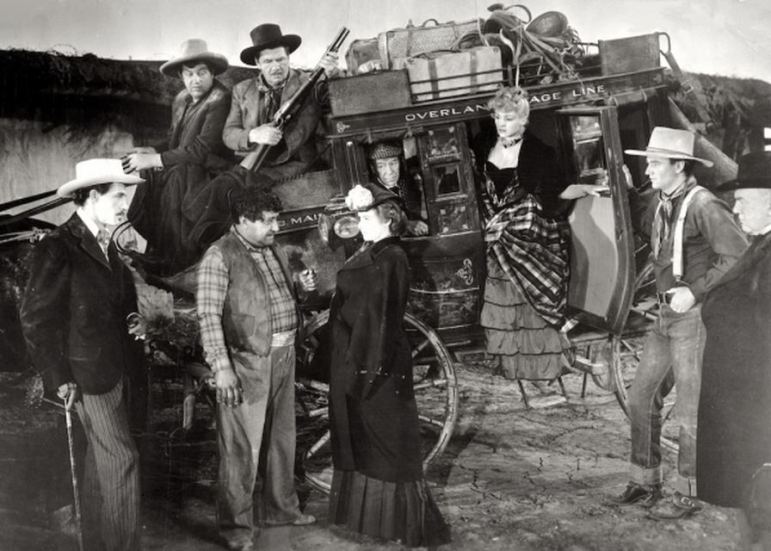
And finally, who could resist a still from the classic movie Stagecoach, with Claire Trevor and John Wayne, directed by John Ford.

stagecoach

Posted in Stagecoaches | Leave a comment

The Sight of a Pretty Woman

A story told by D. F. Crowder in the Chico Enterprise, December 29, 1917—

Of women in those days there were very few. In fact, women were somewhat of a curiosity. Men would go many miles just to look at a woman and when a woman, a pretty one, came in to camp, the news flew for miles . . .

I remember one woman, a Mrs. A. M. Sadorus, who afterwards settled on Rock Creek and died later in Nevada, who told about the curiosity her presence caused when she came West. . . . It was mooted about that a very comely woman was in camp and one miner, more venturesome than the rest, said his eyes were just watering for the look of a pretty woman  . . .  it would do his heart good to see one of God’s fair creatures again. So he went to the Sadorus camp where Mrs. Sadorus and her husband were resting for a few days. Mrs. Sadorus was in the tent and the miner who wanted just to see her approached the husband who stood outside.

“See here, pard,” said the miner, “If you don’t object I’d like just to look at your woman. I ain’t seen one since I left home, back in the States five years ago. No offense meant and you can tell her for me that if she will come out of that thar tent and let me look at her for just one minute I’ll give her ten dollars in dust.”

Sadorus, being a man of humor and appreciating the situation, and likewise acknowledging the reason for the miner’s whimsicality, laughingly told his wife about it. Mrs. Sadorus entered into the spirit of the occasion and putting on a pretty dress came from the tent and stood before the enraptured miner who had removed his hat in awe.

“God Almighty,” he said, “you air a purtty woman. It does my old heart good to see one of your kind again.”

For a full minute the old miner gazed upon the lovely vision and, pulling out his wallet, he handed her a $10 pinch of dust and took his departure.

I have heard Mrs. Sadorus tell this story many times and there are those here yet who will vouch for its truth.

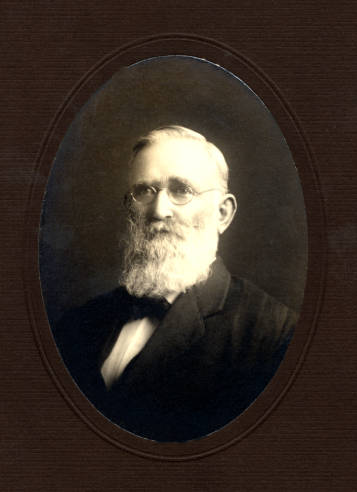
D.F. Crowder 1909. Photo courtesy Special Collection, Meriam Library, CSUChico.

D.F. Crowder 1909. Photo courtesy Special Collection, Meriam Library, CSUChico.

D.F. Crowder came to Butte County in 1856 at the age of 12. He became a farmer in the area of Mud Creek. I suppose the event related here happened before he arrived. Women were exceedingly scarce in the mining camps and diggins.

From December 28, 1917 to January 28, 1918 the Chico Enterprise printed his recollections in a series entitled The Eventful Yesterdays: The Story of Early Chico. Some very interesting reading there — I’ll share some more soon.

Posted in Uncategorized | 2 Comments

Casaba Melons

I found in the California State Library the original letters that accompanied the shipment of melon seeds to John Bidwell. There are two letters, one form letter addressed to John Kennedy (Annie’s brother) and a hand-written one to General Bidwell.

Letter from Department of Agriculture, John Bidwell Papers, California State Library.

Letter from Department of Agriculture, John Bidwell Papers, California State Library.

The text reads as follows:

Sir:   I have the honor to inform you that I have this day sent to your address three varieties of Melon seeds from Asia Minor, received from the Governor General of Smyrna. They are sent for experiment. Please report results.

(Also please find two prs from the Ionian Islands.)

When received please acknowledge.

Respectfully yours, etc.

Horace Capron,  Commissioner

Letter to John Bidwell from S. Dean. John Bidwell Papers, California State Library.

Letter to John Bidwell from S. Dean. John Bidwell Papers, California State Library.

The text:

Genl Bidwell

Dear Sir

Herewith I send you 8 prs. melon seed all rare – The Ionian Melon cost the Department $120 a lb. gold. So it should be very choice.

I take the liberty of sending these seeds as I think it due to California that our farmers have some choice seeds, and I thus avail myself of my position to supply them.

Though so late in the season that irrigation may be necessary yet “better late than never.”

Respectfully yours,

  1. Dean

Please report results to Commissioner.

The seeds came in May 1869 and Bidwell immediately planted them, with great success.I don’t know what the abbreviation “prs.” means, and maybe I have it wrong.

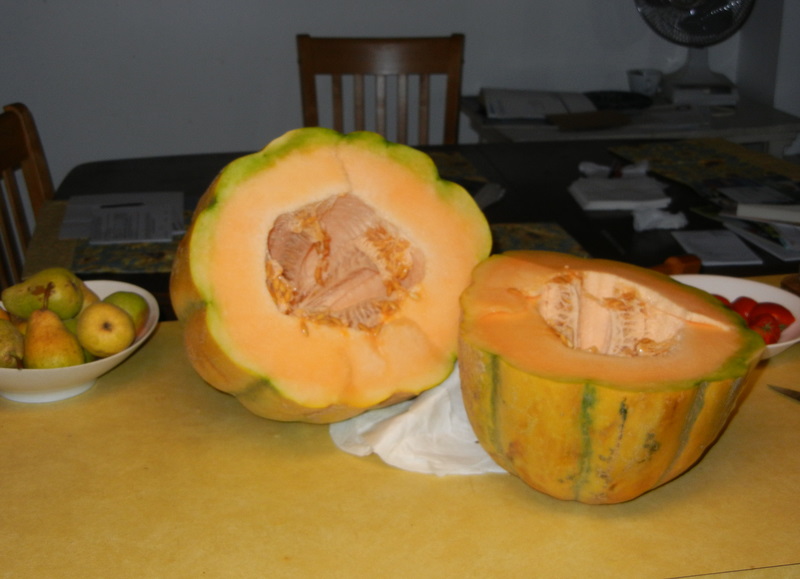
I have grown Casaba melons in the past, but I didn’t plant any this year, because of the drought. They take a lot of water. Bidwell had his melon field situated at the end of a flume. Here is a picture of a melon I grew. They are delicious — the best!

DSCN0538

Posted in Casaba melon | 1 Comment

How NOT to Treat Historical Materials, or, The Librarian’s Despair

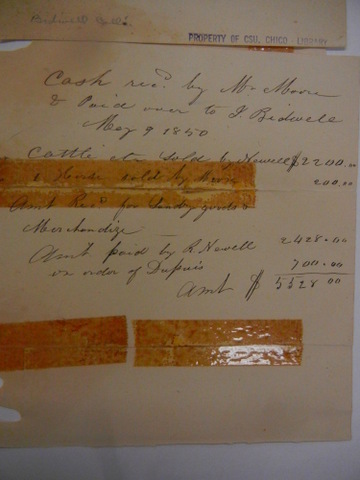
1849-1850 Farm Account for Rancho Chico courtesy Special Collections Meriam Library CSUChico

1849-1850 Farm Account for Rancho Chico courtesy Special Collections Meriam Library CSUChico

DSCN4544 DSCN4545 DSCN4546Here are four pages labeled Farm Account from Rancho Chico for 1849 and 1850. The paper is very brittle and fragile, and I am grateful to George Thompson for allowing me to handle the originals.

The second image here is the reverse side of the first page. Since the pages had been folded in thirds, they were cracking along the fold lines, so someone mended them with Scotch tape. They were probably mended with the tape before they ever came to Special Collections at Meriam Library.

This is so sad! Look how the tape has discolored the page. It probably can’t be taken off now.

The account book starts with Nov. 16, 1849. Paid to Mr. Grry [Grey] $1.53. I am not sure whether that is one dollar and fifty-three cents, or one hundred and fifty-three dollars. Whoever was writing this always seems to put in a dot if the amount is three digits.

Next:

Paid to Mr. Potter for Beef 7. Paid for geting wood 2.

Further down the page:

one mule 40.   two horses sold $3.85. Bilding of shed 1.25.

This handwriting is a bit tricky to read. The other side is easier. I don’t think either one is John Bidwell’s hand. He had other men working for him and helping keep the books.

The third page lists Number of Cattle and Horses Sold by R. Newell for the Ranch, and is dated Feb. 12th, 1850. A lot of Bidwell’s business at this time was the buying and selling of cows, oxen, horses, and mules. With a total of $2350 on the sales, it was evidently a good business.

If you ever have any old papers — letters, books, or other documents — and they are cracked and splitting, please please please do not mend them with ordinary scotch tape. Take them to the library and ask about the best way to conserve them. Or just put the pieces in a folder and store them in a safe place. Doing nothing to old papers is better than trying to mend them with the wrong materials.

Posted in Uncategorized | Leave a comment

The Rubbish of Spiders No Mortal Supposes

I was vacuuming up cobwebs around the windows this morning, and it recalled to mind this phrase:

The rubbish of spiders no mortal supposes

which is a line from The Housewife’s Lament, also known as the The Housekeeper’s Tragedy. or The Poor Old Woman. The entire poem goes like this:oldllady-sweep_mth

One day I was walking, I heard a complaining
And saw an old woman the picture of gloom
She gazed at the mud on her doorstep (’twas raining)
And this was her song as she wielded her broom

Oh! Life is a trial and love is a trouble
And beauty will fade and riches will flee
Pleasures they dwindle and prices they double
And nothing is as I would wish it to be.

There’s too much of worriment goes to a bonnet
There’s too much of ironing goes to a shirt
There’s nothing that pays for the time you waste on it
There’s nothing that last us but trouble and dirt.

In March it is mud, it is slush in December
The midsummer breezes are loaded with dust
In fall the leaves litter, in muddy September
The wall paper rots and the candlesticks rust.

There are worms on the cherries and slugs on the roses
And ants in the sugar and mice in the pies
The rubbish of spiders no mortal supposes
And ravaging roaches and damaging flies.

It’s sweeping at six and it’s dusting at seven
It’s victuals at eight and it’s dishes at nine.
It’s potting and panning form ten to eleven
We scarce break our fast ere we plan how to dine.

With grease and with grime from corner to center
Forever at war and forever alert.
No rest for a day lest the enemy enter
I spend my whole life in struggle with dirt.

Last night in my dreams I was stationed forever
On a far distant isle in the midst of the sea.
My one chance of life was a ceaseless endeavor
To sweep off the waves as they swept over me.

Alas! ‘Twas no dream; again I behold it
I see I am helpless my fate to avert
She lay down her broom, her apron she folded
She lay down and died and was buried in dirt.

Although none of us are making bonnets anymore, and few of us iron shirts (I can remember having to iron my father’s dress shirts though), still some of these troubles remain with us.

The midsummer breezes are loaded with dust — they are if you live across the road from an orchard, like I do. In fall the leaves litter — they still do. There are worms on the cherries if the jays don’t get them first. I don’t have mice in the pies, but we had to set traps for the mice in that were eating our tomatoes.

And if you have a large family or many guests, then the sweeping, victuals, dishes, potting and panning go on and on, so that We scarce break our fast ere we plan how to dine.

So if you ever feel burdened with housework, if you feel that:

Pleasures they dwindle and prices they double
And nothing is as I would wish it to be.

remember that you have something in common with our 19th century sisters.

The poem first appeared in print (unattributed) in a magazine in 1871, and in 1872 was published in Out-of-Door Rhymes by Eliza Sproat Turner. It has been set to music, with the second verse as the chorus. One version by Anne Hills and Cindy Mangsen can be heard here.

Posted in Uncategorized | Leave a comment

The Wimmer Nugget

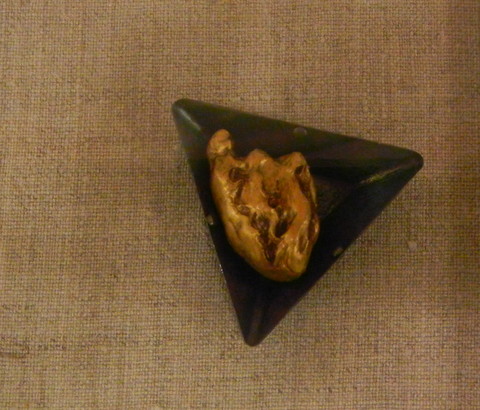
In this post, I wrote that the first gold nugget found by James Marshall is now in the Smithsonian Institution. Certainly they have one of the first pieces of gold found at Coloma. But another piece of gold has an equally good claim, and that is the Wimmer Nugget, now at the Bancroft Library.

The Wimmer Nugget, on display at the Bancroft Library, University of California, Berkeley.

The Wimmer Nugget, on display at the Bancroft Library, University of California, Berkeley.

I saw the Wimmer Nugget in its display case recently when I went to the Bancroft to do some research. It is about the size of the end of my thumb.

Everyone knows the name of James Marshall, discoverer of gold at Coloma. But how many know the names of Peter and Jennie Wimmer? Yet they have just as good a good claim to be gold discoverers, and Jennie was the only person in the camp who actually had experience in gold mining.

Elizabeth Jane “Jennie” Cloud Wimmer was born In Virginia in 1822. In 1838, when she was 16 yeas old, her family moved to north Georgia where Jennie helped her mother run a boarding house for miners. In her free time Jennie went out with her gold pan to do a little prospecting for herself. She developed a good eye for the signs of gold-bearing ore.

She moved to Missouri with her first husband, and after his death, she and Peter Wimmer married and in 1845 joined a wagon train headed for California. Peter was hired by John Sutter and became James Marshall’s assistant in the building of the sawmill at Coloma. Jennie was hired to cook for the men.

There is some debate whether it was Marshall by himself, or Marshall and Wimmer together, or some other combination that first spotted gold in the tailrace of the mill. But there seems to be no doubt that Jennie Wimmer was the first to test it. Although others were doubtful, thinking that it was only iron pyrites that had been found, she recognized the first nugget as true gold. In an interview published in the San Francisco Bulletin in 1874 she stated: “I said, ‘this is gold, and I will throw it into my lye kettle, and if it is gold, it will be gold when it comes out.'”

Jennie was making soap that day, with lye she had made from wood ashes. She threw the nugget in the kettle with the mixture of lye and grease, and after she took off the soap, the nugget of gold was found in the bottom of the kettle the next morning, just as bright and yellow as when it had gone in.

The fortunes of the Wimmer family fluctuated through the years as those of so many pioneer families. They lived in various locations in California and Jennie Wimmer died in San Diego County around 1885. If you want to read more about her, there is information at a variety of Gold Rush internet sites, such as the Oakland Museum and the Gold Rush Gallery.

Posted in Gold, Jennie Wimmer | Leave a comment

Jennie Megquier — Sewing in San Francisco

Jennie Megquier’s letters from Gold Rush San Francisco record a few interesting notes about clothing. In November 1849 she wrote:

I have starched twenty shirts this evening. I tell you this to give you an idea of the amount of work I have to do. Uncle has given me a whole piece of calico, one of de laine, one balererine. I shall make it all into broad aprons as I cannot get time to make a dress and when they get dirty throw them away that is the order of the day in this rich country.

Calico is a plain weave cotton fabric, and delaine was a lightweight wool fabric with a print. What balererine is I have no idea. It isn’t in any online fabric dictionary, like this one or this. Delaine is the sort of fabric that Jennie would have ordinarily used to make a nice dress, not aprons.

Uncle had some washing done for which they charged six dollars a dozen, they looked so bad, he gave them two dollars to keep them.

Which sounds like a joke, but that’s what Jennie wrote.

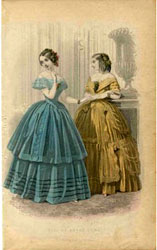
A fashion plate from Godey's Lady's Book 1853.

A fashion plate from Godey’s Lady’s Book 1853.

Later she had more time to sew, and in 1853 wrote:

I was in at Mrs. Calkins today, all well, she and Mrs. Davis are making dresses all the while, I presume they have twenty five in a year, a silk dress lasts but two months at the best. I know not why but everything goes to destruction in a very short time here. . . . I have been making me a brown silk, and next week I am going to make a black one, today I have been making a pink thibet sack trimmed with velvet ribbon but I am sure I do not know when I will wear it.

Thibet was another fine woolen cloth used for making dresses. By a “sack” she probably meant a free-hanging dress with a loose waist.

Posted in Uncategorized | Leave a comment

Chickens at Rancho Chico

In going through the John Bidwell Papers at the California State Library I came across this note from Edward Shackelford Darlington, a young man who briefly worked for John Bidwell in 1851. He is writing from Sam Neal’s Ranch, just south of Rancho Chico, to remind Bidwell to give the chickens water — just the sort of instruction that nowadays would be communicated by cell phone or email.

Letter courtesy California State Library, John Bidwell Papers.

Letter courtesy California State Library, John Bidwell Papers.

Darlington, who was only 19 or 20, can’t resist spoofing the etiquette of 19th century letters. It looks like something Mark Twain would write.

Here is the text, but the bare text cannot do justice to Darlington’s courtesy and flourishes.

Neal’s Oct. 24th [1851]

Major,

I neglected to tell you to have water placed in the chicken coop – also in the small pans around the house. This is absolutely necessary for the preservation of the health of the feathered tribe. – By complying with the requests herein named you will much oblige

Yours very respectfully

with great regard

Your obt servant

in great haste etc.

E. Shackelford Darlington

Posted in Edward Darlington | 2 Comments