
Luzena Stanley Wilson
The account of Luzena Stanley Wilson is one of the most vivid and charming of all the Gold Rush stories that have come down to us. She told her story to her daughter Correnah in 1881 while Correnah was recovering from an illness, and her daughter later published it. Read this opening and ask yourself if you would have picked up and left everything behind as quickly as the Wilsons did.
The gold excitement spread like wildfire, even out to our log cabin in the prairie, and as we had almost nothing to lose, and we might gain a fortune, we early caught the fever. My husband grew enthusiastic and wanted to start immediately, but I would not be left behind. I thought where he could go I could, and where I went I could take my two little toddling babies. Mother-like, my first thought was of my children. I little realized then the task I had undertaken. If I had, I think I should still be in my log cabin in Missouri. But when we talked it all over, it sounded like such a small task to go out to California, and once there fortune, of course, would come to us.
“It seemed like such a small task.” Just pack up for a summer trip across prairie, mountain and desert. It would be an adventure, and when they arrived “fortune, of course, would come to us.” That’s what all the ’49ers thought, and they couldn’t wait to get to El Dorado.
The Wilsons at the time had two children, Thomas, who was about three years old, and Jay, a baby under one year old. Can you imagine a 6-month long camping trip with two toddlers?
It was the work of but a few days to collect our forces for the march into the new country, and we never gave a thought to selling our section, but left it, with two years’ labor, for the next comer. Monday we were to be off. Saturday we looked over our belongings, and threw aside what was not absolutely necessary. Beds we must have, and something to eat. It was a strange but comprehensive load which we stowed away in our “prairie-schooner”, and some things which I thought necessities when we started became burdensome luxuries, and before many days I dropped by the road-side a good many unnecessary pots and kettles, for on bacon and flour one can ring but few changes, and it requires but few vessels to cook them.
Bread and bacon, bacon and bread, some beans, and coffee — those were the staples of the overland trek. Simple and monotonous.
One luxury we had which other emigrants nearly always lacked—fresh milk. From our gentle “mulley” cow I never parted. She followed our train across the desert, shared our food and water, and our fortunes, good or ill, and lived in California to a serene old age, in a paradise of green clover and golden stubble-fields, full to the last of good works.


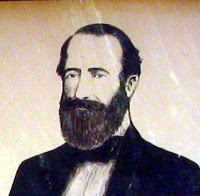
 †Someday I need to write about Sam Neal. His ranch was south of Rancho Chico, where Neal Road is today.
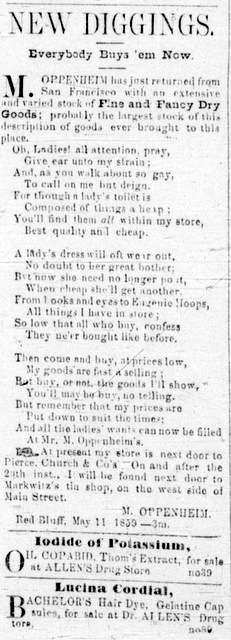 Oh Ladies! all attention, pray,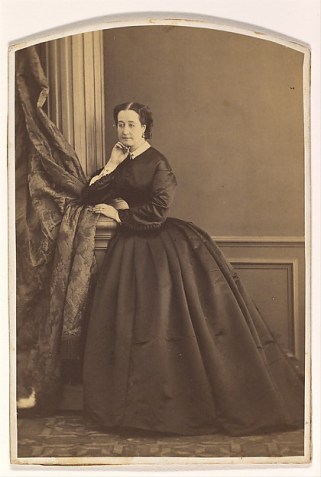
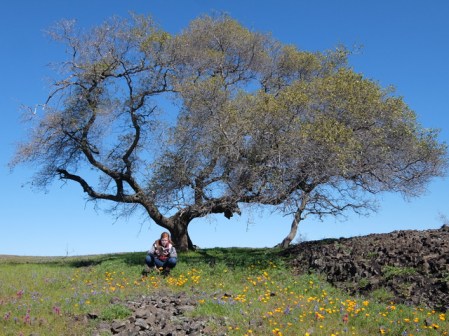



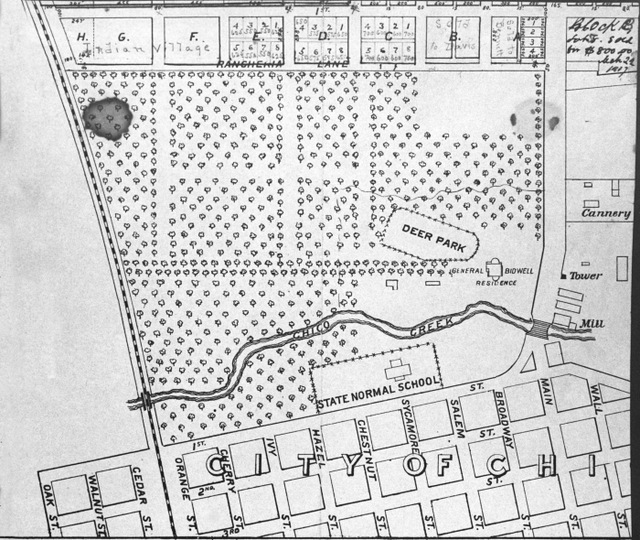

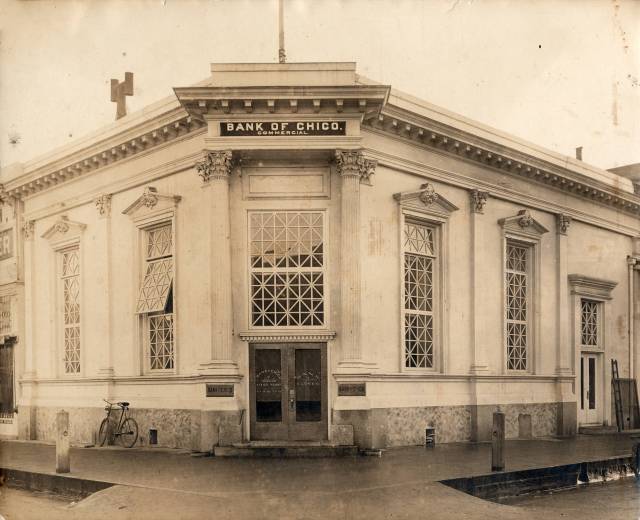

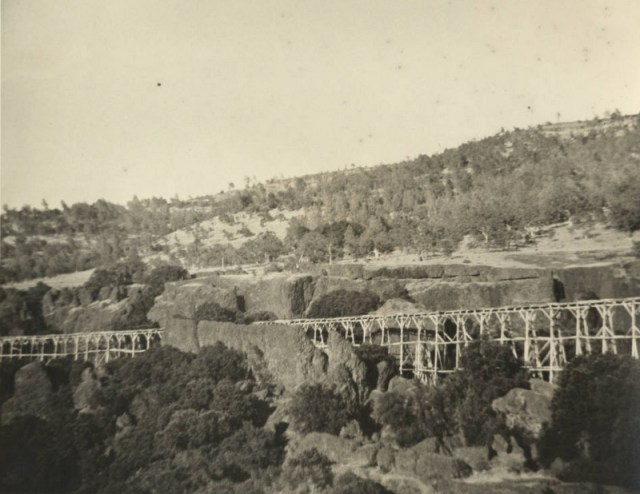
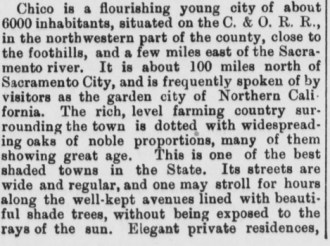 Chico is a flourishing young city of about 6000 inhabitants, situated on the C. & O. R. R., in the northwestern part of the county, close to the foothills, and a few miles east of the Sacramento river. It is about 100 miles north of Sacramento City, and is frequently spoken of by visitors as the garden city of Northern California. The rich, level farming country surrounding the town is dotted with wide-spreading oaks of noble proportions, many of them showing great age. This is one of the best shaded towns in the State. Its streets are wide and regular, and one may stroll for hours along the well-kept avenues lined with beautiful shade trees, without being exposed to the rays of the sun.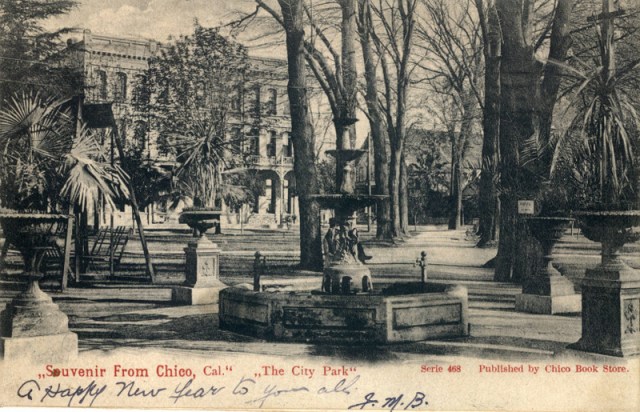

 goldfields