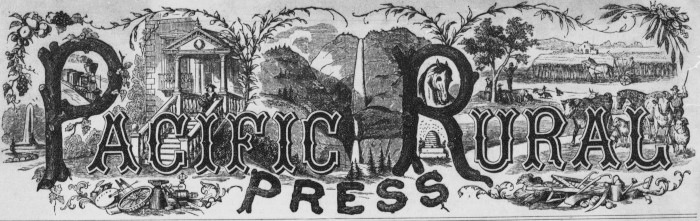
The article on Chico in the Pacific Rural Press, published July 3, 1886, continues with a description of Chico’s financial and manufacturing capacity:
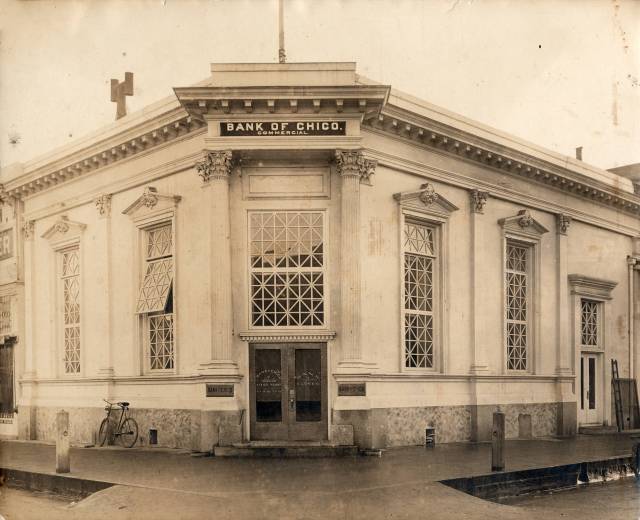
The Bank of Chico, ca. 1900. Look familiar?
Chico has two solid banks—the Bank of Butte County and the Bank of Chico. Both are located in fine brick blocks on opposite corners of Broadway and Second street. The former has a capital of $250,000, with a surplus of about $24,000. N. D. Rideout, the well-known banker of Northern California, is president, and Charles Faulkner cashier. The Bank of Chico, organized in 1872, has a paid-up capital of $100,000, and a surplus of $30,000. W. D. Heath is president, and Alex. Crew cashier. Both banks carry on a general banking business and buy and sell exchange on all the principal cities of the United States.
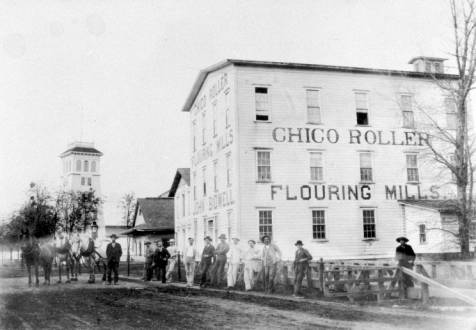
Among the manufactories are included planing mills, box factories, foundries, breweries, soda works, carriage and harness factories, and two large roller flour mills fitted with the latest improved machinery.
Employees of the Sierra Lumber Company at the yard where the flume ended. The water was discharged back into Chico Creek.
On the east side of town is situated the extensive lumber yard and planing mills of the Sierra Flume and Lumber Company, whose great V-shaped flume extends for 40 miles up into the fine timber belt of the Sierras. The company manufactures extensively sash, doors and blinds of all kinds, and gives employment to a large force of men. The immense lumber yard, embracing 15 acres, is filled with lumber and building material of every description. A side track from the railroad, running through the yard, affords excellent shipping facilities.

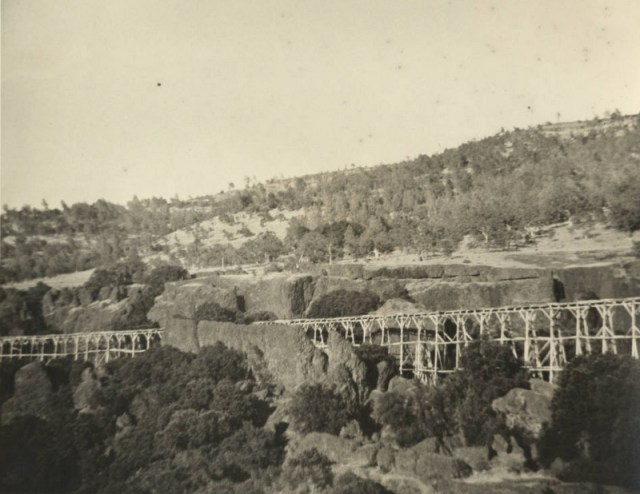
The Sierra Flume running through Chico Creek Canyon
Chico has lines of stages running to Oroville, Prattville (Big Meadows), Cherokee, Deadwood, Colusa, and to Newville, Colusa county, by way of St. Johns and Orland.
I want to know where Deadwood was, or is. Mining camp or lumber camp? Is it a ghost town today? I have never heard of Deadwood in Butte County.
All photos are used courtesy of Special Collections, Meriam Library. California State University, Chico. The library has many more historical photos, including many flume pictures, in the Northeastern California Historical Photograph Collection.
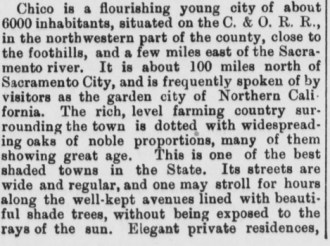 Chico is a flourishing young city of about 6000 inhabitants, situated on the C. & O. R. R., in the northwestern part of the county, close to the foothills, and a few miles east of the Sacramento river. It is about 100 miles north of Sacramento City, and is frequently spoken of by visitors as the garden city of Northern California. The rich, level farming country surrounding the town is dotted with wide-spreading oaks of noble proportions, many of them showing great age. This is one of the best shaded towns in the State. Its streets are wide and regular, and one may stroll for hours along the well-kept avenues lined with beautiful shade trees, without being exposed to the rays of the sun.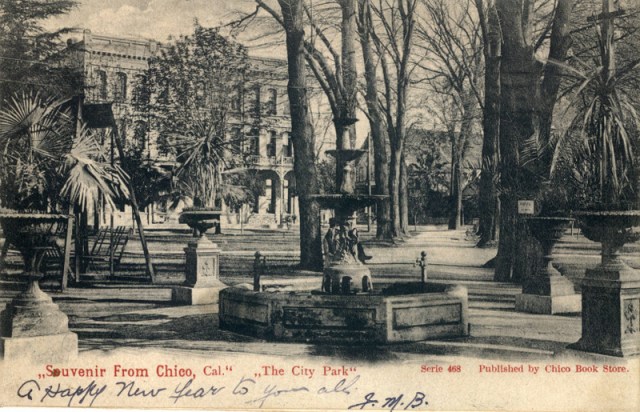
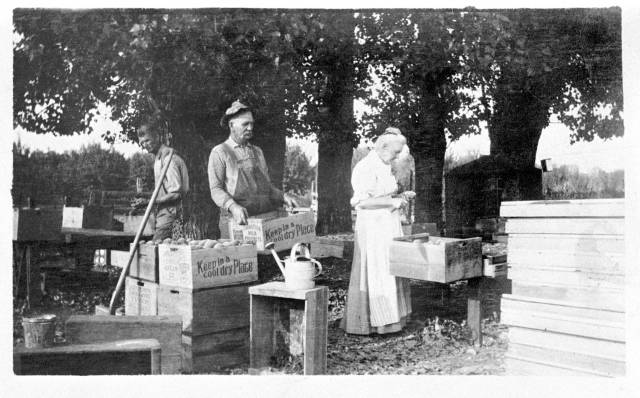
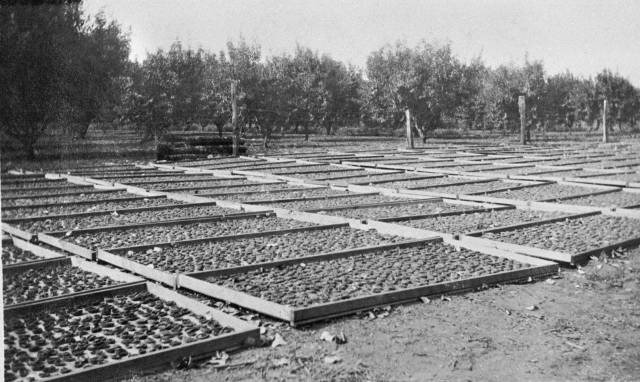
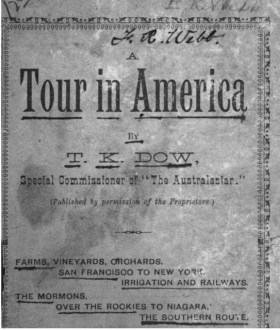 In 1883 Thomas Kirkland Dow, Australian journalist, set out to visit the United States and report on agricultural practices to the readers of his magazine, The Australasian. His book, A Tour in America, was published in Melbourne in 1884.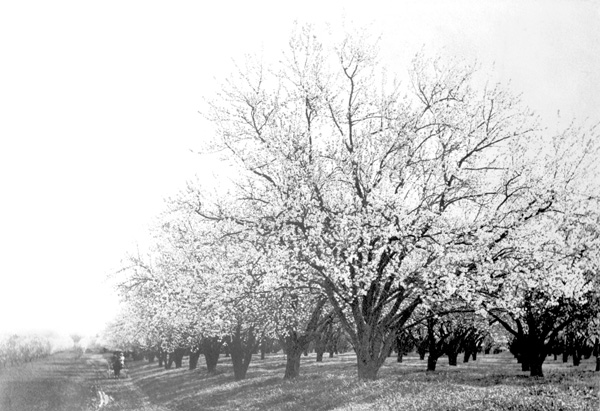

 Squire Wright’s house still stands, the oldest wood frame building in the Sacramento Valley. Chico Heritage Association has devoted time, money, and a great deal of effort to preserving the house, which you can read about on t
 I just came across this book today: Romantic Cities of California, by Hildegarde Hawthorne, with illustrations by E. H. Suydam, published in 1939 by D. Appleton-Century Co. It is a tour of the towns and cities of California, all up and down the state from San Diego to Weaverville. I wouldn’t have thought of all these towns as romantic (I’m looking at you, Bakersfield), but I guess you can’t sell a travel book by calling it Romantic and Not-So-Romantic Cities of California.
 Yippee!

 I used this story in the (almost)
 goldfields