The Best of Days for John A. Sutter

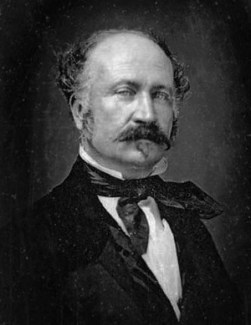
John_Augustus_Sutter_c1850

John A. Sutter in 1850, the earliest photograph.

1847 was a good year for Captain John Sutter. Things were going well and prosperity lay all around. Here is a letter written from John A. Sutter to Mariano Guadalupe Vallejo on October 31, 1847. (The original letter, in the Bancroft Library, is in Spanish.) He relates that the wheat crop is good, cattle trading is fine, the building of a saw mill and a flour mill are going well, he has hired skilled workmen, and by the end of the year he expects to have finished up the year’s work successfully.

Immigrants are coming into California from the United States, but not so many as to be a problem. (According to George R. Stewart in The California Trail, there were less than half as many immigrants in 1847 as there were in 1846. Maybe less than 100 arrived overland to Sutter’s Fort.) He writes:

                                                                                               New Helvetia, 1847 – October 31

Senor Don Mariano Guadalupe Vallejo at Sonoma

My dear Sir and Friend:

I regret very much that I cannot come to visit you in Sonoma – for I have had an inflammation in my eye for the last two weeks.

I have received 150 head of cattle, cows, bulls and calves. Do me the favor to tell me the price of this cattle. Mr. Reading, who has 60 or 68 head will come to see you in a short time. I will send you the bricks when I finish delivering the wheat that I have to deliver. I still have much wheat outside. The saw mill was made in a few weeks, and with the large flour mill we are getting ahead with the work, and by the end of the month of December we shall finish up everything.

The Mormons are the best workers I have, without them the mills could not be made. In a short time I will send you some ramrods to try, for I have workmen who know the trade well. If you need strong shoes for your vaqueros I can send them to you, for I have good shoemakers – all Mormons.

As a Mormon myself (though not of pioneer stock) I am glad to hear these fellow Saints commended for their talents and industry. The letter continues:

Have you jerked meat for sale? How many vine stocks can you sell me in the months of January and February?

The sick are recovering everywhere on the Sacramento. It seems that in many other parts of the country there was much sickness, in Monterey, San Francisco, Napa, etc.

I received a letter from a gentleman in Switzerland. He wishes to come with a company of colonists or emigrants, when I send him a reply favorable to the country. I am certainly going to write him to come, for all of those people are industrious.

Excuse my bad Spanish.

I am, with the highest consideration,

Your very attentive and obedient servant,
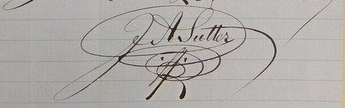
DSCF4391

P.S. Do me the favor to give food to Olimpio and his brother, the messengers.

Olimpio was an Eastern Miwok Indian and the head of Sutter’s vaqueros. He often acted as a courier and in 1848 became keeper of the keys at Sutter’s Fort.

October 31, 1847 — everything is about to change for Sutter. In three months gold will be discovered at his new saw mill, his workers will leave for the goldfields, and he will soon be overrun with exhausted forty-niners and land-hungry squatters. Nothing would ever be this good again.

Posted in John Sutter | Leave a comment

Sutter’s Fort Restored

suttersfort1879

The central building in 1879, surrounded by an empty field

“In its broken, withered and dilapidated condition it offers sublime evidence of the devastation of time.”

So wrote the Sacramento Daily Union on September 2, 1891. But by 1890, nostalgia for “the days of old, the days of gold, the days of ’49” had roused the citizens of Sacramento to restore Sutter’s Fort to its former glory. The newspaper reported  that restoration work had begun and was being “carried on in good earnest.”

The foundation was strengthened with brick and cement, and new adobe bricks were made in the time-honored fashion.

A force of men are busily engaged in making adobe bricks on the ground. This work, to the uninitiated, is peculiarly interesting, for, in order to duplicate the original strength, it necessitates using the same kind of earth, and the same line of operation that was adopted by the original builders. The earth is mixed with water and tramped into proper consistency by the bare feet of the workmen. It is then molded into proper shape and placed on the ground to dry. After being turned several times it soon becomes hard enough for use.

The original fort must have been even larger than it appears today, because the newspaper reported that

Owing to the fact that the south corner of the outer walls extended to where the center of L street now is, the Restoration Trustees have decided to abandon the work of restoring that portion. It is, however, the intention to restore the two bastions, one at the west and the other at the east angles of the building, and show the profile of the outer trails jutting from the bastions, and gradually breaking down to the ground. Limited space in the two blocks will not permit the restoration of the entire outer walls, but by the foregoing plan the exact outline of same can be shown.

As it is, L Street has to curve slightly around the grounds of Sutter’s Fort State Historic Park.

at the old fort newsIn January 1892, the Trustees invited John Bidwell and another old-timer, Charles Stevens, to inspect the work.
The old-timers were delighted with the appearance of the structure, and both united in saying that it looked quite natural. General Bidwell, however, thought the walls used to be whiter than the new coating of adobe renders them. “They used to get a white potter’s clay somewhere up in what is now Amador County,” he said, ” and with that the Indians whitewashed the walls, bastions and the buildings, and I tell you it was quite a feature. As one approached the fort from a distance, the aspect of the old fort, with its snow-white walls, was inviting, I can assure you. The sight gladdened the heart of many a weary traveler.

It must have gleamed as white in the old days as it does today.

suttersfort

Sutter’s Fort in 1847. Library of Congress


Posted in Sutter's Fort | Leave a comment

Sutter’s Fort As It Was

jan30-sac (118)

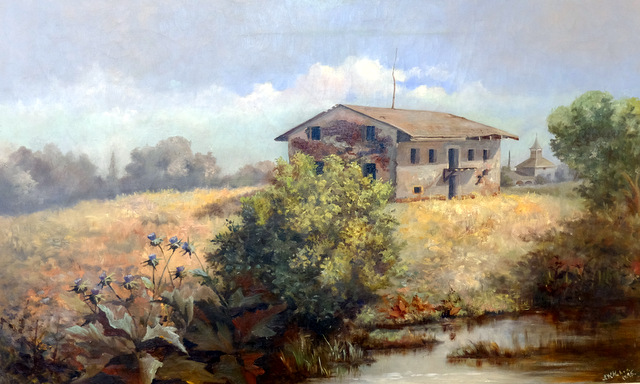
This painting hangs in the California History Room at the State Library in Sacramento. It shows Sutter’s Fort, what was left of it, as it looked before its restoration in the 1890s. The fort had deteriorated quickly after the gold rush, and well before 1890 all that was left was the dilapidated central two-story adobe building where John A. Sutter and John Bidwell had their offices.

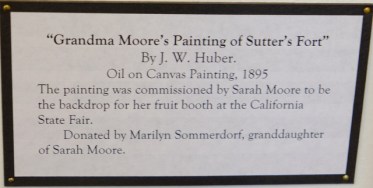
jan30-sac (120)I am a bit confused by the date — 1895 — for the painting, since restoration of the fort by the Native Sons of the Golden West began in 1891. The painting must have actually been done some time before the restoration began.

I am tickled to know, however, that “Grandma Moore” (Sarah Moore) had the picture painted to memorialize the old fort, and to advertise her fruit booth at the State Fair. What a nice idea! And imagine having that as a view from the orchard on your ranch.

The artist, J.W. Huber, was Jennie Willis Huber, who taught art at an academy in Sacramento before her marriage to a man named Amos Brothers.

The painting was donated to the State Library by Grandma Moore’s great-granddaughter, Marilyn Moore Sommerdorf in 2009. You can read more about the painting in the California State Library Foundation Bulletin, no. 94. More images of Sutter’s Fort can be found at Calisphere, a wonderful source of California pictures.

sutters fort old Here’s one — another picture of Sutter’s Fort in decline. It’s a pencil drawing by W. Tyrrell done in 1855. Only a few years after the gold rush and the walls are crumbling and the floors are sagging. It wouldn’t be long before the adobe bricks melted back into the earth.
Posted in Sutter's Fort | Leave a comment

Sarah Pellet’s Philanthropic Scheme

According to the Butte Record for December 23, 1854, Sarah Pellet had a brilliant plan for promoting temperance among the California miners.

Issue Date DECEMBER 23 1854 page 2 pellet

Five thousand young ladies! Miss Pellet certainly did not think small.

The same item was also reported in the Daily Alta California on December 19, 1854, under the headline A Desirable Enterprise. Both newspapers picked up the item from The Miner’s Advocate of Coloma. Was that editor joking, or was Sarah really offering to import young ladies as brides for Sons of Temperance?

The editor of the Daily Alta California commended the plan, but doubted the lady’s ability to carry it out:

If Miss Pellet can carry it out effectually, she will deserve the thanks of the whole bachelor community of the State. There are thousands upon thousands of girls, respectable, well-educated and honest, working from daylight till dark among the deafening machinery of cotton mills, and earning but small wages, who, we should suppose, would gladly come to California if safe conduct and reception, and particularly husbands, were guaranteed them on their arrival, and who are well calculated for helpmates for our farmers, our miners and mechanics, and citizens generally. This is really a very desirable operation of Miss Pellet’s, but, begging the lady’s pardon, we scarcely believe that she possesses the practical ability to carry it into effect.

She didn’t. But anyone out there is welcome to use this story as the basis for a novel about manly miners and New England’s fairest.

sons temperance n currier

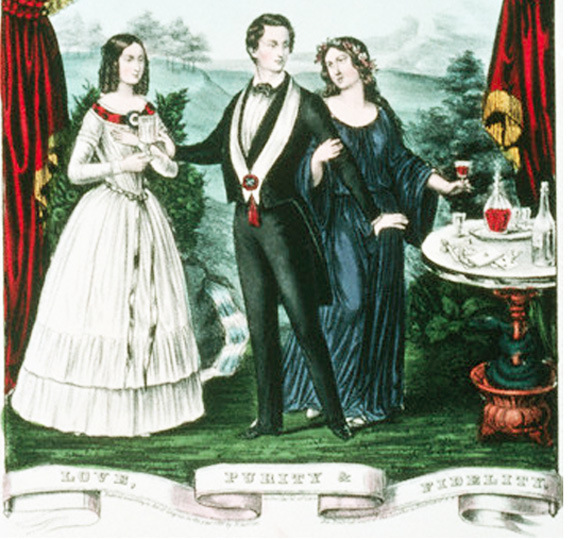
A Sons of Temperance poster from 1851

Posted in Sarah Pellet, Uncategorized | 2 Comments

Sarah Pellet in the Mining Camps

Sarah Pellet came to Bidwell Bar to lecture in the Fall of 1855. The Butte Record of November 3rd noted her plans for a tour of mining camps:

SP Issue Date NOVEMBER 03 1855 page 2Miss Pellett delivered a lecture at the Court House in Bidwell, on Tuesday evening last. The attendance was unusually large, and all expressed themselves well pleased. This was her first visit in Butte County. She lectured in Thursday Evening, at Spanish Ranch, on Friday at Quincy, and this evening will lecture at Elizabethtown. From thence, on Sunday evening at Nelson Point, and the balance of the week at different places in Sierra County, arriving at Forbestown, on Sunday November 11. She will again lecture at Bidwell on Monday Evening, Nov. 12, and at Ophir on the evening of the 13th.
Elizabethtown has disappeared under the debris from hydraulic mining, and Bidwell Bar is drowned under Lake Oroville, but Quincy is still there where she would have found it, and Ophir has changed its name to Oroville.

This is an ambitious schedule. Most of her traveling would have been on muleback, and while the distances are not all that long, the terrain was rough and mountainous. It would have been slow-going. She would have spent her days riding a mule (maybe she wore her brown linen bloomers), her evenings lecturing, and her nights on a cot in a tent or a shack.

Dame Shirley described conditions at Bidwell Bar just three years earlier:

As there was nothing to sleep in but a tent, and nothing to sleep on but the ground, and the air was black with fleas hopping about in every direction, we concluded to ride forward to Berry Creek House, a ranch ten miles farther on our way, where we proposed to pass the night.

Bidwell Bar does not sound very inviting, and they got lost on their way to Berry Creek House, and spent the night on the trail.

But Miss Pellet braved the dangers of the trail and the discomforts of the mining camps. Men were glad to see her, no matter what she proposed as her topic. The sight of a woman, even one lecturing on temperance, abolition, and political reform, was a welcome one. I wish she had written an account of her experiences in California.


Posted in Sarah Pellet, Uncategorized | Leave a comment

A Sketch of California Life in the Waverley Magazine, 1856

After reading the article on Chico in the Waverley Magazine, Nelson Blake wrote “I don’t understand it and await an explanation from you.” I don’t know if he ever got his explanation from John Bidwell, since Bidwell’s letters to Blake were lost long ago.

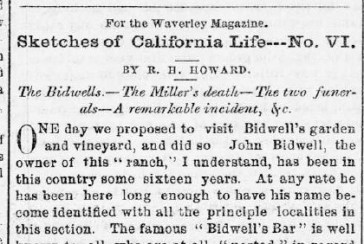
Fullscreen capture 1252018 100728 AMThe article Nelson Blake saw is titled Sketches of California Life — No. VI, by R. H. Howard. It begins:

One day we proposed to visit Bidwell’s garden and vineyard and did so. John Bidwell, the owner of this “ranch,” I understand, has been in this country some sixteen years. At any rate he has been here long enough to have his name become identified with all the principle localities in this section. The famous “Bidwell’s Bar” is well know to all who are “posted” in regard to the geography of this state.

The author, R. H. Howard, does not propose “to give the particulars in an agricultural point of view” (I wish he had!) but only to relate one or two incidents that have “rested upon my mind with no little weight.” These consist of: meeting Bidwell’s brother from Vermont (the author’s home state), the death and funeral of the miller, and the death of an ox. Pretty slim pickings.

The brother in question, although the author of the piece does not name him, was Daniel Bidwell, who came to Chico with his family around 1855. Daniel had a wife, three (I think) sons, and a sixteen-year-old daughter, Mary, who caught the eye of the reporter. She was “as fine a specimen of womanhood as one of as much pride as myself could ask to represent that branch of indigenous products of his home state.” (You can see how wordy this fellow is.)

“I was also much interested, during this visit, in a young man, there laboring at the time under a severe attack of the delirium tremens.” The unnamed young man, “Bidwell’s miller and a native of New York,” dies and is buried, accompanied by much more verbiage about the “mournful occasion” and “this strife and struggle and sacrifice for gain,” — but no details.

But, says Nelson Blake in his letter, “you told me that he died from wounds received in an Indian skirmish.” What Indian skirmish? Who is he referring to? It can’t be Amos Frye, who did indeed die in that way, because Frye died in 1852, while Blake was still residing at Rancho Chico. I don’t know of such an incident in 1855 or ’56, although there was an Indian attempt on Bidwell’s life in early 1856. Evidently I am going to have to do more research.

The death of the miller calls forth from the author sad reflections on the mutability of life, and ‘yet another lesson” — “That to steer clear of the treacherous quicksands that everywhere begirt us, especially in this country, you must shun every species of intemperance as you would the veritable precursor of ruin and death.” I have the notion that the Waverley was enlisted in the cause of Temperance.

The last incident from this visit that “rested upon [the author’s] mind with no little weight,” is the death of an ox.

I was down, the other day, to where the Little Butte creek sinks on the prairie. The Little Butte on one side, and a succession of sloughs on the other, gradually curving, come at length together forming a peninsula covered with oak timber.

There he spies an ox that had apparently just died. As he studies the scene, another ox approaches to investigate and then sends up a anguished howl in mourning. Soon all the cattle “join their full sonorous voices in the chorus, by lowing and bellowing and screaming — chanting a requiem full of power and pathos to their departed companion and friend.” Another meditative paragraph follows, ending with the thought, “And where will my journey end?”

Early_Chico

Rancho Chico in the 1850s, with Bidwell’s Store, adobe house and hotel, and flour mill.

I wish, before his journey’s end, he had given his readers a fuller picture of life at Rancho Chico.


Posted in Nelson Blake, Uncategorized | 1 Comment

Adventures in Research

Last month I went to the California State Library to look at the Sutter’s Fort Pioneer Collection, which contains a file of John Bidwell material. In it was one letter from E. Nelson Blake, a Massachusetts man who had worked for Bidwell in 1851-52 and then returned east. I had seen (so I thought) all of the letters between Blake and Bidwell (they were lifelong friends), but here was one last lone letter.

Nelson Blake was always asking for news of Rancho Chico, and this letter of April 8th 1856, is no exception. (“I would give almost anything to hear a full report of “Chico” news,” he says.) One paragraph stood out to me. Blake writes

I saw last week in a paper printed in Boston called the “Waverley Magazine” a sketch written by a correspondent of a visit to Bidwell’s. I was pleased to read it but was surprised to learn from that, that you had a brother there with you from Vermont with his family. When you spoke of your brother being with you, I thought you meant Thomas. I was also surprised to read there that your miller died of Delirium Tremens when you told me that he died from wounds received in an Indian skirmish. I don’t understand it and await an explanation from you.

Blake was, as you can see, very fond of underlining his words.

I had never heard of this Waverley Magazine and its article on a visit to Bidwell’s ranch. Accounts of Rancho Chico in the 1850s are scarce, and I figured it would be well worth tracking this item down.

It wasn’t just sitting there online (except for a single later issue). It hadn’t been digitized by Google Books. It wasn’t the sort of thing you would find in just any library, even a large research library.

But I did find that the American Antiquarian Society (in where else? Massachusetts) had copies of the magazine. A phone call to their Reference Desk put me in touch with Kim Toney, reference librarian. She did some magic, and a few minutes later a pdf of the April 1856 issue of Waverley Magazine plopped into my In Box.  Hooray!

Fullscreen capture 1252018 101444 AM

So . . . Who was this brother mentioned? Who was the miller, and what did he die of? What other revelations about Rancho Chico are set forth in the article?

Stay tuned for the next episode of Adventures in Research!


Posted in Nelson Blake | Leave a comment

Major Bidwell and the Lady Reporter

DSC_0007AJELast Monday (Jan. 22) Nick Anderson and I presented our historical program to SIRs, Bidwell Branch 110, at the invitation of past “Big Sir” Keith Johnson. (SIRs is an organization for retired men who like to get together for a monthly luncheon and various interest groups.)

I originally worked up this program for the Chico Museum, where we presented it last year. It was much improved this time around, mainly because of all the rehearsal time put in, especially by Nick, who carries much the greater part of the dialogue.

The setting is as follows:

I am a fictitious lady reporter from San Francisco, interviewing prominent Californians in 1858. My nom de plume is Mrs. Leticia Norris. I have traveled to Rancho Chico to talk with Major John Bidwell, famous pioneer, well-known ranch owner, and veteran of the war for California independence.

DSC_0006AJEOur conversation lasts about a half hour, and during that time we discuss adventures on the California Trail, grizzly bears, Captain Sutter, Fort Ross, exploring the Sacramento Valley, the Mexican War, politics, and more grizzly bears. (They keep coming up.) I based the script on Bidwell’s own recollections, and most of his words are taken verbatim from his writings and speeches.

If you know of a group that would enjoy seeing and hearing John Bidwell live and on stage, just get in touch with me in the comments. Nick and I would be delighted to bring our program to you.

DSC_0001AJE

Nick, Nancy, and Keith

Posted in Uncategorized | 1 Comment

Sarah Pellet in California

In Gold Rush California, Miss Sarah Pellet was an item of interest, receiving considerable attention from the newspapers. The first notice of her arrival, in the Sacramento Daily Union of September 20, 1854, stated:

Miss Sarah Pellet, a graduate of Oberlin Seminary, active in her endeavors to promote the philanthropical movements of the day, is among the list of new-comers. We learn from the New York Tribune that she is on a visit to her two brothers, settled in California, and that she will avail herself of any opportunity to address the people of the Golden State upon Temperance, Anti-Slavery, or Woman’s Rights.

She began in San Francisco, and was not exactly a sensation. The Daily Alta California reported:

Miss Pellet’s Lecture on Political Reform. — The announcement that a lecture on  “Political Reform: the means of securing it,” would be delivered at Musical Hall last evening, by Miss Sarah Pellet, drew together not a very large, but a very intellectual audience, who appeared to have gone partly from curiosity and partly from an evident disposition to encourage the lecturer. About eight o’clock, Miss Pellet was introduced to the audience by A. Williams, Esq. She placed herself behind a pulpit looking arrangement which was placed on the stage, and which only permitted her head to be exhibited to the audience. She is a woman apparently about thirty years of age, small and neat-looking, and wearing spectacles.

We suppose that when a woman enters upon the arena of politics, and becomes a public lecturer, she expects to subject herself to the same criticism that would be called out by a lecture from one of the opposite sex. Throwing entirely aside the question of the propriety of women becoming public lecturers, we must say that Miss Pellet does not seem to possess any of the qualifications for an interesting lecturer. Her address was written, and, in reading it, she appeared to find great difficulty, until her constant repetitions and haltings became painful to the audience. Her voice is not pleasant, and her manner of delivery anything but agreeable.

The reporter concluded that her lecture was “very dull and very prosy,” and Miss Pellet would be better off pursuing her reforms by means of the pen, rather than on the lecture circuit.

Sarah Pellet persisted however. She lectured throughout the gold mining regions, from Sonora to Weaverville, and on up into Oregon. A correspondent in Placer County was kinder than the City reporter:

    Our citizens had the pleasure of listening to a temperance lecture last evening, in the new Town Hall, delivered by Miss Sarah Pellet. The audience was quite large and paid the most respectful attention to the fair lecturer. Miss Pellet is a tolerably fair speaker, her articulation very distinct, her points and illustrations quite apropos, and by her pleasing but modest style will doubtless effect much good for the cause of temperance reform in her peregrinations through the mines of California. It is a subject of the highest importance to the mass of our population. A lady lecturer can at any time attract a large crowd and make a more durable impression than a man, and I do hope that Miss Pellet will not cease in her work of temperance reform.

MDH18560805.2.8.2-a1-447wpelletShe left the state at the end of January 1856 and went by steamer to Nicaragua, where she observed with admiration the campaign of William Walker to seize control of that country. She was not done with California, however. She would return in 1857 to continue her endeavors to reform the morals and habits of the ’49ers.
In the meantime, her name had become synonymous with temperance reform in California, and was used to promote temperance beverages, as you can see in this advertisement from 1856.

I am not exactly sure what Cream of Nectar is, but I am sure that it is delicious. It may be the same as Cream Nectar, which (so Internet tells me) is a pink Southern concoction of almond and vanilla flavorings that is still popular in New Orleans for snow-cones.


Posted in Uncategorized | 2 Comments

Sarah Pellet, Lady Reformer

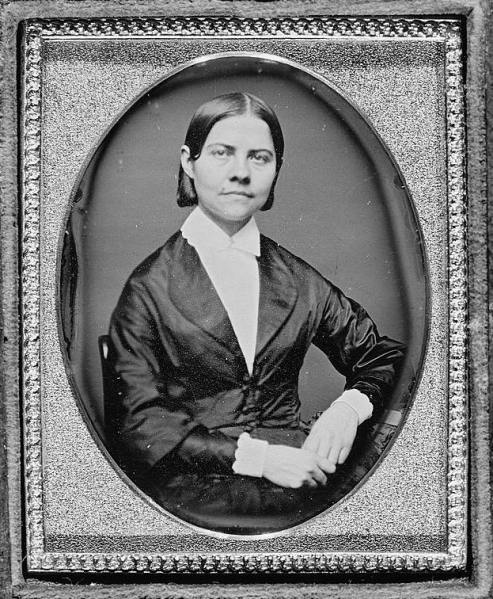
I haven’t been able to find a picture of Sarah Pellet. I wish I had one to show you, because I wonder what she looked like. Newspaper reports sometimes refer to her as “fair” (as in “the fair lecturer”), but that was a convention.

The Daily Alta California said she was “small and neat-looking, and wearing spectacles” and another editor called her “angular.” She was 30 years old when she first came to California. Her passport application of 1858 gives a description that includes height of 5 feet 2 and 3/4 inches, a dark complexion, black hair and eyes, a Grecian nose and a mouth “rather large.”

lucy_stone

Lucy Stone

Sarah Pellet was born in North Brookfield, Massachusetts in 1824. A neighbor of Lucy Stone, she became friends with that women’s rights activist, and like her attended Oberlin College, graduating in 1851. Following her graduation, she returned to Massachusetts and became active in the cause of women’s rights. Later she went on to gain a medical degree. She was certainly an intelligent and determined woman.

Inspired by Lucy Stone’s lecturing tour of the “western states” (what we would call “midwestern”, i.e. Ohio, Indiana and Illinois) in 1853, Sarah decided to go even further west, to California, in 1854-55. A letter to Sarah from Susan B. Anthony in August 1854 encouraged her to take up lecturing to spread the word of women’s rights.

Dear Sarah

I had long been asking my self where is Sarah Pellet & what is she busy about, for busy she must be
What say you Sarah— here is a chance for you, (under the auspices of our State Committee) to make yourself thoroughly at home in the Lecture room—  If you ever intend to make Lecturing your business, you surely need just such a discipline—one cannot have a reputation as speaker, until they have won it, & simply giving a few Lectures to small audiences in large places will not win a name to one’s self—
 
bloomercostume-7

Susan B. Anthony was asking Sarah to campaign around the Northeast, but Sarah decided to go further afield. In the fall of 1854 she boarded a steamship for California, and drew a considerable amount of humorous comment, dressed as she was in “brown linen bloomers.”

Bloomers were practical, especially for a woman who would have to ride a mule across the Isthmus of Panama, but they were considered outlandish and dirisible. Did she continue to wear the bloomers while touring and lecturing throughout California? I wonder.  

Next: Sarah Pellet in California  

Posted in Uncategorized | 3 Comments