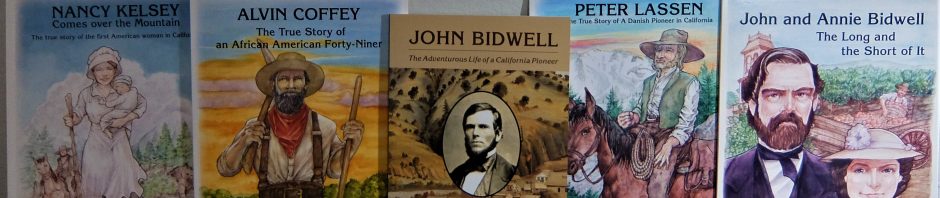
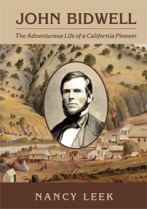
Bidwell, Kelsey, and Mary Ray King

I haven’t been blogging much lately, but I have been working on several projects—-

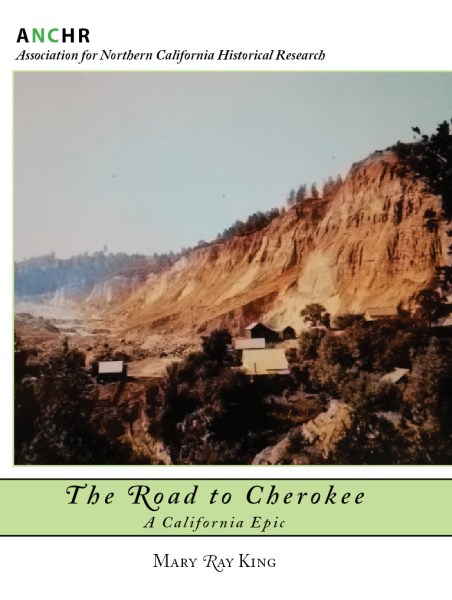
An article for The Diggin’s: If you live in Butte County you probably know that The Diggin’s is the quarterly journal of the Butte County Historical Society. Editor Nancy Brower asked me to turn my biographical introduction for The Road to Cherokee, about the author, Mary Ray King, into an article for the journal. It will be out this month.

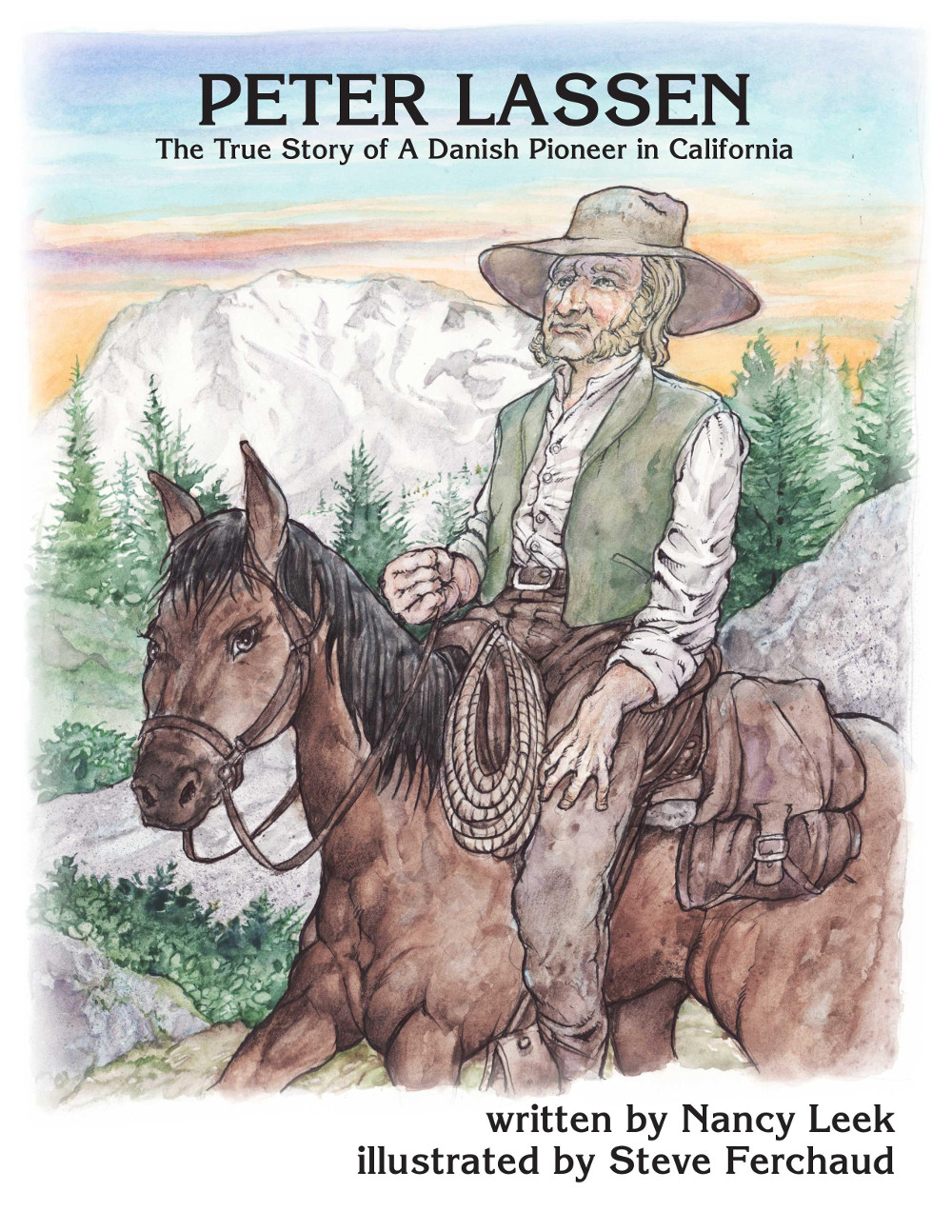
cover-for-nancyWhen I wrote the introduction, I used up every bit of information I could find about Mary Ray King. Since then I was able to meet with her granddaughter, Deborah King, and find out more. I learned that early in her career she wrote short stories under the name Ray McIntyre King. In the early 20th century the reading public had a voracious appetite for short stories and Mary Ray helped feed that appetite.
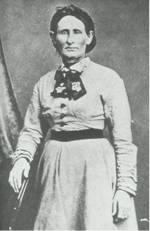
I also expanded on a sensational court case that Mary Ray took part in. You’ll have to read The Diggin’s to find out why rejected marriage licenses and foreign-born suitors caused the court to take the twin Hunter girls away from their parents.

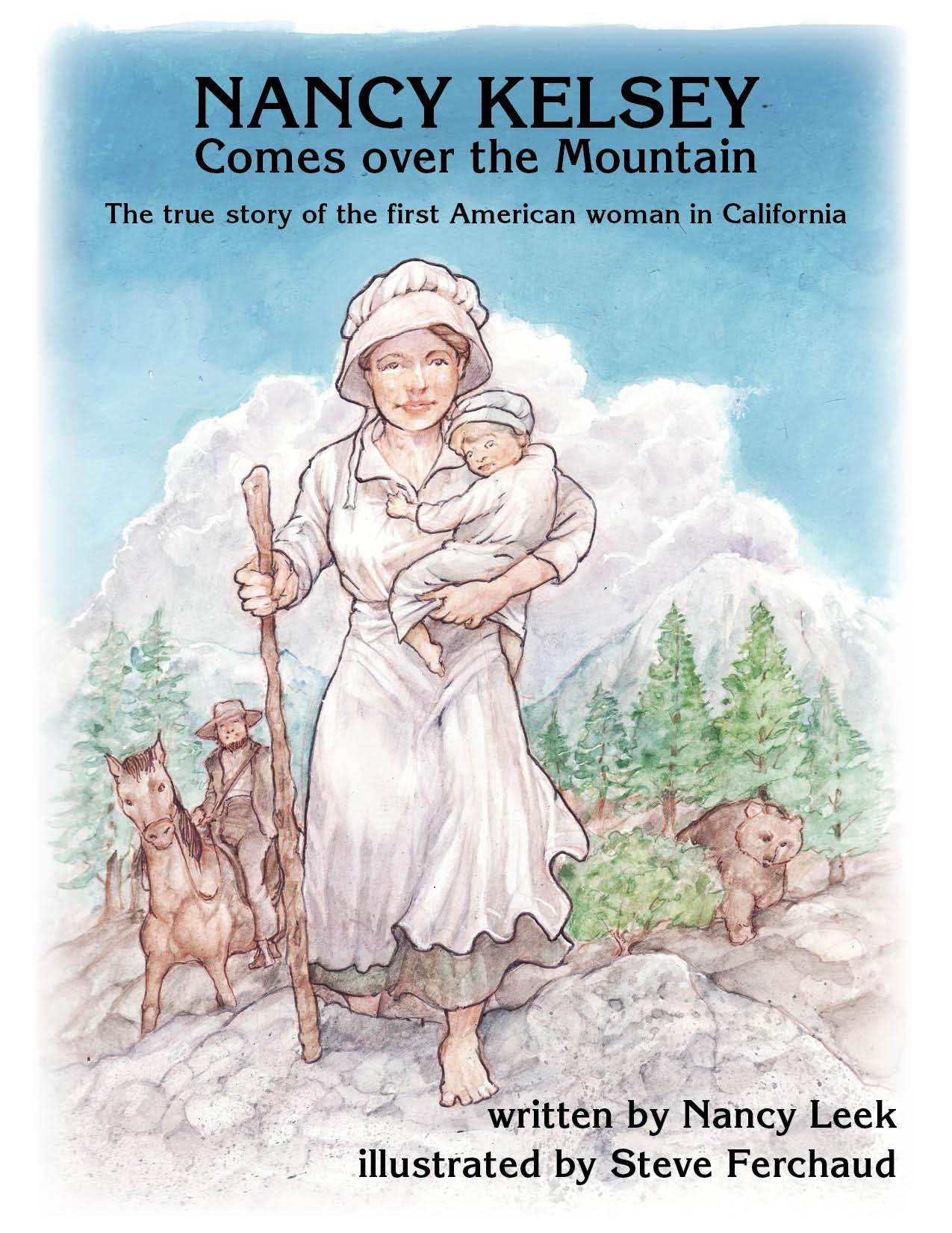
nancykelsey

Nancy Kelsey

A new picture book biography: I loved working with Steve Ferchaud and wanted to do another book with him. Nancy Kelsey was the first American woman to cross the Sierra Nevada mountains into California, and she did it barefoot and carrying a toddler. I want to show what pioneer life was like on the California Trail and how an ordinary woman from the backwoods of Kentucky took part in the Bear Flag Revolt and others events in our history.

Look for my new book in the fall of 2017. I’ll keep you posted on how things come along as Steve creates the illustrations and brings Nancy and Ben Kelsey to life.

bidwell2013 002

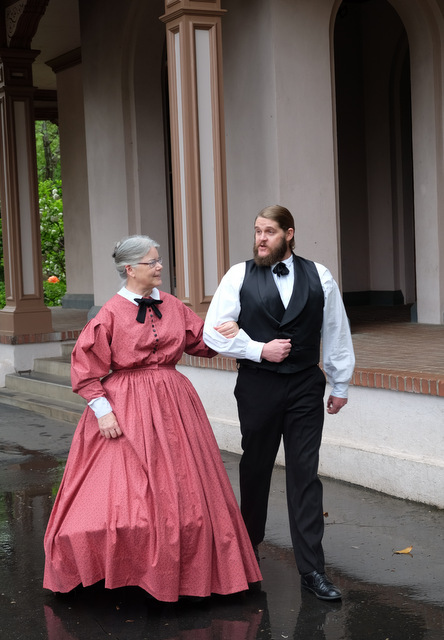
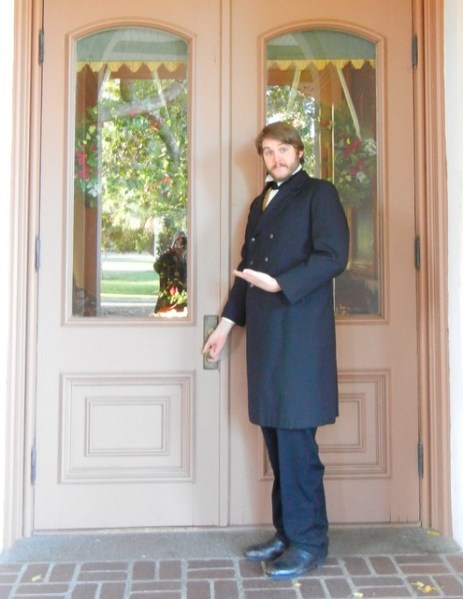
Nick as Bidwell

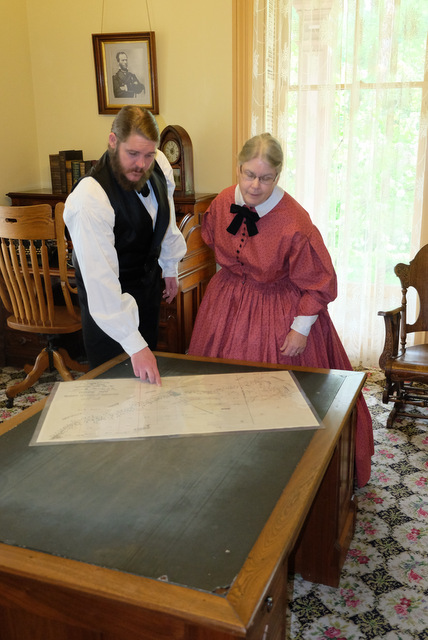
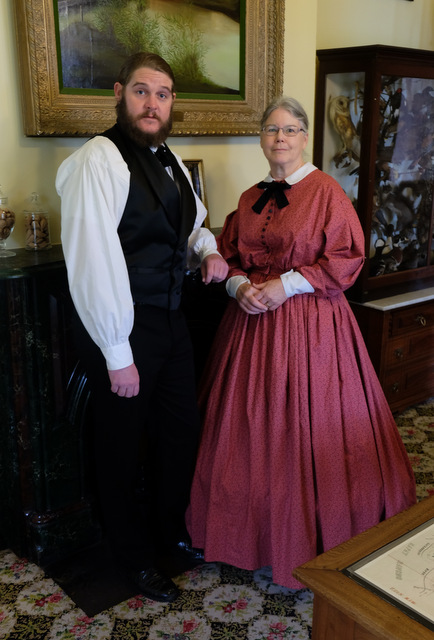
An event at the Chico Museum: John Bidwell is coming back to Chico, and I will be interviewing him at the Chico Museum on Saturday, April 22 from 10 to 11 a.m. Don’t miss A Conversation with Major John Bidwell: Rancho Chico, 1858! Nick Anderson will portray John Bidwell.

It turns out that writing the script was the easy part — it’s all based on the actual words of John Bidwell himself, telling about his trip to California, the discovery of gold, the Mexican War, and grizzly bears — lots of grizzly bears.

The tough part was making a costume for myself! I take the role of Mrs. Letitia Norris, widow and lady reporter for a San Francisco newspaper. I have come to Rancho Chico to interview one of California’s most prominent citizens.

There are hours of work in a 19th century costume. I not only had to make a period dress, but I had to make the corset and hoop skirt to go under it. The reproduction fabric came from Debbie’s Quilt Shop in Paradise. I’ll post a picture as soon as I get it hemmed — that’s the last thing to do.

Posted in Uncategorized | 1 Comment

One Last Thought from Nicholas Dawson

On how to NOT get rich in California:

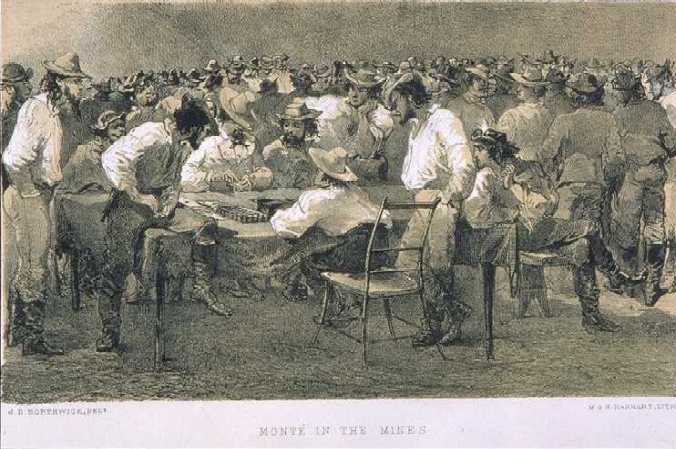
While I was slowly accumulating, the majority of fortune seekers in California were saving nothing. If they mined, they were shifting from place to place, or squandering money in impracticable ventures, such as turning rivers out of their channels; or else they lost as fast as they made by bucking at monte.

Monte-in-the-mines

“Bucking at Monte”

If freighting, they must have a mule team and feed it; put up at a boarding house while in Stockton; pay a dollar for a meal and twenty-five cents for a cigar or glass of whiskey at the tavern tents stuck up at every water hole along the road. Many, especially those from the North became homesick immediately upon arriving at the diggings, and if they had money enough to pay their way back, would auction off their paraphernalia and take the back track. Many who would gladly have got away had to stay; and even now some men stay in California because too poor to get away. Those who made the most were those who fleeced the miners.

Nicholas Dawson was proud of his ability to save money by “the most slavish labor and rigid economy.” He went home with $1600 in gold dust.

How much would $1600 be worth today? According to Measuring Worth, $1600 in 1850 would have the purchasing power of $50,100 today. Enough to give a man with a family a good start in Texas.

(All the information about Nicholas Dawson has been taken from Narrative of Nicholas “Cheyenne” Dawson (Overland to California in ’41 & ’49, and Texas in ’51), Number Seven of the Rare Americana Series Printed & Published by the Grabhorn Press of San Francisco in May, 1933.)


Posted in Nicholas "Cheyenne" Dawson, Uncategorized | Leave a comment

Beautiful Northern California

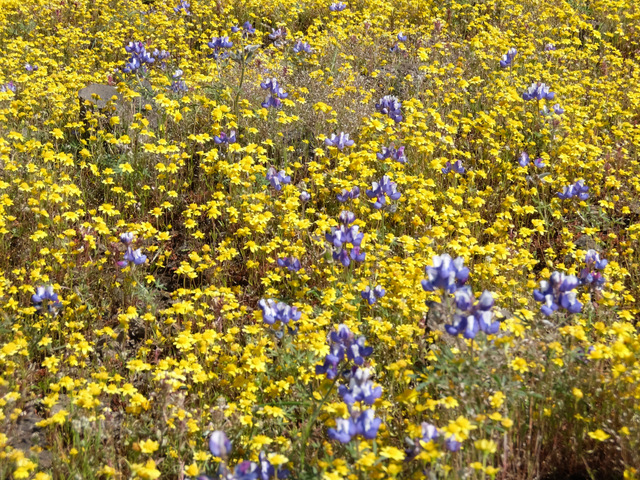
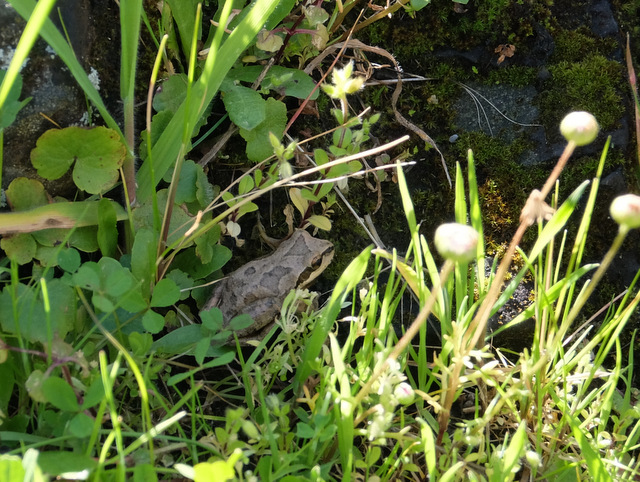
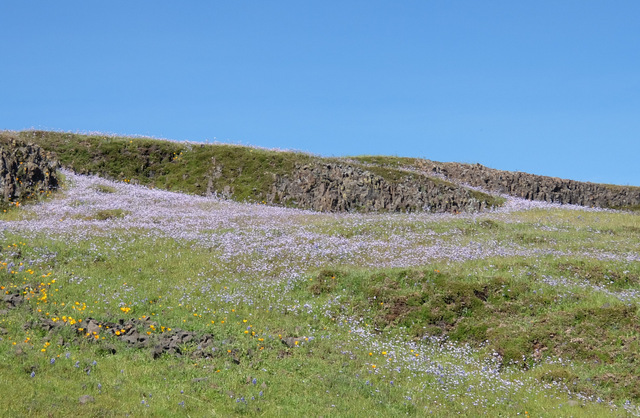
It’s a rainy night all over the North State, so here is some beautiful scenery from Table Mountain to brighten your evening. We were there on a sunny Tuesday and hope to go again soon.

DSCF2990-001

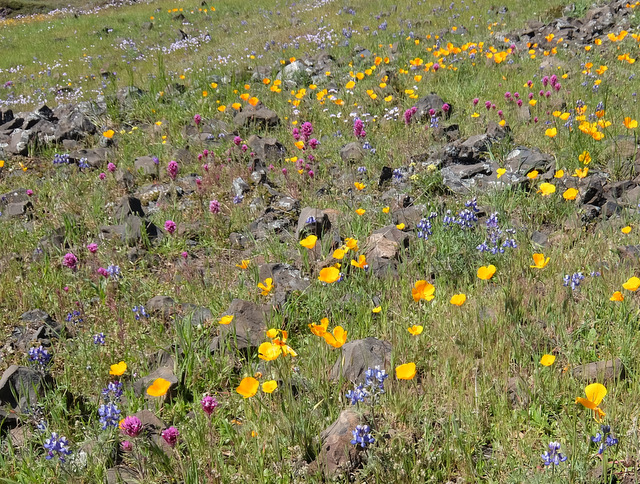
Goldfields and lupine

DSCF2981

A little Pacific chorus frog

DSCF2976-001

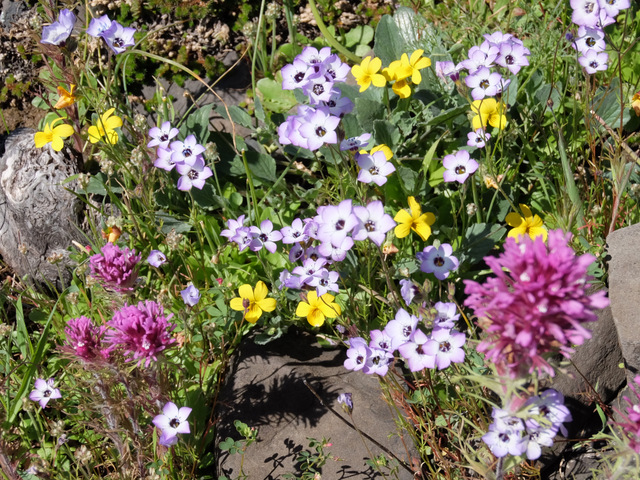
Cascades of bird’s eye gilia

DSCF2962-001

Bird’s eye gilia, oakwoods violets, and purple owl’s clover

DSCF2957

Frying-pans, lupine, and owl’s clover

DSCF2967

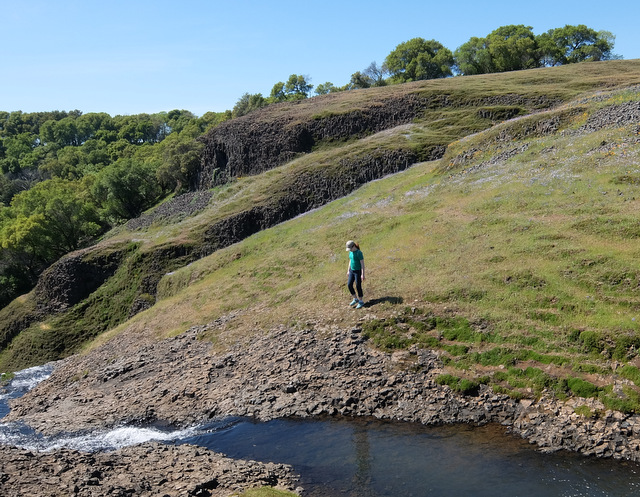
Wandering near the top of Phantom Falls

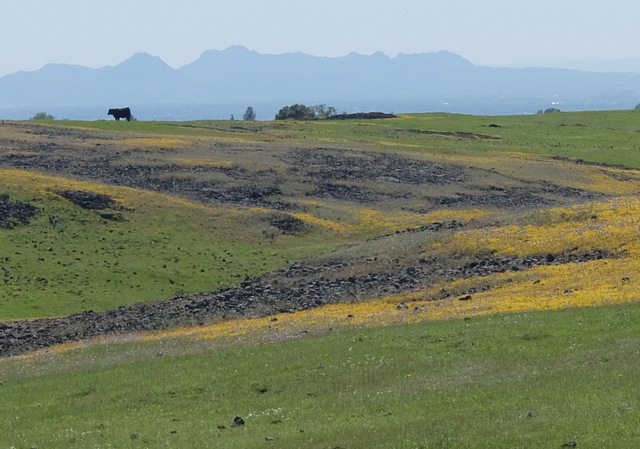
DSCF2988-001

Looking across Goldfields to Sutter Buttes

Posted in Uncategorized | 2 Comments

Nicholas “Cheyenne” Dawson Heads for Home

In the spring I began to think of home, sweet home. I put my Stockton lots in the hands of an agent, sold part of my teams, and left the rest in charge of John Crow. I had now about $1600 in gold dust. I had earned my money by the most slavish labor and rigid economy, footing it always except when the wagons were empty, wearing my clothes long without washing–for no washing was to be hired–never spending a cent except for absolute necessities.

“Cheyenne” Dawson started for home in April 1851, traveling by the Panama route to New Orleans. There he exchanged his gold dust for coin and traveled by steamboat up the river until he arrived home in Arkansas.

DawsonMemoirs12b-photo

Nicholas “Cheyenne” Dawson in his later years, in Texas.

He sought a healthier climate for himself and his family in Texas. He bought a farm near Austin, cleared the land, built a house, broke the soil, and worked hard at farming and stock-raising. He settled down to raise a family and never went wandering again.

In 1894 he sat down to write his memories of his adventures on the trail and in California. After the deaths of Nancy Kelsey (1896) and John Bidwell (1900) he believed himself to be the last surviving member of the Bidwell-Bartleson emigrant company, but actually Michael Nye outlived him by three years.

Nicholas Dawson died on November 24, 1903.


Posted in Uncategorized | 2 Comments

Dawson in the Gold Rush

Nicholas “Cheyenne” Dawson and his three comrades were not getting rich at gold digging. So they decided to try a new occupation–droving.

Droving meant going down to the ranches and buying up cattle to herd back to the mines. Dawson went to Monterey, to his old employer Job Dye, and bought a herd at $20 a head. When he reached the Stanislaus River he sold them for $40 a head, which sounds like a good profit,but the cost of hiring vaqueros and the difficulty of getting the cattle to cross rivers made it a hard job, one that Dawson had no wish to repeat. He lamented that “almost every night the beeves would stampede, and I got almost no sleep.”

When he got back to camp, he and his three friends dissolved their partnership and went their ways.  Dawson and a man named John Crow bought a wagon and four yokes of oxen and “went to freighting.”

We got from five to ten cents a pound, according to the distance. We camped out, did our own cooking, and soon had made enough to buy another team. The diggings were from thirty to one hundred miles distant, and to some of them we had awful roads, but we made it pay.

CharlesMWeberYoung

Charles M. Weber in 1850

Dawson and Crow were operating out of Stockton, and one day Nicholas got up the courage to visit Charles W. Weber, the proprietor of Stockton, owner of a large land grant, and a wealthy man. Weber had come to California in 1841 in the same company as Dawson.

One day when I was feeling a little braver than usual I went to see him, ragged and dirty freighter though I was. “Cheyenne Dawson!” he exclaimed joyously, when he recognized the object before him; and then could not find enough to do for his old mule-eating comrade. He offered to give me a ranch off his grant, and, though I remonstrated, ordered his clerk to make out deeds to me for the two best central lots in Stockton.

Though Weber was anxious to get me into more congenial employment, I was too independent to accept favors, and continued my freighting. The winter of 1850 was remarkably dry, and I freighted all winter, doing better than I had done in the summer, as freights were more plentiful and prices better.

In the spring I began to think of home, sweet home.

Posted in Nicholas "Cheyenne" Dawson, Uncategorized | Leave a comment

Nicholas Dawson in ’49

After spending almost three years in California, Nicholas Dawson returned to the States by way of Mexico. He went back to Arkansas, where he had formerly taught school, and there he found a former pupil, Margaret Wright, who was now a young lady. After teaching in Louisiana for a year, he married Miss Wright in 1848 and settled down to teaching. But California would soon be calling him again.

In 1849, the gold fever broke out in Arkansas. My brother-in-law and some neighbor boys taking it, I was begged to go along. After thinking it over—my state of health, my excellent health on my former trip to California, my poverty, the help I might be to the boys—and my wife giving her consent and agreeing to remain with her parents, I agreed to go.

He and his friends went down to Texas and took the southern route through Mexico and up through California, brown with drought. They arrived at the Mariposa diggings, the southernmost of the mines, in November 1849. Seeing the high prices of goods at the diggings, Dawson proposed to go back to Stockton for supplies while his companions built a cabin.

His observations of California paint a picture of the typical life of a forty-niner. Here are a few of his adventures and remarks:

On packing supplies:  This was a tough trip for me, as it rained every day, and my blankets and saddle blanket would get wet; but I pushed on to Stockton, bought flour, meat, and blankets, and struck back on foot driving the packed animals ahead of me. It was still raining. At night I covered the meat and flour with the new blankets, and exposed my own carcass to the weather. Sometimes an animal would bog down, and I would nearly bog myself in getting the pack to dry ground.

On the miners’ self-government: They were allowed to govern themselves, which they did so effectually that gold dust was stuck up in a crack in the wall, and flour and meat worth $1.50 per pound were left in the open cabin, when you knew that miners were likely to pass by any hour of the day. Nothing was ever stolen. They adopted claim laws also: a person was allowed to stake off a rod square, and as long as his tools were in it, the claim remained sacred, but on removal of the tools, it could be jumped by anyone.

California-Gold-MinersDawson was in partnership with three other men. One of the men took the mules and went off to pack freight, another went hunting in the hills and brought back deer meat to sell, and Dawson and a man named Lewis dug for gold.

Miners’ luck: Lewis and I had miners luck—some days taking out an ounce or more a day, but most of the time nothing, as we would be removing the top dirt from our claim, or prospecting for another claim, sometimes sinking several holes to the bed rock before finding a claim that would pay.

They started out panning, and later switched to rockers. They also tried the old Mexican method of winnowing dry dirt to recapture any gold flakes.

Miners’ homes: We were not making a fortune fast, though we toiled early and late, and in all kinds of weather; nor easily. A miner can rarely keep dry while washing gold, and in winter it is a disagreeable job. The winter of ’49 was very rainy, and snow frequently fell in the diggings when in the plain below it would only rain. The winter shelter for a miner was a log cabin; a house made of canvas stretched on light frames or post in the ground; or more frequently, a tent with a chimney to it, all put up by the miner himself.

Recreation: For those who did not play cards, the only recreation was visiting neighboring cabins for a chat. We rarely asked each other’s names, but only where from; and it was, “How are you, Missouri?” “What’s your luck, Arkansas?”


Posted in Nicholas "Cheyenne" Dawson, Uncategorized | Leave a comment

Nicholas Dawson — Hunting Otter on the Santa Barbaras

Nicholas “Cheyenne” Dawson spent about a year at Santa Cruz keeping store and supervising the shipping of redwood lumber for Job Dye. The business wasn’t making money, so Dye closed the store. He decided to try otter hunting instead and offered Dawson a job as a otter hunter.

DSCF2704Dawson was no seaman, but he was game. Dye built three 15-foot boats, and manned them with three men each. Dawson was the hunter in the bow of one of the boats. They sailed down the coast from Monterey to Santa Barbara and began hunting around the offshore islands. Their procedure was to surround a raft of otters and begin shooting them, and then collecting as many as they could. (I assume dead otters float.)

Otter hunting is a very exciting business, and somewhat dangerous, as you are apt to think when you hear a bullet whistle past you, it having glanced from a wave as it came from a hunter’s gun opposite, who had shot at an otter on a line between you and him. But these risks will be run for an otter skin, worth thirty dollars. and especially when there is rivalry among the hunters.

Thirty dollars in 1842 would be about $500 today, which certainly would make otter hunting a lucrative business. When Dawson later took ship for Mazatlan, Mexico from San Pedro, he paid for his passage with a single otter skin.

At Santa Barbara we found an old otter hunter, A. B. Thompson, who proposed to go into partnership with us on the halves–he to furnish a vessel officered and manned, and to provision us; we to furnish boats guns and ammunition and do the hunting.

This partnership had the advantage that the hunters would not continually be needing to seek shelter to camp. With a vessel to back them up they could work quicker.

We first visited San Nicholas Island, and, hunting around it, killed several otter. Here we searched on shore for a lone woman whom we knew to be on the island, but failed to find her, although we found her tracks.

Anyone who has read Island of the Blue Dolphins, by Scott O’Dell, will recognize this reference. O’Dell used the story of the “Lone Woman” of San Nicholas as the basis for a novel for young readers. Island of the Blue Dolphins was published in 1960 and won the Newbery Medal in 1961. In the book O’Dell calls the girl Karana. I don’t think anyone knows her true Indian name. At the Santa Barbara Mission, where she was taken in 1853, she was known as Juana Maria. She lived alone on San Nicholas Island for 18 years and was not rescued (if that’s what it was) until 10 years after Dawson looked for her.

Dawson and his partners continued the hunt until the otter gave out, and then they went back to Santa Barbara and settled accounts.

I found myself with forty dollars in money and five or six otter skins, a broken arm, and my feet so badly bruised that I could scarcely walk on crutches. [This was the result of a fall off a cliff.]

About this time he decided he had seen enough of California, but “the difficulty now was how to get away.” Leaving California could be just as tricky as getting there, it seems, but eventually he was able to board a ship heading to Mazatlan, and take the overland route across Mexico. He wasn’t sure whether or not it was time to give up his wandering and head for the States, so he let his horse make the decision.

I saw the City of the Aztecs, and as I rode slowly out of it, my mind was still wavering. If I went on with my travels, I would strike out for Acapulco; if I gave them up, my route would be to Vera Cruz. I let my horse decide it. He took the road to Vera Cruz, and I have never regretted it.

But California would call to him again in ’49.


Posted in Nicholas "Cheyenne" Dawson, Uncategorized | Leave a comment

Breaking News (1848)

On this day in 1848 The Californian newspaper of San Francisco broke the news of gold discovery.

CalifornianNewspaperGoldFoundMarch15-1848


Gold Mine Found. –In the newly made raceway of the Saw Mill recently erected by Captain Sutter, on the American Fork, gold has been found in considerable quantities. One person brought thirty dollars worth to New Helvetia, gathered there in a short time. California, no doubt, is rich in mineral wealth; great chance here for scientific capitalists. Gold has been found in almost every part of the country.


It’s true that gold had been found elsewhere in California — a gold mine in the San Fernando Hills had been producing gold for several years — but in such small quantities that no one thought it was worthwhile to pursue it.

But this news of gold in the American River touched off the California Gold Rush, a massive movement of men (and a few women) from all over the world. California would never be the same again.


Posted in Uncategorized | Leave a comment

Nicholas “Cheyenne” Dawson in California, part 8

monterey

If you were an American coming to California in the 1840s, where did you go to find a job? If you were a hunter or trapper or cowboy, like many of the men in that first emigrant train, you went to Sutter. If that wasn’t what you wanted, but were willing to try your hand at just about anything else, you went to villages like San Jose or Monterey (they could hardly be called cities), and looked for someone to hire you to do, well, what?

In Dawson’s case, first he helped build a distillery. Then he cut shingles. Next he got an offer to clerk at a store. That must have sounded easier than wood-cutting.

I helped Bowen start his distillery, and then he, not needing me longer, proposed to furnish me tools and provisions and I to make shingles on the halves. I accepted the proposition and went to work. Selecting a medium-sized tree, I felled it and worked it up; then another—making altogether forty thousand shingles.

The trees were too think for a cross-cut saw to reach through, and I would have to cut in part way with an ax. I was bothered to keep a partner, as most of the redwood sawyers preferred drinking at the still-house to working, and I did most of the work by myself.

(These sawyers were “mostly runaway sailors, and were generally of a low class.”)

While I was working away at my shingles I received a letter by hand from a man by the name of Job F. Dye, in Monterey, requesting me to come there and keep store for him. I was undecided . . .  Would he take me when he saw me? I was nearly naked; what clothes I had were soiled and ragged, as I could hire no washing or mending done, and had tried myself but made a failure.

He decided to give it a try; he was tired of the lonely life of making shingles on his own. He went to Monterey, met Mr. Dye, “a plain, honorable Kentuckian.” Dye had a store at Santa Cruz, and he needed a man with some education to run it for him.

I soon struck a trade with him at twenty dollars per month, cash. When the bargain was closed, Mr. Dye told me to select any ready-made clothing in the stock that I needed, and charge it to myself. This I did immediately, and then I felt a new man. And when I went to supper and had bread, tea, and vegetables, and, best of all, a neat, lively lady at the head of the table, I felt more so. My diet for about a year had been meat alone, except two or three times when I had eaten a few tortillas.

Civilization at last!

Dawson stayed at this job for about a year, and much of his time was taken up with overseeing men who cut and hauled lumber for sale. His greatest trouble, he said, “was to keep from selling to slow-paying customers, and to collect from them when sold to; for very little honor was to be found in either natives or foreigners.”

(Just a note: In these recollections of early California, natives means the Mexican Californians, not Indians, and foreigners means Americans and Europeans.)


Posted in Uncategorized | Leave a comment

A Miner Forty-Niner and his Blue Jeans

DSCF2760Randy Taylor will recognize this advertisement for Coats’ thread. I bought it yesterday at the Chico Bottle Show. I don’t collect bottles, but I think they are interesting and pretty, so I stopped by the show.

What I do like, and will buy occasionally, are vintage greeting and advertising cards, and Randy has some of those too.

Isn’t this a great image? J & P Coats (later Coats & Clark), used many images that highlighted the strength of their thread: hauling boats, stringing a bow, muzzling a dog. They also liked cute pictures of babies, puppies and kittens (and who doesn’t?)

Here we see the typical Forty-Niner, red flannel shirt, leather boots, pistol and all, in camp patching his blue jeans with J&P Coats Best Six Cord thread.

I am going to put this in a little frame and hang over my sewing machine. It’s the perfect image for a seamstress and a writer of northern California history.

Posted in Uncategorized | 3 Comments