
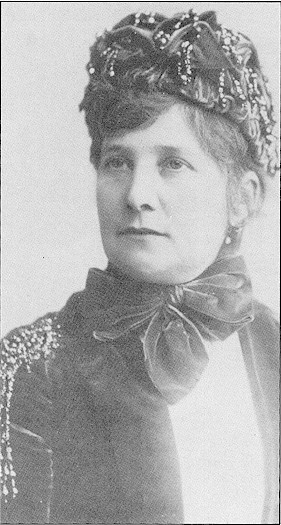
Mrs. Terry in mourning
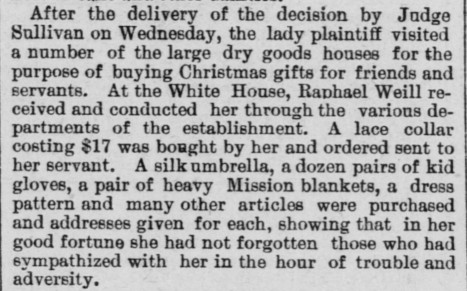
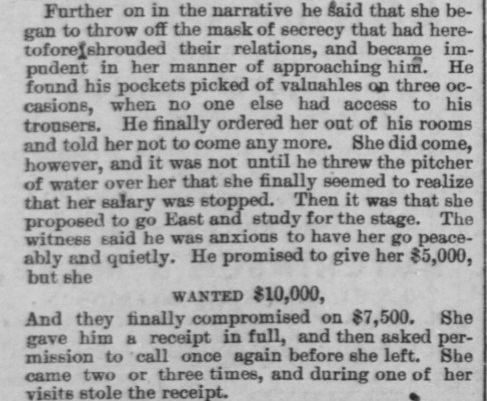
Legal loose-ends remained to be tied up in the various cases brought forth by Sharon v. Sharon and Sharon v. Hill. Sarah Althea was still trying to establish that she had been married to William Sharon, so as to inherit her share of the property. There was a retrial of the divorce case, but Allie lost again. Her attorneys abandoned the case and her attempts to appeal came to naught. By the end of 1890 it was all over.
For the most part Allie stayed on the ranch near Fresno, mourning the death of her husband and protector, but in February 1892 she returned to San Francisco, exhibiting signs of mental illness. Her bizarre behavior put her name in the headlines once again.
The friends she was staying with reported her disappearance after a night spent pacing her room and raving. She heard voices and communed with spirits. She slept and ate little, and her appearance had greatly aged.
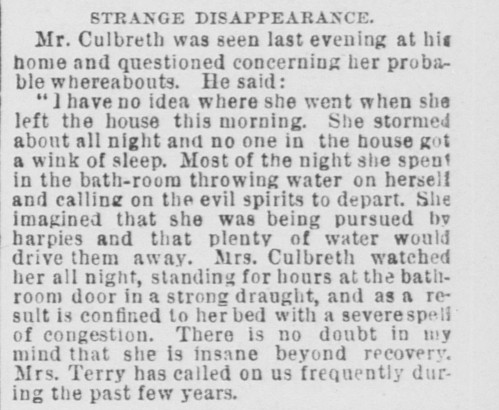
San Francisco Call, 15 February 1892
After she left the Culbreth home, she was found staying with her old friend, “Mammy” Pleasant. Mrs. Pleasant had supported her throughout her courtroom trials, and she again tried to help and protect her. But Allie was too much for her. She ruined fine clothing that Mrs. Pleasant gave her by continually pouring cold water over her head or laying in a bathtub for hours fully clothed. She had to be watched constantly to keep her from wandering off. Feeling she could no longer sustain her friend, Mrs. Pleasant had her arrested on an insanity petition. Allie appeared in court for the last time on March 10, 1892, where she put up a lively defense of herself, but also betrayed the sad condition of her mental capacities.
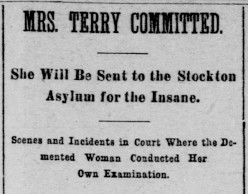
The judge declared her insane and committed her to the state asylum. The next day she was taken to Stockton.
Sarah Althea Terry spent the next 45 years living in the state asylum. She was never considered a danger to herself or anyone else. She continued to think of herself as a grand society belle and dressed in her fine Victorian gowns and hats. She wrote checks on scraps of paper and gave them to other patients. She could talk lucidly on many topics and yet she also told delusional tales of past and present grandeur.
Sarah Althea Hill Terry died on February 14, 1937, long after all the other participants in her drama had left the stage.
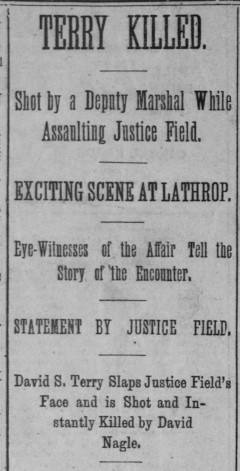


 Field was the judge who replaced Terry on the California Supreme Court in 1856. In 1863 he was appointed by President Lincoln to the newly created tenth Supreme Court seat. This seat had been added to give balance to the court by bringing in a justice from the Pacific states. (That’s a nice bit of trivia — When were there ever ten supreme court justices?)
 Justice Field was not going to stand for that. He ordered the marshal to remove Mrs. Terry from the courtroom. As she continued to revile the judge, the marshal moved to take her out. Her husband, David Terry, stopped him, declaring “No living man shall touch her!’ and then struck the marshal in the face with his fist. As the marshal dragged Allie screaming out of the courtroom, Terry hastened after, drawing his Bowie knife as he went.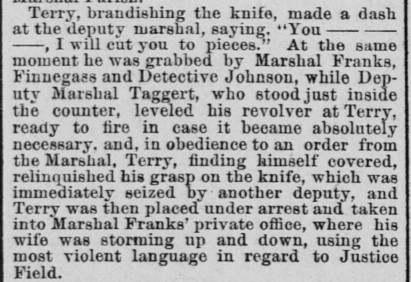
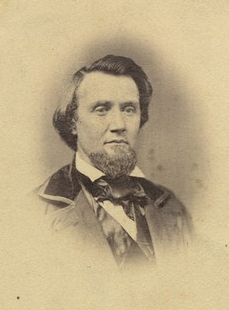 David Smith Terry was born in Kentucky in 1823 and moved with his family to Texas as young boy. All his life he considered himself a southerner and supported the southern cause. He studied law in Texas and was admitted to the bar in 1845, fought in the Mexican War in 1846, and in 1849 joined the gold rush to California. Like many others, he found riches not in the diggings, but in his professional field. He rose rapidly in the ranks of law and politics and in 1855 he won a seat on the California Supreme Court, supported by the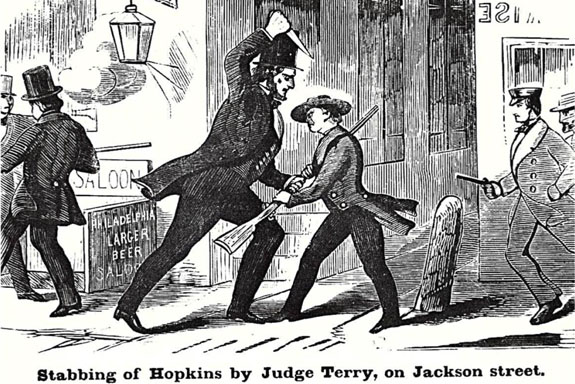
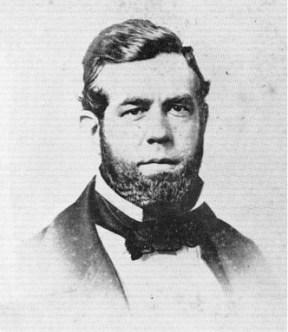 In 1859 Terry failed in his bid to be re-elected to the Supreme Court, and he blamed his loss on fellow Democrat David C. Broderick. Terry was a leader of the southern faction of the party; Broderick represented the northern abolitionist wing. The former friends fell out over their irreconcilable political views (as did the entire Democratic Party soon after).



















 goldfields