 Not long ago a friend of mine asked me why John Bidwell did not name the town he founded after himself. He could name it anything he wanted. Why Chico? Why not Bidwellville, or Bidwellton, or Bidwell City?
It used to be pretty common to name a town after its founder, or someone the founder wanted to honor. Gridley is named for founder George W. Gridley. Redding is named for railroad man Benjamin Redding (or maybe pioneer Pierson B. Reading, who owned the rancho Redding was built on). Weed is named for founder Abner Weed, and not for tumbleweeds or any other plant. Susanville is named after Susan Roop, the daughter of founder Isaac Roop (before that it was Rooptown) and Marysville is named after Mary Murphy Covillaud, a survivor of the Donner Party and wife of Charles Covillaud, who bought Theodor Cordua’s ranch. Cordua called the community he founded New Mecklenburg.
 John Bidwell had been employed by John Sutter to survey the prospective town of Sutterville, just south of Sacramento. Even though it was laid out on higher ground than Sacramento (which was prone to flooding), it never took off, and Bidwell’s lots in the town were worthless. Maybe that was not a good omen.
Bidwell was never much for naming things after himself. As a state senator, he had a hand in naming the counties. He named Sutter County after John Sutter, whose Hock Farm was located there. Perhaps he could have named Butte County after himself, but he didn’t.
In 1849 Bidwell bought Rancho del Arroyo Chico. I don’t know who named it that, but Chico Creek (Arroyo Chico — Small Creek) seems to have had that name when he got here. He sometimes referred to his place as Rio Chico, or Chico Farm. It must have seemed natural then to name the town Chico.
What we called Bidwell Park was named by the city. He and Annie never called it that — they called the area Vallombrosa. There is Bidwell Junior High School in Chico, and two Bidwell Elementary Schools, one in Red Bluff and one in Sacramento. But no town of Bidwell.
 There is a Bidwell Avenue in Chico, which runs along Big Chico Creek west of Nord Ave. Two other streets that were named after John Bidwell have disappeared. I wrote about one of them here. John Gallardo recently informed me that another Bidwell Street shows up on an 1888 bird’s-eye map of Chico. I think it was what is now 12th Street. It is right at the bottom of this map. You can get a closer look at the map at the Chico State Historical Map Collection.
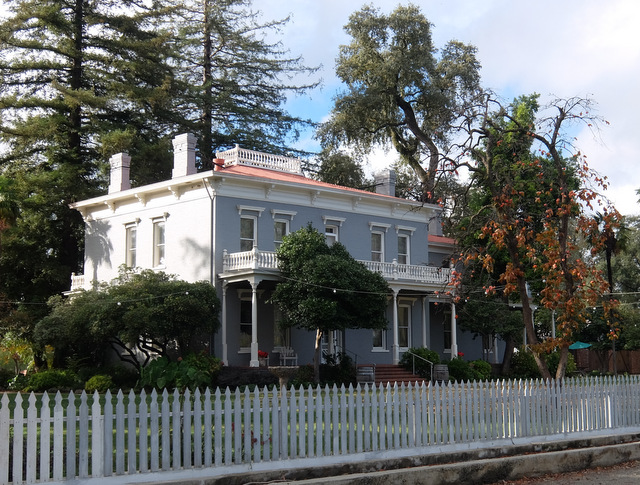
 The house stands at the corner of Fifth and Salem Streets near downtown Chico. Built by Dr. Oscar Stansbury in 1883, it now belongs to the city of Chico. It is cared for by the

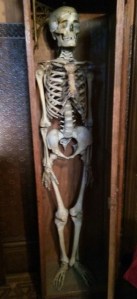 Another highlight of the house is Dr. Stansbury’s medical office. He had an office downtown, but he also maintained a small office in his home, with a separate entrance. It contains his books and instruments, his examining chair (leather with silk fringe!), his roll-top desk, and his skeleton, a real one.
 On December 5, 1848, President James K. Polk ignited the California Gold Rush in his
 There are lots of opportunities this holiday season to promote my new book, Nancy Kelsey Comes over the Mountain. Dan Barnett reviewed it in the
  And then that same Saturday, Dec. 9, I will be with other
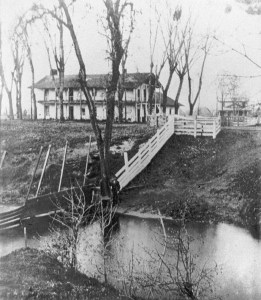
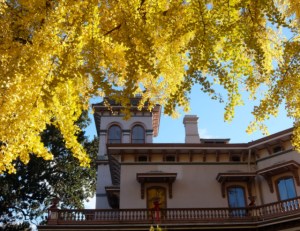 s a sink with running water, and the three bathrooms on the second floor (one in the servants’ rooms) have bathtubs and flushing toilets, an innovation in the 1860s. From the tower John Bidwell could survey his pastures, fields, and orchards. He could even see the Sacramento River, seven miles away, and Chico Landing, where the steamboats docked.
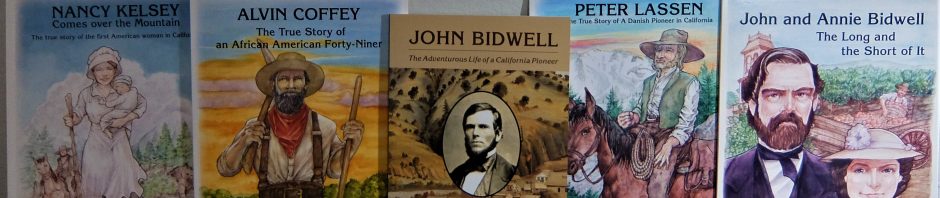
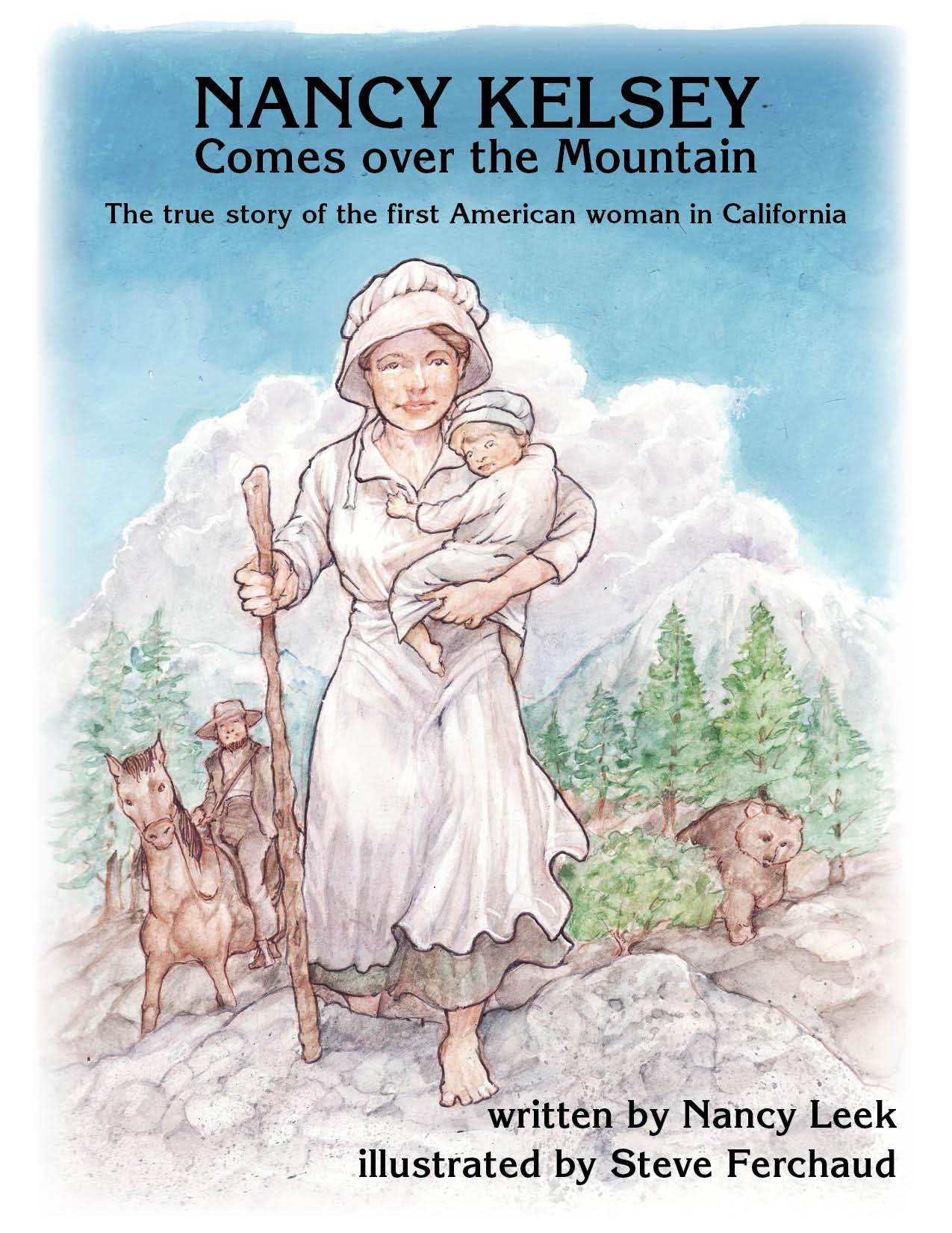
 My new book, that is. Yesterday I received my shipment of 14 boxes of Nancy Kelsey Comes over the Mountain: The True Story of the First American Woman in California.
 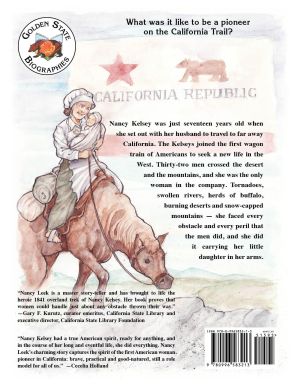 Cecelia Holland, who has written many works of historical fiction and non-fiction, says, “Nancy Kelsey had a true American spirit, ready for anything, and in the course of her long and eventful life, she did everything. Nancy Leek’s charming story captures the spirit of the first American woman pioneer in California: brave, practical and good-natured, still a role model for all of us.”
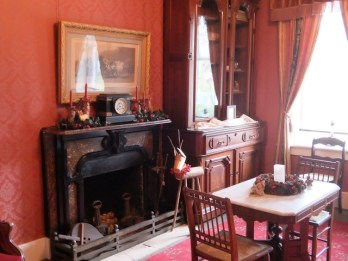 Each of the downstairs rooms has a large ornate mirror over the fireplace, except the library, where the original mirror has been replaced by an engraving. The fireplaces look like marble, but are made of tin, painted with a faux marble finish.
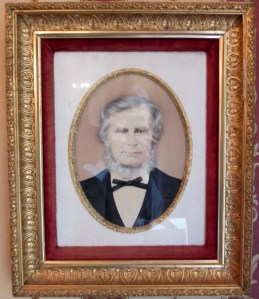
 When C. M. died in 1895, his daughters inherited the property and then sold it to brothers Adam and Henry Compton. From them it passed to William (Pat) Patrick and his wife Hester. The Patricks were childless and Hester bequeathed the home and 28 acres to the Chico Museum upon her death in 2002. The house has been preserved as it would have looked at the turn of the 20th century. It is filled with furniture, artifacts, and clothing that present a picture of life over 100 years ago.

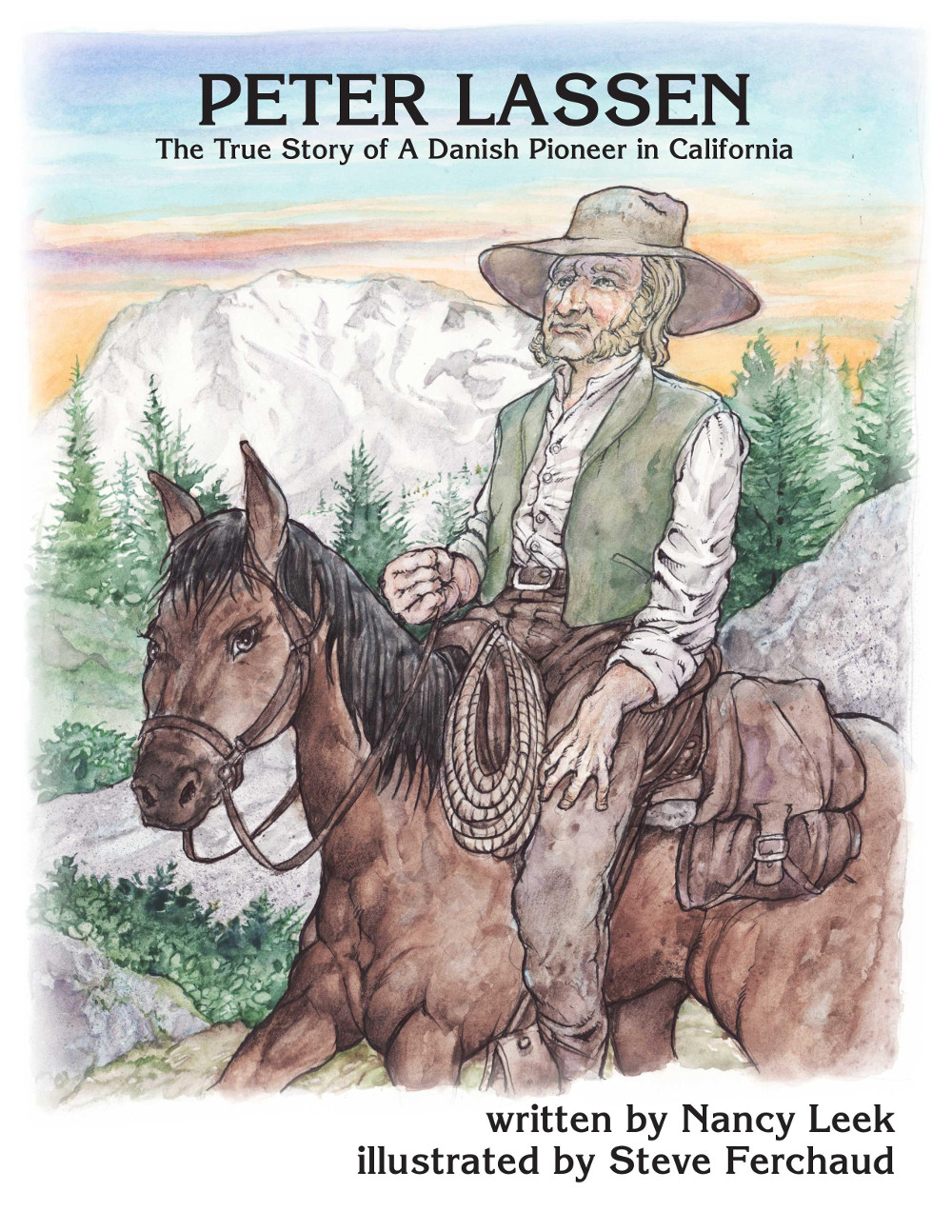
 If Jim posts anything more about the book and the illustrations, I’ll let you know. In the meantime, take a look at
  We Californians tend to think that the American Civil War all happened back east, where the South rebelled and the North fought to maintain the Union. But California, a state since 1850, played a significant role in the War between the States. Richard Hurley tells the story in California and the Civil War (The History Press, 2017.)
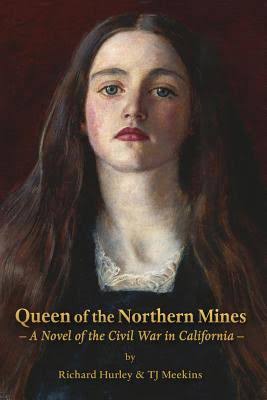 I can also recommend the historical novel written by Richard Hurley and T.J. Meekins, Queen of the Northern Mines (2011), which takes place during the same period and fictionalizes some of the important episodes of the Civil War in California.
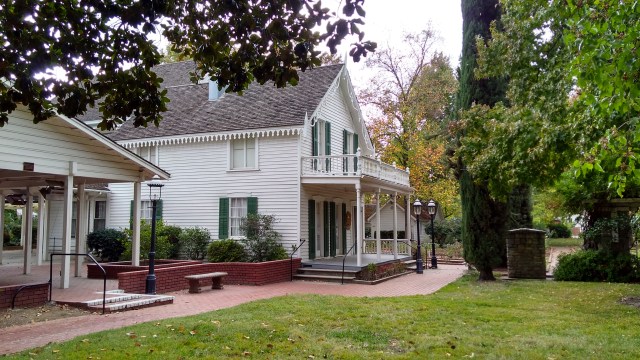 Today my OLLI group visited the C.F. Lott home in Oroville. Set in a city block park, the house is surrounded by lawns, brick paths, a rose garden, and a wisteria arbor. The park is open daily, and the house is open for tours on Fridays and Sundays. I’d like to come back in the spring when the roses and the wisteria are in bloom.
 The C.F. Lott Home was built in 1856 by Charles Fayette Lott, a gold-rush pioneer who helped form California’s government and started the first Citrus Exchange in California. Lott came to California in 1849 and after a short stint at mining with shovel and gold pan, he returned to his profession as a lawyer. He became a judge, a state senator, and a prosperous member of the Oroville community, earning his fortune from mining, ranching, and real estate development.
 for her on the city block that he had bought for $200 in 1855. Their first child, Sarah Virginia, died at the age of 2 or 3, devastating her parents. A son, Charles Fayette Jr. was born in 1873 and a daughter, Cornelia, in 1876. Both the children were somewhat disabled (according to our guides). Fay, as the son was known, was “slow,” and never seemed to have an occupation other than driving his father to and from the office. Cornelia suffered from a facial tic and one weak leg. As the children matured, Judge Lott feared they would be the targets of fortune hunters, so he refused to let his children marry.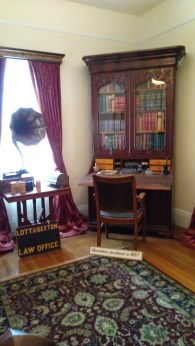
 The wallpaper in the dining room is a reproduction of the original wallpaper. It’s a good example of the kind of bright and bold paper that the Victorians favored.
 The bathtub is three steps up from the floor of the bathroom. It had to be raised in order for it to fit over the stairwell, a previously unused space. Judging by other improvements he made in the house, he was a talented craftsman.
 goldfields