It’s Here!

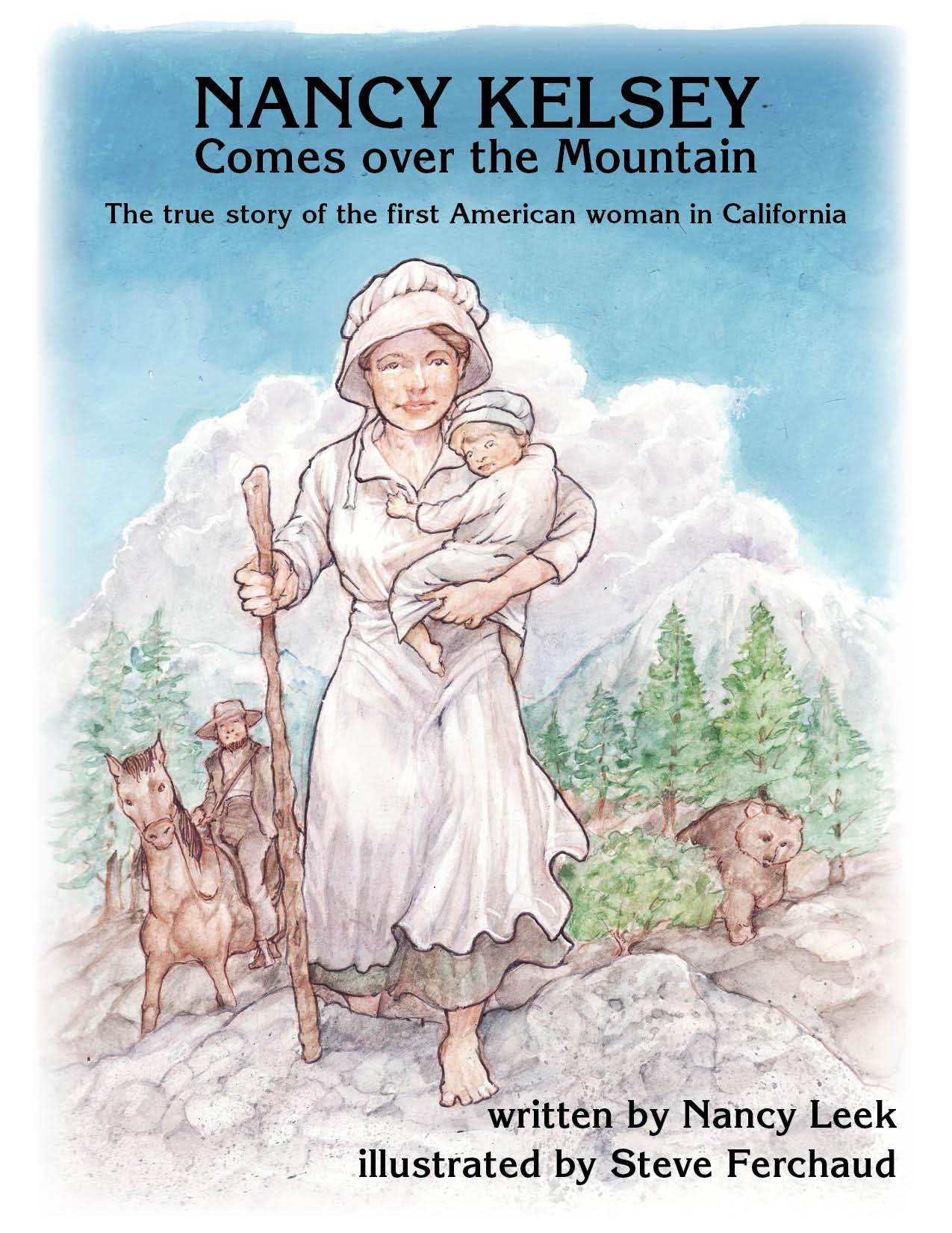
NKfrontcoverMy new book, that is. Yesterday I received my shipment of 14 boxes of Nancy Kelsey Comes over the Mountain: The True Story of the First American Woman in California.
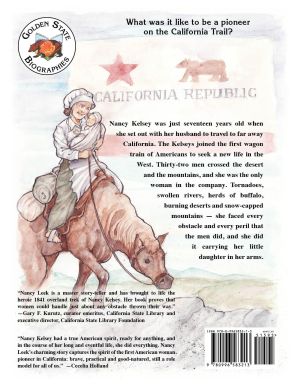
Don’t you just love Steve Ferchaud’s artwork?

This is the exciting true story of Nancy Kelsey’s overland journey to California, the Bear Flag Revolt and other exciting adventures in California. Gary Kurutz, curator emeritus of the California State Library says, “Nancy Leek is a master story-teller and has brought to life the heroic 1841 overland trek of Nancy Kelsey. Her book proves that women could handle just about any obstacle thrown their way.”

NKbackcoverCecelia Holland, who has written many works of historical fiction and non-fiction, says, “Nancy Kelsey had a true American spirit, ready for anything, and in the course of her long and eventful life, she did everything. Nancy Leek’s charming story captures the spirit of the first American woman pioneer in California: brave, practical and good-natured, still a role model for all of us.”
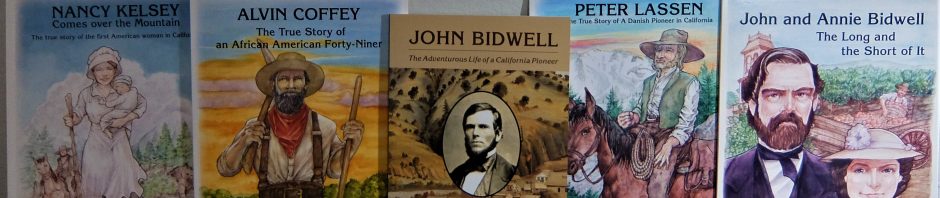
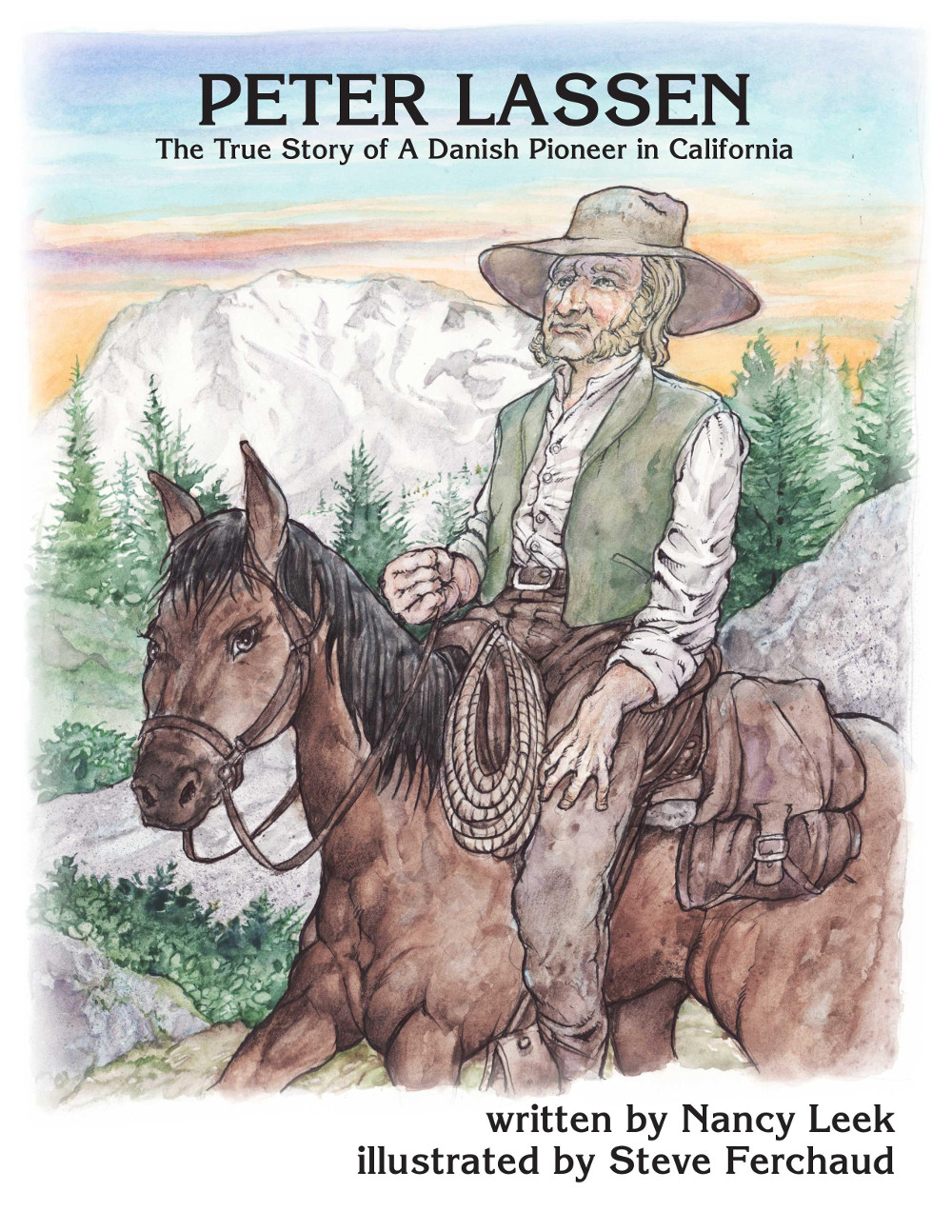
My new project is writing books for a series that I call Golden State Biographies. This is the second picture book biography in the series, although I didn’t call it a series when I wrote John & Annie Bidwell: The Long and the Short of It. I plan on writing more of these, especially if Nancy Kelsey does well.

I haven’t gotten the books out to the local stores yet, but I hope to have it soon at The General’s Store at Bidwell Mansion, as well as Made in Chico, The Bookstore (Chico), My Girlfriend’s Closet in Paradise and The Rusty Wagon in Orland. I’ll be putting it on Amazon too.

If you want a classroom set for your school, please contact me at goldfieldsbooksca@gmail.com and I will get you a set at a discount. I am also available for class presentations — I love to talk about California history!


Posted in Uncategorized | 1 Comment

A Visit to Glenwood Farmhouse at Patrick Ranch

DSCF4074

What was once a working ranch in Butte County, is now a museum dedicated to teaching history, science, and agriculture. Patrick Ranch Museum is located on 28 acres between Chico and Durham. Today my OLLI group toured the 1877 Glenwood Farmhouse at Patrick Ranch. The property was bequeathed to the Chico Museum Association (later the Far West Heritage Association) by the last ranch owner, Hester Grimm Patrick, and her husband William Garrison Patrick.

DSCF4071

DSCF4078

William Northgraves

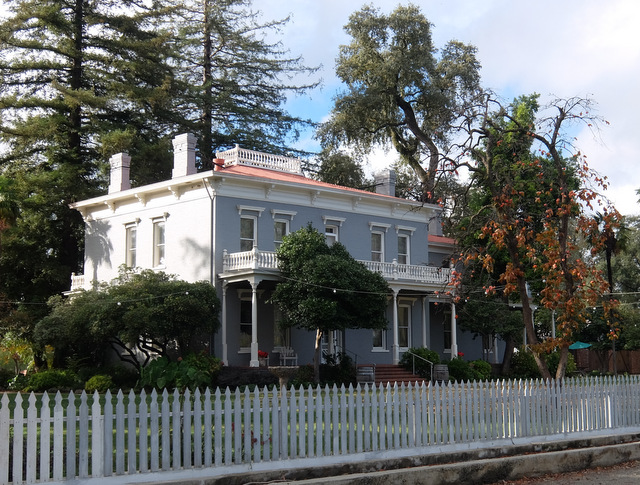
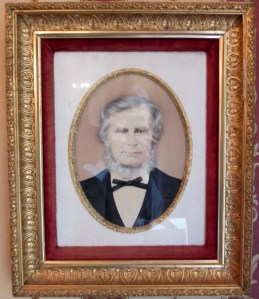
The farmhouse was built by Cornelius Bryant on land belonging to William Northgraves, an early Butte County pioneer. Northgraves, born in England in 1806, came to California in 1846. He mined with John Bidwell at Bidwell’s Bar in 1848-49 and earned enough money to buy a large tract of land on the Hensley Grant south of Chico. Never much of a farmer himself, Northgraves made a deal with Cornelius Bryant in 1867, in which Bryant and his family could live on the land and farm it in exchange for looking after the property and the aging Northgraves.

In 1877 Cornelius (known as C.M.) built a substantial brick house, which he called Glenwood, on the Northgraves Ranch. The bricks were made on site.The house is laid out in typical Victorian style, on the same pattern as the Kelly-Griggs House in Red Bluff. The front door opens into a narrow hallway with a staircase on the right-hand side. To the left of the hall are two rooms, the formal parlor and a music room. To the right are two more rooms, a library and a dining room. This layout is mirrored upstairs, where there are four bedrooms. All the rooms are fairly small by today’s standards. Two of the bedrooms have adjoining bathrooms, which were added at a later time. (See comments for correction.)

DSCF4075Each of the downstairs rooms has a large ornate mirror over the fireplace, except the library, where the original mirror has been replaced by an engraving. The fireplaces look like marble, but are made of tin, painted with a faux marble finish.

What was once a breezeway, and is now enclosed, connects the north side of the house to the structure that contains the kitchen, ranch office, and upstairs servants’ rooms.

C. M. Bryant and his wife Sarah had four daughters, all of whom grew up in the house and were married in it. The Bryants were prominent citizens, and John and Annie Bidwell, as well as other local landowners, were frequent guests at their home.

DSCF4085When C. M. died in 1895, his daughters inherited the property and then sold it to brothers Adam and Henry Compton. From them it passed to William (Pat) Patrick and his wife Hester. The Patricks were childless and Hester bequeathed the home and 28 acres to the Chico Museum upon her death in 2002. The house has been preserved as it would have looked at the turn of the 20th century. It is filled with furniture, artifacts, and clothing that present a picture of life over 100 years ago.

Patrick Ranch is open on the weekends, and has frequent family-friendly events. Check out their website for opening times and upcoming events.

Posted in Uncategorized | 4 Comments

The Gold Queen and the Gold King

Jim Silverman, whose fascination with California history led him to create a blog called This Week in California History, posted these two pictures on Facebook. I can’t resist sharing them.

These two illustrations are from a children’s book published in London in 1850, which just goes to show how quickly the news of gold in California spread around the globe.

Jim has this to say about the pictures:

This book was in the personal library of Mary Schofield, a foreign languages cataloger at the Stanford University Library and serious collector of children’s books. She travelled to Europe periodically and hunted for European children’s books about California and owned some remarkable, if not unique, items Her collection is now part of the Green Library at Stanford and I’ve combed the list of books there from her collection but haven’t been able to identify this one. I’ll send them the images with a query and see what happens. If they find it, I’ll drive down to read it.

Children’s books about California! That sounds right up my alley. I’d love to see the Mary L. Schofield Collection.   She collected over 10,000 works of European children’s literature.

The Gold King and Gold Queen don’t look like they have much to do with California; they look more like playing card figures or characters in a Gilbert & Sullivan opera. It would be interesting to know what the book was, and whether there is anything else in it that demonstrates the world’s fascination with California.

Adobe Photoshop PDFIf Jim posts anything more about the book and the illustrations, I’ll let you know. In the meantime, take a look at his blog, and maybe go out and get his book. I hear they have it at Costco.

Posted in Uncategorized | Leave a comment

California and the Civil War

calcivilwarWe Californians tend to think that the American Civil War all happened back east, where the South rebelled and the North fought to maintain the Union. But California, a state since 1850, played a significant role in the War between the States.  Richard Hurley tells the story in California and the Civil War (The History Press, 2017.)

Both Northerners and Southerners came to the Golden State during the Gold Rush, and in their new environment they clung to their old loyalties. Southerners may have been a minority in the population (which also contained a large contingent of the foreign-born) but they were in control in the state capital. The Democratic Party, which dominated state politics during the 1850s, was run by men such as U.S. Senator William Gwin, a Mississippian and a slave-holder.  They were known as the “Chivalry” or “Chivs.”

Hurley gives his readers the political situation leading up to the outbreak of war, and the choices that Californians faced in 1860. He tells how General Albert Sidney Johnston, a Kentuckian, saved the state for the Union by remained loyal to his duty as commander of the U.S. Army of the Pacific until he could resign his commission and join the Confederate Army.

California had a population made up primarily of young men, and they readily volunteered for military duty. Although eager to fight in the East, most of the recruits took over the duties of the U.S. Army in the West, guarding the mails and fighting Indians. The narrative ranges across the Southwest as the California Volunteers prevent Southern forces from reaching California and its gold.

Gold was the great necessity of the North and the great goal of the South. General Grant acknowledged the importance of this resource, saying, “I do not know what we should do in this great national emergency were it not for the gold sent from California.” Hurley tells exciting tales of Southern attempts to get the gold, both by stagecoach robbery and the privateering plot of Asbury Harpending and his confederates.

Hurley also recounts the career of now-forgotten orator, the Rev. Thomas Starr King, whose speeches in support of the Union rallied Californians to the cause. At one time Starr King, small and frail but mighty, was the most popular man in California. And he tells the wonderful tale of Reuel Gridley and the bag of flour that he auctioned off over and over, raising thousands of dollars for the Sanitary Fund.

Generously illustrated with drawings, maps, and photographs, Hurley’s book is an excellent introduction to a topic too little known. He tells his stories clearly, concisely, and with verve and dash.

queenI can also recommend the historical novel written by Richard Hurley and T.J. Meekins, Queen of the Northern Mines (2011), which takes place during the same period and fictionalizes some of the important episodes of the Civil War in California.

Posted in Uncategorized | Leave a comment

A Visit to the C. F. Lott Home

IMG_20171102_143153135_HDRToday my OLLI group visited the C.F. Lott home in Oroville. Set in a city block park, the house is surrounded by lawns, brick paths, a rose garden, and a wisteria arbor. The park is open daily, and the house is open for tours on Fridays and Sundays. I’d like to come back in the spring when the roses and the wisteria are in bloom.

Judge_CF_Lott_SrThe C.F. Lott Home was built in 1856 by Charles Fayette Lott, a gold-rush pioneer who helped form California’s government and started the first Citrus Exchange in California. Lott came to California in 1849 and after a short stint at mining with shovel and gold pan, he returned to his profession as a lawyer. He became a judge, a state senator, and a prosperous member of the Oroville community, earning his fortune from mining, ranching, and real estate development.

In 1856 Judge Lott went back to Pennsylvania and married Susan Hyer. He built a home Susan_Heyer_Lottfor her on the city block that he had bought for $200 in 1855. Their first child, Sarah Virginia, died at the age of 2 or 3, devastating her parents. A son, Charles Fayette Jr. was born in 1873 and a daughter, Cornelia, in 1876. Both the children were somewhat disabled (according to our guides). Fay, as the son was known, was “slow,” and never seemed to have an occupation other than driving his father to and from the office. Cornelia suffered from a facial tic and one weak leg.  As the children matured, Judge Lott feared they would be the targets of fortune hunters, so he refused to let his children marry.

The Lotts were active in social and business life, and John Bidwell mentions Judge Lott frequently in his diary. The entry for May 20, 1880 reads: “Dined with Judge Lott – his children Fayette & Nelie well.”

Judge Lott died in 1918 at the age of 94, and his son soon after him. Cornelia was at last free to seek a husband. In 1927 she married Jesse Sank, and the couple were devoted to each other for the rest of their lives.

IMG_20171102_144459981

Judge Lott’s study

The house has some interesting features. Upon walking in the front door, the visitor is in a typical Victorian entryway — a narrow hall with narrow steep stairs on the right side. To the left is the parlor, and behind that a room that was originally a dining room, but later Judge Lott’s study. Neither room is very large. Upstairs are three small bedrooms. This comprises the house built in 1856.

In the 1880s the house was considerably enlarged. A large dining room was added at the end of the hallway. A butler’s pantry and a small hallway connect to the kitchen, which may have once been a separate building. Next to the dining room is a small room with another broader set of stairs going up to three more bedrooms and a bathroom. This addition more than doubled the size of the original house.

IMG_20171102_151141841The wallpaper in the dining room is a reproduction of the original wallpaper. It’s a good example of the kind of bright and bold paper that the Victorians favored.


The upstairs bathroom was converted from a small bedroom in the 1930s by Jess Sank for his wife. I don’t know what they did for sanitary needs before that. It’s a handsome bathroom with modern tile-work in pink and gray. It’s so modern that Jess even installed a radio in the bathroom so that Cornelia could have music while she bathed.

IMG_20171102_155331183_HDRThe bathtub is three steps up from the floor of the bathroom. It had to be raised in order for it to fit over the stairwell, a previously unused space.  Judging by other improvements he made in the house, he was a talented craftsman.


Posted in Uncategorized | 2 Comments

Harriett’s Halloween Party

Halloween-Ghost-GraphicsFairy0011How would a group of well-brought-up young people entertain themselves on Halloween 110 years ago? Annie Bidwell’s diary gives us a glimpse.

In 1905 Harriett Alexander came to Chico to live at Bidwell Mansion and attend Chico High School. She was fifteen years old. Although her home was in Oakland, Harriett had  been coming to Bidwell Mansion for lengthy visits since she was a baby. Her mother, Minnie Carroll Alexander, and her mother’s parents, the Carrolls of Sacramento, were old friends of the Bidwells.

Annie Bidwell enjoyed having young people around her, and liked to see them having a good time. In her diary for 1907 (when Harriett was 17) she reports on Harriett’s Halloween Party at the mansion.

Thurs., October 3l.
Harriett’s Halloween Party.
Bought $l0.00 candy & prizes for Harriett’s party this evening.
Very busy all day and evg. Very tired.
Party.
Harriett’s party this evg. from 8.30 to l2.l5 A.M. Guests – (30-),came disguised in sheets & white masks. I did not recognize one person. A merry time they had. After masks were removed & sheeting, very bright games were played to my great amusement and that of some others. Ten O’C – supper, in library. Very elaborate & good. A pumpkin near each end of table & an enormous one in middle, well lighted, & red, & low candles at each plate, lighted, set in apples, added to the merry making. No lights but from pumpkins when ghosts entered. Immense pumpkins everywhere & lights in some. Harriett’s idea & work. Isabell, [indecipherable] McGregor & others helped her. Mansion a bower for party.

Vintage-Jack-O-Lantern-Image-GraphicsFairy-653x1024The Butte Record for November 1st reported that “the mansion was profusely decorated with smilax and chrysanthemums, and each guest appeared attired in a sheet, in keeping with the traditions of the night.”

At 10 o’clock there was a grand march, followed by the unmasking of the guests, music and games, and supper at a long table set up in the library.  The next day Annie records that she was up at 6 a.m. to help clear away the results of the party. Plenty of sheets to pick up and fold, no doubt.

And that’s how to throw a Halloween party, turn-of-the-century style.

Posted in Uncategorized | Leave a comment

New Exhibit Welcomes Visitors to Bidwell Mansion SHP

DSCF4036

The holographic General explains his world.

The renovation is complete, and Bidwell Mansion State Historic Park has a fabulous new exhibit in the Visitors’ Center. The old exhibits from the 1970s are gone, replaced by handsome new display cabinets, gleaming signage, and engaging audio-visual presentations. To see for yourself, visit Bidwell Mansion SHP any Saturday, Sunday, or Monday. Tours of the Mansion are $6, but the Visitor’s Center is free.

DSCF4035-001

The new exhibit has been some two years in the planning, and for several months the space has been off-limits while the installation progressed. Among the artifacts, old favorites (Annie’s wedding shoes, the enormous Maidu basket) are back, and previously unseen items (many more beautiful baskets, Annie’s blue shoulder cape) have been brought to light.

DSCF4031

John and Annie have been brought to life through audio-visual displays. Viewers can follow Bidwell’s 1841 journey across the continent and listen to his journal entries about significant sights along the way. They can also listen to the Bidwells courtship as John and Annie exchange love letters, thanks to the voice talents of Nick Anderson and Jenise Coon.

The star of the exhibit is a walking, talking John Bidwell (Nick again) who tells of his discovery of Rancho Chico and the growth of the ranch. Numerous antique photographs are projected to show the beauties of northern California and the placement of buildings on Rancho Chico.

DSCF4026

Nick Anderson and Kathy Lanphier (former BMA board president) admire the new exhibit.

DSCF4030

Another feature of this new installation is a display cabinet that can be used for changing exhibits by State Parks staff. Currently it contains a display of Victorian ladies’ accessories: fans, gloves, purses, lace collars, handkerchiefs, stockings, and even a silk garter belt. I don’t have room here to give you a close-up view of each of the enchanting items in the case. And every time you visit Bidwell Mansion SHP, there could be something new to enjoy in that particular space.

So come and see and listen and enjoy. The new exhibit brings John and Annie and Rancho Chico to life!


Posted in Bidwell Mansion, Uncategorized | 1 Comment

A Visit to the Kelly-Griggs House

Continuing my OLLI adventures, today the Historic Houses class visited the Kelly-Griggs House Museum in Red Bluff.

DSCF4022

The Kelly-Griggs House is a classic example of 19th century American architecture, and one of several handsome Victorian homes in Red Bluff, California. If you visit it, you must give yourself a some extra time to drive around the neighborhood and enjoy the other fine houses of Red Bluff. At the Kelly-Griggs House Museum they can give you a handy “windshield tour” map of other Victorian homes.

The house was built in the 1880s by Sidney Allen Griggs, a prosperous dealer in sheep and cattle. Griggs, a native of New Hampshire, caught “gold fever” in 1849 and took the Panama route to California. After so-so luck in the gold fields, he moved to Tehama County and started a sheep ranch on Mill Creek. In 1880 he built his commodious residence on the corner of Washington and Ash Streets.

DSCF4018

In 1885 Sidney Griggs married Melvina Roundtree Montgomery, the wealthy widow of John M. Montgomery, the owner of the Capay Grant. She was said to be very beautiful, and she and Mr. Griggs were active in civic and social affairs. Mr. Griggs died in 1906 and his wife continued to live in the home until her death in 1931 at the age of 91.

The house was purchased by the Kelly family in 1931. The Kelly parents were of Irish descent from Australia, coming to California in 1870. They were ranchers and farmers, and the owners of the “Kelly’s Place” resort in the Warner Valley, now a part of Lassen National Park. Several of the unmarried sons and daughters of the family bought the house in Red Bluff after the deaths of their parents.

The last resident of the house, Miss Anne Kelly, sold her home to the Kelly-Griggs House Museum Association in 1966.

The museum contains an extensive collection of Victorian costumes and textiles, everything from quilts to wedding dresses to delicate under garments. There is also an important collection of Native American artifacts, including baskets and stone tools. The man known as Ishi, the last Yahi, is featured in the collection. He was born in Tehama County not far from Red Bluff.

Our docents gave us a delightfully informative tour of the house. Photography is allowed, but they asked that photos not be posted online, so I have only included photos of the outside of the house. To see the interior, do visit or book a tour.

The Kelly-Griggs House Museum is currently closed for exterior renovation, and when the restoration is complete and all the furnishing put back in place, it will be better than ever. Watch for the re-opening. The regular hours are Sundays & Thursdays from 1 to 3 PM.

And don’t forget to look for those other Victorian houses in Red Bluff. Here are pictures of just two of the many fine homes.

DSCF4023

DSCF4024

Posted in Uncategorized | 2 Comments

The Lincoln Assassination Incarceration

I have to thank the Orland Historical and Cultural Society for bringing this story to my attention on their Facebook page. And a great bit of history it is!

On April 20, 1865, Captain Augustus Washington Starr was sent from Sacramento to the town of Colusa to follow up on reports of Southern sympathizers who were “guilty of making exulting expressions over the assassination of President Lincoln.” So reported the Marysville Appeal of April 22nd. Southerners in the town, and there were many, planned to celebrate by “firing the anvil” at the blacksmith’s shop. Firing the anvil was a popular way to cause a ruckus in the 19th century.

Colusa was known as a hotbed of Southern sympathizers, and the men arrested by Captain Starr were among the most prominent men of the county. District Attorney A.D. Shepardson, Deputy Assessor C. Price, Justice of the Peace J. Scroggins and rancher John Campbell were all apprehended.

The next day four more men were arrested: the blacksmith, the keeper of the “Copperhead Saloon,” another rancher named O’Neil, and Will S. Green, the editor of the Colusa Sun. Green, a Kentuckian, was a strong supporter of state’s rights. The men were taken to Camp Union in Sacramento and then sent to Alcatraz, where they spent two months on the Rock.

Will Green went on to many prominent position in county and state government, including County Superintendent of Schools, Mayor of Colusa, State Assemblyman, State Treasurer, and Trustee of the California State Library.


colusa plaqueIn 2016 the Sam Brannan chapter of E Clampus Vitus placed a plaque commemorating the event at the Colusa County Courthouse.

You can read more about this event in this article from the San Jose Mercury News.


Posted in Lincoln, Uncategorized, Will S. Green | Leave a comment

Coming Soon!

I have a new book in the works — a picture book biography of another pioneering Californian — and I want to show you some of the great illustrations that Steve Ferchaud has done for it.

DSCF3999

The cover without the title

What was it like to be a pioneer on the California Trail? Nancy Kelsey Comes Over the Mountain: The True Story of the First American Woman in California will tell you the story.


Nancy Kelsey was just seventeen years old when she set out with her husband to travel to far-away California. The Kelseys joined the first wagon train of Americans to seek a new life in the West. Thirty-two men crossed the desert and the mountains, and she was the only woman in the company. Tornadoes, swollen rivers, herds of buffalo, burning deserts and snow-capped mountains — she faced every obstacle and every peril that the men did, and she did it carrying her little daughter in her arms.

Can you imagine it? Together Steve Ferchaud and I will show you what it was like to be the first woman to come over the Sierra Nevada mountains into Alta California.

DSCF4002

Packing up to hit the trail to California

This book will have the same format as my other picture book biography,  John and Annie Bidwell: The Long and the Short of It.

With two books in the series, I think I need a series title. I’m thinking of calling the series “Golden State Pioneers” but I am open to suggestions for a good series title.

Not only was Nancy Kelsey a pioneer on the California Trail, she also lived history when she got here, from the Bear Flag Revolt to the Gold Rush and beyond. It’s an amazing story, and I am excited to bring this pioneer heroine to life.


DSCF3998

Two double-page spreads from the book


Posted in Nancy Kelsey, Uncategorized | Leave a comment