Only a few months after the Likins family arrived in San Francisco they experienced a violent earthquake. The earthquake had a magnitude between 6.3 and 6.7, and took place on the Hayward Fault on October 21, 1868. It was called the Great San Francisco Earthquake until the quake of 1906 came along.
Aftershocks continued for a few weeks. Amy Likins resumed her book-selling and was in Santa Clara when another strong shock hit.

I now concluded to go to Santa Clara and canvass that town, before delivering my pictures in San José. Eight o’clock in the evening found me seated in the ladies’ parlor at the hotel, conversing with the landlord concerning the severe shock of earthquake we had two weeks previous.
I thought, if the Lord spared me, I would not stay another night in a brick house. I had partially undressed when the house commenced shaking. Frightened all but to death, I scarcely knew what to do; but found myself in the door-way with the candle in my hand, thinking I must not go into the street in this condition. There came a second shock. I blew out the light, threw it on the floor, and rushed into the street, not caring how I appeared. It was full of people. Some of them looked at me curiously; but I drew my shawl close about me and stood my ground, nor could I be persuaded to return to my room. The clerk brought me my shoes and baggage, and took me where he knew I could obtain lodgings, to a lady’s, a few doors away. She gladly offered me shelter, as her husband was away from home, and she was very lonely.
There were several light shocks after I had been there. Next morning, many joked me about my appearance the evening previous, especially Mr. W., who said he never would forget how comical and frightened I looked.
What a welcome to California!
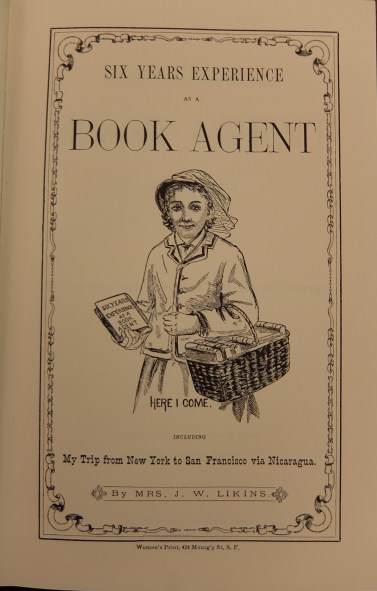 And here she is! Or should I say, “Here I Come,” since that’s what Mrs. J. W. Likins says herself on the picture. Six years of selling books had given Amy Likins plenty of confidence.
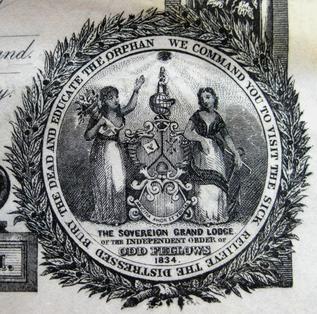
 Amy Likins says that she became a Rebekah fifteen years before coming to California in 1868, which would have been only two years after the degree was created. She found her association quite useful as she went about her travels as a book agent. A man wearing the symbol of the Odd Fellows, the three link chain, was someone she could trust, someone she could call on to assist her if she were accosted by some “ruffian,” as she relates in the following story.
 Taking my bundle, I started out; called at the several places of business, and had tolerable good success. I called on one gentleman I pitied very much; he had to use crutches. He told me he was a cripple, from rheumatism. Still he seemed energetic, and full of business, carrying on a drug-store and keeping the Post-office, and was contented and happy. He said, when I came around again, he would take Mark Twain’s “Innocents Abroad,” if I would bring it to him, as he was a great reader.
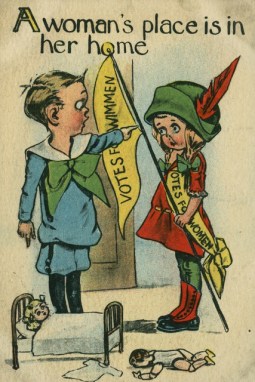 A few days later she encountered another one of these misogynists.
 Horatio Seymour, former governor of New York, was Grant’s Democratic rival in the race for the presidency. He lost, 47% to Grant’s 53%.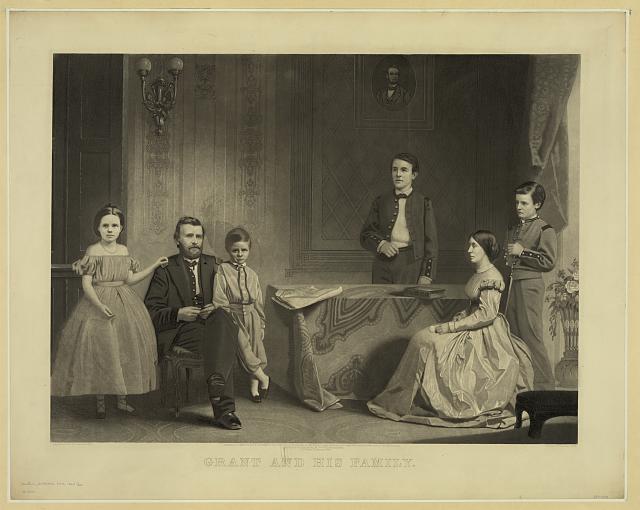


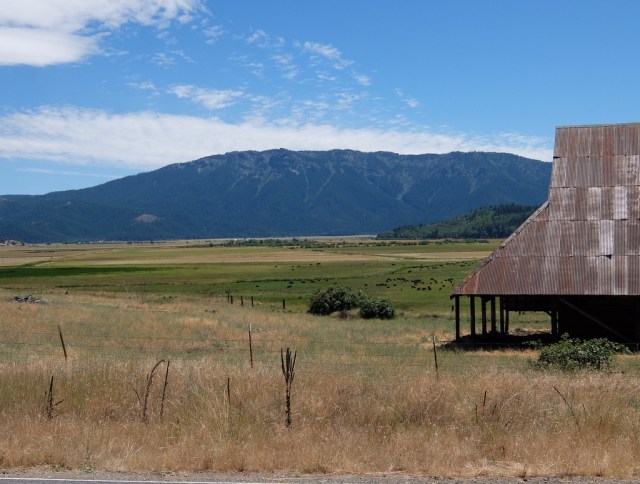
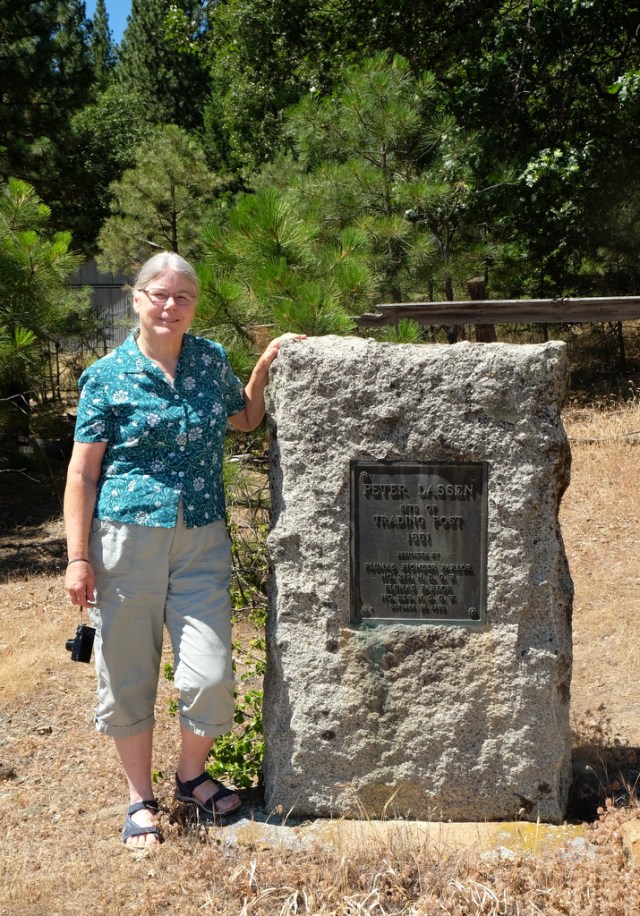
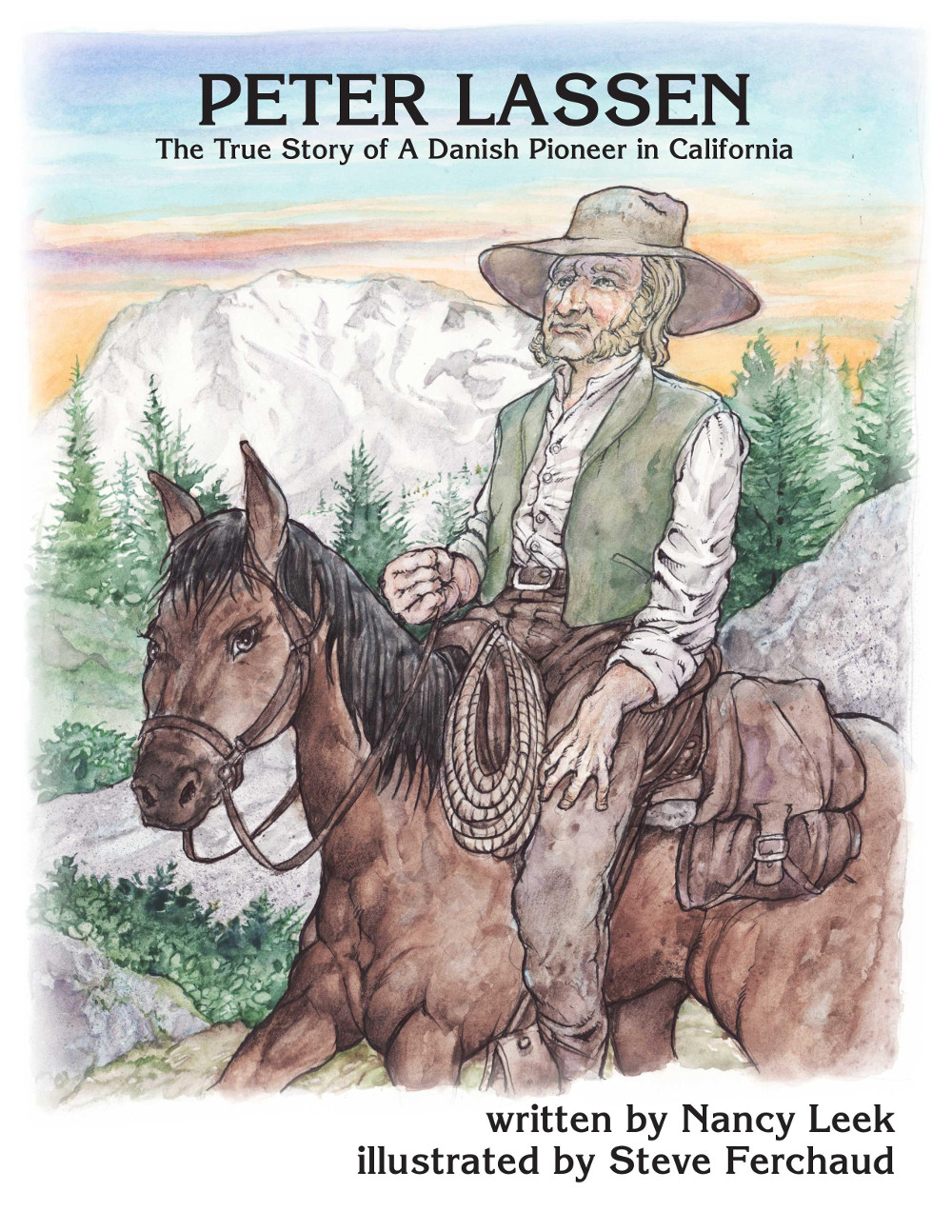
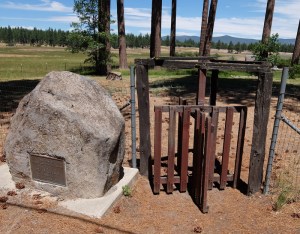 No visit to Susanville on the trail of Peter Lassen is complete without a visit to Lassen’s grave. He is buried in a small Masonic cemetery about 5 miles south of Susanville. The cemetery has a charming little turnstile gate next to a stone marking the site. It’s a beautiful setting for a resting place, on the edge of the valley where sheep graze and the graves are shaded by tall Ponderosa pines.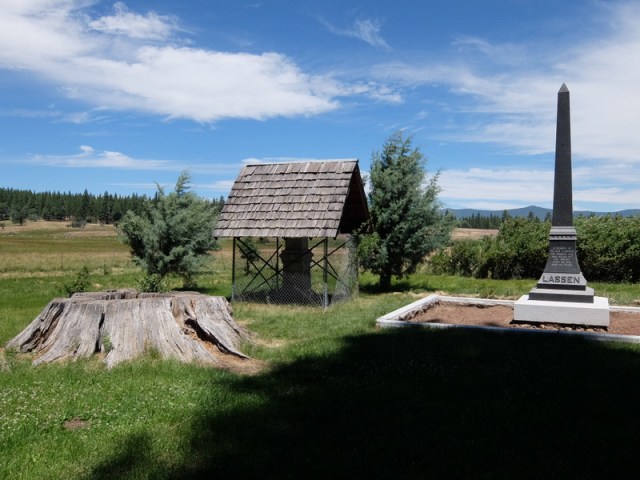
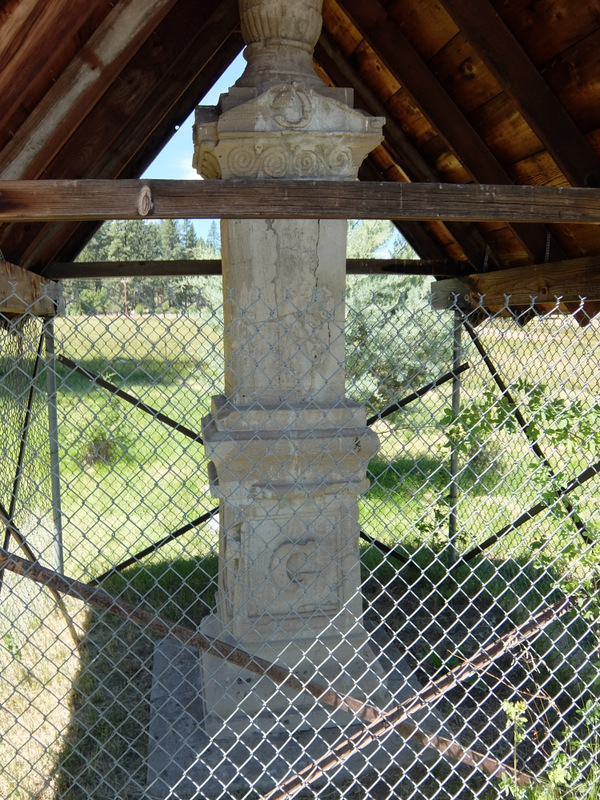
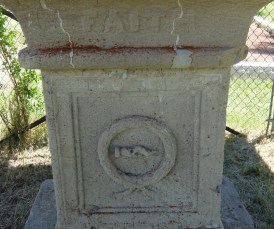 The grave marker is a handsome example of 19th century mortuary art, carved with Masonic symbols, such as an all-seeing eye and clasped hands, as well as crossed gun and arrow. The monument is fenced in and roofed to preserve it from weather and the the kind of vandals who like to carve their initials on anything handy.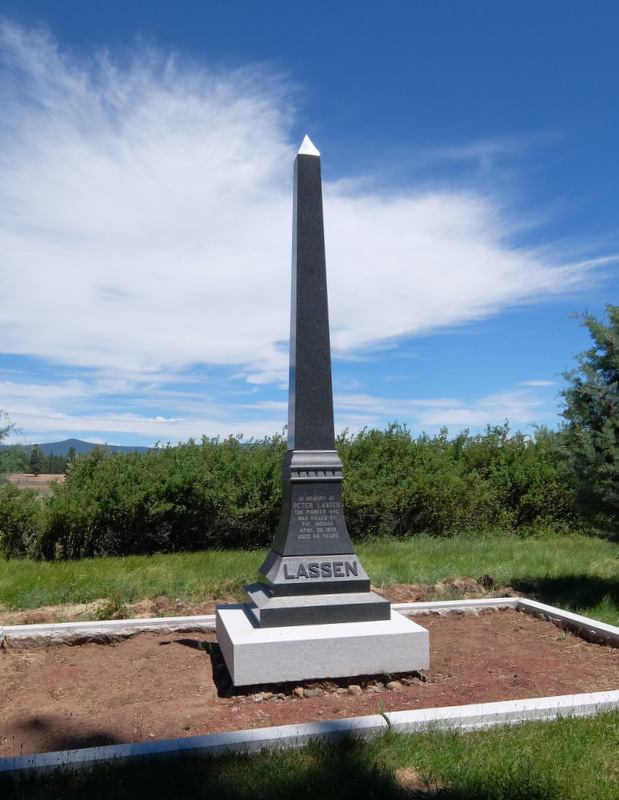

 goldfields